
A container home may be possible in Miami when it meets zoning, building, structural, wind, flood, energy, utility, fire, and permit requirements. Property owners should confirm requirements with the city, county, and qualified local professionals before buying containers or starting design.
Container Homes Miami: Laws, Cost & Build Ideas
Miami Container Home Laws, Costs & Build Ideas
Miami’s rising home prices, limited buildable land, coastal conditions, and interest in flexible design have pushed more homeowners, builders, and developers to explore alternative construction methods. Shipping container homes are one idea people consider for compact homes, backyard studios, ADUs, coastal retreats, and custom multi-container layouts.
But building in Miami is not the same as building in many other markets. Container home projects must be planned around zoning, permits, Florida Building Code requirements, wind design, flood zones, corrosion protection, utilities, insulation, foundations, drainage, and local approvals.
This guide explains Miami container home laws, cost factors, design ideas, climate considerations, and how Conexwest can help with container selection, modifications, and delivery. To shop local inventory, visit Conexwest shipping containers for sale in Miami, FL.
Key Takeaways
- Container homes may be possible in Miami when the project meets zoning, building, structural, wind, flood, fire, energy, utility, and permit requirements.
- Shipping containers used for residential occupancy are reviewed differently from containers used for storage.
- Miami-Dade has strict rules for cargo containers used as storage, and residential container home projects require separate residential design and permit review.
- Miami’s coastal climate makes corrosion protection, drainage, waterproofing, insulation, ventilation, and humidity control especially important.
- Conexwest offers Miami shipping containers for sale, delivery planning, and modification options for doors, windows, insulation, flooring, HVAC, electrical, shelving, and more.
Can You Build a Container Home in Miami?
A container home may be possible in Miami, but the container must be converted into a legal structure that meets the requirements for the intended residential use. A container used for storage is not reviewed the same way as a container used for sleeping, cooking, bathing, or permanent occupancy.
Once a shipping container becomes a dwelling unit, it may need architectural plans, structural engineering, building permits, trade permits, inspections, utility connections, wind design, flood-zone review, foundation design, energy documentation, and local approvals.
Start with official resources from Miami-Dade County Building, the City of Miami’s State of Florida Applicable Codes, and the Florida Building Code.
Miami Container Home Laws and Permits
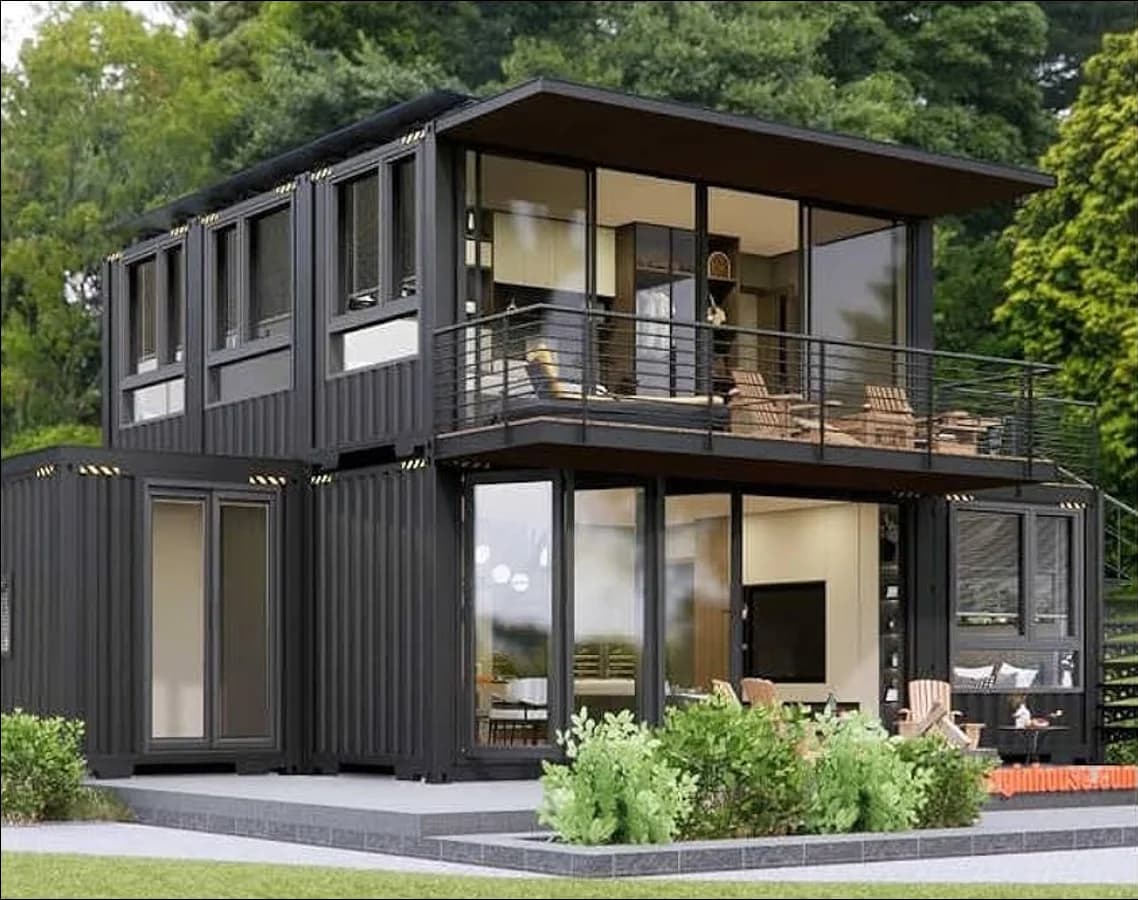
Container homes in Miami are not approved simply because they use steel shipping containers. The city or county reviews the final use, design, foundation, utilities, safety features, structural work, flood exposure, wind design, and compliance with applicable local and state requirements.
Common review items may include:
- Zoning and allowed residential use
- Building permit review
- Structural engineering
- Foundation and anchoring design
- Wind-load design
- Flood-zone and elevation requirements when applicable
- Electrical permits
- Plumbing permits
- Mechanical permits
- Energy code documentation
- Fire access and life-safety requirements
- Utility connections and inspections
- HOA, coastal, historic district, or neighborhood restrictions when applicable
Property owners should confirm local requirements before buying containers or starting fabrication. A licensed architect, structural engineer, contractor, and local permitting professional can help determine what is allowed on the specific property.
Zoning and Cargo Container Rules
Miami-Dade rules for cargo containers are strict when containers are used as storage units. County code language allows cargo container storage units only in certain commercial and industrial zoning districts and limits them to storage that is ancillary to an existing business. The rules also address visibility, stacking, maintenance, traffic flow, and lot coverage.
That storage-container rule does not automatically make container homes legal in residential districts. A container home must be reviewed as a dwelling or building project under the zoning and building requirements that apply to that specific property.
For zoning questions, review Miami-Dade’s Zoning Improvement Permit guidance and speak with the local planning or zoning office before starting design.
Residential Portable Storage Rules Are Different
Miami-Dade also has rules for residential portable storage units. These are not the same as full-size 20ft or 40ft shipping containers used for building projects. Residential portable storage rules include limits on size, placement, setbacks, and allowed contents.
If you are planning temporary storage during construction, review Miami-Dade’s Residential Portable Storage Units guidance. If you are planning a dwelling, you will need a separate residential design and permit path.
Florida Building Code and Miami-Dade Requirements
Container homes in Miami must comply with applicable Florida Building Code requirements. Miami-Dade and the City of Miami use Florida Building Code requirements for building, residential, energy, mechanical, plumbing, fuel gas, accessibility, and existing-building work depending on the project.
Miami-Dade County and Broward County are located in Florida’s High-Velocity Hurricane Zone, so wind design, product approvals, roof assemblies, openings, anchoring, and building-envelope details must be reviewed carefully by qualified professionals.
For windows, doors, shutters, roof systems, and other building-envelope components, customers should confirm whether products have required Florida Product Approval or Miami-Dade Product Control approval for the intended use. Miami-Dade provides a Product Control Search, and the state provides a Florida Product Approval search.
Permit Process
A Miami container home project may require architectural drawings, structural calculations, site plans, product approvals, energy documentation, flood-zone information, trade permits, and inspections. Exact requirements depend on the city, county, property, flood zone, project size, and design.
Miami-Dade provides building permit information through its Building Department and permit resources. Customers should confirm the correct permit path before ordering containers or starting modifications.
Hurricane, Wind, and Flood Planning
Container homes in Miami should not be described as hurricane-proof. They must be designed, anchored, reinforced, and inspected according to applicable wind, flood, and building-code requirements.
Important planning items include:
- Engineered foundation and anchoring
- Wind-load calculations
- Flood-zone and elevation review when applicable
- Impact-rated windows, doors, shutters, or opening protection when required
- Roof design and attachment details
- Container-to-container connection design
- Protection for utility penetrations
- Drainage and stormwater planning
Miami Container Home Cost Factors
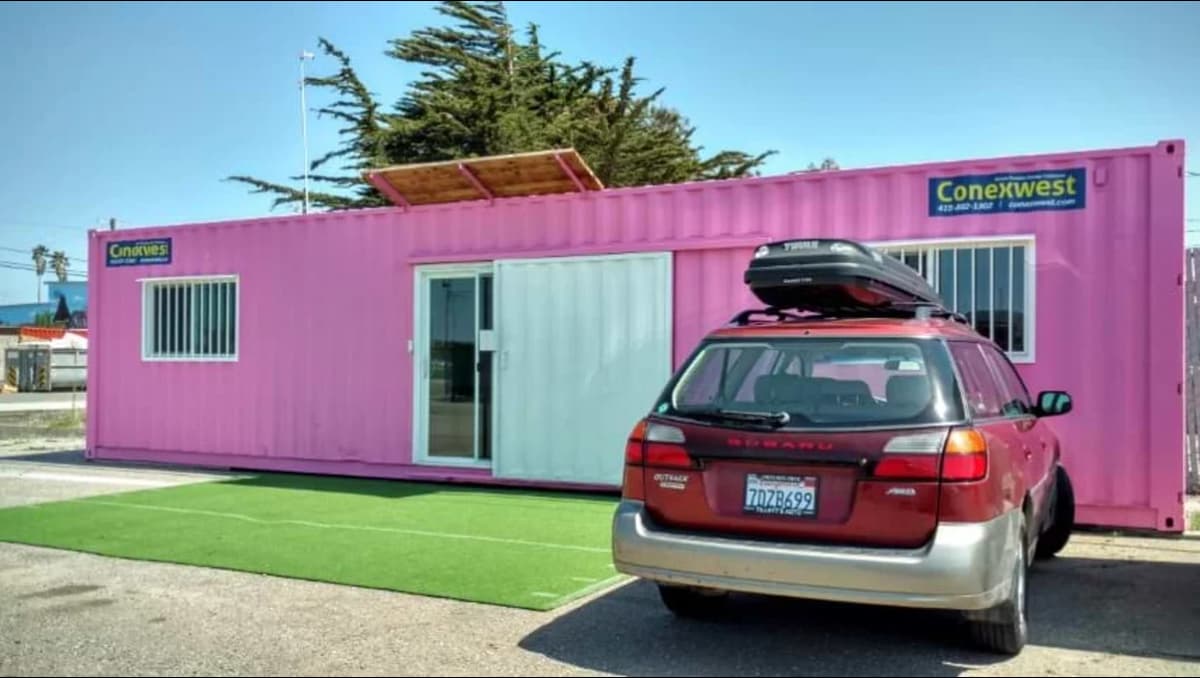
The container shell is only one part of the total project cost. A code-compliant container home in Miami can require design, engineering, permits, foundation work, utilities, wind and flood review, corrosion protection, insulation, HVAC, plumbing, electrical, windows, doors, finishes, delivery, and contractor labor.
Container Shell Cost
Container pricing depends on size, condition, availability, delivery ZIP code, and whether the unit is new, used, refurbished, or one-trip. A used 20ft shipping container may be enough for basic concepts or small storage needs, while a 40ft shipping container or 40ft high cube container may be better for residential layouts that need more usable space.
For a cleaner starting point, many customers consider one-trip containers. Learn more in Conexwest’s guide to one-trip shipping containers.
Foundation, Anchoring, and Flood Planning
Miami projects may require more foundation planning than inland markets because of wind, flood, soil, drainage, elevation, and coastal exposure. Foundation and anchoring details should be designed by qualified professionals for the specific site.
Common foundation planning items include:
- Soil conditions
- Flood zone and elevation
- Wind uplift resistance
- Container corner-post support
- Drainage and stormwater management
- Utility routing
- Access for delivery or crane placement
Hurricane-Zone Product Requirements
Windows, doors, shutters, roof assemblies, and other exterior products may require Florida Product Approval or Miami-Dade Product Control approval depending on the project and location. These requirements can affect cost, product selection, lead times, and installation details.
Interior and Exterior Finishes
Interior finishing often includes insulation, framing, drywall or wall panels, flooring, cabinetry, lighting, appliances, plumbing fixtures, and HVAC. Exterior finishing may include paint, cladding, roof assemblies, protective coatings, awnings, decks, shade structures, and corrosion-resistant details.
Cutting openings for windows and doors can require reinforcement. Larger openings, open-concept layouts, rooftop decks, and multi-container connections should be reviewed by a structural engineer.
Total Budget Planning
| Project Type | Typical Cost Drivers | Planning Notes |
|---|---|---|
| Single-container studio | Container shell, insulation, compact utilities, bathroom, kitchenette, HVAC, foundation | Works best with a simple layout and limited structural cuts. |
| Container ADU or backyard unit | Permits, engineering, residential utilities, foundation, finishes, access, inspections | Must be reviewed as a legal dwelling unit, not just a container placement. |
| Multi-container home | Engineering, reinforcement, joining containers, larger foundation, utilities, full interior buildout | Offers more space but adds structural and permitting complexity. |
| Coastal or flood-zone property | Elevation review, wind design, anchoring, corrosion protection, floodplain requirements, drainage | Requires early review of code, flood, wind, access, and local restrictions. |
For current container pricing, visit Conexwest shipping containers for sale in Miami, FL.
Design Ideas for Miami Container Homes
Coastal Exterior Style
Miami container homes should respond to sun, salt air, humidity, rain, wind, and outdoor living. Coastal exterior ideas may include light-colored finishes, corrosion-resistant coatings, shade structures, awnings, covered decks, and landscape screening.
Exterior cladding, stucco-style finishes, wood-look accents, metal panels, or painted steel can help a container project fit the neighborhood while protecting the structure.
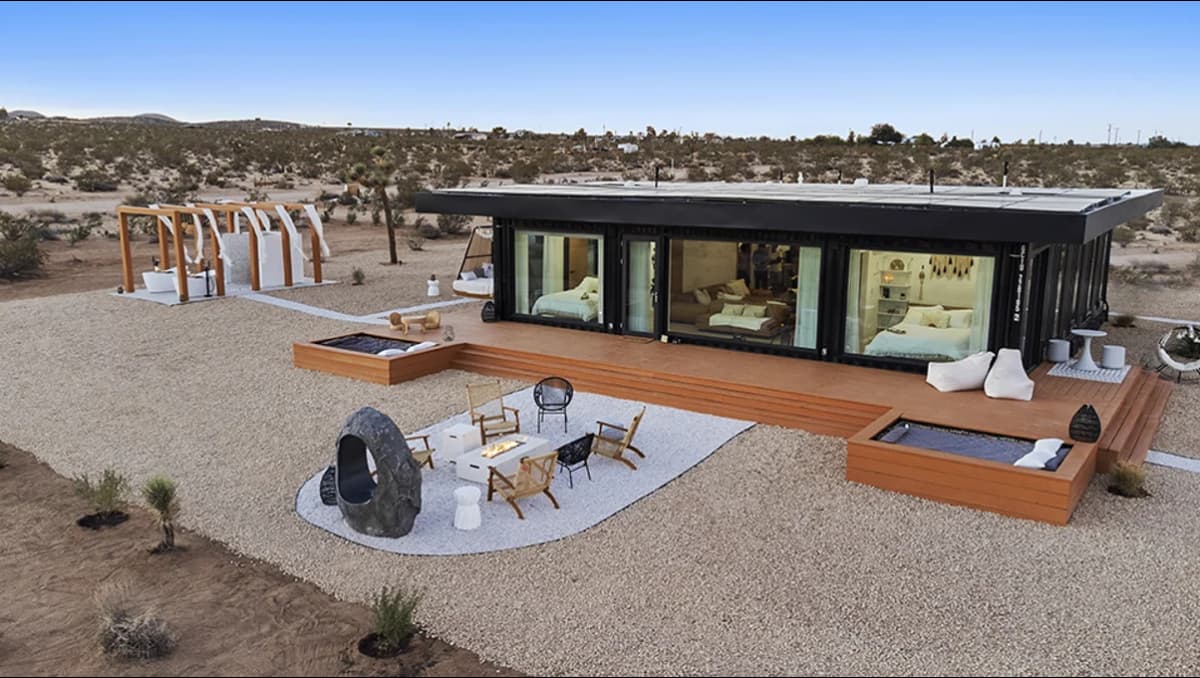
Exterior finishes, landscaping, shading, and corrosion protection can help a container home fit the site while improving comfort and durability.
Multi-Container Layouts
Multiple containers can be arranged in parallel, L-shaped, U-shaped, stacked, or offset configurations to create bedrooms, living areas, bathrooms, kitchens, storage, and outdoor courtyards.
Multi-container layouts require more engineering because joining containers, cutting openings, or stacking units changes the structure. Container-to-container connections should be designed by qualified professionals.
Indoor and Outdoor Living
Miami’s climate makes covered outdoor space a valuable design feature. Patios, screened rooms, shaded decks, courtyards, and outdoor kitchens can make compact layouts feel larger.
Rooftop decks and gardens require structural review, waterproofing, drainage, guardrails, wind design, and safe access. A container roof should not be used as occupied outdoor space without engineering and permit review.
Shade, Cooling, and Ventilation
Large windows can make a container home brighter, but in Miami they must be planned around heat gain, wind design, opening protection, privacy, and product approvals. Shaded openings, cross-ventilation, mechanical ventilation, and efficient HVAC can improve comfort.
For planning support, read Conexwest’s guides to shipping container insulation options and how to stop condensation in a shipping container.
Build Process for a Miami Container Home
Successfully building a container home in Miami requires early planning, realistic budgeting, and qualified professionals. Most projects follow the same general path: feasibility review, design, engineering, permitting, site preparation, container delivery, fabrication, utilities, finishes, inspections, and final approval.
1. Confirm Zoning and Feasibility
Before buying containers, confirm whether the property can support the intended project. Review zoning, setbacks, lot coverage, height, flood zone, utility access, fire access, HOA rules, historic district requirements, and neighborhood restrictions.
2. Create the Design and Engineering Package
Work with qualified professionals to create plans that address layout, structure, foundation, anchoring, wind design, flood conditions, utilities, energy performance, egress, fire safety, and accessibility when applicable.
3. Submit for Permits
Permit requirements depend on the project scope and location. Primary homes, ADUs, accessory structures, multi-container projects, flood-zone properties, and modified containers may each require different levels of review. Complete applications with accurate plans and engineering can help avoid delays.
4. Prepare the Site
Site preparation may include clearing, grading, drainage, foundation work, utility trenching, driveway access, flood-elevation planning, staging areas, and delivery access planning.
5. Modify the Containers
Container modifications can happen off-site or on-site depending on the project. Standard modifications include cutting openings, reinforcing steel, adding windows and doors, installing insulation, preparing utility openings, and applying exterior finishes.
For more details, read Conexwest’s shipping container modifications guide and the guide to installing windows in shipping containers.
6. Complete Interior Finishes
Interior finishing can include insulation, framing, drywall or panels, flooring, cabinets, kitchen fixtures, bathroom fixtures, electrical trim, lighting, HVAC, doors, and finish details.
For residential planning support, read Conexwest’s guides to shipping container home plans, shipping container kitchens, and shipping container bathrooms.
Conexwest Can Help With Your Miami Container Project
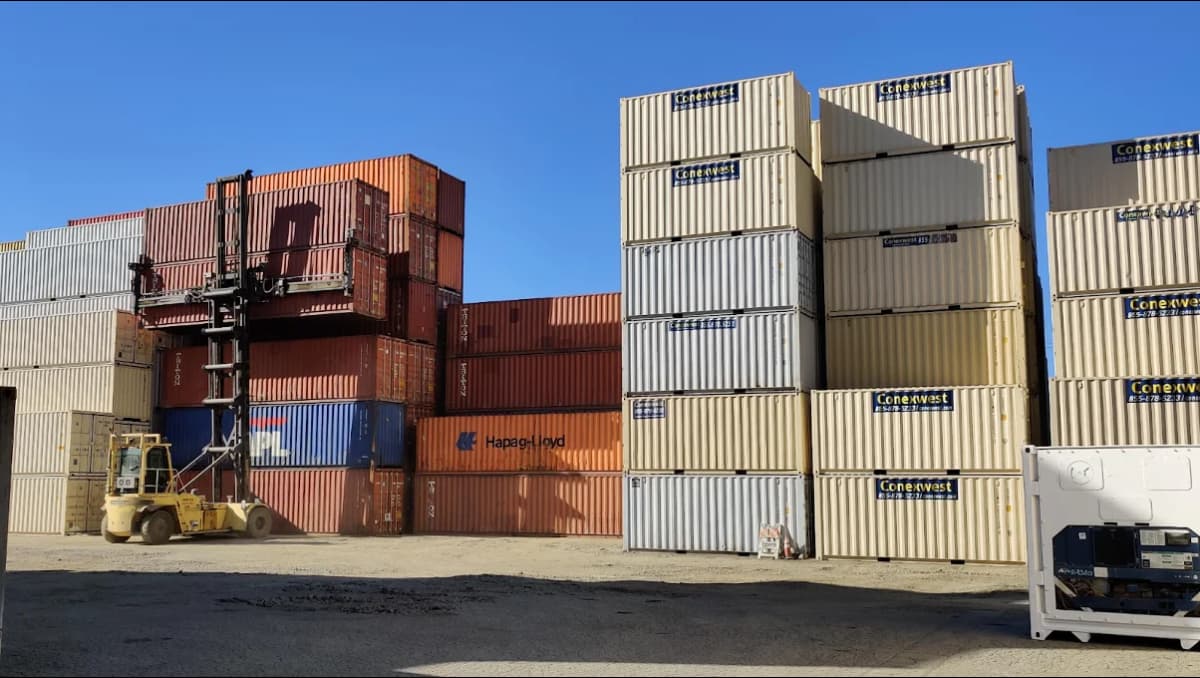
Conexwest can help Miami customers choose containers for storage, office, residential concepts, ADUs, custom builds, and other container projects. Customers can compare container sizes, conditions, heights, and modification options before ordering.
Conexwest can support:
- Shipping containers for sale in Miami, FL
- 10ft, 20ft, 40ft, and 45ft container options
- New, used, refurbished, and one-trip container options when available
- Standard and high cube containers
- Doors, windows, insulation, flooring, HVAC, electrical, shelving, paint, and security upgrades
- Custom fabrication for offices, storage, studios, and residential concepts
- Delivery planning based on site access and placement needs
Conexwest does not replace your architect, engineer, contractor, HOA, city, county, or permitting authority. For Miami container home projects, customers should work with qualified local professionals to confirm zoning, permit, code, wind, flood, utility, energy, and construction requirements before building.
Related Miami and Container Home Guides
If you are planning a Miami container home or residential container project, these Conexwest guides may also help:
- Shipping Containers for Sale in Miami, FL
- Florida Shipping Container Zoning Laws, Permits & Building Code Requirements
- Shipping Container Homes vs. Traditional Homes: Cost Comparison
- How Much Does a Shipping Container Home Cost?
- Shipping Container Home Plans & Floor Designs
- Shipping Container Modifications: Complete Guide
- One-Trip Shipping Containers: Meaning, Cost, Pros & Cons
Was this helpful?
Frequently Asked Questions
Yes. Residential container home projects usually require permits. Additional permits may be needed for electrical, plumbing, mechanical, foundation, utility, flood-zone, and site work depending on the project scope.
A shipping container may be used as part of a residential project only if the final structure is designed and permitted as a legal dwelling unit. Miami-Dade cargo container storage rules do not automatically allow full-size shipping containers to be used as homes in residential districts.
No home should be described as hurricane-proof. A properly engineered container home can be designed for applicable Miami-Dade wind and flood requirements, but performance depends on foundation anchoring, structural reinforcement, product approvals, opening protection, drainage, and code-compliant construction.
Cost depends on container size, condition, number of containers, design, engineering, permits, foundation, wind and flood requirements, utilities, insulation, HVAC, plumbing, electrical, windows, doors, finishes, delivery, and contractor labor. Current container pricing should be checked through Conexwest product pages.
A 20ft container may work for compact spaces, while a 40ft container provides more room for living areas, bathrooms, kitchens, or storage. High cube containers can be useful when extra interior height is important.
Conexwest offers modification options such as doors, windows, insulation, flooring, HVAC, electrical, shelving, paint, and security upgrades. Residential projects still require local design, engineering, permits, product approvals, and contractor review.
Conexwest offers shipping containers for sale in Miami, including multiple sizes and condition options. Customers can shop local container options and review delivery information through the Miami city sales page.