
A vertical farm container is defined by its stacked growing layout. A hydroponic container farm is defined by its soil-free growing method using nutrient-rich water. Many vertical farms use hydroponics, but the terms are not identical.
Vertical Farm Shipping Container: Stacked Growing Layouts, Features, and Costs | Conexwest
Key Takeaways
- Vertical farm shipping containers use stacked growing layouts to maximize crop production in a compact, controlled space.
- High cube containers are often useful for vertical farming because the extra height can support taller racks, lighting, airflow, and service access.
- Vertical farming is not the same as hydroponics. Vertical farming describes the layout, while hydroponics describes one possible soil-free growing method.
- Costs depend on container size, condition, insulation, lighting, airflow, shelving, electrical work, climate control, delivery, and crop-specific equipment.
- Conexwest provides containers and custom modifications that can support vertical farm layouts for urban, rural, commercial, and educational growing projects.
Vertical Farm Shipping Containers for Compact Indoor Growing
A vertical farm shipping container turns a compact steel structure into a controlled indoor growing space. Instead of spreading crops across open land, vertical farming uses stacked racks, trays, towers, or grow channels to increase production within a smaller footprint.
This makes container-based vertical farming especially useful for urban growers, restaurants, schools, non-profits, research programs, and agricultural businesses that want predictable production without depending entirely on outdoor acreage or seasonal weather.
The layout is the key. A strong vertical farm design accounts for rack spacing, lighting placement, airflow between tiers, humidity control, crop access, harvesting workflow, utility routing, and maintenance space inside the container.
What Is a Vertical Farm Shipping Container?
A vertical farm shipping container is a modified container designed to support stacked indoor growing. Crops are arranged in multiple layers to make better use of height and floor space, while lighting, insulation, ventilation, and climate control help maintain stable growing conditions.
Vertical farming describes the way crops are arranged in stacked layers to maximize growing space. It is not the same as hydroponics. A vertical farm may use hydroponic, aeroponic, or other controlled growing systems, but the defining feature is the vertical layout.
If your project is focused specifically on nutrient-rich water systems, reservoirs, pumps, pH/EC monitoring, and soil-free crop production, see our guide to hydroponic shipping container farms.
Conexwest, a leader in shipping and storage solutions based in Northern California, offers new, used, and refurbished containers from 10ft to 45ft, with fast delivery within 3-7 days and container fabrication options such as insulation, doors, vents, electrical components, shelving, and other modifications. Conexwest serves over 10,000 national customers, including clients like the U.S. Navy and Google. As an ISO 9001 and AWS-certified company, we focus on quality, reliable fabrication, and competitive pricing. |
Key Features of Vertical Farm Containers
Vertical farm containers are designed around space efficiency, crop access, and environmental control. The exact layout depends on the crop, growing method, available utilities, and production goals, but most vertical farm builds require a combination of structural, electrical, ventilation, and interior modifications.
- Stacked Grow Racks or Shelving: Vertical racks help increase growing capacity without requiring a larger land footprint.
- LED Grow Lights: Full-spectrum lighting can be arranged by rack level to support consistent crop growth across multiple tiers.
- Airflow Planning: Fans, vents, filters, and circulation systems help move air evenly through stacked growing rows.
- Climate Control Systems: HVAC, dehumidification, and ventilation can help manage temperature and humidity in enclosed growing environments.
- Insulated & Sealed Interiors: Foam insulation and interior wall systems can help stabilize conditions and reduce energy loss.
- Controlled Growing Systems: Vertical farms may use hydroponic, aeroponic, soil-based, or hybrid systems depending on the crop and operator preference.
- Sensor-Based Monitoring: Monitoring tools can track temperature, humidity, lighting, CO₂, and other conditions that affect crop consistency.
- Food-Grade Build Materials: Cleanable, corrosion-resistant surfaces can support a safer environment for edible crops.
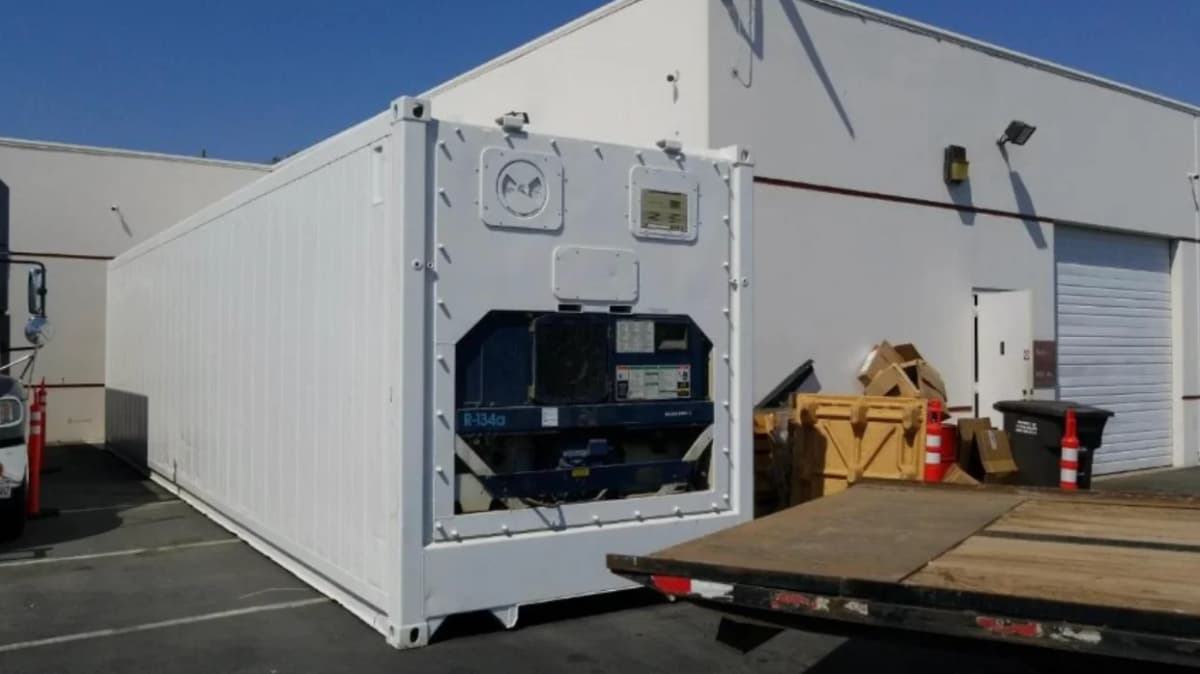
Refrigerated containers can be useful for temperature-sensitive applications because they are insulated and designed for controlled environments. For broader controlled-environment planning, review our guide to building a shipping container greenhouse, farm, or garden.
Common Dimensions for Vertical Farm Containers
Vertical farm shipping containers come in several standard sizes. The right choice depends on production goals, rack height, aisle width, crop type, equipment access, and whether the container needs dedicated areas for seeding, growing, harvesting, packaging, or utility equipment.
20ft High Cube Container
- Best for compact operations, pilot projects, schools, research programs, or limited-space sites.
- Interior dimensions: approximately 5.902 m (L) × 2.352 m (W) × 2.698 m (H)
40ft High Cube Container
- Common for mid-size and commercial vertical farms because it offers more room for grow racks, utility access, storage, and workflow separation.
- Interior dimensions: approximately 11.96 m (L) × 2.35 m (W) × 2.70 m (H)
45ft High Cube Container
- Useful for larger layouts that need added length, storage space, separate zones, or higher-volume production.
- Interior dimensions: approximately 13.556 m (L) × 2.35 m (W) × 2.698 m (H)
High cube containers are often preferred for vertical farming because the added interior height can improve rack design, airflow, lighting clearance, and maintenance access.
Most Common Add-On Options
Vertical farming requires more than a container and shelves. Add-ons should support crop density, safe access, stable environmental conditions, and efficient daily operations.
Custom Grow Racks or Shelving
Vertical racks are the core feature of a container vertical farm. Rack height, shelf spacing, aisle width, and weight capacity should be planned around crop type, lighting, irrigation, harvesting access, and cleaning needs.
Lighting Layout by Rack Level
LED grow lights should be positioned so plants receive consistent coverage across multiple tiers. Lighting plans may vary for seedlings, leafy greens, herbs, microgreens, or fruiting crops.
Airflow and Humidity Control
Stacked crops can create uneven temperature and humidity zones. Fans, vents, filters, and dehumidification can help move air through the container and reduce hot spots or moisture buildup.
Backup Power Systems
Add solar panels, battery backups, or small generators to support critical systems during outages, especially on remote or off-grid sites.
CO₂ Enrichment Units
Some enclosed grow environments may use CO₂ enrichment to support plant growth. These systems should be planned carefully with ventilation, monitoring, and safety requirements.
Remote Monitoring & Automation Tools
Automation can help manage temperature, lighting schedules, airflow, watering, and environmental data. Remote access can also help operators monitor conditions and respond to changes quickly.
UV Sterilization
UV systems may be used to help disinfect water lines, tools, or equipment, reducing the risk of bacteria, fungi, or algae affecting the grow environment.
Air Purifiers & Filters
HEPA filters and purification units can improve air quality and help reduce the spread of pathogens, pests, mold, or dust in the grow space.
Seedling Germination Zones
A dedicated seedling area can help support continuous crop rotation. This zone may need softer lighting, different humidity conditions, and easy access for transplanting.
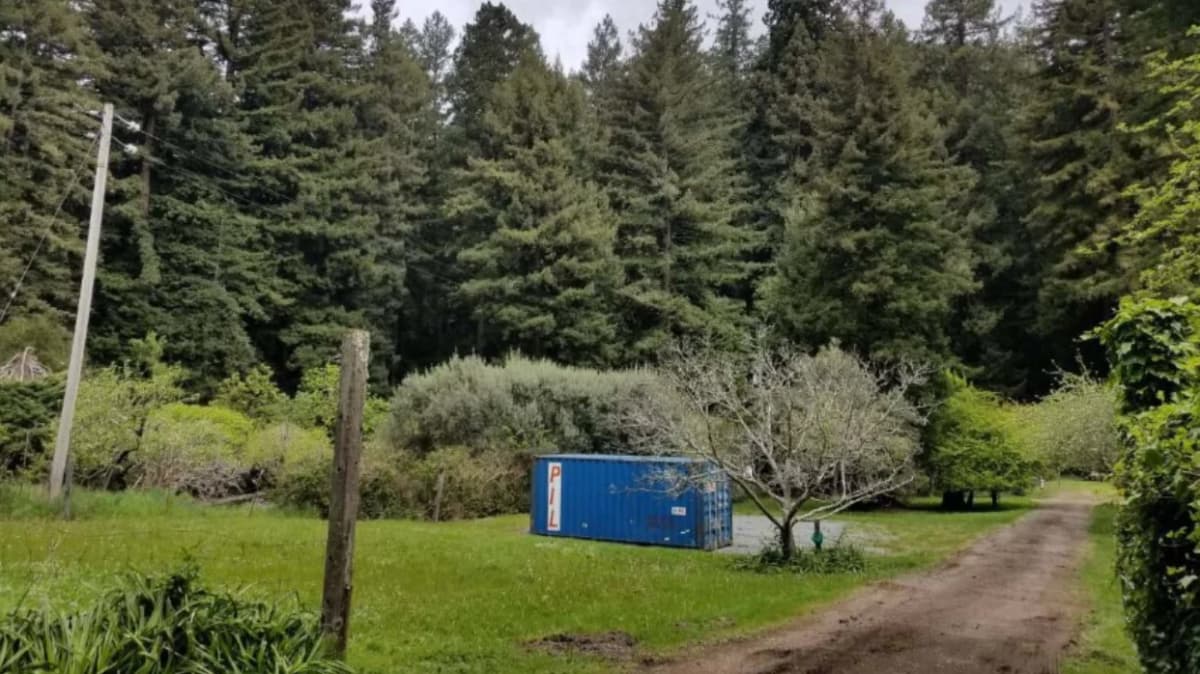
For growers focused on soil-free water systems, nutrient delivery, pumps, reservoirs, and water recirculation, see our related guide to hydroponic shipping container farms.
How Much Does a Vertical Farm Shipping Container Cost?
Vertical farm container costs depend on the container size, condition, layout, modifications, electrical requirements, insulation, lighting, shelving, HVAC, airflow, crop system, delivery, and site preparation. The prices below reflect container costs only. They do not include all modifications, add-ons, equipment, delivery fees, permitting, installation, or crop-specific systems.
For broader project budgeting across greenhouse, farm, and garden applications, see our guide on how much a shipping container greenhouse, farm, or garden costs.
Container Type | Oakland | Los Angeles | Sacramento | Dallas | Atlanta |
20ft High Cube Shipping Container | $4,195 if buying $139/4 weeks if renting | $7,000 if buying $139/4 weeks if renting | $4,195 if buying $139/4 weeks if renting | $4,130 if buying $139/4 weeks if renting | $4,117 if buying $139/4 weeks if renting |
40ft High Cube Shipping Container | $2,195 if buying $149/4 weeks if renting | $2,100 if buying $149/4 weeks if renting | $2,195 if buying $149/4 weeks if renting | $2,375 if buying $149/4 weeks if renting | $2,249 if buying $149/4 weeks if renting |
45ft High Cube Shipping Container | $2,699 if buying $169/4 weeks if renting | $2,600 if buying $169/4 weeks if renting | $6,299 if buying $169/4 weeks if renting | $4,451.40 if buying $169/4 weeks if renting | $6,246.60 if buying $169/4 weeks if renting |
40ft New High Cube Refrigerated Certified ISO Container 408-480 V 3 Ph 25 Amp | $44,760.40 if buying | $43,941.20 if buying | $44,957 if buying | $39,371.60 if buying | $36,837.20 if buying |
*These numbers are estimates, and the actual price can vary based on location, availability, container condition, modifications, delivery, and project requirements. For accurate pricing, contact Conexwest for a custom quote.
Site Planning, Utilities, and Permits
Before placing a vertical farm container on a property, check local zoning, building rules, utility requirements, and permit requirements. A container used for farming may still need approval depending on whether it is temporary or permanent, connected to utilities, used commercially, or placed on agricultural, residential, or mixed-use land.
If the unit will be placed on farmland or a rural parcel, review our guide on whether you can place a shipping container on agricultural land. Local rules may cover setbacks, foundations, drainage, electrical connections, water access, inspections, and long-term placement.
Why Choose Conexwest for Vertical Farm Containers
Conexwest can help turn a standard shipping container into a modified shell ready to support a vertical farm layout. With experience in container modifications, our team can help growers plan the right structure, size, and configuration for their space and production goals.
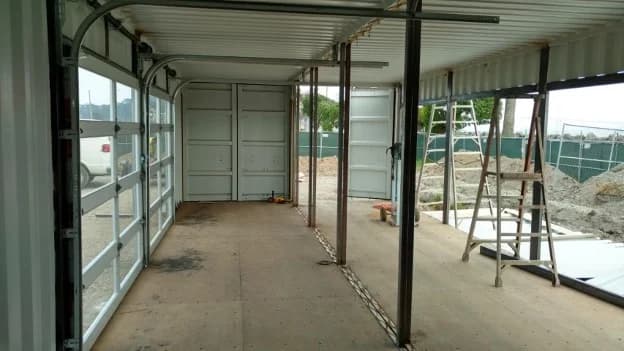
Vertical farming containers can support fresh produce production in urban, rural, commercial, educational, and research settings when the layout is properly planned.
- Custom Fabrication: We can modify containers with insulation, electrical features, vent cutouts, doors, partitions, shelving, and other layout-specific elements.
- Reliable Inventory: Choose from 10ft, 20ft, 40ft, or 45ft containers, including high cube options for more interior height.
- Fast Nationwide Delivery: We ship across the U.S. in as little as 3–7 days, depending on location, availability, and project requirements.
- Experienced Support: Our team can help you choose a container configuration based on your layout, utilities, site access, and space goals.
- Warranty Protection: New containers include a 10-year warranty, while used units come with 5-year coverage.
Whether you are building your first vertical farm or scaling up an existing operation, Conexwest can provide a durable container shell and modifications to support your project.
Was this helpful?
Frequently Asked Questions
High cube containers provide extra height, which can support more vertical growing racks, lighting clearance, and maintenance access. Refrigerated containers are already insulated and can be useful when stable indoor conditions are important.
Many growers use vertical farm containers for leafy greens, herbs, microgreens, seedlings, and some small fruiting crops such as strawberries. Crop options depend on rack design, lighting, climate control, irrigation, and operator experience.
A single 20ft or 40ft container can fit on a relatively compact site, but the property should have a level surface, delivery access, ventilation clearance, and access to required utilities such as power and water.
Operators should understand crop care, environmental control, lighting schedules, humidity, airflow, sanitation, and the growing system being used. Automation can help, but successful vertical farming still requires ongoing monitoring and maintenance.
Yes. Conexwest handles custom modifications such as insulation, electrical features, shelving layouts, doors, vent cutouts, partitions, and HVAC-related preparation so your container can better support a vertical farm layout.
Conexwest provides the shipping container and modification services. The grow racks, lighting, irrigation, sensors, crop systems, and automation may be installed by the grower, contractor, or third-party vertical farming specialist depending on the project.