
Container Rental Insurance: What to Cover and Who Pays
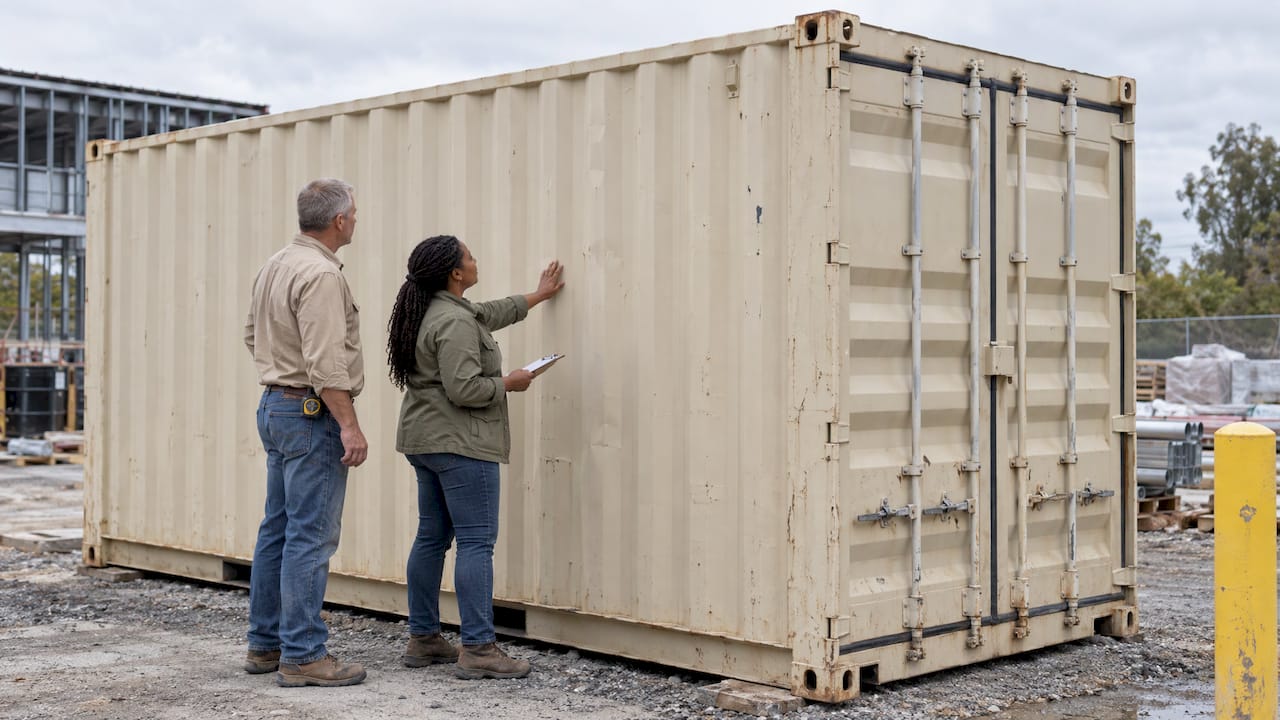
When you rent a storage container, three things need insurance: the container itself, whatever you put inside, and any injury or property damage the container could cause on your site. Usually the rental agreement makes you responsible for the box from delivery to pickup, and your existing property or renter’s policy often covers stored contents only in a limited way. Settle all three before the truck arrives, not after a loss.
This guide is written for businesses, contractors, municipalities, retailers, event teams and homeowners who rent containers for jobsite storage, temporary offices, seasonal inventory or cold storage. It shows what each coverage type does and which documents to read. It also shows how to line up coverage with the container you choose from Conexwest storage containers for rent.
TL;DR
- Three layers matter: damage to the container, loss of the contents, and third-party liability. One policy rarely covers all three.
- Read the rental agreement first. It says who carries the risk of theft, vandalism, weather and damage between delivery and pickup.
- Homeowners and renter’s policies often cap or exclude property in a storage container, so a business or jobsite load usually needs its own coverage.
- Costs depend on the value of what you store, the coverage limit, the deductible and where the container sits. Get a quote against the real replacement value of your contents.
- Better site security and clear photo records at delivery make claims easier to document.
Table of Contents
- What kind of insurance does a rented container need?
- Who is responsible for insuring a rented container?
- Container damage coverage and damage waivers
- Insuring what is inside
- Liability: the coverage people skip
- Moving the container or contents: transit coverage
- What can reduce or void a claim
- What does it cost?
- A checklist by type of renter
- Rent or buy: how it changes the insurance picture
- Choose the right container, then protect it
- FAQ
- Sources
What kind of insurance does a rented container need?
A rented container is someone else’s property sitting on your ground, filled with your property. That creates three separate exposures, and each has its own type of coverage.
| Exposure | What it protects | Typical coverage type |
|---|---|---|
| The container | Dents, structural damage, roof leaks, door damage, theft of the unit | Container damage coverage or damage waiver, or a physical damage policy |
| The contents | Tools, inventory, furniture, equipment, records | Contents or tenant insurance, business property, inland marine |
| Liability | Injury or property damage to others caused by the container or your use of it | General liability |
One published breakdown of portable storage coverage splits protection the same way: physical damage to the unit, contents, and general liability for third-party injury or property damage. The same source says container damage deductibles typically run $250 to $1,000, with the limit set to match replacement value.
If you also move the container or its contents, add a fourth item: transit. That is covered below.
Who is responsible for insuring a rented container?
In most rentals, you are. The container stays the property of the rental company, but the agreement normally passes the risk of loss to you while it is on your site. Read these clauses before you sign:
- Responsibility for damage and loss. Look for language on theft, vandalism, fire, weather and damage during loading. Check whether the rental company offers a damage waiver and what it costs.
- Insurance requirements. Some agreements ask for proof of general liability, or name the rental company as an additional insured. Municipalities and large chains often have their own certificate requirements, so send these to your risk manager early.
- Contents. Most agreements say the rental company does not insure what you store. Plan on covering it yourself.
- Site conditions. Ground, access and placement affect damage risk. If the container sits on soft ground, near traffic or under power lines, document it.
- Return condition. Normal wear is treated differently from damage. Photograph all sides, the roof, the doors and the interior at delivery and at pickup.
Before delivery, call your insurance agent with the agreement in hand. An agent or broker is the right person to confirm what your current policies already respond to and where a gap remains.
Container damage coverage and damage waivers
A damage waiver is a common way to cover the box itself. It is not insurance in the strict sense but a contract term or a program that pays for covered damage to the container. In one U.S. program for mobile storage, the policy pays up to $3,500 per occurrence for 8x20 or smaller containers and $7,000 for larger ones. It pays the lessor directly, applies only where the renter is legally responsible, and excludes ordinary wear and cosmetic damage unless structural integrity is affected.
The same program lists container damage waiver amounts from $1,000 to $20,000, month to month, with deductibles that vary by amount. Treat those figures as an example of how these products are built, not a quote. What you actually get depends on the rental company’s terms and the insurer.
Three practical points:
- Match the limit to the container. A 40ft high cube or an insulated unit costs more to repair or replace than a basic 20ft box. Browse sizes and types, such as a 20ft storage container or a 40ft insulated container, and compare the limit to the unit you rent.
- Know the deductible. A $1,000 deductible on a small dent claim means you pay the repair yourself.
- Cosmetic damage. Scratches and paint scuffs are commonly excluded, so the photo record at delivery matters.
Insuring what is inside
Contents are where gaps appear most often, and they depend on who you are.
Business and jobsite contents
A contractor storing tools and materials, a retailer holding holiday inventory, a restaurant using cold storage and an airport or hotel storing parts all hold property that a standard business property policy may treat as being “off premises” or in a temporary location. Ask your agent whether the policy extends to a rented container, at what limit, and whether theft requires evidence of forced entry. Contractors can also ask about an inland marine policy such as an installation floater, which is built to cover materials and equipment in transit, in temporary storage and during installation.
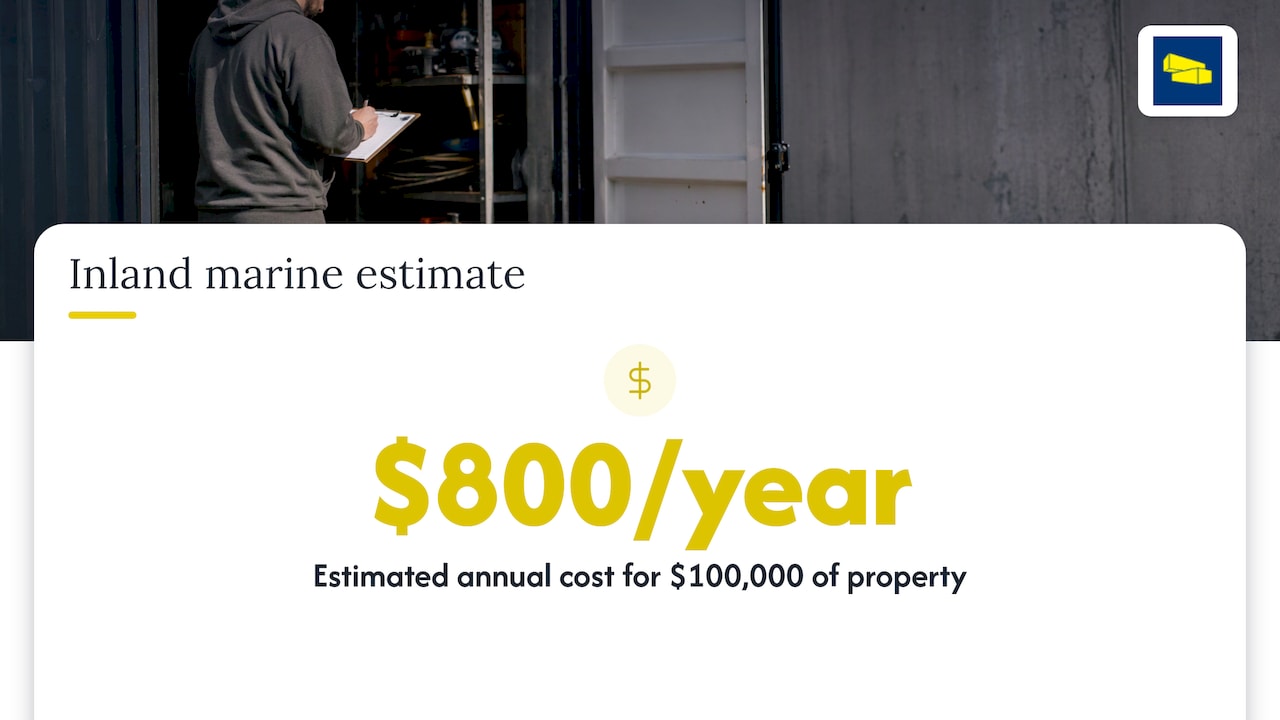
One estimate puts inland marine coverage at about $0.80 per $100 of coverage, roughly $800 a year on $100,000 of property. Your own rate will vary by trade, value, location and claims history, so use it only to size a budget.
Homeowners storing furniture during a renovation
Homeowners and renters policies usually treat belongings in a container as off-premises property, and the limit is often much lower than for items in the home. In New York, for example, the state insurance regulator’s guide says personal property away from the premises is generally covered at 10% of the dwelling limit under a Special Form policy. Renters policies can be tighter: one national insurer’s policy, updated June 29, 2026, caps storage-unit contents at a flat $1,000 in most states, with higher caps in a handful of states and cash limited to $200. If you are moving furniture worth more than that, ask your insurer about a scheduled item rider or a separate storage policy before the container arrives.
Named perils or all-risk
Contents policies come in two forms. Named-peril coverage pays only for the causes listed, such as fire, theft or windstorm. All-risk coverage pays for any cause that is not excluded. When you compare quotes, compare the exclusion list as closely as the price.
Liability: the coverage people skip
A container can hurt someone. A door swings in wind, a person trips over the ground-level step, a unit shifts on uneven ground or blocks an emergency route. Liability coverage pays for third-party injury or property damage claims, and your general liability policy is the usual home for it. Confirm that the policy covers a rented container on the site where it will sit, and that the limits meet any contract requirement from the project owner, the city or the venue.
Event planners and general contractors using a container as an office should check this point in particular, since people other than employees will walk in and out of the unit. Where a ground-level office or office container is used, the same liability coverage applies to the people who enter it.
Moving the container or contents: transit coverage
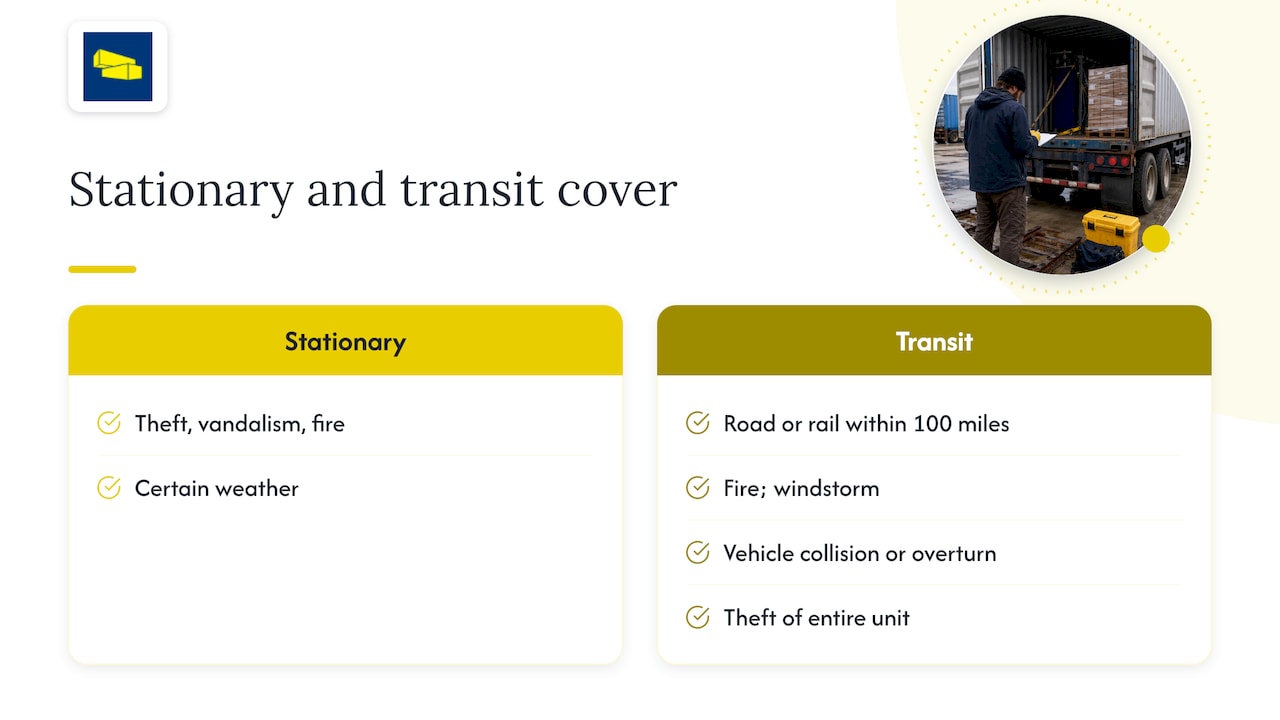
Coverage while a container is stationary is not the same as coverage on the road. One broker explains that on-site coverage addresses theft, vandalism, fire and certain weather while the unit is stationary, whereas shifting, collision and road vibration are transit risks that need their own cover. The same source notes that a carrier’s legal liability is fault-based and may pay as little as $2 per kilogram for freight.
The mobile storage program mentioned above limits transit coverage to road or rail within 100 miles of the insured premises for named causes: fire, windstorm, vehicle collision or overturn, theft of an entire unit, and loading or unloading damage. If your container will be relocated between jobsites, or you load a container for a long-distance move, check the distance and cause limits. For the basics of insuring goods on a truck, this overview of cargo insurance coverages lays out how the types differ. For moves, see our guide to long distance moving with a storage container.
What can reduce or void a claim
Claims are denied or cut for predictable reasons. Check these before the container is on site:
- Exclusions. Wear, tear, rust, cosmetic damage and gradual deterioration are commonly excluded.
- Sub-limits. Cash, electronics, tools and high-value items often have lower caps than the headline limit.
- Security conditions. Some policies expect locks or other deterrents. A guide to making a shipping container more secure covers locking options and placement.
- Flood. FEMA’s standard flood policy defines a building so that it does not include a shipping container. If your site is in a flood zone, ask your agent how stored property is treated.
- Documentation. An inventory list, photos with dates, and receipts for high-value items turn a dispute into a routine claim.
- Who was responsible. A damage waiver typically pays only where you are legally responsible, so it helps to know the agreement’s terms.
What does it cost?
There is no single price, because the premium follows the value and the risk. Four factors drive it:
- Value stored. Higher replacement value means higher premium.
- Limit and deductible. A higher deductible lowers the premium but raises your out-of-pocket on a claim.
- Location and security. Theft rates, flood exposure and site fencing matter.
- Duration and type of use. Month-to-month storage, a jobsite for a year and a seasonal retail rental price differently.
A practical approach: list the contents with replacement values, ask your agent for a quote on adding the container to your existing policy, and compare it with a standalone storage policy. Do both before delivery day.
A checklist by type of renter
| Renter | Main coverage to confirm |
|---|---|
| General contractors and construction crews | Contractor’s equipment or installation floater, general liability, contract insurance requirements |
| Retailers and chain stores with holiday inventory | Business property limit at a temporary location, theft sub-limits, liability |
| Restaurants and food operators | Contents coverage for stock in a cold storage container, plus spoilage terms in your policy |
| Cities, municipalities, parks | Self-insurance or pooled coverage rules, liability certificates, tools and vehicles stored inside |
| Airports and hotels | Parts and tool inventory, liability for shared access areas |
| Event planners | Event liability, equipment coverage while on site and in transit |
| Homeowners | Off-premises personal property limits, scheduled items, liability if the container sits on the street or driveway |
Rent or buy: how it changes the insurance picture
With a rental, the damage risk to the box is limited in time and set by the agreement. With a purchase you own the container and insure it as property for as long as you keep it. For long projects, the rent or buy decision is worth running with the insurance cost included. If you plan to convert a container into living space, see whether a shipping container home is insurable, which is a different insurance question from a storage rental.
Our view: plan coverage when you choose the container
We have delivered more than 30,000 containers across 48 states, to logistics, education and government customers, as well as contractors and retailers. The pattern we see in how people order is simple: they choose the size and type first and think about coverage last. We recommend reversing that.
Pick the container for the job, whether that is a 20ft box for tools, an insulated unit for temperature-sensitive stock or an office container for a jobsite. Then write down what will be inside, what it is worth and who will be on the site. That list is the document your insurance agent needs to match coverage to the unit.
Our online ordering lets you browse and customize a container in a few clicks, including options such as lockboxes and roll-up doors, so you can set up storage that fits your site before it is delivered. Decide on insurance in the same sitting, and the delivery day becomes routine.
Conexwest
Choose the right container, then protect it
Conexwest offers storage containers for rent with delivery and pickup services, plus customization options such as lockboxes, roll-up doors and interior layouts, as well as cold storage and office containers. Order online, choose the size and configuration that suits your site, and bring the final spec to your insurance agent so coverage fits the exact unit and contents.
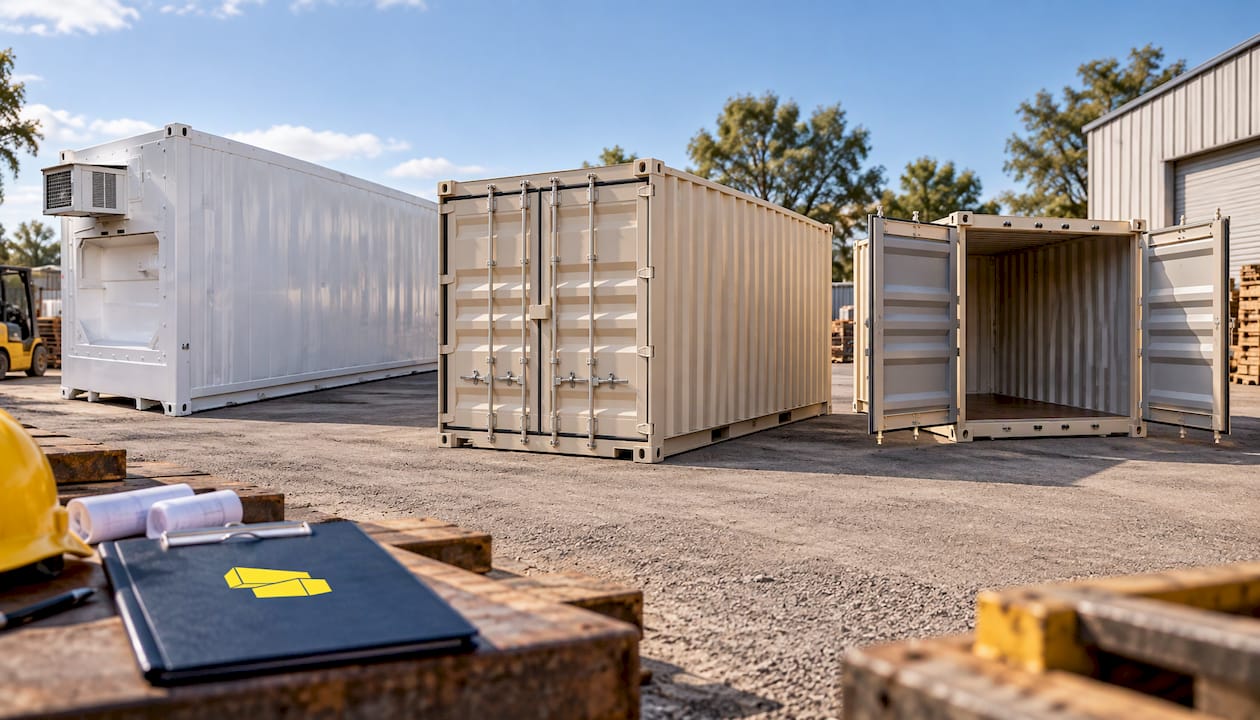
If the job needs more than plain storage, look at our office containers or cold storage containers.
FAQ
Do I need insurance to rent a shipping container?
Most rental agreements make you responsible for the container while it is on your site, and many ask for proof of liability coverage. Contents are rarely covered by the rental company. Read the agreement and confirm your coverage with your insurance agent before delivery.
Does homeowners or renter’s insurance cover items in a rented container?
Sometimes, but usually at a reduced limit. Off-premises property is often covered at a fraction of the home’s limit, and some renters policies cap storage contents at a flat amount such as $1,000. Check the limit, sub-limits and exclusions with your insurer.
What does a container damage waiver cover?
It pays for covered physical damage to the container when you are legally responsible, usually up to a set limit and subject to a deductible. Ordinary wear and cosmetic damage are typically excluded. The exact terms depend on the program in your rental agreement.
Is the container covered while it is being moved?
Not necessarily. Coverage on site and coverage in transit are different, and transit coverage often has distance and cause limits. If the container or its contents will travel between sites, ask your agent for transit coverage in writing.
What is the cheapest way to cover a rented container?
Start by asking whether your existing business property or inland marine policy can be extended to the container, then compare that with a standalone storage policy. The right choice depends on the value stored and the limits you need, so get both quotes on the same contents list.
Sources
- Portable Storage and Container Insurance
- Mobile container storage contents insurance program
- Storage Protectors policy (U.S.)
- NYSDFS Homeowners and Tenants Insurance Guide
- Does Renters Insurance Cover Storage Units?
- FEMA SFIP Commentary
- Installation Floater Insurance for Contractors
- Overview of cargo insurance coverages