
No. Container home approval depends on the local zoning district, county or city rules, HOA restrictions, building code requirements, flood zone, and site conditions. Always confirm approval with the local planning and building department before purchasing land or ordering containers.
Can You Build a Container Home in Florida? | Laws, Costs & Layout Ideas
2026 Florida Container Home Laws, Costs and Layout Ideas
Building a container home in Florida can be a smart way to create a durable, modular, and design-forward living space, but it is not as simple as placing a shipping container on land and moving in. Florida container homes must follow local zoning rules, the Florida Building Code, wind-load requirements, floodplain rules, foundation standards, energy requirements, utility permits, and inspections. This 2026 guide explains whether container homes are allowed in Florida, what permits you may need, how hurricane and flood requirements affect the design, what container homes may cost, and which layouts work best for Florida’s climate.
Key Takeaways
- Container homes can be legal in Florida, but approval depends on county zoning, city ordinances, land use, HOA rules, building permits, and site-specific engineering.
- Florida does not have one simple statewide “container home law.” Container homes are generally reviewed under the same residential code, zoning, structural, energy, electrical, plumbing, and mechanical requirements as other homes.
- Hurricane-resistant design is essential. Container homes must be engineered for local wind loads, uplift forces, foundation anchoring, impact protection, roof/wall openings, and flood-zone conditions where applicable.
- In 2026, full container home project costs can vary widely, often ranging from modest small builds to six-figure custom homes depending on size, land, utilities, engineering, finishes, foundation, and local requirements.
- Florida’s heat, humidity, salt air, heavy rain, and storm exposure make insulation, ventilation, corrosion protection, drainage, and moisture control especially important.
- Conexwest does not build full residential homes, but shipping containers, container fabrication services, and custom container modifications can support container-based projects when properly engineered and permitted.
Are Container Homes Legal in Florida?
Container homes can be legal in Florida, but they are not automatically allowed everywhere. Each project must comply with local zoning rules, residential building requirements, structural engineering standards, and any restrictions that apply to the specific property. A container home that may be allowed on rural land in one county could be restricted in a coastal municipality, deed-restricted neighborhood, or HOA-controlled community.
Before buying land or ordering containers, contact the local planning department and building department. Ask whether shipping container homes are allowed in the zoning district, whether metal exterior materials are restricted, whether minimum home size rules apply, and whether the property has floodplain, coastal, environmental, or HOA limitations.
For a broader legal overview, read Conexwest’s Florida shipping container zoning, permit, and building code guide.
Florida Building Codes and Permits for Container Homes
Container homes in Florida are generally reviewed as residential structures, not as a separate building category. That means they must satisfy the Florida Building Code, local building department requirements, structural engineering requirements, and all applicable electrical, plumbing, mechanical, energy, floodplain, and site-preparation rules.
The Florida Building Code, 8th Edition (2023), became effective on December 31, 2023. The 9th Edition (2026) is scheduled to take effect on December 31, 2026. Because timing matters, always confirm the active code edition with the local building department before submitting plans.
Common permits and approvals may include:
- Building permit for the structure, foundation, framing, roof, openings, and structural modifications
- Electrical permit for wiring, panels, outlets, lighting, grounding, and power systems
- Plumbing permit for water supply, fixtures, drainage, sewer, septic, or well connections
- Mechanical permit for HVAC, ventilation, dehumidification, and ductwork
- Floodplain review if the property is in a flood zone or coastal hazard area
- Driveway, septic, well, stormwater, or environmental permits depending on the parcel
- HOA or architectural review if the property is in a deed-restricted community
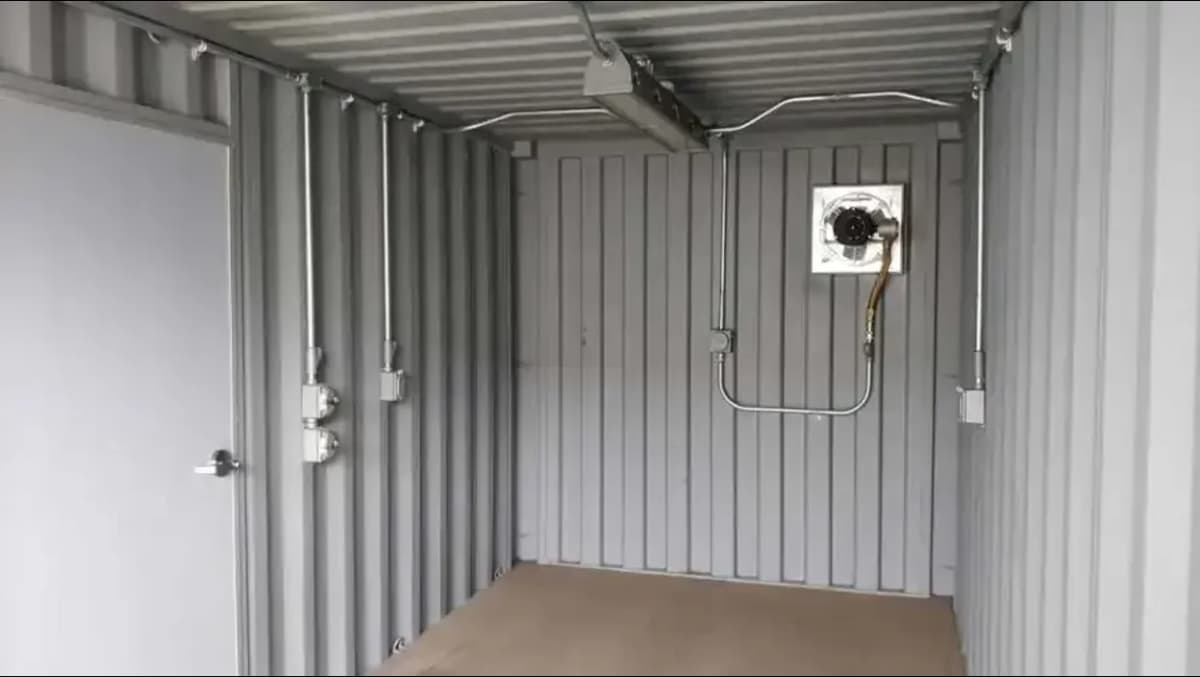
Electrical work in a container-based structure must be planned, permitted, and inspected according to the applicable local code and project requirements.
Local Zoning Rules: Why County Approval Matters
Zoning is often the first obstacle for Florida container homes. Building code determines how the structure must be built, but zoning determines whether the structure is allowed on the land in the first place. Some areas may allow container homes as single-family residences, while others may restrict nontraditional construction, visible metal exteriors, accessory dwellings, or compact homes.
| Local Rule | Why It Matters |
|---|---|
| Zoning district | Determines whether a residential container home, accessory dwelling, workshop-home, or modular-style structure is allowed. |
| Minimum dwelling size | Some jurisdictions require a minimum square footage for residential homes. |
| Exterior design rules | Some areas may restrict exposed metal siding or require specific architectural finishes. |
| Setbacks and lot coverage | Controls where the home can sit on the parcel and how much of the lot can be covered by structures. |
| HOA or deed restrictions | Private restrictions may prohibit container homes even if the local government allows them. |
| Floodplain and coastal rules | May require elevation, flood-resistant materials, additional engineering, or drainage improvements. |
If you are still comparing Florida container-home locations, the safest first step is to ask the local planning department whether a shipping container home is allowed on the exact parcel, not just within the general county.
Cost of Building a Container Home in Florida in 2026
Florida container home costs vary significantly based on land, site work, container size, engineering, foundation design, utility access, interior finishes, hurricane upgrades, insulation, HVAC, and local permitting requirements. A small DIY-style project may cost much less than a fully permitted custom home, while larger multi-container homes with premium finishes can become comparable to conventional construction.
As a broad 2026 planning range, simple container-home projects may start in the lower five figures for basic container structures and modifications, while fully finished, code-compliant residential builds can reach six figures or more. Larger custom homes with multiple containers, elevated foundations, impact-rated openings, high-end interiors, and complex site work can cost substantially more.
| Cost Item | Typical Planning Range | What Affects the Cost |
|---|---|---|
| Base shipping containers | Varies by size, condition, location, and availability | 20ft, 40ft, high cube, new, used, refurbished, delivery distance, and market availability. |
| Structural engineering | Project-specific | Container cuts, reinforcement, stacking, openings, wind loads, foundation connections, and local review. |
| Foundation | Moderate to high | Slab, piers, elevated foundation, flood zone, soil conditions, drainage, and anchoring requirements. |
| Insulation and moisture control | Moderate to high | Spray foam, vapor control, dehumidification, ventilation, and condensation prevention. |
| Windows, doors, and openings | Moderate to high | Impact-rated openings, reinforcement, hurricane shutters, glass doors, and exterior finishes. |
| Electrical, plumbing, and HVAC | Moderate to high | Service panels, outlets, lighting, fixtures, HVAC sizing, ductwork, water/sewer/septic, and inspections. |
| Interior finishes | Varies widely | Framing, wall panels, flooring, kitchens, bathrooms, cabinetry, appliances, and finish level. |
| Permits and inspections | Project and county-specific | Building department fees, plan review, revisions, floodplain review, and required inspections. |
For container pricing and available units, browse Conexwest’s shipping containers for sale, including 20ft shipping containers and 40ft shipping containers. For modification cost planning, read Conexwest’s shipping container modification cost breakdown.
Hurricane and Wind Requirements for Florida Container Homes
Hurricane-resistant design is one of the most important parts of building a container home in Florida. A shipping container is strong as a steel box, but residential conversion changes the structure. Cutting large openings for windows, doors, glass walls, stairs, or multiple-container connections can reduce structural strength unless the project is properly reinforced and engineered.
Florida wind design depends on the property location, building height, exposure category, risk category, local wind maps, and whether the site is in a wind-borne debris region or High Velocity Hurricane Zone. Coastal and South Florida areas can have stricter requirements than many inland locations.
Hurricane-related design items may include:
- Engineered foundation anchoring to resist uplift and lateral forces
- Structural reinforcement around large cuts, windows, doors, and joined containers
- Wind-rated doors, windows, skylights, and garage-style openings
- Impact-rated glass or approved hurricane shutters where required
- Roof and wall assemblies designed for local wind conditions
- Corrosion-resistant coatings and hardware near coastal salt air
- Drainage planning for heavy rainfall and stormwater runoff
- Flood elevation design for coastal and flood-prone parcels
In Miami-Dade and Broward counties, High Velocity Hurricane Zone requirements can create additional product approval, testing, and installation requirements. Always work with a Florida-licensed engineer or architect familiar with local hurricane standards before finalizing a container home design.
Climate-Specific Requirements for Florida
Florida’s climate creates unique design challenges for container homes. Heat, humidity, salt air, heavy rain, termites, mold risk, and storm exposure all need to be considered early. A container home that is not properly insulated, ventilated, and moisture-managed can become uncomfortable and vulnerable to condensation.
Steel conducts heat quickly, so insulation is essential. Many container projects use closed-cell spray foam or other insulation systems designed to reduce thermal transfer and help control condensation. HVAC sizing, dehumidification, air sealing, and ventilation are also important in Florida’s humid environment.
Florida climate planning should include:
- Spray foam or another insulation system suitable for humid climates
- Ventilation and dehumidification to help manage moisture
- Corrosion-resistant coatings for coastal or salt-air locations
- Roof overhangs, shading, and solar heat reduction strategies
- Stormwater drainage away from the foundation
- Impact-rated windows, doors, or approved storm protection where required
- Proper sealing around wall penetrations, windows, doors, and utility openings
For related planning, read Conexwest’s guides on spray foam insulation for shipping containers and condensation and moisture in storage containers.
Popular Layout Ideas for Florida Container Homes
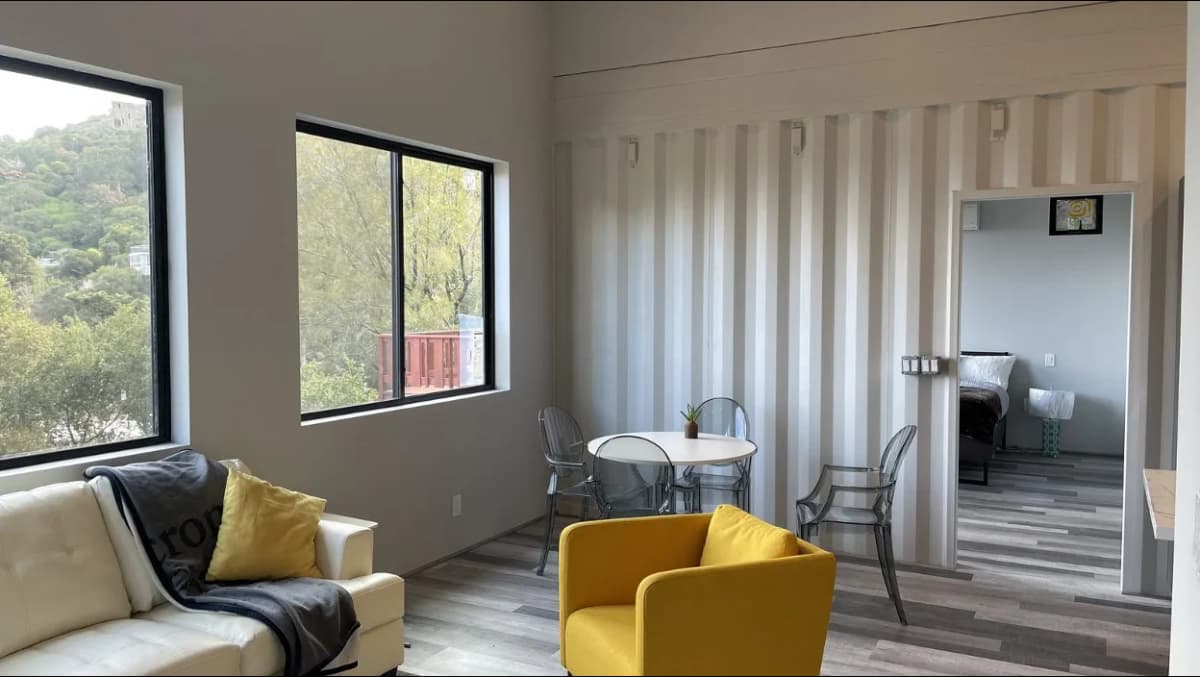
Open layouts, large windows, and smart insulation can help make narrow container interiors feel brighter and more livable.
The best Florida container home layout depends on the parcel, flood elevation, wind design, family size, budget, and whether the home will be used as a primary residence, guest house, rental, or accessory dwelling.
1. Single-Container Studio
A 40ft container can work for a compact studio or guest suite with a small kitchen, bathroom, sleeping area, and living space. This layout is best for small parcels, accessory units, vacation retreats, or simple low-footprint projects.
2. Two-Container Side-by-Side Layout
Placing two containers side by side creates a wider floor plan and allows for a more conventional living area. This layout can support separate bedrooms, a larger kitchen, and a more comfortable living/dining space, but it requires engineered structural connections and roof planning.
3. L-Shaped Container Home
An L-shaped layout can create a protected courtyard, patio, or outdoor living zone. This works well in Florida when shade, outdoor access, and cross-ventilation are planned carefully.
4. Elevated Container Home
In flood-prone or coastal locations, an elevated container home may help meet flood elevation requirements and create covered parking or storage below. Elevated designs require careful engineering for wind, foundations, stairs, utilities, and access.
5. Open-Concept Living Layout
Open layouts can make container homes feel larger by combining kitchen, dining, and living areas. Large openings, however, must be structurally reinforced and designed for Florida wind loads.
6. Multi-Container or Two-Story Build
Multi-container and stacked layouts can create more square footage on smaller lots. These builds require more engineering, stronger foundations, structural reinforcement, and careful code review.
For more design ideas, see Conexwest’s 2-story shipping container home plans and 4-bedroom shipping container home plans.
Container Home Financing and Insurance in Florida
Financing a container home in Florida can be more complicated than financing a conventional home. Lenders may require engineered plans, permits, contractor bids, proof of code compliance, appraisal support, and a clear path to a certificate of occupancy. Some lenders may be less familiar with container-based construction, so regional banks, credit unions, and construction-to-permanent lenders may be worth exploring.
Insurance also deserves early attention. Insurers may ask for structural documentation, wind mitigation details, roof information, foundation type, flood zone status, replacement cost, and proof that the home meets applicable codes. Coastal and flood-prone areas may also need windstorm and flood coverage.
Before applying for financing or insurance, gather:
- Engineered plans and construction drawings
- Building permit information
- Contractor or fabricator scope of work
- Foundation and wind-load documentation
- Flood zone information and elevation certificate if applicable
- Detailed budget and construction timeline
- Comparable property information if available
Why Buy Your Containers from Conexwest?
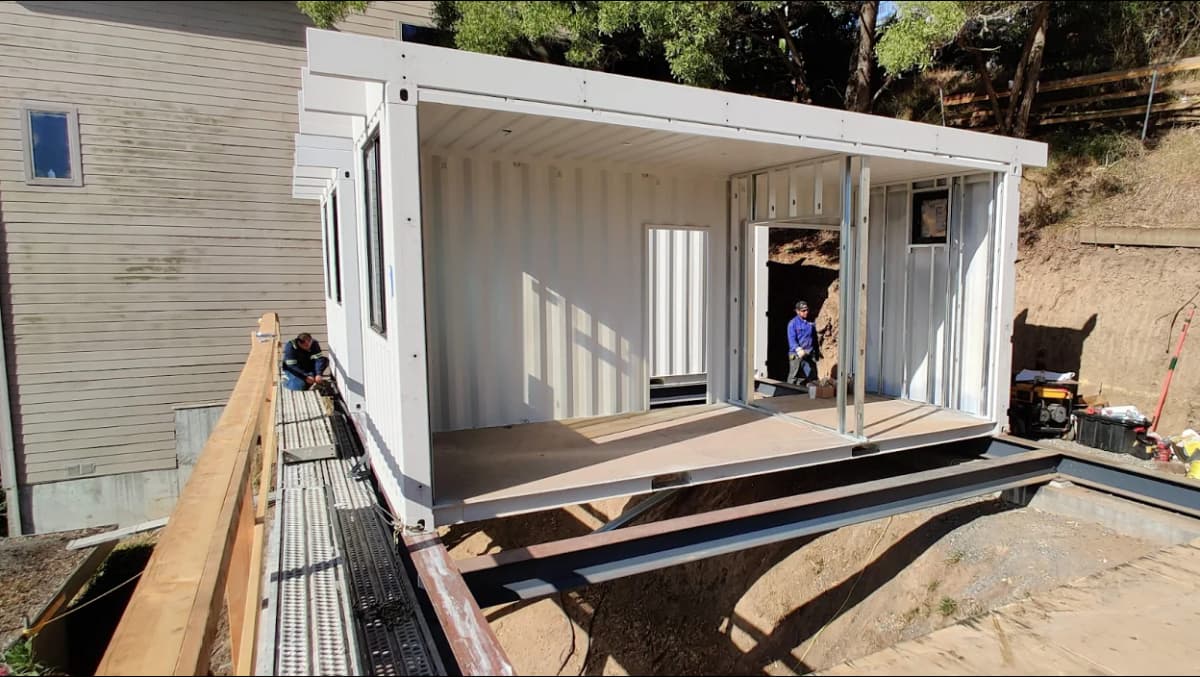
Container-based residential projects require careful planning, engineering, insulation, openings, and site-specific code review.
Conexwest provides new, used, and refurbished shipping containers in multiple sizes, along with container modification and fabrication services that can support container-based projects. While Conexwest does not build full residential container homes, our containers and modification options can be part of a broader project led by licensed design and construction professionals.
Depending on your project, Conexwest can support container selection, delivery coordination, doors, windows, insulation, electrical planning, HVAC options, flooring, shelving, locks, paint, and other modifications. For residential use in Florida, all container modifications should be reviewed by the project’s licensed engineer, architect, contractor, and local building department.
Conexwest can support Florida container projects with:
- Shipping containers for sale in 10ft, 20ft, 40ft, 45ft, and specialty sizes
- Storage container rentals for temporary project staging or jobsite storage
- Container fabrication services for doors, windows, openings, vents, and other custom work
- Container customizations including electrical, HVAC, insulation, shelving, flooring, and security options
- Shipping container modification planning for specialty builds
- Container selection guidance for residential, storage, office, workshop, and modular project needs
If you are planning a Florida container home, start with local zoning approval and engineered plans before ordering modified containers. That will help ensure the container design matches the site, permitting path, and Florida code requirements.
Was this helpful?
Frequently Asked Questions
Yes. A residential container home generally requires building permits, engineered plans, inspections, and approvals for structural, electrical, plumbing, mechanical, foundation, and energy-code compliance.
The Florida Building Code, 8th Edition (2023), became effective on December 31, 2023. The 9th Edition (2026) is scheduled to take effect on December 31, 2026. Confirm the applicable code edition with your local building department before submitting plans.
Timelines vary by county, design complexity, permitting, engineering, fabrication, site work, foundation, utilities, and inspections. A simple project may move faster than conventional construction, but the total planning and approval process can still take months.
Some may, but financing can be more difficult than for conventional homes. Lenders may require permits, engineered plans, inspection records, a certificate of occupancy, insurance documentation, and proof that the home meets residential building requirements.
The biggest challenges are usually zoning approval, hurricane engineering, floodplain requirements, insulation, moisture control, foundation anchoring, utility permits, and proving code compliance during plan review and inspections.
Conexwest does not build full residential container homes. Conexwest provides shipping containers, container sales, rentals, and modification services that may support container-based projects. Any residential use must be engineered, permitted, and approved for the specific site and jurisdiction.