
Most comfortable two-story homes use 4–6 forty-foot high cube containers. This creates 1,280–1,920 square feet of interior space. You'll get 2–4 bedrooms, 2 bathrooms, and open living areas. Five containers works great for many families—three on the ground floor and two upstairs. Container homes feel bigger than their square footage because of open floor plans, higher ceilings, and outdoor living spaces. Sliding glass walls, roof decks, and covered patios can double your usable space in good weather.
2-Story Shipping Container Home Plans: Ideas & Cost
2-Story Shipping Container Home Plans with Free Design Ideas
A 2-story shipping container home is a smart way to maximize living space, reduce your building footprint, and create a modern layout using stacked 20ft or 40ft containers. Whether you want a compact two-level home, a larger family floor plan, a rooftop deck, or a dramatic cantilever design, the right container layout can help you balance cost, comfort, structure, and style. In this guide, we’ll break down 2-story shipping container home plans, design ideas, container sizes, foundation options, stacking requirements, and key cost factors to consider before you build.
Key Takeaways
- Two-story container homes provide 1,000–2,400 square feet using up to 80% fewer building materials than traditional construction.
- Properly engineered container homes withstand winds up to 175 mph.
- Foundation requirements cost 30–40% less than conventional homes.
- At Conexwest, we provide structural-grade containers and professional modification services that are perfect for 2-story home projects.
Why 2-Story Container Homes Make Perfect DIY Projects
Container homes offer way more than just cool industrial looks. These modular boxes let you customize your home without breaking the bank. Going two stories doubles your living space without eating up your whole lot.
Shipping containers are crazy strong too. They're built to carry tons of cargo while stacked high on ships in rough seas. This strength makes them perfect for stacking into multi-level homes that can handle extreme weather.
The best part? You're recycling massive steel structures instead of sending them to waste. A typical 2-story container home uses 4–8 containers, recycling over 30,000 pounds of steel. Add in the smaller foundation and faster build time, and you've got a seriously eco-friendly home.
Conexwest, a leader in shipping and storage solutions based in Northern California, offers new, used, and refurbished containers from 10ft to 45ft, with fast delivery within 3–7 days and container fabrication options like adding shelves and locks. We serve over 10,000 customers nationwide, including prestigious clients like the U.S. Navy and Google. As an ISO 9001 and AWS-certified company, we ensure top quality and competitive pricing. |
Container Home Building Basics
Container homes follow the same building codes as regular homes. The good news is containers often exceed residential construction requirements when reinforced properly. They resist moisture, pests, fire, and mold better than wood framing.
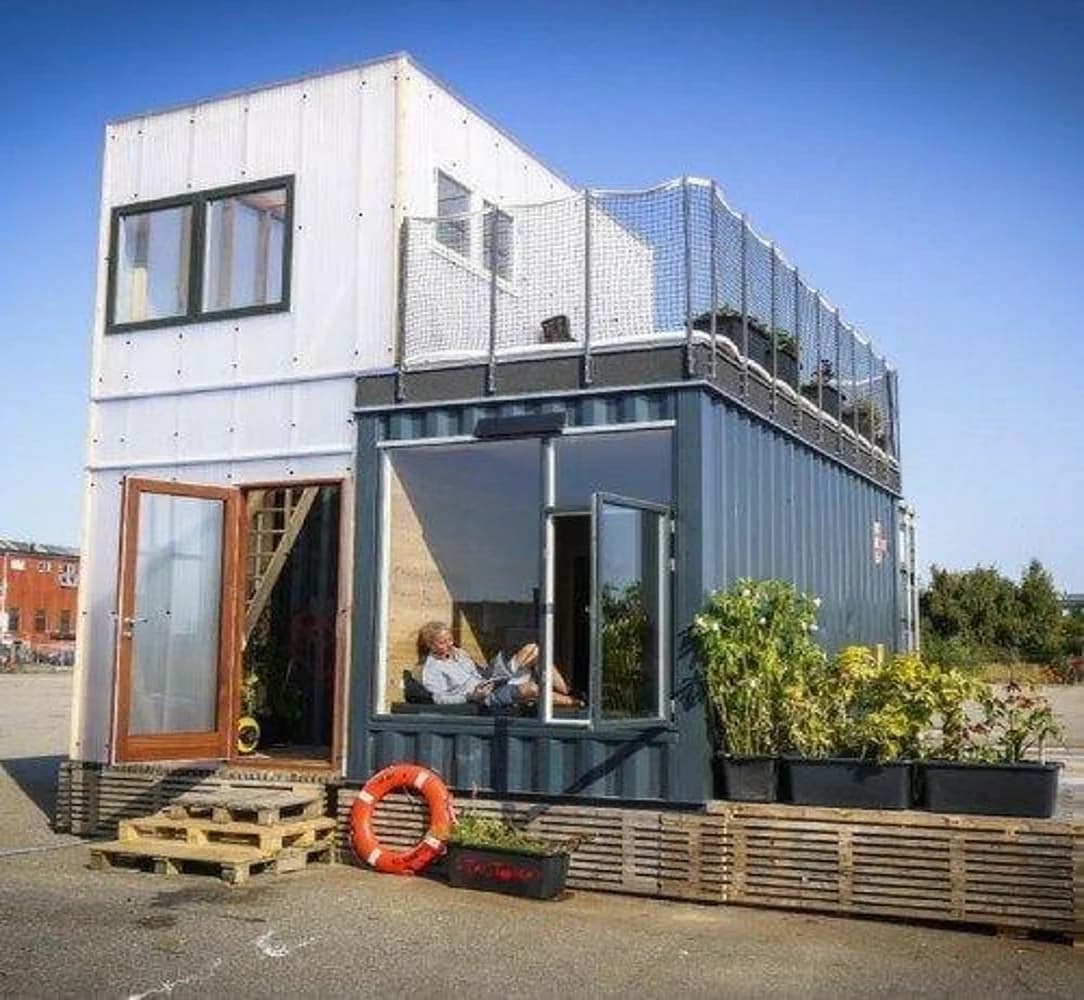
Container homes follow standard building codes and, when properly reinforced, often exceed residential requirements while resisting moisture, pests, fire, and mold better than wood framing. (Image courtesy of IndiaMART)
Container Sizes & Cost
- 20-foot container: 20' x 8' x 8'6" gives you 160 square feet. Interior space is 19'4" x 7'8" x 7'10". Weighs 4,850 pounds empty and can hold 59,000 pounds. New containers start at $3,100.
- 40-foot container: 40' x 8' x 8'6" gives you 320 square feet. Interior space is 39'5" x 7'8" x 7'10". Weighs 8,380 pounds empty and can hold 67,000 pounds. New containers start at $5,645.
- 40-foot high cube container: 40' x 8' x 9'6" gives you 320 square feet with extra height. Interior space is 39'5" x 7'8" x 8'10". Weighs 8,600 pounds empty and can hold 67,000 pounds. New containers start at $5,100.
Buy "one-trip" or nearly new containers when possible because they cost $1,000–2,000 more but save thousands in repair work later. Use high cube containers for first floors to get comfortable ceiling heights after adding insulation and utilities. Standard height works fine for second floors.
*These numbers are estimates, and the actual price can vary. Thus, it’s best to reach out to us for an accurate quote.
How to Stack Containers Safely
Containers get their strength from corner posts and rails. When you cut holes for windows, doors, or connections, you weaken this strength. That's why steel reinforcement is crucial wherever you make openings.
Install steel beams above openings and add vertical supports next to large cuts. When you span multiple containers or create overhangs, you'll need engineered steel I-beams or tube steel.
Connect stacked containers at more than just the corners. While containers lock together with twist locks on ships, homes need welded connections and steel reinforcement plates at each corner. This creates one solid structure instead of just stacked boxes.
Foundation Options for Two Stories
Your foundation matters even more with containers than regular homes. Those corner posts concentrate huge loads in small areas. Most container homes use one of three foundation types.
Pier foundations work best and cost least. You put concrete columns right under each container corner. For six 40-foot containers in a 2-story build, you need just 24 piers instead of a full foundation. This cuts concrete use by up to 70%.
Containers homes shine on sloped sites too. Their rigid steel structure can hang over slopes with proper engineering. This saves money on digging and keeps your site looking natural.
5 Best 2-Story Container Layout Ideas
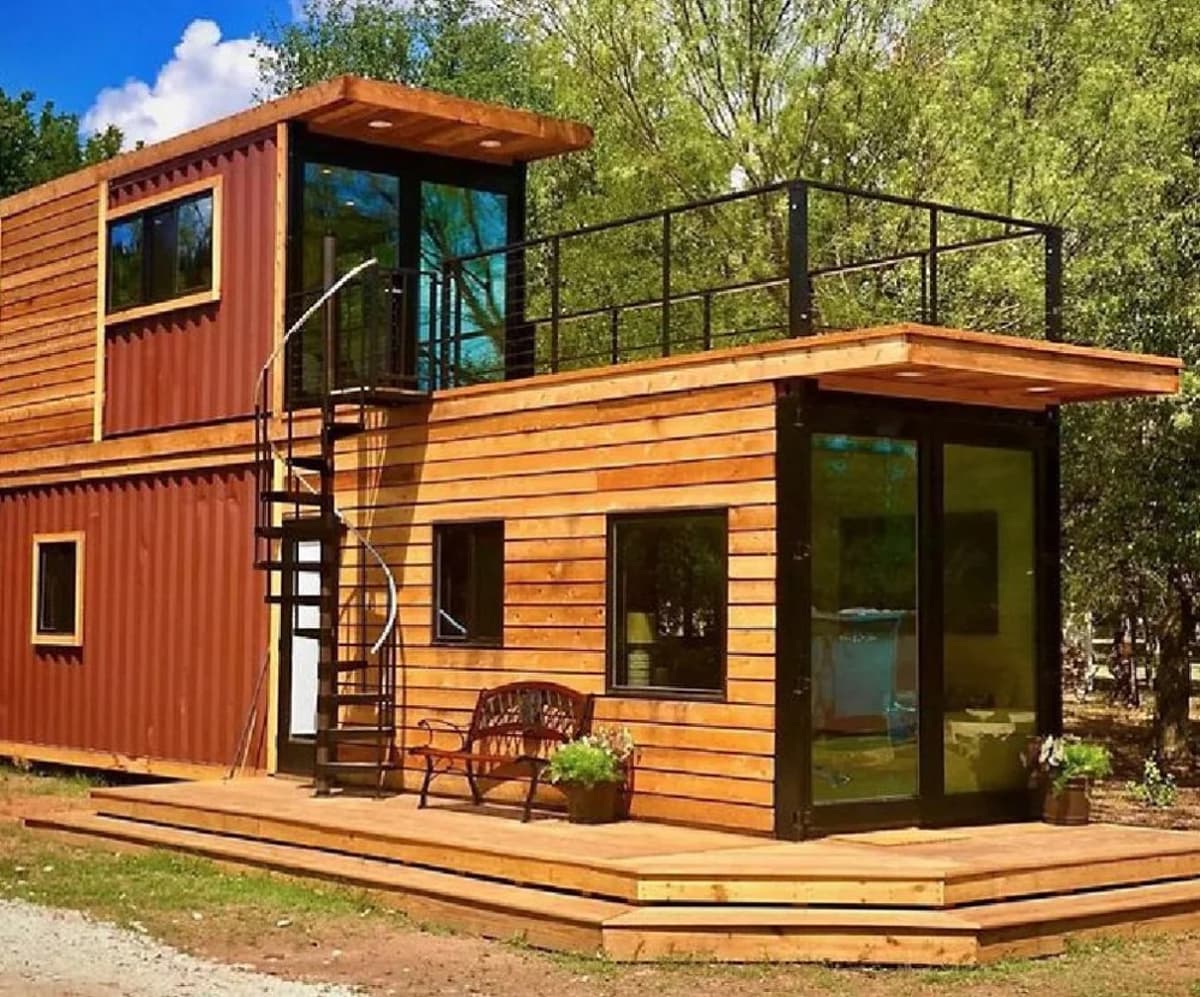
Container modules let you create countless designs that balance looks, function, and easy construction. (Image courtesy of IndiaMART)
1. The Cantilever Design
This cantilever design puts second-floor containers offset from the first floor, creating dramatic overhangs that provide shade and weather protection below. Cantilevers usually extend 8–12 feet, though you can go longer with more reinforcement.
For every foot of overhang, you need about 1.5 times that length anchored to the structure, which requires adding steel I-beams running the container's length and connecting them to the supporting container below.
2. The Courtyard Setup
Arrange containers in an L, U, or O shape to create a protected outdoor space in the center. This works great in any climate by blocking wind while letting in light. Second-story containers sit right above the first floor, creating walls that shield your courtyard too.
You'll need 6–8 containers for a complete 2-story courtyard home. You can also add sliding glass doors on all sides to blend indoor and outdoor living. The space feels way bigger than the actual square footage.
3. Side-by-Side Stack
Place two or more containers next to each other on each level to create wider, more traditional floor plans that feel like a regular house inside. Remove the walls between containers and add steel support to create open spaces up to 24 feet wide.
But you will need serious steel beam reinforcement where you remove interior walls, especially on the first floor. Keep some container walls as natural room dividers for both structure and flow.
4. The T-Shape Layout
The T-shape naturally separates living areas without interior walls. Put social spaces like the kitchen and living room at the top of the T and use the stem for bedrooms and bathrooms. Make the second floor smaller to create double-height spaces in some areas.
Face the wider section south (in the northern hemisphere) with lots of windows for winter sun and keep fewer windows on the north side to reduce heat loss. The offset second story creates spots for terraces and green roofs.
5. The Cross Stack
Place containers perpendicular to each other for an interlocking pattern. This needs precise engineering at crossing points, but creates a striking home with built-in outdoor areas between containers.
Each level uses 2–3 containers in different directions. You get multiple rooftop terrace opportunities and views in several directions. While structurally complex, this design stands out from any regular house.
Essential Features for Container Comfort
Insulation for Any Weather
Container homes need specialized insulation because they're all metal. Use spray foam insulation (R-value 6-7 per inch) on exterior walls and roof. Apply at least 2 inches in mild climates and go up to 3–4 inches for extreme temperatures.
Also create thermal breaks to stop heat transfer through metal. Put rigid foam board on the container exterior before siding. Floors need 1.5–2 inches of closed-cell spray foam plus a subfloor with more rigid insulation.
Connecting Containers Right
When containers sit side-by-side, remove parts of adjoining walls and reinforce with steel beams. Weatherproof these connections with industrial flashing and coatings made for metal buildings.
For vertical connections, weld all four corners between floors. Add 1/4" steel plates across connection points to spread loads evenly.
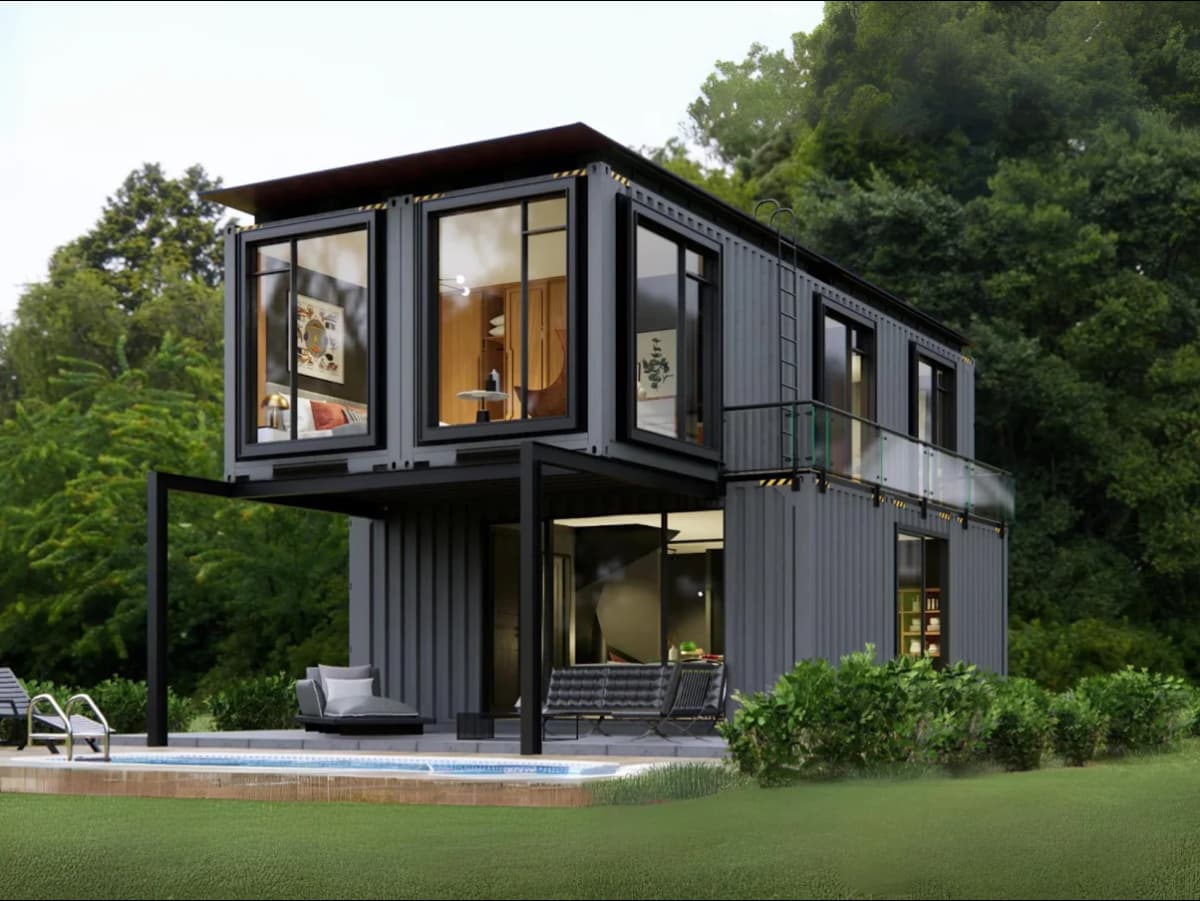
Get a structural engineer to design container connections, especially in earthquake or hurricane zones.
Windows & Doors for Natural Light
Smart window placement transforms dark metal boxes into bright living spaces by strategically positioning larger windows (4' x 6' or bigger) on the south side for winter sun while using smaller windows on north walls to reduce heat loss. Corner windows where containers meet create an amazing, modern look that maximizes natural light.
For even more brightness, clerestory windows at the top of tall spaces pull light deep inside, while insulated steel exterior doors provide both security and efficiency. Large sliding glass doors (8'–12' wide) seamlessly connect indoor and outdoor spaces, though every opening requires steel reinforcement on all sides to maintain structural integrity.
Space-Saving Stairs
Container homes need smart staircase design. Spiral stairs take the least space (5' diameter), but make moving furniture hard. Alternating tread stairs cut length by 40% but take getting used to. Switchback designs with small landings work best, tucking into otherwise wasted corners.
Building Your Container Home Step by Step
1. Finding Good Containers
When sourcing containers, look for suppliers who specialize in containers for building rather than shipping, as one-trip containers work best and typically cost $3,500–5,000 for 40-foot high cubes. Whenever possible, inspect containers yourself by checking corner posts for damage, examining floors and roofs for rust, and ensuring doors seal properly.
It's also important to ask about the container's history and previous contents, avoiding any that were used for toxic materials or heavily treated with pesticides. Get the CSC plate information for manufacturing details and maintenance history, and for two-story builds, consider sourcing containers from the same batch since they often fit together better.
2. Preparing Your Site
Start with soil testing to design the right foundation. Most container homes use piers under each corner post. The foundation must be level within 1/4 inch across the entire footprint for proper alignment.
Install utilities before placing containers—run water, sewer, electrical conduits, and data lines to central access points. Design foundations with pathways for utilities to enter the containers near plumbing and electrical panels.
3. Modifying Containers
Do major modifications while containers are on the ground. Cut openings for doors, windows, and connections between containers. Each cut needs steel headers, footers, and jack studs for reinforcement too. Follow engineered plans exactly and pay attention to load paths.
Protect all cut edges from rust with marine-grade coatings. Some builders apply spray foam insulation now for better access. Others wait until after stacking for better coverage at connections.
4. Stacking & Securing
Use a crane rated for double the container weight to position upper containers, following your plans and using temporary guides welded to the lower containers for precise alignment. Start with twist locks at each corner like on ships.
Create permanent connections by welding steel plates across gaps between containers at each corner. Add extra reinforcement anywhere upper containers aren't fully supported below. Get an engineer to inspect connections before interior work.
5. Interior Finishing
Start with electrical and plumbing rough-in using attachments made for steel. Install interior steel stud framing attached to container walls. This creates space for insulation and utilities while giving you something to attach finishes to.
Complete insulation before drywall. For quiet floors, use spray foam plus acoustic underlayment before subflooring. Finish with materials that complement the industrial vibe like polished concrete floors and exposed elements.
Your 2-Story Container Home Vision Starts at Conexwest
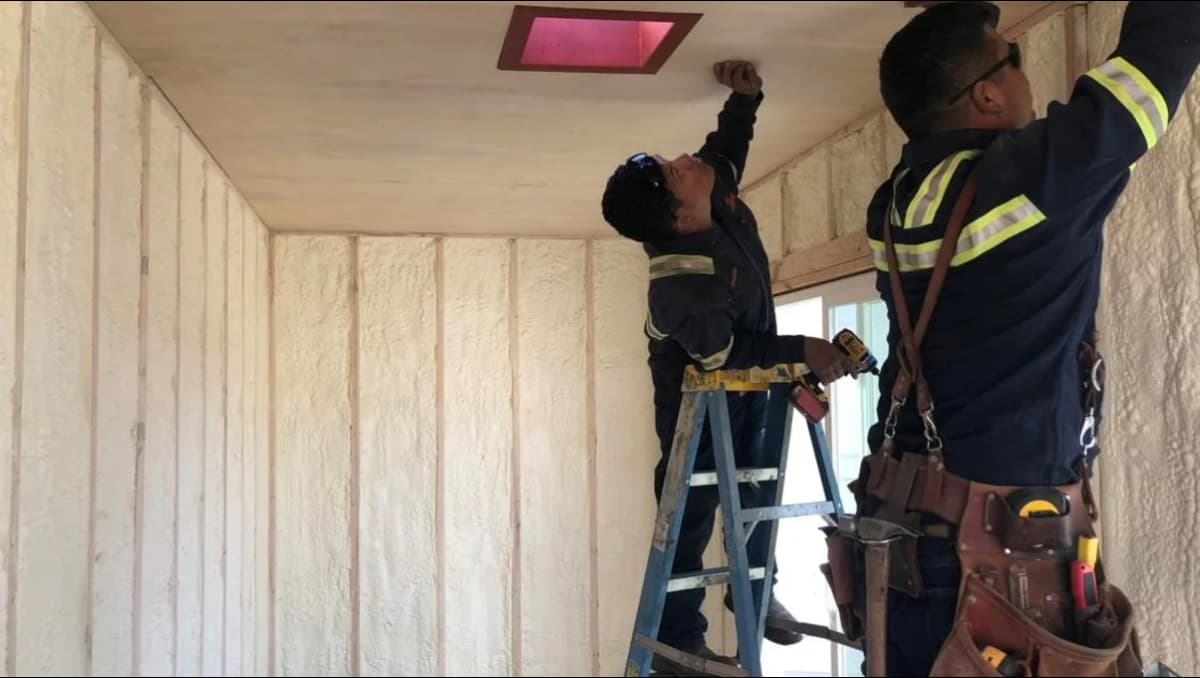
Conexwest transforms your container home plans into reality with quality containers and expert modifications designed for safe, beautiful multi-story construction.
- Structural-Grade Container Selection: We help you choose containers specifically suited for 2-story construction. Not all containers can handle the stress of stacking and major modifications. We select units with the thickest corner posts, best structural integrity, and minimal wear that ensure your home stays solid for decades.
- Professional Modification Services: Our certified welders handle the critical cuts and reinforcements needed for safe 2-story builds. We install engineered headers above openings, reinforce connection points between stacked containers, and add steel supports exactly where your plans require them.
- Multi-Container Coordination: Building with 4–8 containers requires precise planning. We coordinate delivery timing so containers arrive when you need them, match containers from similar production runs for better fit, and can pre-modify containers before delivery to speed up your build timeline.
- Nationwide Delivery Solutions: Our specialized delivery fleet handles the unique challenges of container home sites. Whether you're building on a slope, tight urban lot, or rural property, we have the equipment and experience to position containers precisely where your foundation requires them.
Was this helpful?
Frequently Asked Questions
Shipping container homes work great in any climate with proper design and insulation. Cold climates need thermal breaks between steel and environments. Use exterior rigid foam under siding plus interior spray foam for R-values that match or beat regular construction. Hot climates benefit from reflective roof coatings, shade elements, and ventilated facades to reduce heat. The steel's thermal mass actually helps by stabilizing interior temperatures. Hurricane zones love container strength when properly anchored, while earthquake zones do well with the rigid steel frame on proper foundations. High humidity areas need careful vapor barriers and ventilation to prevent condensation.
A two-story container home takes 4–8 months from delivery to move-in. Traditional construction takes 9–18 months for similar homes. Containers skip time-consuming framing since the structure already exists. The fastest projects modify containers off-site before delivery, creating weathertight structures in days. Permits can take 2 weeks to 6 months depending on location. Site prep needs 1–4 weeks. The finish level affects the timeline too. DIY builders usually take 30–50% longer than pros due to learning curves and limited work hours. Common delays include utility connections, inspector schedules, and custom material orders.
Container home values have improved as they gain acceptance. In progressive markets focused on sustainability, good container homes sell for 5–15% more than comparable traditional homes. Lower energy costs (30–40% less with proper insulation), reduced maintenance (no rot, termites, or mold), and growing demand for innovative sustainable homes drive values up. Location matters though. Conservative markets with little container home exposure might mean longer selling times or lower prices despite objective advantages. Work with appraisers and agents who understand alternative construction for better valuations.
Not every container can handle the stress of becoming a 2-story home, that's where we make a huge difference. At Conexwest, we inspect every container for structural integrity and previous damage that might compromise strength. Our containers come with documentation showing their load capacity and structural ratings, giving your engineer the data needed for safe design. Plus, we can customize containers in our shop for your specific plans, ensuring every cut and support beam is exactly where it needs to be for your 2-story dream home.