
Shipping Containers for Industrial & Manufacturing Storage | Conexwest
Shipping Containers for Industrial and Manufacturing Storage
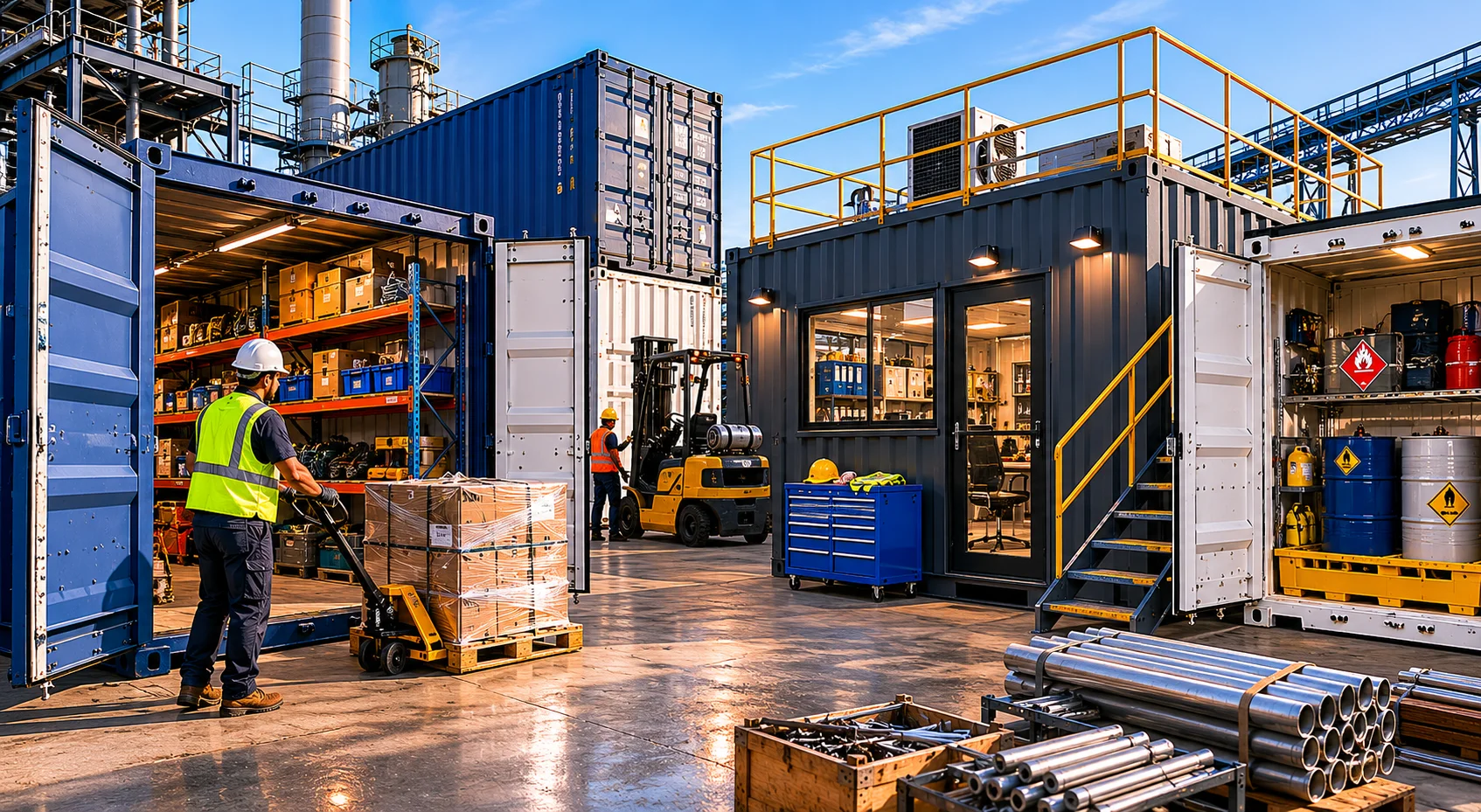
Industrial and manufacturing businesses need secure, flexible space for raw materials, finished goods, tools, MRO parts, equipment, chemicals, temporary offices, and overflow inventory. Shipping containers can support these needs with ground-level storage, weather-resistant construction, lockable access, custom shelving, office-storage combinations, hazmat storage options, and jobsite-ready modifications. Whether you manage a manufacturing plant, warehouse, fabrication shop, distribution yard, energy facility, or maintenance operation, the right container setup can help organize inventory, protect equipment, and add usable space without a full building expansion.
Key Takeaways
- Industrial and manufacturing storage containers can be used for raw materials, tools, parts, equipment, finished goods, maintenance supplies, and temporary workspace.
- Standard storage containers are useful for general inventory, while modified containers can support shelving, lighting, ventilation, HVAC, electrical systems, workbenches, and secure access.
- Hazmat storage containers may be needed for chemicals, solvents, flammable liquids, corrosives, and regulated materials, depending on material type and local requirements.
- Office-storage combo containers can give plant managers, supervisors, technicians, and field teams both workspace and secure storage in one unit.
- Renting is often best for temporary storage, shutdowns, maintenance projects, and seasonal inventory. Buying is usually better for long-term, recurring, or heavily customized use.
How Industrial and Manufacturing Businesses Use Shipping Containers
Manufacturing and industrial sites often need space that is close to the work. A shipping container can be placed near production areas, warehouses, loading zones, maintenance shops, staging yards, or remote jobsites to keep materials and equipment accessible.
Instead of sending teams back and forth to off-site storage or overcrowding warehouse aisles, businesses can use containers to create organized, secure, ground-level storage where it is needed most.
| Industrial Need | Recommended Container Type | Common Uses |
|---|---|---|
| Raw material storage | Standard storage container | Metal parts, packaging, lumber, components, hardware, and non-sensitive materials |
| Tools and equipment | Storage container with shelves or workbench | Power tools, safety gear, shop equipment, maintenance supplies, jobsite tools |
| MRO and spare parts | Shelved storage container | Replacement parts, filters, belts, fittings, motors, consumables, repair inventory |
| Hazardous materials | Hazmat storage container | Chemicals, solvents, flammable liquids, corrosives, oils, regulated materials |
| Temporary office and storage | Office-storage combo container | Plant offices, supervisor stations, maintenance offices, jobsite admin space |
| Finished goods overflow | 20ft, 40ft, or 45ft storage container | Packaged inventory, staged shipments, seasonal demand, warehouse overflow |
Best Container Types for Industrial Storage
The best industrial container depends on what you need to store, how often employees need access, whether the materials are regulated, and whether the container will be temporary or permanent.
| Container Type | Best For | Recommended Features |
|---|---|---|
| 20ft storage container | Compact industrial storage, tools, parts, jobsite materials, maintenance supplies | Lockbox, shelving, vents, lighting, workbench, ramp |
| 40ft storage container | Large inventory, warehouse overflow, raw materials, equipment, finished goods | Side doors, shelving, ventilation, lighting, security upgrades |
| 45ft high cube container | High-volume storage, oversized inventory, tall racking, bulk materials | Extra height, shelving, lighting, access improvements |
| Shipping container with shelves | MRO parts, tools, safety supplies, small components, organized inventory | Heavy-duty shelving, bins, lighting, lockbox, inventory zones |
| Office-storage combo container | Manufacturing offices, plant supervisors, maintenance teams, field operations | Office area, storage area, HVAC, electrical, lighting, windows, personnel door |
| Hazmat storage container | Chemicals, solvents, flammable liquids, corrosives, regulated materials | Spill containment, ventilation, HVAC, shelving, security, signage |
Browse Conexwest’s shipping containers for sale, storage container rentals, and container customization options to compare available sizes and modifications.
Industrial Storage Container Use Cases
Raw Materials and Production Supplies
Manufacturers can use shipping containers to store raw materials, packaging, components, fasteners, tools, and production supplies near the work area. This can help reduce clutter inside the main facility while keeping frequently used materials close to production teams.
MRO Parts and Maintenance Inventory
Maintenance, repair, and operations teams often need organized access to replacement parts, filters, lubricants, belts, fittings, electrical components, PPE, and tools. A container with shelves can create a dedicated maintenance storage area that keeps parts visible, separated, and easier to track.
For more on organized storage, read Conexwest’s guide to shipping containers with shelves.
Finished Goods and Warehouse Overflow
When warehouse space gets tight, a storage container can help hold finished goods, packaged inventory, seasonal products, or staged shipments. This can be especially useful during production surges, inventory builds, remodels, or peak shipping periods.
Tools, Equipment, and Jobsite Materials
Industrial contractors, plant maintenance crews, and fabrication teams can use containers to secure tools, equipment, safety supplies, and materials. Ground-level access makes it easier to load and unload items throughout the workday.
Temporary Office and Storage Space
Office-storage combo containers can help plant managers, safety teams, supervisors, and maintenance crews create workspace close to operations. These containers can combine an office section with secure storage in the same unit.
For a dedicated option, review Conexwest’s 20ft combo office and storage container.
Hazmat Storage for Industrial and Manufacturing Sites
Some industrial and manufacturing facilities handle chemicals, solvents, oils, fuels, flammable liquids, corrosives, cleaning agents, or other regulated materials. These items may require specialized storage, separation, containment, ventilation, signage, and site-specific compliance planning.
A hazmat storage container can support safer organization and restricted access, but requirements depend on the material type, quantity, Safety Data Sheet, local fire code, EPA/RCRA rules, OSHA requirements, and the authority having jurisdiction.
Hazmat containers may be used for:
- Chemical storage
- Solvent and coating storage
- Oil, fuel, and lubricant storage
- Flammable or combustible liquid storage
- Corrosive material storage
- Hazardous waste accumulation support
- Laboratory and testing materials
- Agricultural or facility maintenance chemicals
Learn more in Conexwest’s hazmat storage container rental and sale cost comparison and review the 20ft hazmat container.
Custom Modifications for Industrial Containers
Industrial storage containers can be customized to match the workflow of a facility, maintenance team, or production site. The right modifications can improve access, organization, ventilation, power, comfort, and security.
| Modification | Purpose | Best For |
|---|---|---|
| Shelving and racks | Organizes small parts, tools, boxes, and maintenance inventory. | MRO storage, warehouses, tool rooms, production support |
| Lighting and electrical | Supports visibility, power tools, chargers, and workstations. | Workshops, office-storage units, active inventory areas |
| Ventilation | Improves airflow and helps reduce heat buildup or stagnant air. | Tool storage, equipment storage, chemical-aware planning |
| HVAC and insulation | Helps regulate temperature for people, equipment, or sensitive materials. | Office-storage combos, temperature-sensitive inventory, workshops |
| Personnel doors | Improves daily access without opening full cargo doors. | Offices, workshops, maintenance containers |
| Roll-up doors or side doors | Improves loading access and separates storage zones. | Frequent loading, pallet access, equipment storage |
| Workbenches | Creates space for repair, assembly, inspection, or tool work. | Maintenance teams, mobile workshops, fabrication support |
| Lockboxes and security upgrades | Helps protect tools, materials, inventory, and high-value equipment. | Industrial yards, remote sites, high-value storage |
Explore Conexwest’s container fabrication services, shipping container modifications, and custom container add-ons for more options.
Rent vs Buy for Industrial and Manufacturing Containers
Renting or buying depends on how long the container will be used, how much customization is required, and whether the need is temporary or ongoing.
| Option | Best For | Main Benefits | Planning Notes |
|---|---|---|---|
| Rent | Shutdowns, maintenance projects, temporary overflow, seasonal inventory, short-term jobsites | Lower upfront cost, flexible duration, easier to scale up or down | Customization may be more limited, and rental costs can add up over time. |
| Buy | Long-term storage, permanent industrial yards, recurring production needs, custom builds | Ownership, long-term value, greater customization flexibility | Higher upfront cost and more responsibility for maintenance and long-term planning. |
For short-term needs, review storage container rentals. For long-term industrial storage, browse shipping containers for sale.
Industrial Container Planning Checklist
Before choosing a container, define what the container needs to do. The right answer may be a standard dry container, a shelved storage container, a hazmat container, an office-storage combo, or a custom modified container.
- What materials, tools, or products will be stored?
- Do any materials require hazmat storage, containment, ventilation, or special handling?
- How often will employees access the container?
- Will items be stored on pallets, shelves, racks, bins, or carts?
- Do you need lighting, power, HVAC, insulation, or ventilation?
- Will the container be temporary, seasonal, or permanent?
- Does the site have enough delivery clearance and level placement space?
- Do you need forklift access, side doors, roll-up doors, or ramps?
- Will the container need to support office space, maintenance work, or inspections?
- Are local permits, fire code rules, environmental requirements, or safety procedures involved?
How Conexwest Can Help
Conexwest provides shipping containers for sale and rent, office-storage combo containers, hazmat storage containers, shelved containers, and custom container modifications for industrial and manufacturing applications. Depending on your project, Conexwest can help with container selection, delivery coordination, shelving, lighting, electrical packages, HVAC, ventilation, doors, security upgrades, and custom fabrication.
Whether you need secure storage for tools, warehouse overflow for finished goods, a plant office with storage, or a hazmat container for regulated materials, Conexwest can help you choose a container setup that fits your site and workflow.
Frequently Asked Questions
Can shipping containers be used for manufacturing storage?
Yes. Shipping containers can be used for raw materials, tools, parts, finished goods, maintenance supplies, equipment, and temporary overflow storage at manufacturing and industrial sites.
What size container is best for industrial storage?
A 20ft container works well for compact storage, tools, or parts. A 40ft container offers more capacity for inventory, materials, and equipment. A 45ft high cube container may be useful for larger-volume storage or taller items.
Can a shipping container be used as a plant office?
Yes. Office-storage combo containers can provide both workspace and secure storage for supervisors, safety teams, maintenance departments, field crews, and industrial operations.
Can industrial containers include shelves?
Yes. Shelving can be added to help organize tools, parts, bins, supplies, PPE, and maintenance inventory. This is especially useful for MRO storage and warehouse support.
Can hazardous materials be stored in a shipping container?
Hazardous materials may require a properly configured hazmat storage container. Requirements depend on the material, quantity, Safety Data Sheet, local fire code, OSHA, EPA/RCRA, state rules, and the authority having jurisdiction.
Should industrial businesses rent or buy storage containers?
Renting is often better for temporary projects, shutdowns, seasonal inventory, or short-term overflow. Buying is usually better for long-term, recurring, or custom industrial storage needs.