
Shipping containers are common in Washington because the state has major ports, construction activity, agriculture, seafood, rain, outdoor industries, logistics, and strong demand for secure portable storage.
Shipping Container Uses in Washington State | Conexwest
Shipping Container Uses in Washington State: Ports, Farms, Jobsites & More
Shipping containers are everywhere in Washington State, and it is easy to see why. From Seattle and Tacoma ports to construction sites, farms, marinas, schools, restaurants, warehouses, and rural properties, containers solve a simple problem: people need durable, secure, weather-resistant space that can be delivered where it is needed.
Washington’s economy makes shipping containers especially useful. The state has major port activity, constant construction, a strong agricultural industry, seafood and cold storage needs, outdoor recreation, and a wet climate where protected storage matters. Containers are not popular because Washington laws are automatically easy. They are popular because they are practical.
This guide breaks down the most common shipping container uses in Washington, why businesses and property owners rely on them, and what to consider before placing or modifying one.
Key Takeaways
- Shipping containers are widely used in Washington for construction, ports, farms, food storage, retail, events, marine storage, and secure equipment storage.
- The top Washington use cases include construction storage, port and logistics storage, agriculture, refrigerated food storage, and pop-up retail or event spaces.
- Washington container laws are not automatically easier. Rules depend on the city, county, zoning district, placement location, duration, and intended use.
- Temporary storage containers are usually simpler than permanent structures, container homes, offices, retail units, or occupied spaces.
- Conexwest supplies shipping containers for storage, commercial, agricultural, jobsite, mobile office, refrigerated, and custom projects across the country.
Are Shipping Container Laws Easier in Washington?
Not necessarily. Washington is not automatically easier than other states when it comes to shipping container placement, permitting, or conversion. The rules depend on the local city or county, the property zoning, how long the container will stay, and what the container will be used for.
A container used for temporary storage on a construction site or farm may be treated very differently from a container converted into a home, office, retail space, or permanent commercial structure. In some areas, containers may require zoning approval, building permits, right-of-way permits, design review, setbacks, screening, foundation approval, or utility permits.
For more detail on local approvals, permits, and placement rules, read our full guide to Washington shipping container zoning laws, permits, and building code requirements.
In simple terms:
- Storage container or temporary use: Usually simpler, but still depends on local rules.
- Permanent structure: May require permits, setbacks, foundation review, anchoring, and zoning approval.
- Container home, ADU, or occupied space: More complex because it must meet residential code, insulation, egress, fire safety, utilities, HVAC, and inspections.
- Commercial use: May involve zoning, parking, signage, accessibility, fire access, electrical permits, plumbing permits, and inspections.
The reason shipping containers are so common in Washington is not because the state has no rules. It is because containers fit the state’s economy: ports, construction, agriculture, rain, logistics, seafood, outdoor recreation, and fast-growing cities all create constant demand for secure portable space.
For more detail on local approvals, permits, and placement rules, read our full guide to Washington shipping container zoning laws, permits, and building code requirements.
Top 5 Shipping Container Uses in Washington State
1. Construction Site Storage & Jobsite Offices
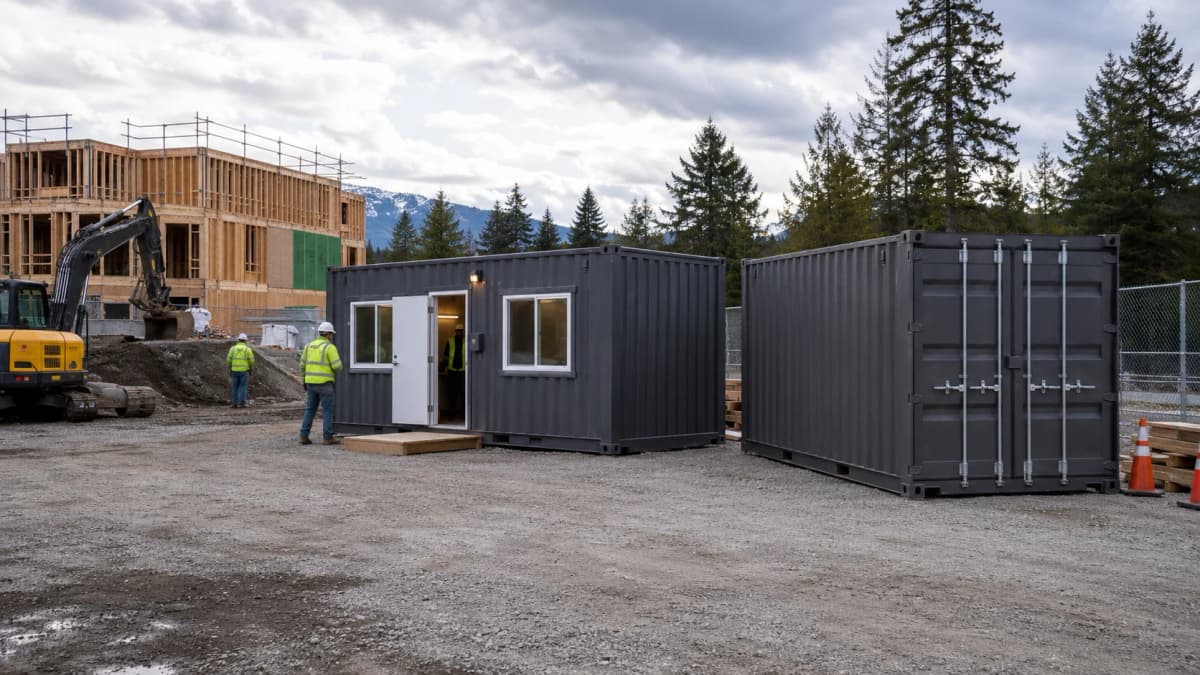
Construction is one of the biggest reasons shipping containers are used throughout Washington. In cities like Seattle, Tacoma, Bellevue, Spokane, Everett, Vancouver, and surrounding suburbs, containers help contractors keep tools, materials, equipment, safety supplies, and temporary offices close to the worksite.
A container gives crews a secure place to store high-value equipment overnight. It also protects materials from Washington’s rain and damp conditions. On larger jobsites, containers can be modified into mobile offices, break rooms, plan rooms, tool rooms, or equipment rooms.
For a city-specific breakdown, see our guide to shipping container uses in Seattle.
Common construction uses include:
- Tool and equipment storage
- Lumber and material storage
- Jobsite offices
- Mobile break rooms
- Roadwork and infrastructure storage
- Bridge and public works project storage
- Temporary warehouse space
2. Port, Marina & Logistics Storage
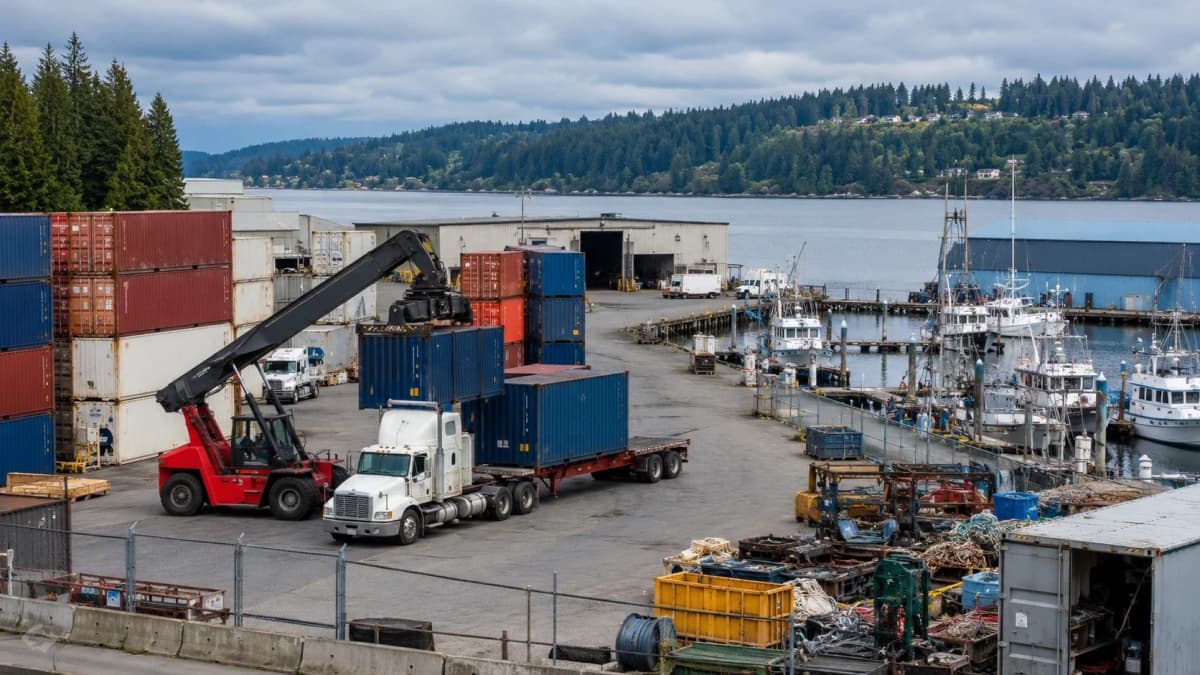
Washington is a major port and logistics state, so shipping containers naturally play a large role in storage, freight, warehousing, trucking, rail, and marine operations. Around Seattle, Tacoma, Everett, Vancouver, and other industrial areas, containers are used for moving goods, storing parts, organizing supplies, and supporting port-adjacent businesses.
Containers are also common around marinas, boatyards, fishing operations, and waterfront businesses. They provide secure storage for boating supplies, fishing gear, tools, maintenance equipment, seasonal inventory, and marine parts.
Common port and marine uses include:
- Port and freight storage
- Marina storage
- Boat equipment storage
- Fishing gear storage
- Industrial yard storage
- Last-mile delivery hubs
- Secure inventory storage
3. Agriculture & Farm Storage
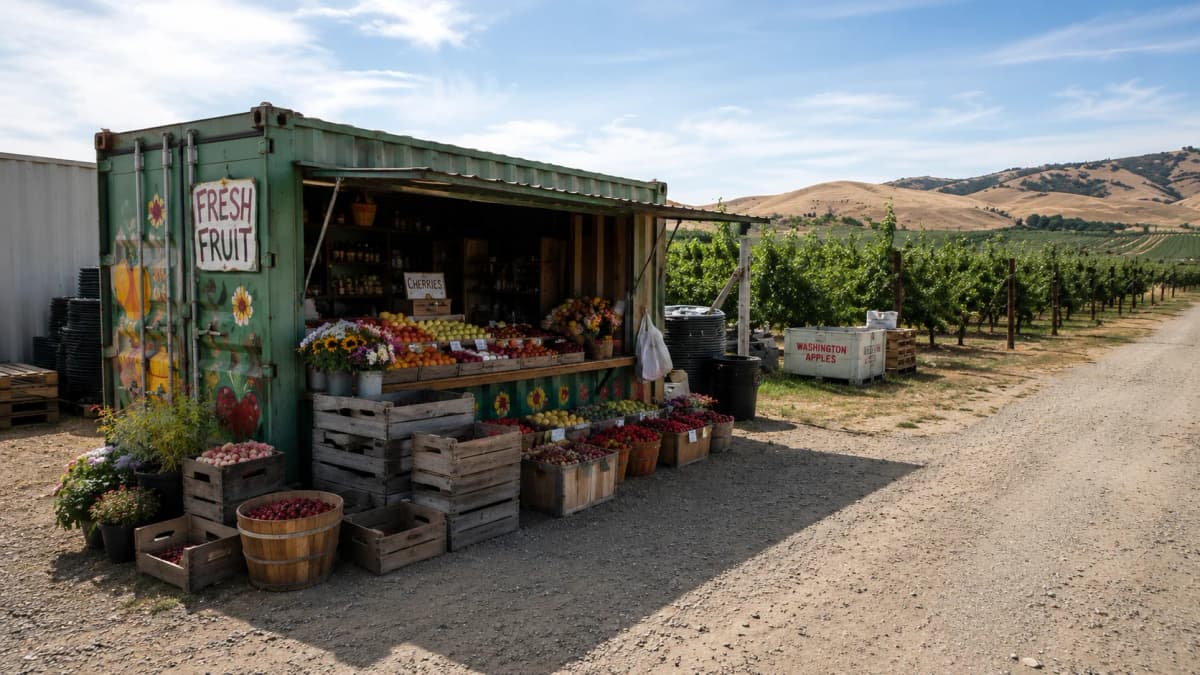
Washington is one of the country’s strongest agricultural states, and containers are useful on farms, orchards, vineyards, ranches, and rural properties. Eastern Washington, in particular, has large agricultural operations that need durable storage for tools, irrigation parts, feed, harvest supplies, seasonal equipment, and packing materials.
Containers work well for farms because they can be placed close to the work area, moved when needed, and secured after hours. They are also useful during harvest season when growers need short-term storage, staging space, or extra supply rooms.
Common agriculture uses include:
- Farm tool storage
- Apple, berry, hop, and produce storage support
- Irrigation supply storage
- Feed and farm supply storage
- Vineyard and winery storage
- Equipment protection
- Seasonal harvest storage
- Greenhouses and hydroponic setups
4. Refrigerated Storage for Seafood, Produce & Food Businesses
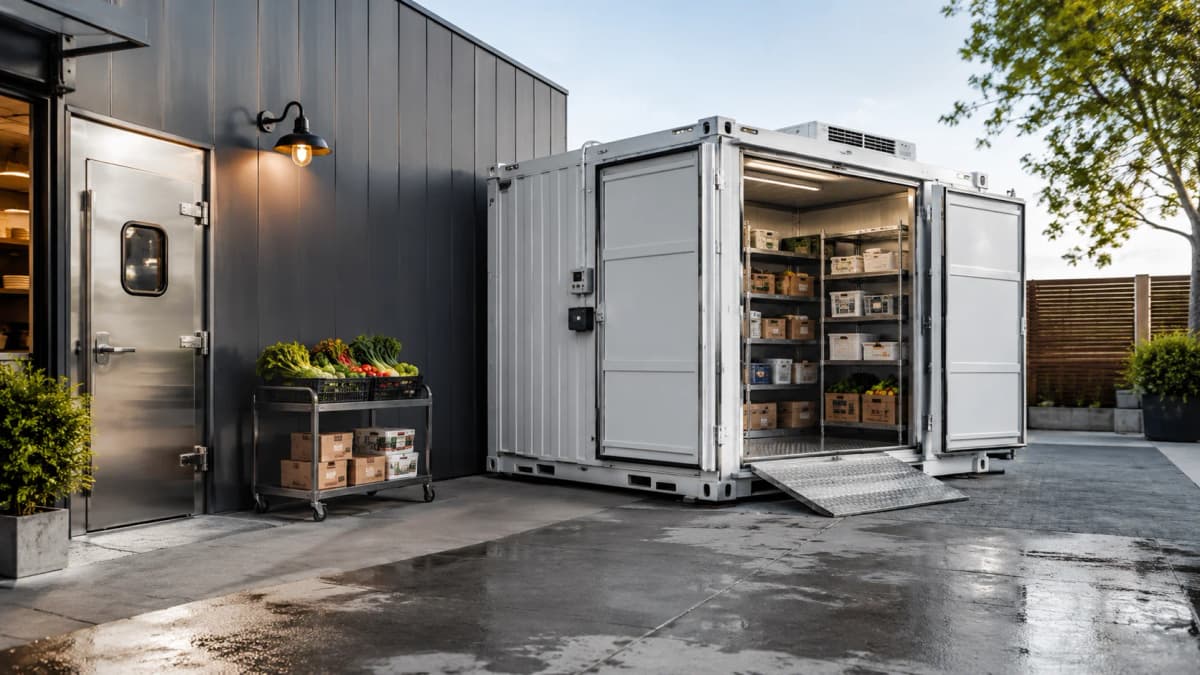
Washington’s seafood, agriculture, restaurant, farmers market, brewery, winery, and food processing industries create strong demand for refrigerated and temperature-controlled storage. Refrigerated shipping containers can help businesses store seafood, produce, beverages, dairy, prepared foods, flowers, and event inventory.
In coastal areas and port cities, reefers can support seafood businesses, fish markets, restaurants, and distributors. In agricultural regions, refrigerated containers can help with harvest overflow, temporary cold storage, produce staging, and seasonal demand.
Common cold storage uses include:
- Seafood cold storage
- Produce storage
- Restaurant cold storage
- Brewery and winery storage
- Farmers market storage
- Event catering cold storage
- Portable freezer storage
- Food processing overflow storage
5. Retail, Coffee Shops, Events & Pop-Up Spaces
Washington has a strong coffee, food, arts, market, festival, and outdoor event culture. Shipping containers are often used for retail pop-ups, coffee kiosks, food stands, ticket booths, event storage, vendor booths, and brand activation spaces.
Containers are popular for these uses because they are durable, customizable, and easy to brand. A container can be modified with service windows, doors, counters, lighting, electrical packages, HVAC, shelving, and exterior finishes.
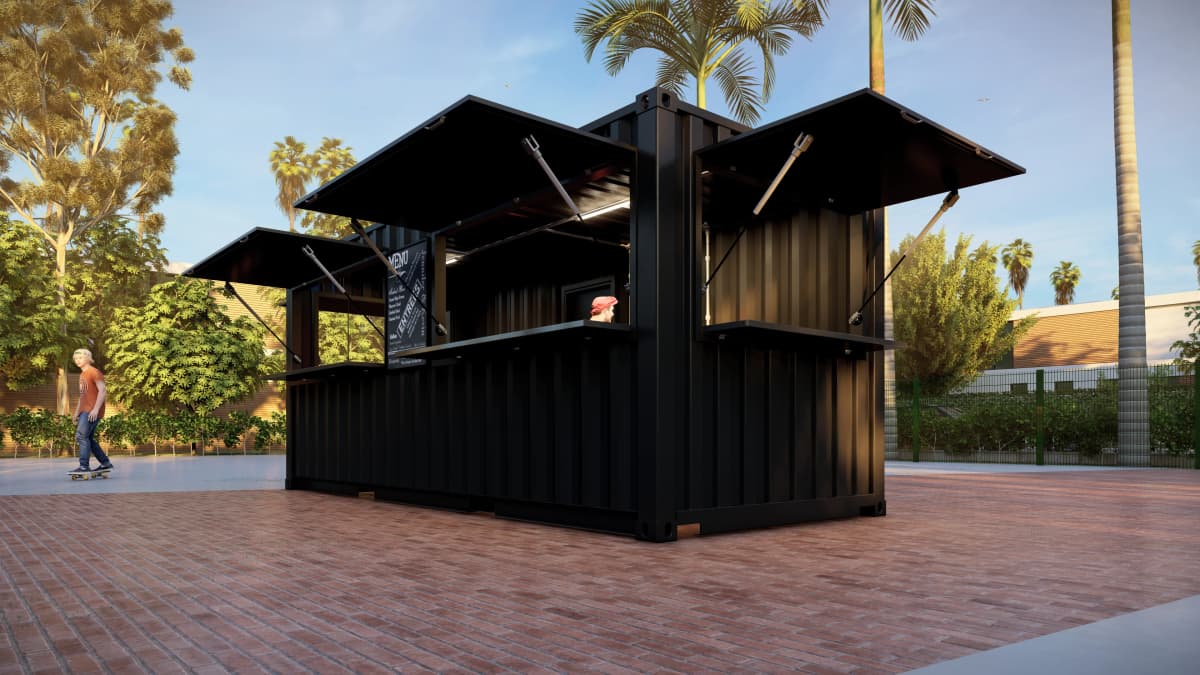
Common retail and event uses include:
- Coffee shops
- Retail pop-up shops
- Food stands and food truck support units
- Festival vendor booths
- Outdoor ticket booths
- Event storage
- Farmers market booths
- Brand activation spaces
Why Washington Businesses Use Shipping Containers
Shipping containers fit Washington because they solve problems across many industries. They are secure, portable, weather-resistant, and available in multiple sizes. They can stay simple as storage units or be modified for more advanced uses.
Washington’s rain also makes covered storage valuable. Tools, inventory, farm supplies, sports equipment, school supplies, marine gear, and event materials all need protection from moisture. A wind- and watertight container gives businesses a practical way to keep supplies organized and protected.
Containers are also flexible. A business can start with a standard storage container, then upgrade with shelving, lockboxes, vents, windows, personnel doors, roll-up doors, insulation, electrical packages, or refrigeration depending on the use.
How Conexwest Supports Washington Container Projects
Conexwest supplies shipping containers for storage, commercial, agricultural, jobsite, refrigerated, mobile office, and custom projects. Customers can choose from new, used, and refurbished containers in multiple sizes, including 10ft, 20ft, 40ft, and 45ft options.
Conexwest also provides container fabrication options such as doors, windows, vents, insulation, electrical packages, shelving, roll-up doors, lockboxes, HVAC, partitions, and custom paint.
For Washington customers, container selection should be matched to the project. A construction site may only need a basic wind- and watertight container. A restaurant may need a refrigerated unit. A farm may need ventilation, shelving, or moisture control. A retail pop-up may need windows, service openings, electrical, and exterior finishes.
Conexwest also provides shipping container delivery. Before delivery, customers should confirm driveway access, placement area, ground conditions, overhead clearance, turning radius, local permits, and equipment needs.
What Else Do Shipping Containers Come in Handy for in Washington?
Beyond the top five uses, shipping containers are helpful across many Washington industries, properties, and communities. Here are other common ways containers are used across the state:
- Shipping containers for sale
- Storage container rentals
- 20ft shipping containers
- 40ft shipping containers
- 40ft high cube containers
- Custom shipping container modifications
- Shipping container delivery
- Mobile office containers
- Refrigerated containers
- Insulated containers
- Port and marina storage
- Boat equipment storage
- Fishing gear storage
- Seafood cold storage
- Restaurant cold storage
- Brewery and winery storage
- Farmers market storage
- Farm and agricultural storage
- Apple, berry, hop, and produce storage
- Feed and farm supply storage
- Greenhouses
- Hydroponic farms
- Mushroom farms
- Construction site storage
- Tool and equipment storage
- Lumber and material storage
- Jobsite offices
- Roadwork and DOT storage
- Bridge and infrastructure project storage
- Utility rooms
- Generator rooms
- Pump houses
- Electrical equipment rooms
- Solar or battery equipment housing
- Backyard storage
- Garage overflow storage
- Workshop space
- Woodworking shops
- Mechanic shops
- Mobile repair units
- Retail pop-up shops
- Coffee shops
- Food stands and food truck support units
- Event storage
- Festival vendor booths
- Outdoor ticket booths
- Parks and recreation storage
- School equipment storage
- Sports team storage
- Emergency supply storage
- Disaster response units
- Fire department training structures
- Temporary housing at remote jobsites
- Logging camp storage
- Mining or remote worksite storage
- Hunting cabins
- Off-grid cabins
- Tiny homes
- ADUs and backyard guest units where allowed
- Container homes where permitted
- Art studios
- Music studios
- Photo and video production sets
- Outdoor gyms
- Observation booths
- Security booths
- Mobile medical clinics
- Archive and document storage
- Secure inventory storage for e-commerce businesses
- Seasonal retail inventory storage
- Last-mile delivery storage hubs
- Temporary warehouse space
For more detail on local approvals, permits, and placement rules, read our full guide to Washington shipping container zoning laws, permits, and building code requirements.
Was this helpful?
Frequently Asked Questions
Not automatically. Laws depend on the city, county, zoning district, placement location, duration, and intended use. Temporary storage is usually simpler than permanent structures, occupied spaces, container homes, or commercial conversions.
You may need a permit depending on where the container is placed and how it is used. Containers in public rights-of-way, permanent structures, commercial uses, utility-connected units, and occupied spaces may require approval.
The most common uses include construction site storage, jobsite offices, port and logistics storage, farm storage, refrigerated food or seafood storage, retail pop-ups, coffee shops, event storage, and secure business storage.
They may be possible where zoning allows and the structure meets building code, residential safety, insulation, egress, utilities, fire safety, and inspection requirements. Container homes and ADUs are more complicated than basic storage containers.
Yes. Conexwest sells shipping containers for storage, jobsite, agricultural, commercial, refrigerated, mobile office, and custom projects. Conexwest also offers fabrication options and delivery support.