
A shipping container lean-to roof is a single-slope roof structure attached to or supported beside a shipping container. It creates covered outdoor space while the container provides secure enclosed storage.
Shipping Container with Lean-To Roofing: Features, Dimensions, Add-Ons & Costs
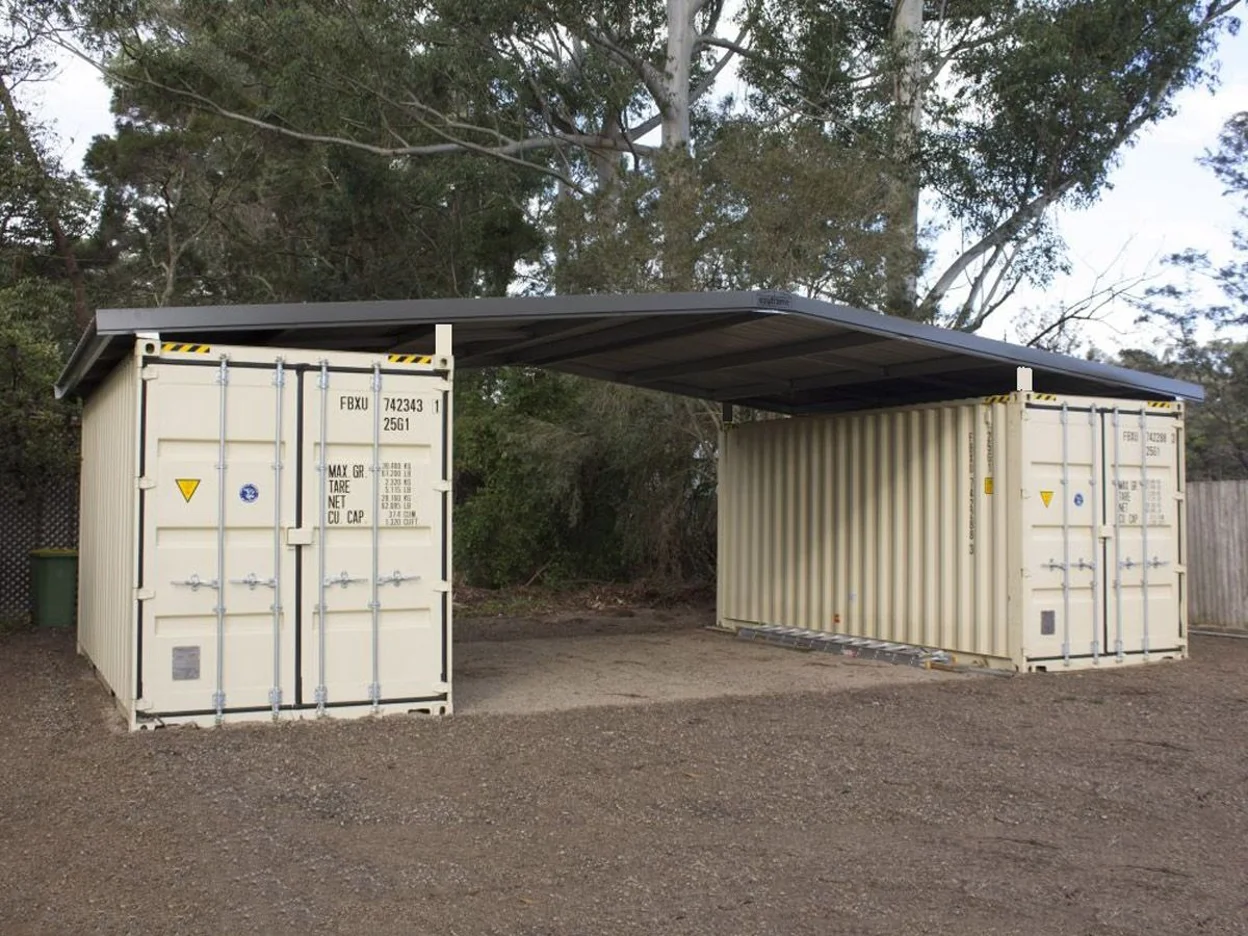
Shipping Container with Lean-To Roofing: Features, Dimensions and Costs
A shipping container with lean-to roofing is a practical way to add covered storage, shade, or workspace without building a full standalone structure. By attaching a single-slope roof to a 20ft or 40ft shipping container, you can create a durable, weather-resistant setup for equipment storage, workshops, garages, agricultural storage, jobsite operations, vehicle coverage, or outdoor work areas. This guide explains shipping container lean-to roofing features, common dimensions, roof span options, add-ons, customization ideas, and cost factors so you can choose the right container roof setup for your site, budget, and use case.
Key Takeaways
- Shipping containers with lean-to roofing add covered space for equipment, vehicles, materials, workshops, agricultural use, and jobsite operations.
- A lean-to roof is usually more cost-effective than building a separate garage, shed, canopy, or standalone storage structure.
- Common container base sizes include 20ft and 40ft shipping containers, with roof span, slope, support posts, and clearance designed around the site and intended use.
- Popular add-ons include lighting, electrical packages, insulation, roll-up doors, shelving, gutters, downspouts, ventilation, custom paint, and security upgrades.
- The final cost depends on container size, roof material, span, engineering, site preparation, delivery, permitting, and custom modifications.
- Conexwest offers shipping containers for sale, storage container rentals, and custom container modifications to help build practical container-based storage and workspace solutions.
What Is a Shipping Container Lean-To Roof?
A lean-to roof is a simple single-slope roof structure attached to or supported alongside a taller structure. When added to a shipping container, it creates a covered area next to the container while the container itself provides secure enclosed storage. The result is a flexible setup that combines lockable container storage with open-air covered space.
This type of container roof system is useful when you need protection from sun, rain, snow, or falling debris but do not need a fully enclosed building. Businesses and property owners often use shipping container lean-to roofing for equipment coverage, material staging, vehicle parking, farm storage, workstations, tool storage, and temporary or permanent jobsite support.
Compared with a standalone garage, pole barn, or canopy, a lean-to container roof can be faster to plan and easier to customize because the shipping container already provides a strong steel base for storage, security, and layout flexibility.
For related structure options, explore Conexwest’s shipping containers for sale, storage container rentals, container fabrication services, and customization options.
Why Add Lean-To Roofing to a Shipping Container?
A shipping container already provides secure enclosed storage, but a lean-to roof expands what the container can do. Instead of storing everything inside the container, you can keep weather-resistant items, vehicles, machinery, lumber, pallets, tools, or work areas under cover while reserving the locked container interior for higher-value inventory.
| Benefit | Why It Matters | Common Uses |
|---|---|---|
| More covered space | Adds usable square footage without fully enclosing another building. | Equipment storage, work areas, staging zones |
| Lower build complexity | A lean-to roof is typically simpler than a full standalone structure. | Jobsite shelters, farm storage, temporary workspaces |
| Secure storage plus open cover | The container protects valuables while the roof covers larger or frequently used items. | Tools, machinery, materials, vehicles |
| Flexible layout | Roof span, height, posts, and slope can be designed around the site. | Garages, workshops, agricultural storage |
| Weather protection | Helps protect materials and equipment from sun, rain, and snow exposure. | Construction, farms, warehouses, industrial yards |
Common Uses for Shipping Containers with Lean-To Roofs
Shipping containers with lean-to roofing work well when a business needs both secure indoor storage and outdoor covered space. This makes them useful for industrial, agricultural, commercial, residential, and jobsite applications.
Equipment and Vehicle Storage
A lean-to roof can create covered parking or equipment protection for tractors, forklifts, trailers, ATVs, trucks, landscaping equipment, or machinery. The container can store tools, parts, fuel cans, safety gear, or maintenance supplies while the roof covers larger equipment outside.
Workshops and Work Areas
A container with lean-to roofing can create a practical workshop layout. The container interior can hold tools and materials, while the covered exterior area can be used for cutting, assembly, repairs, fabrication, or staging.
Agricultural and Farm Storage
Farms and ranches can use lean-to container setups for hay, feed, irrigation supplies, animal equipment, tractors, tools, and seasonal materials. For farm-specific planning, read Conexwest’s guide on placing a shipping container on agricultural land.
Construction and Jobsite Storage
On construction sites, a lean-to roof can create a covered staging area for lumber, pipe, tools, pallets, safety gear, and weather-sensitive materials. The container provides lockable storage, while the roof gives workers a shaded or rain-protected work zone.
Commercial and Industrial Storage
Warehouses, manufacturers, repair shops, and industrial facilities can use a lean-to container setup for overflow storage, parts staging, maintenance supplies, outdoor work areas, and equipment protection. For more industrial storage ideas, see Conexwest’s guide on shipping containers for industrial and manufacturing storage.
20ft vs 40ft Container Lean-To Roofs
The container size affects how much covered space you can create. A 20ft container works well for compact sites, smaller equipment, and focused work areas. A 40ft container creates a longer roof line and more covered space for vehicles, materials, or multiple workstations.
| Container Size | Best For | Planning Notes |
|---|---|---|
| 20ft shipping container | Small workshops, compact equipment storage, farm tools, jobsite materials | Good for smaller sites and easier placement. Works well when you need a focused covered area. |
| 40ft shipping container | Vehicle coverage, larger work areas, machinery storage, commercial use | Provides more roof length and covered area, but requires more site clearance and delivery space. |
| 40ft high cube container | Workshops, taller equipment, added interior storage, commercial operations | Extra height can improve interior usability and clearance for certain storage or workspace needs. |
Browse Conexwest’s 20ft shipping containers, 40ft shipping containers, and 40ft high cube containers to compare available sizes.
Lean-To Roof Dimensions and Span Options
Lean-to roof dimensions depend on the container length, desired covered area, roof slope, local weather conditions, support posts, and site layout. A roof can be designed to extend several feet from the container or span a much larger area if engineered correctly.
| Roof Planning Factor | What to Consider |
|---|---|
| Container length | A 20ft container creates a shorter roof line, while a 40ft container supports a longer covered area. |
| Roof projection | The distance the roof extends from the container determines how much usable covered space you gain. |
| Roof slope | The slope affects drainage, snow shedding, clearance, and overall appearance. |
| Support posts | Larger spans usually require posts, footings, and engineered connections. |
| Clearance height | Vehicle storage, machinery, forklifts, trailers, and work areas may need additional height. |
| Local weather | Wind, rain, snow, and seismic conditions can affect roof framing, anchoring, and material selection. |
Before building, confirm site conditions and local code requirements. Larger roof spans may require engineering, permits, footings, and inspections.
Best Roof Materials for Container Lean-To Structures
The best roofing material depends on budget, climate, desired durability, and whether the lean-to will be used for light storage, vehicle coverage, or a more permanent work area.
| Roof Material | Advantages | Best For |
|---|---|---|
| Corrugated metal panels | Durable, practical, and common for utility structures. | Equipment storage, farm use, workshops, industrial yards |
| Standing seam metal roofing | Clean appearance, strong weather performance, and long service life. | Permanent commercial or residential-style builds |
| Polycarbonate panels | Allows natural light while providing rain coverage. | Greenhouse-style use, garden storage, light-duty covered areas |
| Insulated roof panels | Improves temperature control and reduces heat transfer. | Workshops, occupied work areas, hot or cold climates |
| Fabric canopy systems | Lightweight and faster to install in some applications. | Temporary shade, seasonal storage, low-cost coverage |
Add-Ons for Shipping Container Lean-To Roof Setups
Add-ons can make a lean-to roof container more useful for daily work, storage, and security. The best upgrades depend on whether the setup will be used for equipment, vehicles, tools, materials, staff work areas, or agricultural operations.
Lighting and Electrical
Lighting makes the covered area safer and more useful in early mornings, evenings, and indoor-style work zones. Electrical packages can support tools, chargers, outlets, fans, or basic workstations. Explore Conexwest’s electrical package options.
Shelving and Interior Storage
Shelving helps organize the interior of the container while the lean-to roof covers larger items outside. This combination is useful for tools, parts, jobsite supplies, farm materials, and warehouse overflow. For more ideas, read Conexwest’s guide on shipping containers with shelves.
Roll-Up Doors and Access Upgrades
Roll-up doors, personnel doors, and additional openings can make a container easier to use as a workshop or storage hub. Access points should be planned around how people, tools, vehicles, and materials will move through the site.
Gutters and Drainage
Gutters and downspouts help direct water away from the covered area, container foundation, and nearby pathways. Drainage is especially important when the lean-to roof covers equipment, work areas, or stored materials.
Custom Paint and Branding
Custom paint can help match the container to your property, farm, business, or jobsite branding. For commercial locations, paint and signage can also make the structure look more finished and professional.
Shipping Container Lean-To Roof Cost Factors
The cost of a shipping container with lean-to roofing depends on the base container, roof size, support structure, material selection, engineering, site conditions, delivery, and add-ons. A small, simple lean-to roof will cost less than a larger engineered roof designed for vehicles, commercial use, snow loads, or high-wind areas.
| Cost Factor | How It Affects Price |
|---|---|
| Container size and condition | New, used, refurbished, 20ft, 40ft, and high cube containers have different base prices. |
| Roof span and length | Larger roof areas require more material, support posts, footings, and labor. |
| Roof material | Corrugated metal, standing seam, insulated panels, and polycarbonate panels vary in cost. |
| Engineering and permits | Permanent or larger structures may require drawings, wind/snow-load review, permits, and inspections. |
| Site preparation | Level ground, gravel pads, concrete footings, drainage, and access improvements can add cost. |
| Add-ons | Lighting, electrical, gutters, roll-up doors, shelving, HVAC, insulation, and paint increase the final price. |
| Delivery and installation | Distance, equipment access, container placement, and installation complexity affect total cost. |
For base container pricing and available options, browse Conexwest’s shipping containers for sale. For temporary storage or jobsite use, compare storage container rentals.
Permits and Site Planning
A lean-to roof may require permits depending on your location, roof size, use, foundation, wind load, snow load, attachment method, and whether the structure is temporary or permanent. Local rules vary, so confirm requirements with your building department before ordering materials or starting construction.
Before building, check:
- Local zoning and allowed use
- Setbacks from property lines and other structures
- Building permit requirements
- Wind, snow, and seismic design requirements
- Foundation or footing requirements for roof posts
- Stormwater drainage and runoff rules
- Utility clearance and overhead obstructions
- Fire access, vehicle access, and site circulation
If the lean-to roof will be used commercially, for agricultural operations, or as part of a permanent structure, work with a qualified contractor or engineer to confirm the design is safe and compliant.
How Conexwest Can Help
Conexwest provides shipping containers for sale and rent, along with container modification and fabrication services for storage, jobsite, agricultural, commercial, and industrial applications. Depending on your project, Conexwest can help with container selection, delivery planning, doors, windows, vents, electrical packages, shelving, roll-up doors, insulation, paint, and other customization options.
A shipping container with lean-to roofing can be an efficient way to add covered space while keeping secure storage close by. Whether you need equipment coverage, farm storage, a workshop, vehicle protection, or a jobsite work area, Conexwest can help you choose the right container and modification package for your needs.
Was this helpful?
Frequently Asked Questions
Common uses include equipment storage, vehicle coverage, workshops, agricultural storage, jobsite staging, material storage, tool storage, and covered outdoor work areas.
A 20ft container works well for smaller sites and compact storage needs. A 40ft container provides a longer roof line and more covered space for vehicles, materials, machinery, or larger work areas.
Permit requirements depend on your local building department, roof size, foundation, use, and whether the structure is temporary or permanent. Always check local zoning and building requirements before construction.
Yes, in many cases, but the container condition should be inspected first. Structural condition, roof condition, corrosion, corner posts, and wall integrity should be reviewed before adding roof loads or attachments.
Cost depends on the container size and condition, roof span, roof material, support posts, footings, engineering, delivery, site preparation, and add-ons such as lighting, electrical, shelving, gutters, and custom paint.