

How Can Refrigerated Container Help During Heat
Can a Refrigerated Container Help During a Heatwave?
Heatwaves create more than comfort problems. They can affect worker safety, outdoor events, food storage, grocery inventory, farm harvests, medical supplies, flowers, and emergency response planning. When temperatures rise, businesses and organizations may need temporary cold storage close to the people, products, or supplies they need to protect.
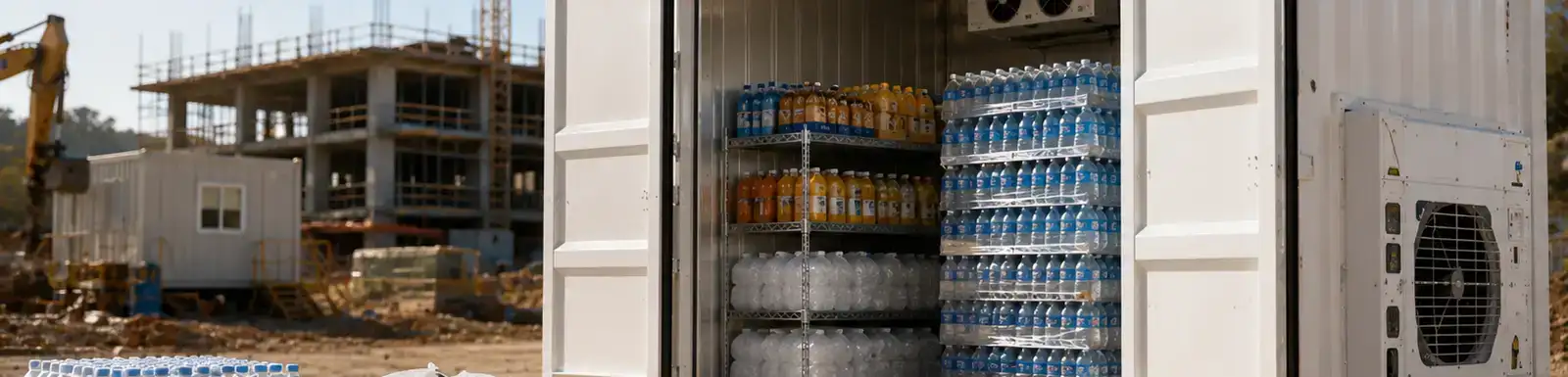
A refrigerated container, also called a reefer container, can help during a heatwave by keeping water, ice, drinks, food, produce, flowers, and temperature-sensitive inventory cold on-site. These containers can be especially useful for construction sites, outdoor events, farms, grocery stores, restaurants, schools, emergency staging areas, and industrial yards.
However, there is an important difference between a container used for cold storage and a container used as a cooling area for people. A reefer container is designed first for temperature-controlled storage, not automatically as a public cooling room. That does not mean a container-based cooling area cannot be arranged. It means the setup needs to be planned correctly, especially if workers, event staff, visitors, students, or the public will enter the unit.
For a people-focused cooling area, read our related guide: How to Turn a Shipping Container Into a Cooling Station.
Official heat guidance recommends air conditioning or an air-conditioned location during dangerous heat, and OSHA emphasizes water, rest, and shade for workers exposed to heat. Learn more from the CDC heat health guidance, OSHA heat exposure guidance, and Heat.gov cooling center resources.
How Refrigerated Containers Help During Heatwaves
During extreme heat, cold supplies can become just as important as shade and rest areas. A refrigerated container can help keep critical supplies cold and accessible without relying on limited indoor refrigerator space or permanent cold storage construction.
Common heatwave uses include storing bottled water, electrolyte drinks, ice, cold towels, food, beverages, produce, flowers, catering supplies, and temperature-sensitive inventory. Restaurants and grocery stores may use reefers for overflow refrigeration. Farms may use them to hold produce during harvest. Event teams may use them for beverages and catering. Jobsites may use them to support worker hydration stations.
Conexwest offers cold storage containers, including refrigerated containers, freezer containers, blast freezers, and other temperature-controlled options for commercial, event, emergency, and industrial use.
Cooling Station vs. Cold Storage Container
A cooling station is for people. A cold storage container is for products and supplies. This distinction matters because a refrigerated container can hold cold air, but it should not automatically be used as a room where people sit, rest, or gather.
A reefer container is ideal for storing cold water, ice, beverages, food, flowers, produce, medical supplies, and emergency inventory. If people need to cool down, an office container with HVAC is usually the better starting point because it is designed as occupied workspace.
The strongest heatwave support setup is often a two-container approach: use a refrigerated container for cold supplies and an HVAC office container for people. That way, water and ice stay protected while workers, staff, or visitors use a safer cooled space.
| Container Type | Best Heatwave Use | Planning Notes |
|---|---|---|
| Refrigerated container | Cold water, ice, drinks, food, produce, flowers, medical supplies | Best for cold storage and heatwave supply support. |
| HVAC office container | Worker breaks, staff cooling, admin space, site operations | Better starting point when people need to occupy the space. |
| Custom modified container | Planned cooling station with specific layout and safety needs | May require HVAC, insulation, lighting, safe exits, accessibility, and permits. |
Can a Reefer Container Be Used as a Cooling Area for People?
A refrigerated container can support a cooling-area concept, but it needs the right modifications and approvals if people will enter or remain inside. A standard reefer is not automatically a people-occupied space. It may be too cold, lack proper ventilation, have unsuitable entry and exit conditions, or create safety issues if used incorrectly.
A cooling area for people may require proper ventilation, safe lighting, emergency exit access, temperature controls, accessibility planning, electrical review, slip-resistant flooring, interior safety features, and local approval. Public-facing use may also require fire review, event permits, insurance, staffing, signage, sanitation planning, and occupancy review.
For most businesses, jobsites, and event teams, the safer setup is simple: use a reefer container for cold supplies and use an HVAC office container for people. If you want to arrange a people-focused container cooling station, read How to Turn a Shipping Container Into a Cooling Station.
Best Places to Use Refrigerated Containers During a Heatwave
Refrigerated containers can be useful anywhere cold supplies are needed close to the work area. Construction sites can use them for cold water, ice, electrolyte drinks, and cold towels. Events and festivals can use them for beverages, catering supplies, and ice storage. Farms can use them for produce, flowers, and harvest staging. Restaurants and grocery stores can use them for backup or overflow refrigeration.
They can also support schools, sports fields, emergency response areas, community centers, warehouses, distribution yards, marinas, and port-adjacent operations. In public or semi-public settings, the setup should be reviewed carefully to make sure it does not block fire lanes, sidewalks, emergency access, traffic flow, utilities, exits, or pedestrian routes.
Construction Use vs. Public Use
Construction use is usually more controlled because the container serves a defined jobsite and a known group of workers. A reefer container can store cold water and ice, while an office container can provide a cooled break area, site office, or first-aid support space. The site should still review power, access, fire lanes, shade, drainage, and temporary structure rules.
Public use is more complex. A container used at a public event, school, community center, municipal site, or public cooling area may require temporary use permits, fire department review, accessibility review, electrical approval, staffing, signage, insurance, and emergency planning.
City rules vary. For example, the City of Miami has a Temporary Occupancy Permit process for construction-related temporary trailers, fences, loading areas, sales centers, or parking. San Diego also provides Temporary Use Permit guidance for certain limited-time uses. Always check local rules before delivery.
What to Check Before Using a Container for Heatwave Support
Whether the container is used for cold storage, jobsite support, event operations, or a cooling-area concept, the setup should be reviewed before delivery. The main things to confirm are use, power, placement, safety, and local approval.
| Planning Area | What to Confirm |
|---|---|
| Use | Decide whether the container will store cold supplies, support workers, serve an event, or be part of a public cooling setup. |
| Power | Confirm voltage, phase, panel capacity, generator backup, connection distance, and safe electrical setup. |
| Placement | Choose level, well-drained ground with enough room for delivery, loading, door swing, and service access. |
| Safety | Review ventilation, lighting, emergency access, temperature controls, slip risks, and whether people will enter the container. |
| Permits | Check city rules, temporary use permits, event permits, fire access, public access, property owner approval, and utility requirements. |
Power planning is especially important. A refrigerated container is only useful if the site can safely support the required electrical load. If the container will hold critical supplies, backup power may also be needed.
Can a Shipping Container Stay Cool Inside During Extreme Heat?
Yes, a shipping container can stay cool inside, but not on its own. A standard steel container can overheat quickly in direct sun because metal absorbs and transfers heat. To work as a cooling station, the container needs the right modifications to reduce heat gain and keep cooled air inside.
The most important upgrades are insulation, air sealing, HVAC, ventilation, and proper door and window placement. Insulation helps slow heat transfer through the steel walls and roof. Air sealing helps prevent cooled air from escaping. A properly sized HVAC system keeps the interior comfortable, while ventilation and humidity control help reduce stale air and condensation.
Placement also matters. A container placed in direct sun on hot pavement will be harder to cool than one placed on level ground with shade, airflow, and proper drainage. Light-colored exterior paint, reflective roof coatings, shade structures, and awnings can also help reduce heat buildup.
For more planning guidance, read Conexwest’s guides to shipping container insulation options and how to stop condensation in a shipping container.
Common Mistakes to Avoid
The most common mistake is treating a standard reefer container like a public cooling room without the right modifications or approval. A reefer can be excellent for cold supplies, but people-occupied use needs ventilation, exits, lighting, temperature control, accessibility, and local review.
Other mistakes include forgetting power requirements, placing the container on soft or poorly drained ground, blocking emergency access, overloading the container, blocking interior airflow, skipping temperature monitoring, or assuming that temporary placement never needs approval.
Avoid describing any container setup as “hurricane-proof,” “public approved,” or “code compliant” without project-specific review. Requirements depend on the city, property, duration, use, utility connections, and whether people will occupy the space.
Best Heatwave Setup: Reefer + HVAC Office Container
For many jobsites, events, schools, farms, and emergency staging areas, the best setup is not just one container. A refrigerated container can store cold supplies, while an office container with HVAC can provide a safer, more comfortable area for people.
This approach separates cold storage from occupancy. The reefer protects bottled water, ice, beverages, food, produce, flowers, or medical supplies. The office container supports worker breaks, staff cooling, admin work, first-aid support, or event operations.
Customers can explore Conexwest cold storage containers, office containers, container delivery, and container fabrication options based on the project.
How Conexwest Can Help
Conexwest can support heatwave, jobsite, event, school, emergency, and temporary workspace planning with container options that match the use case. Customers can compare refrigerated containers for cold storage, office containers with HVAC, storage containers for equipment and supplies, and custom modified containers for planned projects.
Conexwest can help with 10ft, 20ft, and 40ft container options, refrigerated containers, freezer containers, office containers, doors, windows, insulation, HVAC, electrical, lighting, shelving, flooring, and delivery planning based on site access and placement needs.
Conexwest does not replace local officials, engineers, contractors, electricians, event planners, fire authorities, health departments, or permitting agencies. Customers should confirm zoning, permits, occupancy, electrical, accessibility, fire access, and safety requirements before using a container for heatwave support or as a cooling station.
Related Guides
- How to Turn a Shipping Container Into a Cooling Station
- Guide to Building a Shipping Container Office
- Shipping Container Office with Bathroom: Features, Layouts & Costs
- Shipping Container Office with Storage: Features, Dimensions & Costs
- Best Insulation Options for Shipping Containers
- How to Stop Condensation in a Shipping Container
- Shipping Container Delivery
Frequently Asked Questions
- Can a refrigerated container help during a heatwave?
Yes. A refrigerated container can help during a heatwave by storing cold water, ice, drinks, food, produce, flowers, medical supplies, and other temperature-sensitive items. It is best used as cold storage, not automatically as a people-occupied cooling room.
- Can a reefer container be used as a cooling station for people?
It may be possible, but only with the right modifications and approvals. A people-occupied cooling area may require HVAC, ventilation, lighting, safe exits, accessibility review, electrical review, temperature controls, and local permits. An HVAC office container is usually the better starting point for people.
- What is the best container setup for heatwave support?
For many sites, the best setup is a refrigerated container for cold supplies and an HVAC office container for people. This separates cold storage from occupancy and creates a more practical heatwave support station.
- Can a shipping container stay cool inside during a heatwave?
Yes, but only when it is properly modified. A standard steel container can overheat in direct sun, so a cooling station needs insulation, HVAC, air sealing, ventilation, and safe entry and exit planning. Shade, reflective coatings, and limited door openings can also help the container retain cooled air.
- Where can a refrigerated container be placed during a heatwave?
Common locations include construction sites, event grounds, farms, restaurants, grocery loading areas, schools, sports fields, warehouses, industrial yards, municipal facilities, and emergency response areas. Placement should be level, accessible, well-drained, clear of fire lanes, and approved by the property owner or local authority.
- Do you need permits to use a container as a cooling station?
Permit requirements depend on location, duration, use, utility connections, occupancy, public access, and local rules. Public, event, school, construction, and long-term uses may all require different approvals.
- What should be stored in a reefer container during extreme heat?
A reefer container can store bottled water, ice, electrolyte drinks, beverages, food, produce, flowers, medical supplies, event inventory, and other temperature-sensitive items. Requirements vary by product, industry, and local rules.
- Can Conexwest help with heatwave container planning?
Yes. Conexwest offers cold storage containers, office containers, storage containers, delivery planning, and fabrication options. Customers should still confirm site access, power, permits, safety, and occupancy requirements with local professionals and authorities.