

How to Turn a Shipping Container Into a Cooling Station
How to Turn a Shipping Container Into a Cooling Station
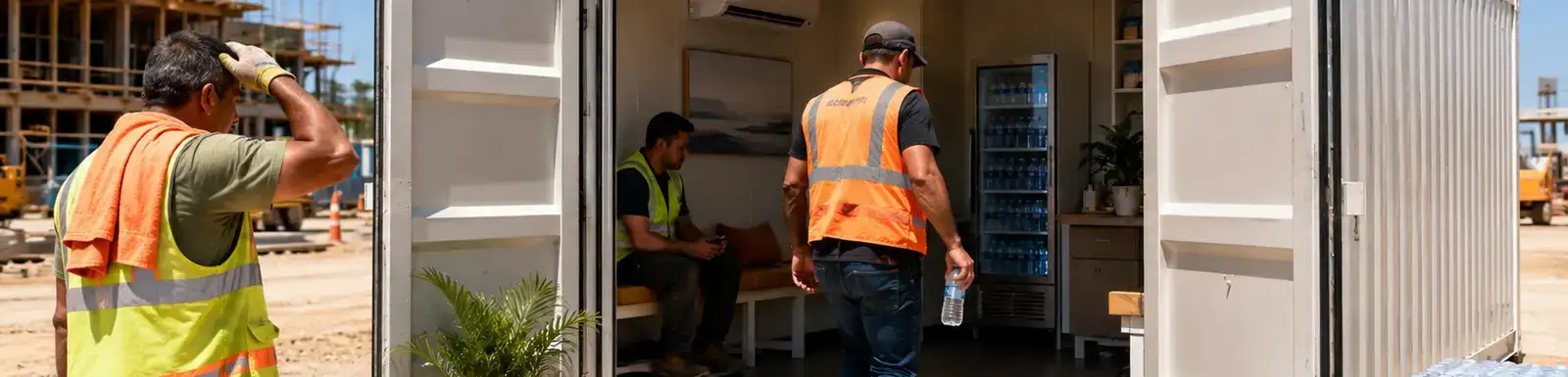
Extreme heat can create serious problems for construction crews, outdoor event teams, schools, farms, emergency responders, and businesses that operate in hot conditions. When temperatures rise, people may need access to shade, water, rest, and air-conditioned spaces. Supplies such as bottled water, ice, food, medical items, flowers, produce, and temperature-sensitive inventory may also need protection from heat.
A shipping container can help support heatwave planning when it is set up correctly. Depending on the goal, a container can become an air-conditioned break room, jobsite cooling station, event support room, emergency supply station, or cold storage area.
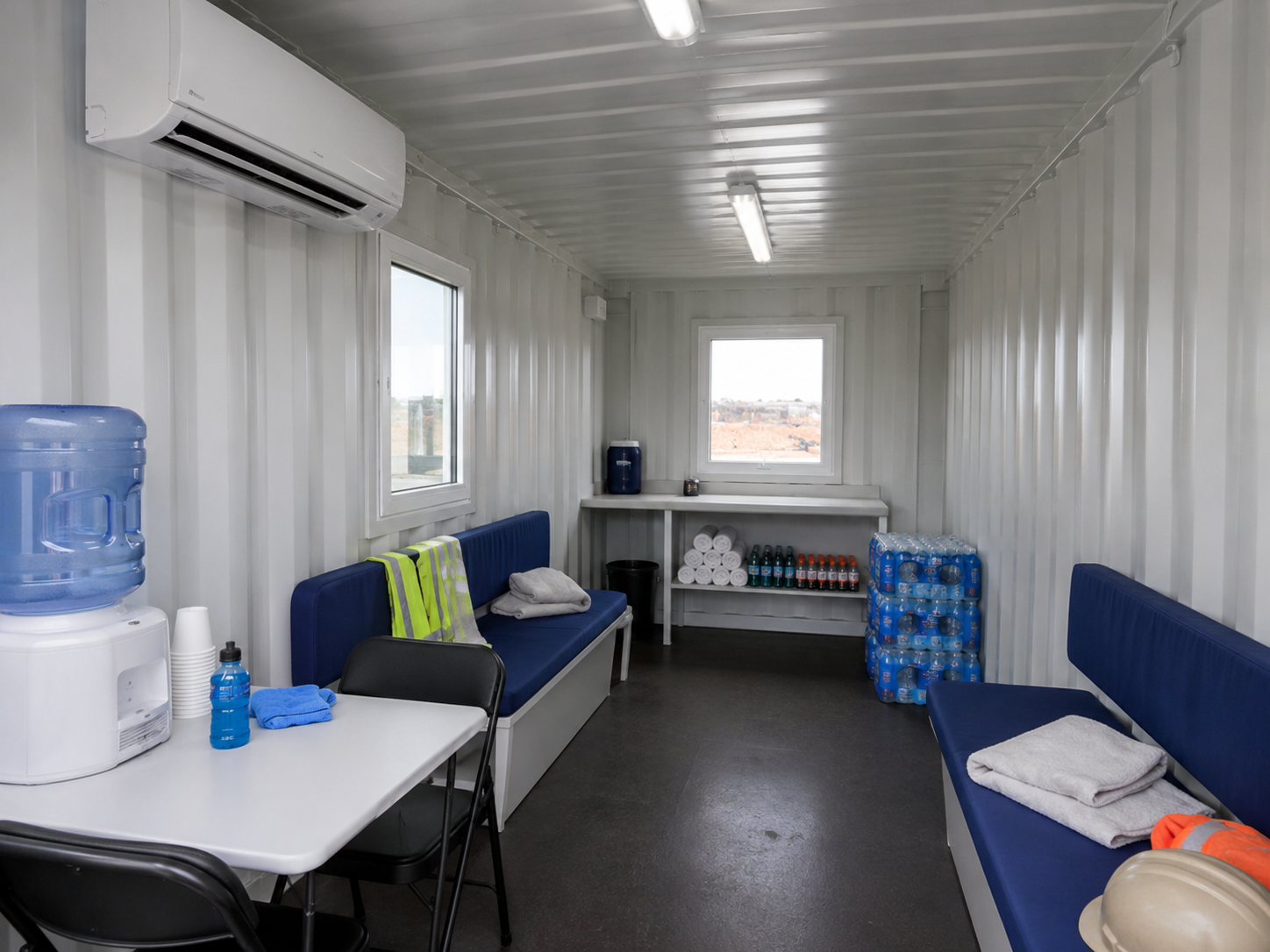
However, not every container is automatically safe for people to occupy. A standard storage container, refrigerated container, and office container are built for different purposes. If people will enter, rest, work, or cool down inside the unit, the container needs proper HVAC, insulation, ventilation, lighting, safe exits, electrical planning, accessibility review, and local approval.
Official heat guidance recommends air conditioning or an air-conditioned location during dangerous heat, and OSHA emphasizes water, rest, and shade for workers exposed to heat. Learn more from the CDC heat health guidance and OSHA heat exposure guidance.
What Is a Shipping Container Cooling Station?
A shipping container cooling station is a modified container designed to provide heat relief or cooling support. It may be used as a private worker break area, staffed event support space, school or campus cooling room, emergency supply station, or part of a public heat-relief setup.
The right container depends on the use. An office container with HVAC is usually the best option when people need to sit, rest, or work inside. A refrigerated container is better for cold supplies such as water, ice, drinks, food, produce, flowers, and medical inventory. A custom modified container may be used when the project needs a specific layout, added doors, lighting, insulation, seating, electrical systems, or accessibility features.
For many heatwave situations, the strongest setup is a two-container support station: one refrigerated container for cold supplies and one HVAC office container for people.
| Container Type | Best Heatwave Use | Planning Notes |
|---|---|---|
| HVAC office container | Worker break room, staff cooling room, site office, event operations | Best starting point when people need to occupy the space. |
| Refrigerated container | Cold water, ice, food, beverages, produce, flowers, medical supplies | Best for supplies, not automatically a people-occupied cooling room. |
| Custom modified container | Planned cooling station with specific safety, layout, and access needs | May require added HVAC, insulation, lighting, exits, permits, and accessibility review. |
Can Any Shipping Container Become a Cooling Station?
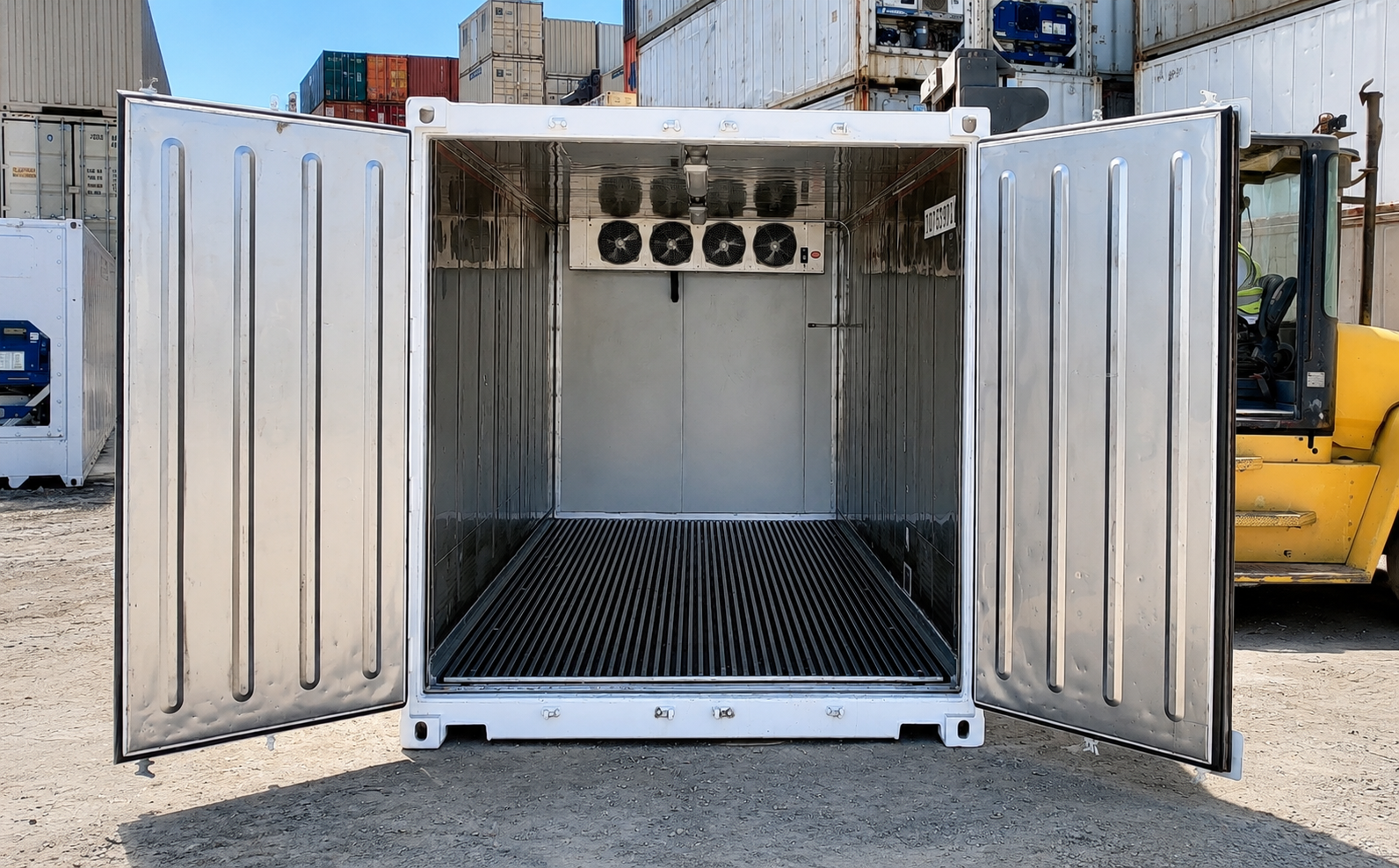
A container-based cooling station can be arranged, but it should not be treated like a simple DIY project if people will occupy the space. A basic storage container can become extremely hot in direct sun. Without insulation, HVAC, ventilation, and safe entry and exit planning, it is not appropriate as a cooling room.
At minimum, a people-occupied cooling container should be reviewed for HVAC, insulation, interior lighting, electrical safety, ventilation, emergency exit access, slip-resistant flooring, temperature control, seating, accessibility, and local permits. Public-facing use may require more review than private jobsite use.
If you are starting with a standard storage container, Conexwest container fabrication options can help with modifications such as doors, windows, insulation, HVAC, electrical, lighting, flooring, shelving, and other features depending on the project.
Cooling Station vs. Cold Storage: Know the Difference
A cooling station is for people. Cold storage is for products and supplies. This difference matters because a refrigerated container can hold cold air, but that does not automatically make it a safe place for people to sit inside.
A reefer container is designed for temperature-controlled storage. It can be very useful during heatwaves because it can store bottled water, ice, beverages, food, produce, flowers, and other temperature-sensitive items. But if the goal is to give people a place to cool down, an HVAC office container is usually the better starting point.
A refrigerated container may still be part of a cooling station setup. The smarter approach is to use the reefer for supplies and an office container for people. That way, the cold drinks, ice, towels, and emergency supplies stay protected while workers, staff, or visitors use a safer occupied space.
Best Uses for a Shipping Container Cooling Station
Container cooling stations can support many heat-related situations when planned properly. Construction sites may use them as worker break areas, first-aid support rooms, or cold water stations. Outdoor events can use them for staff cooling, operations, catering support, and beverage storage. Schools, camps, and sports fields may use them during summer programs, practices, graduations, or outdoor events.
Farms and agricultural sites can use a refrigerated container for produce, flowers, and cold drinks while using an office container as a shaded, cooled admin or break area. Municipal agencies, nonprofits, and emergency teams may also consider container-based support during extreme heat, but public use requires more planning than private business use.
Heat.gov describes cooling centers as a common strategy during extreme heat. If a container will be used as part of public heat relief, review guidance from Heat.gov cooling center resources and confirm local requirements before opening the space to the public.
Construction Use vs. Public Use
A construction site cooling station is usually used by a defined group of workers. It may be placed inside an active jobsite, near the site office, or beside a worker rest area. The setup should still be reviewed for power, shade, delivery access, fire lanes, stairs or ramps, electrical safety, and whether the container is covered by existing construction permits or needs separate approval.
Public use is more complex. A cooling station used for visitors, event guests, students, community members, or the general public may require temporary use permits, event permits, fire review, accessibility planning, occupancy limits, staffing, signage, insurance, sanitation planning, electrical review, and emergency procedures.
City rules vary. For example, the City of Miami has a Temporary Occupancy Permit process for construction-related temporary trailers, fences, loading areas, sales centers, or parking. San Diego also provides Temporary Use Permit guidance for certain limited-time uses. These examples show why local review matters before placing a container for public or temporary use.
How to Plan a Container Cooling Station
The planning process starts with one question: will the container cool people, supplies, or both? If people need to rest inside, start with an office container or a custom modified container. If the goal is cold water, ice, food, flowers, produce, or emergency inventory, start with a refrigerated container.
The next step is HVAC and insulation. A container used for cooling people should have properly sized air conditioning, insulated walls and ceiling, sealed gaps, lighting, safe electrical connections, and a comfortable layout. In humid climates, dehumidification and ventilation should also be considered.
Power must be confirmed before delivery. Office containers, refrigerated containers, and multi-container setups may require more power than expected. Confirm voltage, phase, panel capacity, generator backup, connection distance, and who is responsible for the electrical hookup.
Entry and exit also need attention. A cooling station should have safe stairs or a ramp, non-slip entry, door hardware that works from the inside, emergency access, interior and exterior lighting, clear pathways, and accessible entry when required.
Can a Shipping Container Stay Cool Inside During Extreme Heat?
Yes, a shipping container can stay cool inside, but not on its own. A standard steel container can overheat quickly in direct sun because metal absorbs and transfers heat. To work as a cooling station, the container needs the right modifications to reduce heat gain and keep cooled air inside.
The most important upgrades are insulation, air sealing, HVAC, ventilation, and proper door and window placement. Insulation helps slow heat transfer through the steel walls and roof. Air sealing helps prevent cooled air from escaping. A properly sized HVAC system keeps the interior comfortable, while ventilation and humidity control help prevent stale air and condensation.
Placement also matters. A container placed in direct sun on hot pavement will be harder to cool than one placed on level ground with shade, airflow, and proper drainage. Light-colored exterior paint, reflective roof coatings, shade structures, and awnings can also help reduce heat buildup.
For people, an office container with HVAC is usually the best starting point. For supplies, a refrigerated container is better. A reefer container can hold cold water, ice, beverages, food, produce, flowers, and temperature-sensitive items, but it should not be treated as a people-occupied cooling room unless it is specifically modified and approved for that use.
For more planning guidance, read Conexwest’s guides to shipping container insulation options and how to stop condensation in a shipping container.
Site Placement and Delivery Planning
A cooling station should be placed where people can access it safely and where the container can operate properly. The site should be level, well-drained, accessible to delivery trucks, close to power, and clear of fire lanes, driveways, sidewalks, exits, and emergency routes.
Before scheduling delivery, confirm truck access, gate width, turning space, overhead clearance, ground conditions, drainage, door swing, stairs or ramp location, power source, generator placement, pedestrian flow, and emergency access. For more delivery planning, review Conexwest shipping container delivery information.
If the station will be used for public events, schools, community sites, or municipal support, the site plan should also account for staff supervision, signage, accessibility, restroom access, sanitation, and crowd flow.
Common Mistakes to Avoid
The biggest mistake is treating a standard container like a finished cooling room. A storage container without HVAC and insulation can become hotter than the outside air. Another common mistake is using a refrigerated container for people without reviewing ventilation, emergency release, temperature settings, lighting, and occupancy requirements.
Other problems include forgetting power requirements, placing the container on soft or poorly drained ground, blocking fire lanes or sidewalks, skipping backup power for critical supplies, placing a generator too close to doors or vents, or assuming that a temporary setup does not need local approval.
A container cooling station should also avoid extreme temperature settings. The goal is a safe cooled space, not a freezer-like environment. Temperature should be controlled and monitored, especially if the unit is used by workers, event staff, students, or the public.
Best Container Cooling Station Setups
| Setup | Best For | Recommended Container Approach |
|---|---|---|
| Basic jobsite heat support | Construction crews, field teams, supervisors | HVAC office container with seating, water access, lighting, and first-aid supplies. |
| Event cooling support | Outdoor markets, festivals, sports events, catering teams | Office container for staff plus reefer container for drinks, ice, and catering storage. |
| Public cooling support | Community heat relief, municipal support, emergency response | Custom or office container reviewed for occupancy, accessibility, permits, staffing, and safety. |
| Cold supply station | Farms, schools, events, emergency staging, jobsite hydration | Refrigerated container for water, ice, food, flowers, produce, or temperature-sensitive supplies. |
How Conexwest Can Help
Conexwest can support heatwave, jobsite, event, school, emergency, and temporary workspace planning with container options that match the use case. Customers can compare refrigerated containers for cold storage, office containers with HVAC, storage containers for equipment and supplies, and custom modified containers for planned projects.
Conexwest can help with 20ft and 40ft container options, office containers, cold storage containers, doors, windows, insulation, HVAC, electrical, lighting, shelving, flooring, and delivery planning based on site access and placement needs.
For cold supplies, explore cold storage containers. For people-occupied workspace, explore office containers. For custom features, review container fabrication.
Conexwest does not replace local officials, engineers, contractors, electricians, event planners, fire authorities, health departments, or permitting agencies. Customers should confirm zoning, permits, occupancy, electrical, accessibility, fire access, and safety requirements before using a container as a cooling station.
For cold supplies, explore Conexwest cold storage containers. For people-occupied workspace, explore office containers. For custom features, review container fabrication.
Related Guides
- Guide to Building a Shipping Container Office
- Shipping Container Office with Bathroom: Features, Layouts & Costs
- Shipping Container Office with Storage: Features, Dimensions & Costs
- Best Insulation Options for Shipping Containers
- How to Stop Condensation in a Shipping Container
- Shipping Container Delivery
For cold supplies, explore Conexwest cold storage containers. For people-occupied workspace, explore office containers. For custom features, review container fabrication.
Frequently Asked Questions
Can a shipping container be turned into a cooling station?
Yes. A shipping container can be turned into a cooling station when it is properly modified with HVAC, insulation, ventilation, lighting, safe entry and exit, power, and local approvals. A standard storage container should not be used as a cooling station without the right modifications.
Is a refrigerated container the same as a cooling station?
No. A refrigerated container is designed for cold storage. It can store water, ice, drinks, food, flowers, produce, medical supplies, and other temperature-sensitive items. If people will occupy the container, additional safety, ventilation, exit, lighting, temperature control, and permit review may be required.
What type of container is best for people during a heatwave?
An HVAC office container is usually the better option for people because it is built as occupied workspace. A refrigerated container is better for cold supplies. For larger sites, using both together can create a stronger heatwave support setup.
Can a cooling station be used on a construction site?
Yes. A container cooling station can support construction heat-safety planning when it is set up correctly. The site should review power, placement, shade, access, fire lanes, worker access, and whether the unit is covered by construction permits or needs separate approval.
Can a container cooling station be used for the public?
It may be possible, but public use requires more planning. Public cooling setups may need temporary use permits, event permits, fire review, ADA/accessibility planning, staffing, signage, insurance, sanitation planning, and emergency procedures.
Where can a container cooling station be placed?
Common locations include construction sites, event grounds, farms, schools, sports fields, parking lots, warehouses, industrial yards, municipal sites, emergency response areas, and community centers. Placement must be level, accessible, well-drained, clear of fire lanes, and approved by the property owner or local authority.
Do you need permits for a container cooling station?
Permit requirements depend on location, duration, use, occupancy, utility connections, public access, and local rules. Construction, event, public, school, and long-term uses may all require different approvals.
What should be stored in a reefer container during a heatwave?
A reefer container can store bottled water, ice, electrolyte drinks, beverages, food, produce, flowers, medical supplies, event inventory, and other temperature-sensitive items. Requirements vary by product, industry, and local rules.
Can a shipping container stay cool inside during a heatwave?
Yes, but only when it is properly modified. A standard steel container can overheat in direct sun, so a cooling station needs insulation, HVAC, air sealing, ventilation, and safe entry and exit planning. Shade, reflective coatings, and limited door openings can also help the container retain cooled air.