
Pharmaceutical & Healthcare Storage Containers | Conexwest
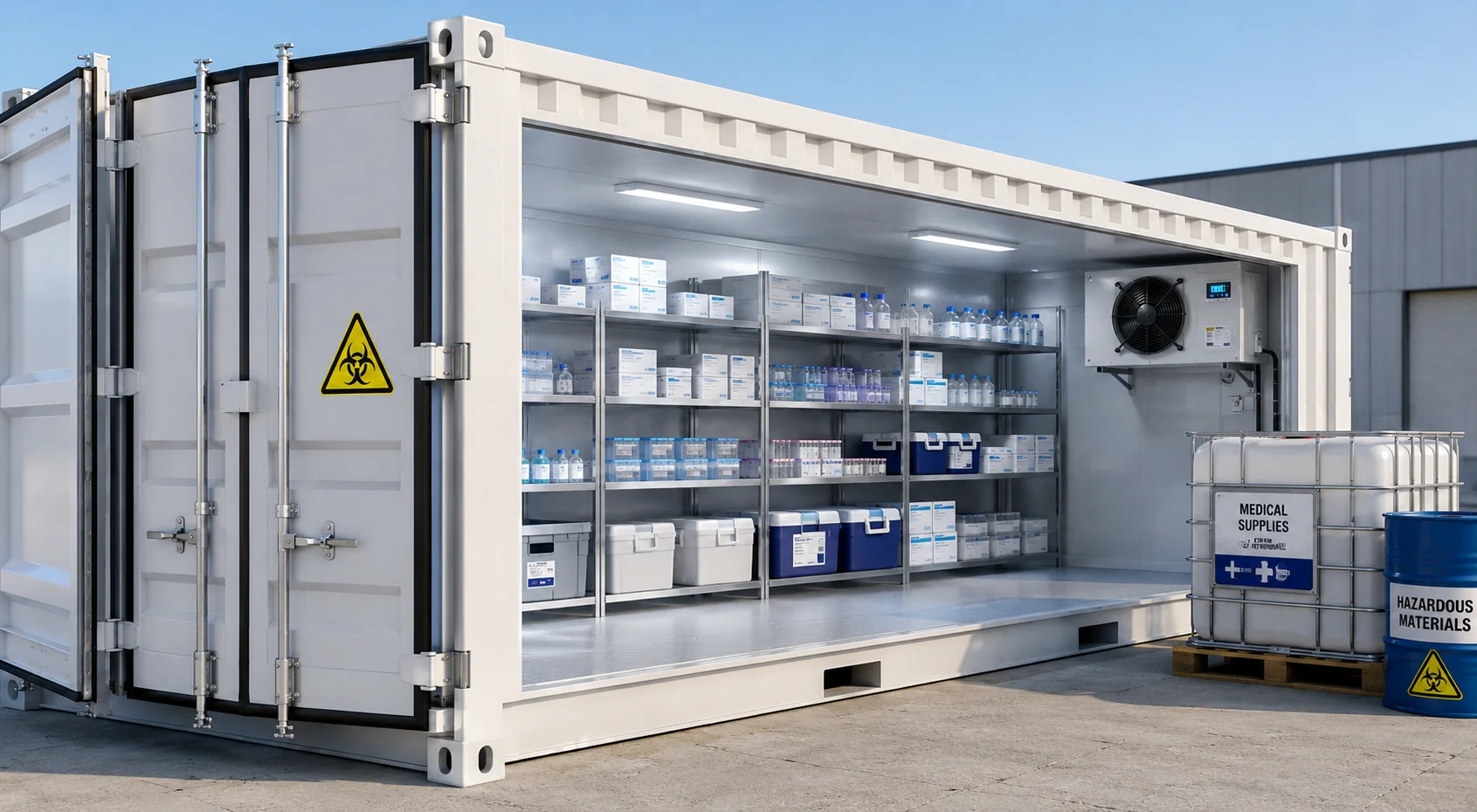
Pharmaceutical & Healthcare Storage Containers
Pharmaceutical, laboratory, and healthcare operations often need more than basic storage. Medical supplies, temperature-sensitive inventory, lab chemicals, vaccines, diagnostic materials, PPE, cleaning chemicals, and regulated products may require secure access, temperature control, careful organization, and site-specific safety planning. Shipping containers can support these needs when they are properly selected, configured, monitored, and used according to applicable facility procedures, product requirements, and regulatory standards. This guide explains the main types of pharmaceutical and healthcare storage containers, including refrigerated containers, hazmat storage containers, and secure medical supply storage options.
Key Takeaways
- Pharmaceutical and healthcare storage containers can support temporary or long-term storage for medical supplies, lab materials, PPE, temperature-sensitive products, and regulated inventory.
- Refrigerated containers are useful for temperature-controlled storage, including certain pharmaceuticals, medical supplies, biotech materials, and cold-chain inventory.
- Hazmat storage containers may be used for lab chemicals, cleaning agents, solvents, biological materials, hazardous waste streams, or regulated supplies when properly configured.
- The right container depends on product temperature requirements, site access, power availability, security needs, ventilation, storage duration, and compliance requirements.
- No container is automatically FDA, CDC, GMP, or pharma compliant by default. Compliance depends on the product, process, monitoring, documentation, validation, and facility procedures.
Why Pharma, Labs and Healthcare Facilities Need Specialized Storage
Healthcare and pharmaceutical storage is different from general commercial storage because many products are sensitive to temperature, humidity, light, contamination risk, access control, or handling procedures. A hospital storing backup medical supplies does not have the same requirements as a pharmacy storing refrigerated products, a laboratory storing reagents, or a biotech company storing temperature-sensitive materials.
That is why container selection should begin with the product requirements first. Review the manufacturer’s storage instructions, Safety Data Sheets, internal standard operating procedures, local code requirements, and any regulatory standards that apply to your facility or product type.
Common healthcare and pharma storage needs include:
- Temperature-controlled pharmaceutical inventory
- Medical supply overflow storage
- Laboratory chemical storage
- Refrigerated or frozen product support
- Backup cold storage during renovations or equipment repairs
- PPE, equipment, and emergency response storage
- Hospital, clinic, pharmacy, or biotech facility overflow
- Hazardous material or hazardous waste storage support
- Secure storage for regulated or high-value inventory
Container Options for Pharmaceutical and Healthcare Storage
Pharmaceutical, laboratory, and healthcare facilities may need different container types depending on what they are storing. Some applications require refrigeration. Others require hazmat features, secure access, shelving, HVAC, or general dry storage.
| Container Type | Best For | Common Features to Consider |
|---|---|---|
| Refrigerated container | Temperature-sensitive pharmaceuticals, medical supplies, biotech materials, cold-chain inventory | Temperature control, power planning, monitoring, shelving, backup power planning, access control |
| Freezer or blast freezer container | Frozen products, sensitive materials, research samples, products needing lower temperature ranges | Low-temperature refrigeration, power requirements, monitoring, alarms, flat floors, interior lighting |
| Hazmat storage container | Lab chemicals, solvents, cleaning chemicals, hazardous materials, regulated waste streams | Spill containment, ventilation, HVAC, shelving, lockboxes, signage, material segregation |
| Secure dry storage container | PPE, hospital supplies, records, equipment, disaster response supplies, boxed inventory | Lockbox, shelving, lighting, personnel door, climate control, access control |
| Custom modified container | Specialized healthcare, laboratory, or pharmaceutical storage workflows | Doors, windows, HVAC, electrical, shelving, insulation, partitions, ramps, lighting |
Refrigerated Containers for Pharmaceuticals and Medical Supplies
Refrigerated containers, also called reefer containers, are used when products need controlled temperatures. Conexwest offers 20ft and 40ft refrigerated container options for commercial and industrial cold storage applications, including industries such as pharmaceuticals, agriculture, food distribution, manufacturing, and healthcare support.
Conexwest’s 20ft reefer container guide lists several refrigeration unit options. Carrier and Daikin 20ft reefer units are listed with temperature ranges from -20°F to +70°F, while Thermo King 20ft reefer units are listed from -40°F to +70°F. Conexwest’s 40ft high cube reefer guide lists a temperature range from -20°F to +70°F.
Refrigerated containers may support:
- Temperature-sensitive pharmaceutical inventory
- Medical supply overflow storage
- Biotech and lab materials
- Hospital or pharmacy backup cold storage
- Temporary storage during facility renovations
- Cold-chain staging and overflow
- Emergency response storage
For more detail, see Conexwest’s 20ft reefer container dimensions and specifications, 40ft reefer container dimensions and specifications, and cold storage and freezer container options.
Important Note on Vaccine and Pharmaceutical Storage Compliance
A refrigerated container can support temperature-controlled storage, but it should not be described as “vaccine compliant,” “FDA compliant,” “CDC compliant,” or “GMP compliant” by default. Pharmaceutical and vaccine storage depends on the specific product requirements, equipment qualification, temperature mapping, monitoring devices, alarms, backup power planning, staff procedures, and documentation.
The CDC Vaccine Storage and Handling Toolkit notes that refrigerated vaccines are generally stored between 2°C and 8°C / 36°F and 46°F, and it also explains that newly installed or repaired units may need several days to stabilize before use. USP guidance for drug storage and distribution emphasizes risk mitigation throughout storage and transportation. Always confirm storage requirements with the manufacturer, facility quality team, pharmacist, regulatory team, or healthcare compliance professional.
Useful external resources include the CDC vaccine storage and handling resources, the CDC Vaccine Storage and Handling Toolkit, and USP information on Good Storage and Distribution Practices for Drug Products.
20ft vs 40ft Refrigerated Containers for Healthcare Storage
The right refrigerated container size depends on product volume, site access, rental timeline, power availability, and workflow. A 20ft refrigerated container is easier to place and often works well for compact cold storage. A 40ft refrigerated container provides more storage volume and may be better for high-volume healthcare, biotech, or pharmaceutical operations.
| Size | Best For | Planning Notes |
|---|---|---|
| 20ft refrigerated container | Compact cold storage, pharmacies, clinics, temporary backup storage, smaller product volumes | Easier to place in tight sites and may be more practical when storage volume is moderate. |
| 40ft refrigerated container | Hospitals, distribution centers, biotech facilities, larger pharmaceutical inventory, bulk medical supply storage | Provides more capacity but requires more delivery clearance, site space, and power planning. |
| Single-phase or dual-voltage options | Sites with limited power infrastructure or varying electrical availability | Power compatibility should be confirmed before delivery and setup. |
For a deeper size comparison, read Conexwest’s 20ft vs 40ft refrigerated container guide.
Hazmat Storage Containers for Labs, Pharma and Healthcare Facilities
Laboratories, pharmaceutical operations, hospitals, and healthcare facilities may also need storage for hazardous materials. These can include lab chemicals, reagents, solvents, cleaning chemicals, flammable liquids, corrosives, biological materials, and hazardous waste streams.
Conexwest’s 20ft hazmat storage container provides approximately 1,172 cubic feet of secure storage space and can support hazardous material storage applications. Depending on the use case, hazmat containers may be configured with features such as ventilation, HVAC, shelving, electrical packages, containment features, additional doors, and security upgrades.
Hazmat storage containers may support:
- Laboratory chemical storage
- Cleaning and disinfectant chemical storage
- Solvent and reagent storage
- Regulated medical or laboratory waste support
- Industrial healthcare facility maintenance materials
- Pharmaceutical manufacturing or testing support
- Temporary hazardous material storage during renovations or shutdowns
For more information, review Conexwest’s hazmat storage container rental vs sale cost guide and 20ft hazmat container.
Secure Medical Supply Storage Containers
Not every healthcare storage need requires refrigeration or hazmat features. Hospitals, clinics, emergency response teams, and healthcare contractors may need secure dry storage for supplies, records, equipment, PPE, mobile care resources, or disaster response inventory.
Secure dry storage containers may be used for:
- PPE and emergency supply storage
- Medical equipment overflow
- Hospital renovation support
- Temporary clinic or field response inventory
- Records or boxed supply storage
- Disaster response and emergency preparedness supplies
- Maintenance, facilities, and janitorial inventory
Conexwest offers shipping containers for sale and storage container rentals for businesses that need secure ground-level storage. Custom options can include shelving, lighting, personnel doors, ramps, HVAC, and security upgrades.
Security, Access Control and Inventory Organization
Pharmaceutical, healthcare, and laboratory storage often requires stronger access control than general warehouse storage. High-value products, regulated inventory, chemicals, medical supplies, and sensitive materials should be stored in a way that limits unauthorized access and supports inventory control.
Security and organization options may include:
- Lockboxes and heavy-duty locks
- Personnel doors
- Interior shelving
- Interior lighting
- Partition walls
- Separate storage zones
- Access-control planning
- Temperature monitoring equipment
- Clear labeling and inventory organization
- Restricted-access placement on-site
Explore Conexwest’s container customization options for common modifications such as shelving, vents, HVAC, electrical features, security upgrades, and access improvements.
Rent vs Buy for Pharmaceutical and Healthcare Storage Containers
The decision to rent or buy depends on storage duration, urgency, customization needs, budget, and whether the container will support temporary or ongoing operations.
| Option | Best For | Advantages | Things to Consider |
|---|---|---|---|
| Rent | Short-term projects, renovations, emergency backup storage, temporary overflow, seasonal needs | Lower upfront cost, flexibility, faster deployment, easier to scale up or down | Rental costs add up over time; customization may be more limited than purchasing. |
| Buy | Long-term storage, recurring healthcare operations, permanent cold storage support, facility expansion | Long-term value, full ownership, more customization flexibility, no recurring rental payments | Higher upfront cost and more responsibility for long-term maintenance and compliance planning. |
For refrigerated container cost planning, see Conexwest’s refrigerated container rental vs sale cost comparison. For hazmat storage, see the hazmat storage container rental vs purchase cost guide.
Questions to Ask Before Choosing a Pharma or Healthcare Storage Container
Before choosing a container, define the product, risk level, storage duration, and facility requirements. This helps determine whether you need dry storage, refrigerated storage, freezer storage, hazmat features, or a custom modified container.
- What products or materials will be stored?
- Are they temperature-sensitive, hazardous, high-value, or regulated?
- What temperature range is required by the manufacturer?
- Is humidity control required?
- Is continuous monitoring or alarm notification required?
- Is backup power needed?
- Will the container need shelving, racks, or segregated storage zones?
- Do any materials require SDS review or hazmat storage planning?
- Will staff need daily access?
- Does the site have proper truck access and placement space?
- Are local permits, inspections, or facility approvals required?
How Conexwest Can Help
Conexwest provides storage containers, refrigerated containers, freezer containers, hazmat containers, and custom container modifications for commercial, industrial, healthcare, laboratory, and pharmaceutical support applications. Depending on your needs, Conexwest can help with container selection, delivery coordination, HVAC, electrical features, ventilation, shelving, doors, security upgrades, and cold storage options.
If you need temperature-controlled medical storage, review Conexwest’s cold storage container options. If you need hazardous material storage, explore 20ft hazmat containers. For standard secure storage, visit shipping containers for sale or storage container rentals.
Frequently Asked Questions
Can shipping containers be used for pharmaceutical storage?
Yes, shipping containers can support pharmaceutical storage when properly configured for the product’s requirements. Depending on the use case, this may require refrigeration, freezer storage, monitoring, shelving, HVAC, security, documentation, and facility-specific procedures.
Are refrigerated containers suitable for vaccines?
A refrigerated container may support temperature-controlled storage, but vaccine storage requires strict temperature ranges, monitoring, documentation, and procedures. CDC guidance generally lists refrigerated vaccine storage between 2°C and 8°C / 36°F and 46°F. Always follow manufacturer instructions, CDC guidance, and facility procedures before storing vaccines.
What type of container is best for medical supply storage?
For non-temperature-sensitive supplies, a secure dry storage container may be enough. For temperature-sensitive inventory, a refrigerated or freezer container may be needed. For lab chemicals or regulated materials, a hazmat storage container may be more appropriate.
Can lab chemicals be stored in a shipping container?
Lab chemicals may be stored in a properly configured hazmat storage container, depending on the material type, quantity, compatibility, ventilation needs, containment requirements, and local regulations. Review Safety Data Sheets and consult your EHS team before storing chemicals.
Do pharma storage containers need temperature monitoring?
Temperature monitoring is often necessary for temperature-sensitive pharmaceuticals, vaccines, biologics, and medical products. Monitoring requirements depend on the product, manufacturer instructions, facility procedures, and applicable standards.
Should healthcare facilities rent or buy storage containers?
Renting is often better for temporary overflow, renovations, emergency storage, or short-term projects. Buying may be better for long-term, recurring, or heavily customized storage needs.
Are shipping containers compliant for pharmaceutical storage by default?
No. A container is not automatically compliant for pharmaceutical storage by default. Compliance depends on the stored product, temperature control, monitoring, qualification, documentation, facility procedures, and applicable regulatory requirements.