
20ft vs 40ft Refrigerated Container: Size, Cost & Best Uses | Conexwest
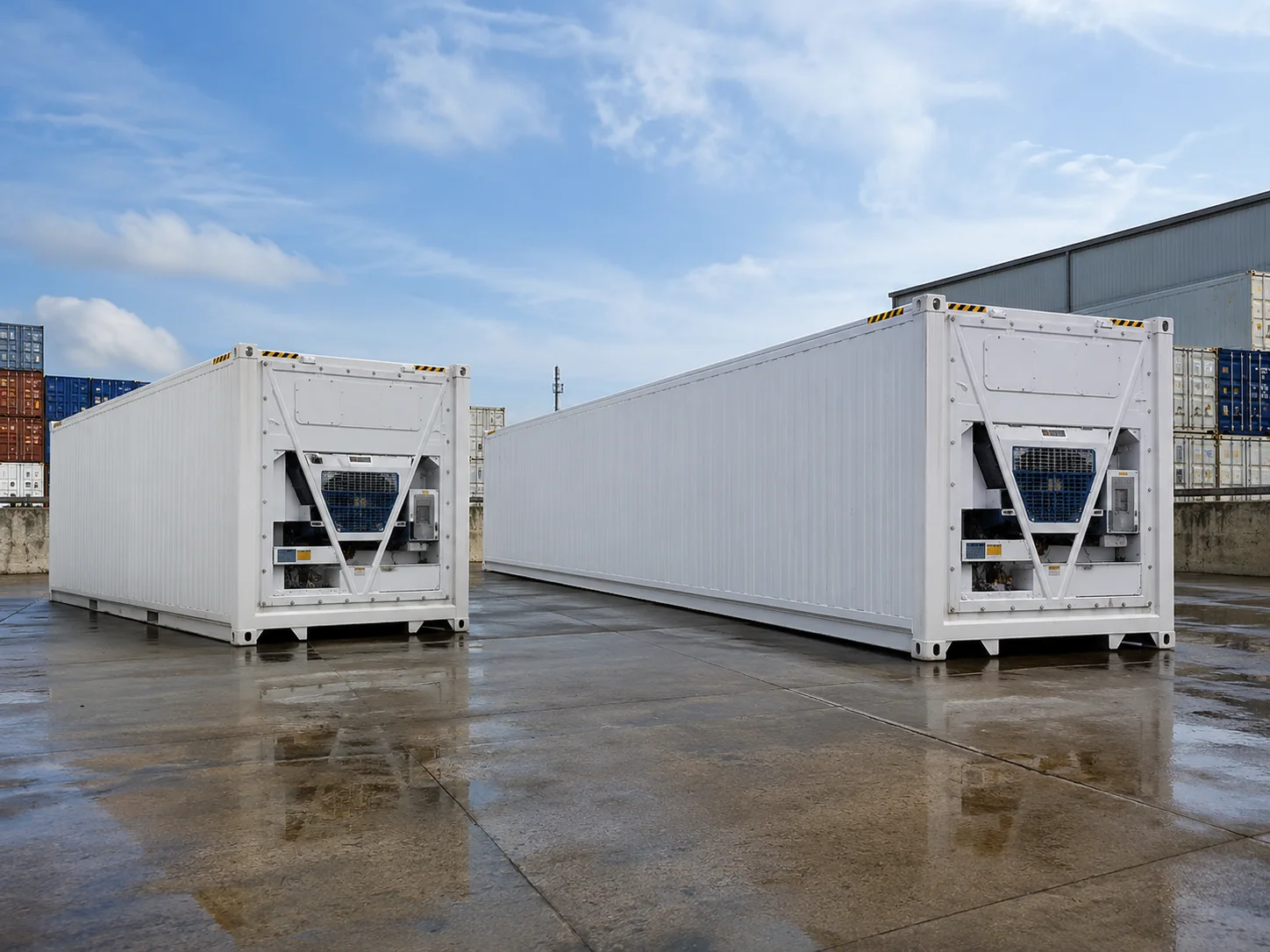
Choosing between a 20ft and 40ft refrigerated container depends on more than how much cold storage space you need. The right reefer container size affects site placement, delivery access, rental cost, purchase price, power requirements, storage capacity, and how efficiently your team can load and organize temperature-sensitive products. Whether you need compact cold storage for a restaurant, event, pharmaceutical inventory, or jobsite, or a larger refrigerated container for food distribution, agriculture, floral storage, or bulk inventory, this guide compares 20ft vs 40ft refrigerated containers to help you choose the right size for your operation.
Key Takeaways
- 20ft refrigerated containers are best for smaller cold storage needs, tight spaces, restaurants, events, and temporary overflow inventory.
- 40ft refrigerated containers provide more storage capacity and better cost-per-cubic-foot value for bulk inventory, distribution, agriculture, and larger commercial operations.
- The right choice depends on storage volume, site access, power availability, rental length, delivery clearance, and product type.
- A 20ft reefer is usually easier to place and operate, while a 40ft reefer is better when you need more capacity from one unit.
- If you are unsure which size fits your operation, compare your product volume, available space, and expected storage timeline before renting or buying.
20ft vs 40ft Refrigerated Container: Quick Comparison
| Feature | 20ft Refrigerated Container | 40ft Refrigerated Container |
|---|---|---|
| Best For | Small to mid-size cold storage, restaurants, events, overflow inventory, compact sites | Bulk storage, distribution, agriculture, food service, floral, pharmaceuticals, large operations |
| Exterior Size | Approximately 20' L x 8' W x 8'6" H | Commonly available as 40' L x 8' W x 9'6" H high cube reefer |
| Interior Space | More compact storage footprint | Significantly larger storage capacity |
| Site Placement | Easier to place in tight or urban spaces | Requires more clearance and delivery space |
| Rental Cost | Generally lower rental rate | Higher rental rate, but better storage volume per unit |
| Purchase Cost | Generally lower purchase price | Higher purchase price, but more cold storage capacity |
What Is a 20ft Refrigerated Container?
A 20ft refrigerated container, also called a 20ft reefer container, is a temperature-controlled shipping container designed for compact cold storage. According to Conexwest’s 20ft reefer specifications, a standard 20ft refrigerated container has exterior dimensions of approximately 20 feet long, 8 feet wide, and 8 feet 6 inches high. Conexwest’s product specifications also list interior dimensions of approximately 18 feet 6 inches long, 7 feet 6 inches wide, and 7 feet 5 inches high, with about 1,050 cubic feet of capacity.
This size is often the better fit when space is limited, delivery access is tight, or the business only needs temporary or moderate refrigerated storage. A 20ft reefer can be useful for restaurants, caterers, grocery overflow, pharmaceutical storage, agriculture, light manufacturing, and backup refrigeration.
Best Uses for a 20ft Refrigerated Container
- Restaurant overflow inventory
- Catering and event cold storage
- Temporary refrigerated storage during renovations
- Pharmaceutical or medical supply storage
- Small agricultural storage needs
- Backup cold storage during equipment repairs
- Construction or jobsite temperature-controlled storage
For more detailed measurements, see Conexwest’s guide to 20ft reefer container dimensions and specifications.
What Is a 40ft Refrigerated Container?
A 40ft refrigerated container is a larger reefer container designed for higher-volume temperature-controlled storage. Conexwest’s 40ft reefer specifications describe a 40ft high cube reefer container with exterior dimensions of approximately 40 feet long, 8 feet wide, and 9 feet 6 inches high. That extra length and height make it a strong option for businesses that need more cold storage capacity in one unit.
A 40ft reefer is often used for food distribution, seafood and meat storage, agriculture, floral storage, pharmaceutical inventory, beverage storage, and large event operations. It requires more delivery clearance than a 20ft unit, but it can help consolidate inventory and reduce the need for multiple smaller refrigerated containers.
Best Uses for a 40ft Refrigerated Container
- Food distribution and wholesale storage
- Large restaurant or grocery operations
- Agricultural harvest storage
- Seafood, meat, and beverage storage
- Floral and nursery inventory
- Pharmaceutical and healthcare inventory
- Long-term commercial cold storage
For more specifications, review Conexwest’s guide to 40ft reefer container dimensions and specifications.
Storage Capacity: Which Size Holds More?
The most obvious difference between a 20ft and 40ft refrigerated container is storage capacity. A 20ft reefer is easier to place and may be enough for smaller operations, while a 40ft reefer provides substantially more usable space for larger inventory needs.
A 20ft refrigerated container may be the better choice if your business needs cold storage for a limited amount of product, short-term overflow, or a temporary project. A 40ft refrigerated container may be more efficient if you regularly store bulk inventory, pallets, produce, frozen goods, or temperature-sensitive products that need more room for airflow and organization.
Site Access and Delivery Clearance
Site access is one of the most important practical factors when comparing 20ft vs 40ft refrigerated containers. A 20ft reefer is easier to deliver, maneuver, and place in tighter locations. This makes it useful for urban restaurants, small warehouses, temporary event spaces, and jobsites with limited room.
A 40ft reefer needs more space for delivery, placement, and access around the unit. Before choosing a 40ft refrigerated container, confirm that your site has enough room for the delivery truck, container placement, door swing, safe access, and electrical setup.
Power Requirements and Temperature Control
Refrigerated containers require a reliable power source to maintain temperature. Conexwest’s 20ft refrigerated container specifications list typical power requirements of 460V 3-phase power with 32–40 amps. Some Conexwest refrigerated container options also include single-phase and dual-voltage configurations, depending on the unit type.
Temperature ranges vary by container model and refrigeration system. Conexwest’s 20ft reefer guide notes that some 20ft reefer containers can maintain temperatures from -40°F to 70°F, while the 40ft high cube reefer guide lists a temperature range of -20°F to 70°F. For businesses needing deeper freezing, blast freezer or deep freezer configurations may be more appropriate than a standard refrigerated container.
If you are comparing refrigeration options by temperature range instead of size, read Conexwest’s guide on reefer vs freezer containers.
Rental and Purchase Cost Comparison
Cost is another major factor when deciding between a 20ft and 40ft refrigerated container. Conexwest’s refrigerated container rental and sale comparison lists estimated purchase and rental ranges for common reefer options. A 20ft refrigerated container is listed at approximately $30,000 to $40,000 to purchase and about $799 per 4 weeks to rent. A 40ft refrigerated container is listed at approximately $35,000 to $45,000 to purchase and about $899 per 4 weeks to rent.
While a 40ft refrigerated container costs more overall, it can provide better value when your business needs the additional capacity. For smaller or shorter-term needs, a 20ft reefer may be the more cost-effective choice because it requires less space and has a lower rental rate.
For a deeper price comparison, see Conexwest’s article on refrigerated container rental and sale costs.
When to Choose a 20ft Refrigerated Container
Choose a 20ft refrigerated container if your priority is flexibility, compact placement, or short-term cold storage. This size works well when you need reliable refrigeration but do not have enough product volume to justify a larger unit.
A 20ft reefer may be best if you need:
- Cold storage for a smaller business or temporary project
- A unit that fits in tighter spaces
- Lower rental or purchase cost
- Restaurant, catering, or event overflow storage
- Backup refrigeration during repairs or renovations
- A compact unit that can be easier to deliver and reposition
When to Choose a 40ft Refrigerated Container
Choose a 40ft refrigerated container if your business needs more storage volume, better bulk inventory control, or a long-term cold storage solution. A larger reefer may cost more upfront, but it can reduce the need for multiple smaller units and improve storage efficiency for high-volume operations.
A 40ft reefer may be best if you need:
- Higher-capacity refrigerated storage
- Bulk food, beverage, floral, or agricultural storage
- Long-term commercial cold storage
- More room for pallets, shelving, and product organization
- One larger unit instead of multiple smaller containers
- Better cost-per-cubic-foot value for larger inventory needs
Which Refrigerated Container Size Is Better for Restaurants?
For restaurants, the right reefer size depends on inventory volume, available space, and how long the container will be used. A 20ft refrigerated container often works well for overflow inventory, catering prep, seasonal demand, emergency refrigeration, and renovations. A 40ft refrigerated container may be a better option for larger restaurants, commissary kitchens, grocery operations, or businesses storing large volumes of perishable products.
For restaurant-specific cold storage planning, read Conexwest’s guide on how to choose the right cold storage for your restaurant.
Should You Rent or Buy a 20ft or 40ft Reefer?
Renting is usually the better option for short-term cold storage, seasonal demand, events, emergency refrigeration, or temporary projects. Buying may make more sense for businesses with ongoing cold storage needs, predictable inventory volume, and a long-term site location.
If your operation needs refrigerated storage for only a few weeks or months, renting a 20ft or 40ft reefer may help reduce upfront cost. If the container will be used year-round, purchasing may offer better long-term value.
Final Recommendation: 20ft vs 40ft Refrigerated Container
A 20ft refrigerated container is usually the better choice for compact, temporary, or lower-volume cold storage. It is easier to place, more flexible for tight sites, and generally less expensive to rent or buy. A 40ft refrigerated container is the better choice for larger operations that need more storage capacity, better bulk inventory control, and stronger cost-per-cubic-foot value.
The best refrigerated container size depends on your site, product volume, power availability, budget, and storage timeline. If you need help comparing options, Conexwest offers cold storage and freezer containers in multiple sizes and configurations for commercial, industrial, agricultural, restaurant, healthcare, and event applications.