
Consider the intended use of the container. For transporting goods, steel or plywood flooring is suitable. For residential or office spaces, options like carpet tiles or vinyl planks can be used. Also, consider factors like durability, resistance to moisture, ease of cleaning, and maintenance.
Guide To Shipping Container Floor Thickness & Types Available
Shipping Container Floor Thickness & Types – Full Guide
Key Takeaways
- The standard thickness of a shipping container floor is approximately 28mm (1.1 inch).
- Floor thickness significantly impacts the load-bearing capacity, stability, and durability of a container.
- Common materials for container floors include plywood, steel, epoxy, and vinyl.
- Conexwest’s experts can help you pick the right flooring option for your needs and install a new container floor with precision.
Understanding Shipping Container Floor
Shipping container floors consist of two main elements: steel cross-members and a wood floor. The steel cross-members span the width of the container and are spaced approximately every 5–6 inches to provide structural support. These cross-members lift the container above the ground, which helps minimize moisture seepage and damage from the environment.
Conexwest, a leader in shipping and storage solutions based in Northern California, offers new, used, and refurbished containers from 10ft to 45ft, with fast delivery within 3-7 days and container fabrication options like adding shelves and locks. We serve over 10,000 customers nationwide, including prestigious clients like the U.S. Navy and Google. As an ISO 9001 and AWS-certified company, we ensure top quality and competitive pricing. |
Why Shipping Container Floor Thickness Matters
Most standard shipping containers have a floor thickness of 1.1 inches (28 mm) but can vary. Here’s why it matters:
- Load Capacity: Thicker floorboards can support heavier loads, which increases the load capacity of a container.
- Durability and Lifespan: Proper floor thickness is necessary to maintain structural integrity and extend the lifespan of shipping containers.
- Resistance to Damage: Thicker flooring increases resistance against moisture and pest damage - common issues in shipping containers.
- Goods Safety: Thicker floors mean reduced chances of goods damage during transportation, as a thinner floor might buckle under pressure.
Types Of Shipping Container Floors
1. Original Plywood or Bamboo Flooring
Marine-grade plywood is the most common and traditional flooring choice for shipping containers. Typically 28 mm thick, these floors are treated with insecticides and fungicides to prevent pest infestation and decay.
They provide excellent durability, load-bearing capacity, and natural insulation properties. However, the wood requires periodic maintenance to retain its protective qualities.
2. Carpet Flooring
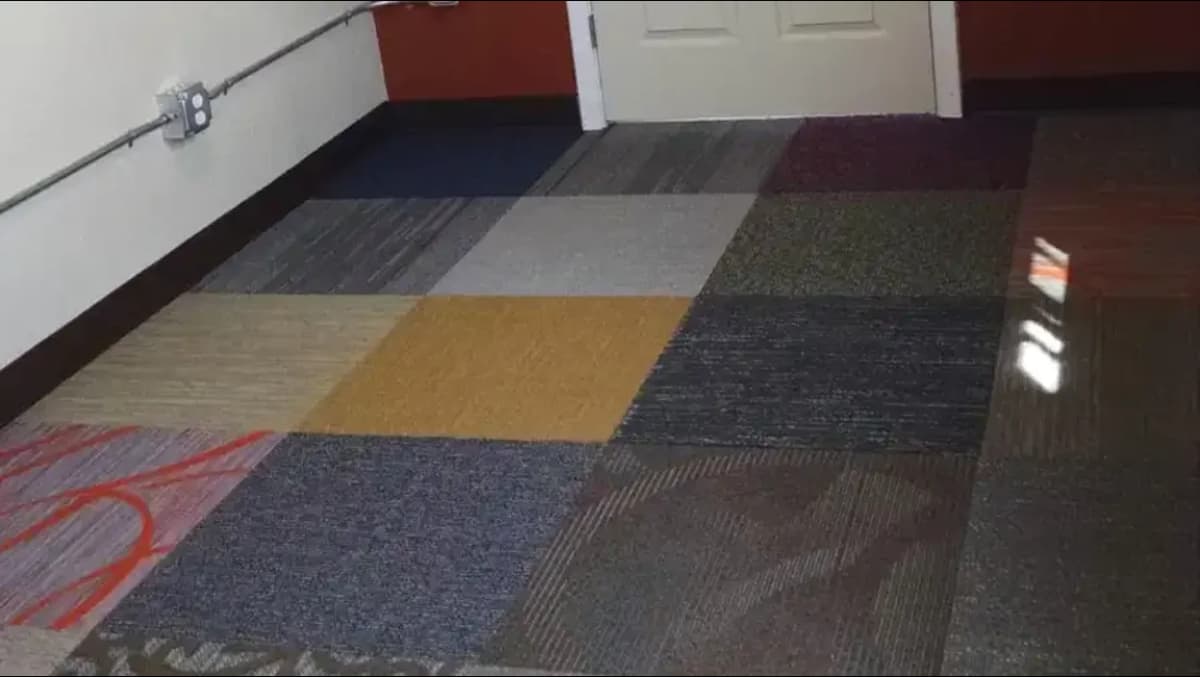
Carpet flooring is usually preferred for shipping container homes.
Often used in converted container offices and living spaces, carpet flooring provides comfort and sound absorption. It's installed over the existing container floor with proper underlayment to prevent moisture buildup.
While it creates a more comfortable, homey environment, the carpet requires regular cleaning and isn't suitable for high-traffic commercial applications.
3. Containment Tray Flooring
Specifically designed for hazardous material or chemical storage, containment tray flooring has a raised steel or aluminum platform with a liquid-tight tray underneath.
This system catches and contains any spills or leaks to prevent environmental contamination. The trays are equipped with drainage points and can be easily cleaned.
4. Epoxy Flooring
A popular choice for converted containers, epoxy flooring provides a seamless, durable surface that's both chemical and water-resistant. The multi-layer system includes a primer, base coat, and clear topcoat, creating a hard-wearing surface that's easy to clean and maintain.
Epoxy floors can be customized with different colors and patterns, which makes them ideal for retail spaces, workshops, and industrial applications.
5. Laminate Flooring
A cost-effective option for converted containers used as offices or living spaces, laminate flooring provides the appearance of hardwood with better durability and moisture resistance. It's installed as a floating floor system over a moisture barrier and can withstand moderate traffic.
While not as durable as some other options, laminate provides good value and aesthetic appeal for non-industrial applications.
6. Steel Flooring

Steel flooring is the strongest flooring option.
Highly durable and completely waterproof, steel flooring is often used in specialized containers requiring maximum strength and chemical resistance. Usually featuring a checker plate or diamond pattern for improved traction, steel floors can handle extreme weights and harsh conditions.
While excellent for industrial applications, steel flooring can be cold and noisy.
7. Vinyl Flooring
A versatile option that combines durability with comfort, vinyl flooring is available in sheets or tiles. Commercial-grade vinyl provides good water resistance and is relatively easy to maintain. It can withstand moderate traffic and provides some sound-dampening properties.
Modern vinyl options include luxury vinyl tiles (LVT) that can mimic the appearance of wood or stone while providing superior durability and moisture resistance.
Choose Conexwest For Shipping Container Flooring Fabrication

The experienced fabrication team of Conexwest knows how to install any type of flooring to perfection.
At Conexwest, we are the leading provider of shipping containers and their fabrication services in the US.
Among the extensive customization options we give you, one of them is container flooring—an important part of a shipping container on which relies its lifespan and loading capacity. So if you're planning to customize it, make sure it’s done by someone you can trust, and here’s why we’re the right choice.
- Customization Expertise: Regardless of the type of flooring you need - steel, vinyl, epoxy, etc - we have a top fabrication team to deliver it with the highest of standards.
- Customer-Focused Service: We're committed to providing excellent customer service. From initial consultation to final delivery - we work closely with you to understand your requirements and make sure you're completely satisfied with the result.
- Proven Track Record: We have a long history of delivering high-quality container solutions to a wide range of industries. Our experience and expertise mean you can trust us to get the job done right and on time.
Get a quote
Was this helpful?
Frequently Asked Questions
- Regularly check for signs of wear or damage, such as cracks or warping.
- Make sure the floor is clean and free from debris, which can cause damage over time.
- If the floor is made of wood, treat it with sealants or coatings to protect against moisture and pests.
- For metal floors, inspect for signs of rust and address them immediately to prevent further corrosion.
Yes, you can replace the floor of a used shipping container. This process involves removing the existing floor and installing a new one, which can be made from your choice of materials.
Marine-grade plywood is resistant to extreme temperatures, humidity, and heavy cargo loads. However, it can attract pests and often requires pesticide treatment.
At Conexwest, we provide new, used, and refurbished containers in sizes ranging from 10 ft to 45 ft. Our inventory has many types of containers, including:
- Standard
- High cube
- Refrigerated
- Flat rack
- Open top
- Hazmat