
No. A standard shipping container should not be buried without professional engineering and reinforcement. Containers are designed to carry loads through their corner posts, not to resist soil pressure against the roof and side walls. Unreinforced burial can lead to wall buckling, roof collapse, leaks, and serious safety hazards.
How Deep Can You Bury a Shipping Container? Safety & Depth Guide | Conexwest
How Deep Can You Bury a Shipping Container? 2026 Safety and Legal Guide
Burying a shipping container is much more complicated than digging a hole and lowering the container into the ground. Standard shipping containers are designed to carry loads through their corner posts, not to resist constant pressure from soil pushing against the roof and side walls. Without professional engineering, reinforcement, drainage, waterproofing, ventilation, and local permits, a buried container can buckle, corrode, leak, or collapse. This 2026 guide explains how deep a shipping container can realistically be buried, why full burial is risky, what reinforcement is usually required, and why partial burial or berming may be a safer alternative.
Key Takeaways
- Standard shipping containers should not be fully buried without professional engineering and major reinforcement. Their strength is concentrated in the corner posts, not the roof or side walls.
- Shallow cover or partial burial may be possible in limited cases, but burial depth depends on soil type, water table, drainage, container condition, reinforcement design, and local code requirements.
- Soil pressure, wet soil, hydrostatic pressure, roof loading, corrosion, and poor ventilation are the biggest risks for underground container projects.
- Berming or partial burial is often safer, easier to inspect, easier to maintain, and less expensive than fully burying a shipping container.
- Excavation work can be dangerous. Always work with a structural engineer, excavation contractor, and local building department before starting an underground container project.
- Conexwest provides shipping containers for sale, container fabrication services, and custom container modifications, but any underground use must be engineered and permitted for the specific site.
Can You Bury a Shipping Container?
Technically, a shipping container can be placed underground only when the project is properly engineered, reinforced, drained, waterproofed, ventilated, and permitted. In practical terms, however, a standard unmodified shipping container should not be treated like a purpose-built underground shelter. Containers are built for stacking and transport, where loads transfer through the corner castings and vertical posts. Underground soil pressure works very differently by pushing inward against the walls and downward against the roof.
This difference matters. The roof and side walls of a standard container are relatively thin corrugated steel. They are not designed to hold back earth, saturated soil, or hydrostatic water pressure. Once a container is buried, even shallow soil cover can create loads the container was never designed to carry.
If your goal is an underground shelter, storm shelter, bunker, cellar, or earth-covered storage space, the safest first step is not buying a container. It is hiring a licensed structural engineer who can evaluate the site, soil conditions, groundwater, loads, access, ventilation, emergency exits, and code requirements.
For a broader project overview, read Conexwest’s guide to building an underground bunker using shipping containers.
Shipping Container Burial Risks
Burying a standard shipping container without reinforcement is dangerous. Containers are strong in the way they were designed to be strong: they can be stacked when loads are carried through the corner posts. They are not designed to resist constant pressure from soil on the roof and walls. When soil pushes inward, the side walls can bow, the roof can sag, and the structure can fail.
Water makes the problem worse. Wet soil is heavier than dry soil, and water trapped around a buried container can create hydrostatic pressure. Even if the container does not collapse right away, moisture can cause rust, leaks, mold, and long-term structural deterioration.
| Risk | Why It Matters | Planning Response |
|---|---|---|
| Wall pressure | Soil pushes inward against thin corrugated steel walls. | Requires engineered side-wall reinforcement and pressure distribution. |
| Roof loading | Soil above the container can overload the roof and cause sagging or collapse. | Requires engineered roof support, beams, or external structural protection. |
| Water pressure | Poor drainage can trap water around the container and force moisture through weak points. | Requires drainage, waterproofing, gravel base, and possibly sump systems. |
| Corrosion | Buried steel exposed to moisture can rust faster than an above-ground container. | Requires coatings, membranes, drainage, inspections, and maintenance access. |
| Ventilation failure | Underground enclosed spaces can become unsafe without fresh air and exhaust. | Requires engineered ventilation, emergency air, and safe access/egress planning. |
| Excavation hazards | Trench or excavation collapse can seriously injure workers before the container is even placed. | Requires excavation safety planning, shoring, sloping, shielding, and qualified contractors. |
How Deep Can You Bury a Shipping Container?
There is no universal safe burial depth for a shipping container. The answer depends on the container condition, soil type, groundwater level, drainage design, reinforcement system, roof load, side-wall pressure, and whether the project has been engineered for underground use.
As a general safety principle, a standard unreinforced container should not be fully buried. Even shallow burial can be risky if water, clay soil, poor drainage, or roof loading is involved. Many safer projects use partial burial, berming, or an external structure around the container rather than placing soil directly against an unprotected container.
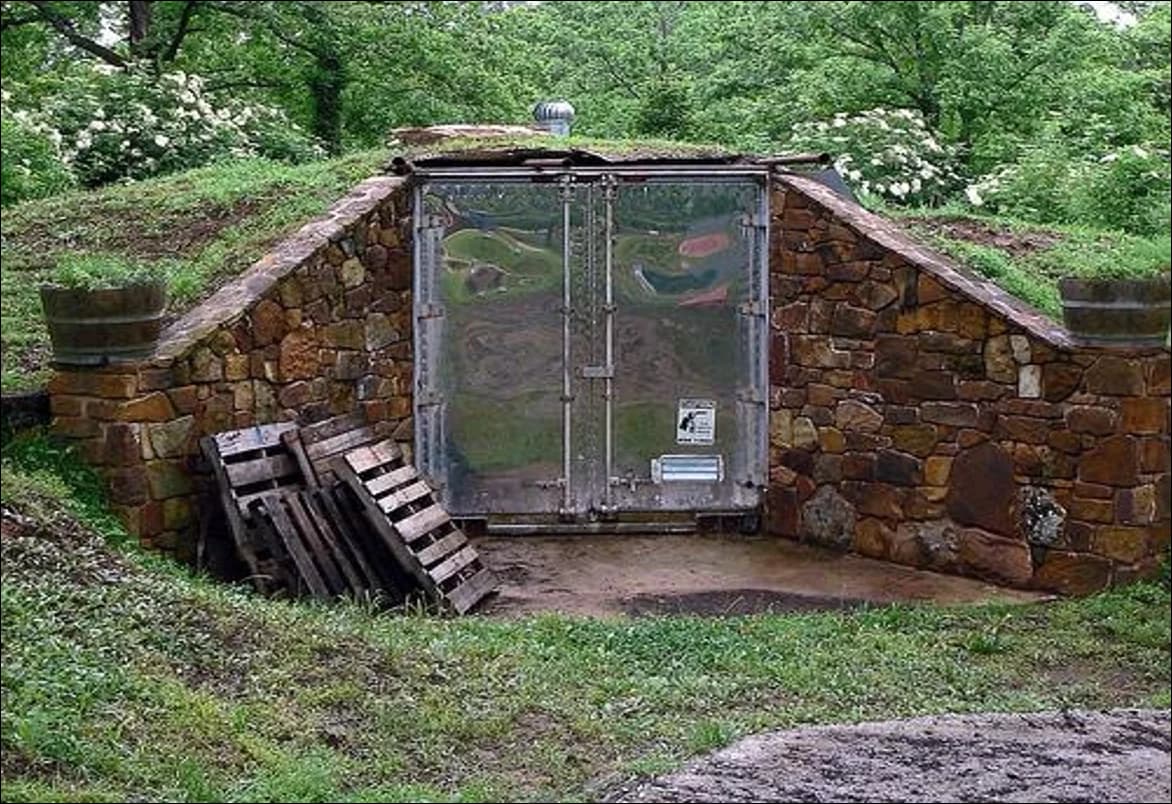
Standard shipping containers are not designed for full burial. Partial burial, berming, or engineered enclosure systems are usually safer than placing soil directly against the roof and side walls.
Shallow Cover or Partial Burial
Shallow cover or partial burial may reduce visual exposure and help with temperature stability, but it still requires drainage, waterproofing, and structural review. Even a small amount of soil on the roof adds weight. Soil against the walls adds lateral pressure. If the soil becomes saturated, loads can increase quickly.
Full Burial
Full burial should only be considered when the container is part of an engineered underground structure. That usually means the container is reinforced internally, protected externally, supported at the roof, isolated from direct soil pressure, drained properly, waterproofed, ventilated, and inspected according to local requirements.
Why Deeper Is Not Automatically Better
Deeper burial may sound appealing for concealment, temperature control, or protection, but it greatly increases risk. Additional depth increases soil load, water pressure, excavation complexity, ventilation requirements, emergency access needs, and structural cost. At some point, a purpose-built underground structure may be safer and more cost-effective than forcing a container to perform a job it was not designed to do.
Burial Depth Planning Guide
| Burial Approach | Risk Level | What It Usually Requires | Best Use |
|---|---|---|---|
| No burial / above ground | Lowest | Normal site prep, anchoring if needed, drainage, and weather protection. | Storage, workshops, shelters, offices, equipment rooms. |
| Berming | Lower than full burial | Sloped soil placement, drainage, waterproofing, roof protection, and access planning. | Earth-sheltered appearance, temperature stability, reduced exposure. |
| Partial burial | Moderate to high | Engineering, wall reinforcement, waterproofing, drainage, ventilation, and inspection access. | Projects needing some earth coverage without full burial loads. |
| Full burial | Highest | Structural engineering, reinforced roof/walls, pressure distribution, waterproofing, drainage, ventilation, emergency exits, and permits. | Only for engineered underground projects. |
Structural Requirements for Underground Container Projects
Any container intended for underground use must be evaluated as part of a structural system. The container itself is not enough. The engineer must account for soil loads, roof loads, lateral pressure, groundwater, corrosion, openings, access points, ventilation penetrations, and long-term maintenance.
Container Type and Condition
Not every container is a good candidate for modification or underground planning. Newer containers and structurally sound cargo-worthy units may provide a better starting point than containers with dents, heavy rust, roof damage, floor damage, or weakened corner posts. Even then, the container still needs reinforcement for burial-related loads.
Browse Conexwest’s 20ft shipping containers, 40ft shipping containers, and shipping containers for sale to compare available container options.
Internal Reinforcement
Internal reinforcement may include steel beams, columns, cross-bracing, wall supports, and roof supports designed by a structural engineer. The design must transfer loads safely to the foundation and prevent wall or roof collapse. Reinforcement often reduces usable interior space, which should be considered early in layout planning.
Roof Support
The roof is one of the most vulnerable parts of a buried container. Soil placed above a container can overload the roof unless a separate engineered support system is used. Depending on the design, this may require steel beams, reinforced concrete, a protective structural lid, or another engineered load-transfer system.
External Pressure Distribution
External systems can help prevent soil from pressing directly against the container walls. Depending on the design, this may include reinforced concrete walls, retaining walls, gabion systems, structural shells, drainage layers, geotextiles, waterproofing membranes, or other engineered barriers.
For a deeper technical overview, see Conexwest’s guide on how to reinforce a shipping container for underground use.
Excavation and Legal Requirements
Underground container projects are not just container projects. They are excavation and structural projects. Local building departments may require permits for excavation, grading, retaining walls, foundations, electrical work, ventilation, drainage, and occupied or accessory structures.
Excavation safety is also critical. OSHA excavation guidance addresses protective systems such as sloping, benching, shoring, and shielding. Excavation conditions vary by soil type, depth, water, nearby structures, and site conditions, so qualified contractors should plan the excavation before work begins.
Before digging, confirm:
- Local building permit requirements
- Zoning and allowed land use
- Setback requirements
- Utility location and underground service lines
- Soil type and bearing conditions
- Seasonal water table depth
- Drainage and stormwater requirements
- Whether retaining walls or engineered shoring are required
- Emergency access and egress requirements
- Whether the structure will be occupied, used for storage, or used as a shelter
Water Problems: The Biggest Long-Term Threat
Water is often the most serious long-term problem for buried containers. Even if the structure is reinforced, moisture can cause corrosion, leaks, mold, odor, floor damage, and equipment failure. Waterproofing alone is not enough. A safe underground design needs drainage first, then waterproofing, then inspection and maintenance access.
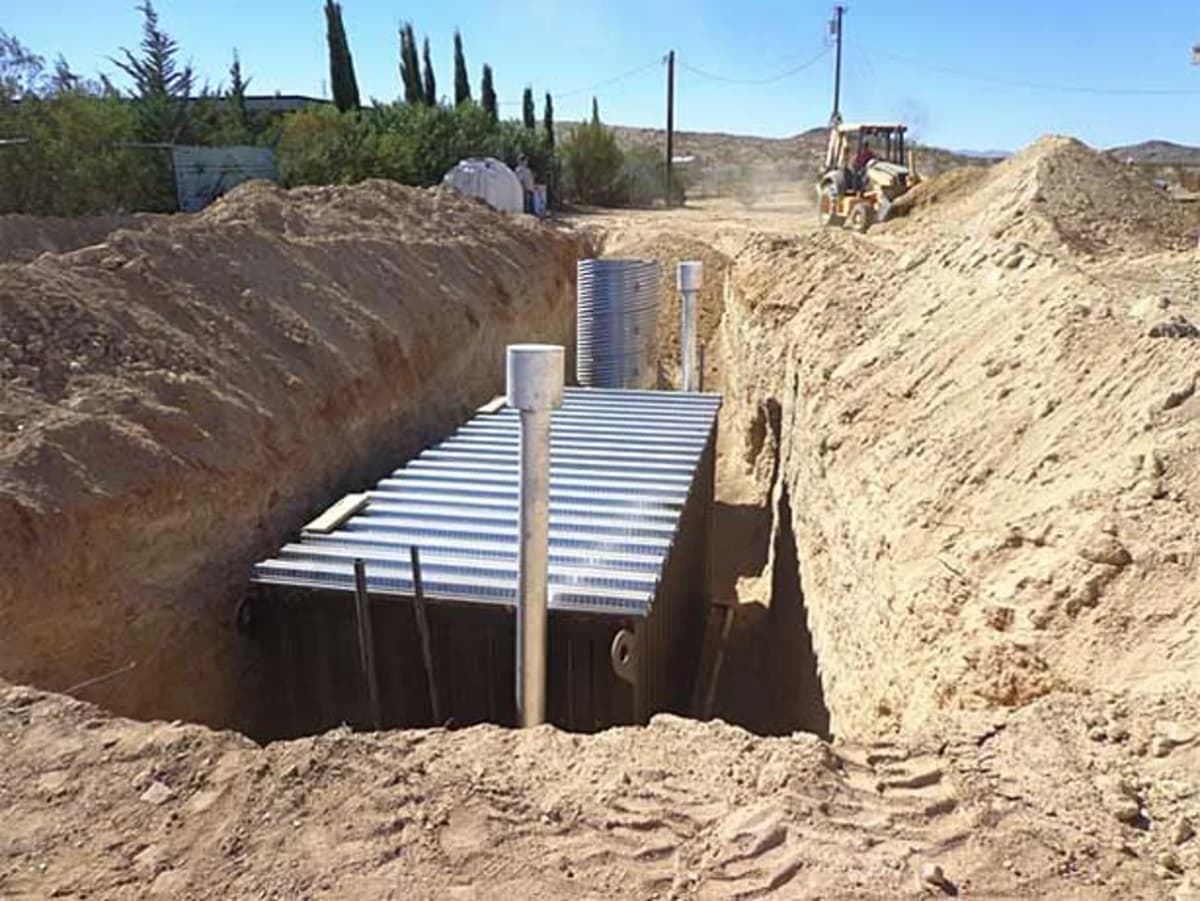
Water infiltration can cause corrosion, mold, and long-term structural damage in buried container projects.
Water Table Assessment
Before planning burial, evaluate the water table and how it changes throughout the year. A site that appears dry in summer may experience high groundwater in spring or after heavy storms. Soil testing, percolation testing, and local drainage information can help determine whether underground placement is realistic.
Drainage Solutions
Drainage should be designed before waterproofing. Common planning elements may include a compacted gravel base, perimeter French drains, drainage pipe, geotextile fabric, sump systems, discharge points, surface grading, and waterproof membranes. Water should be moved away from the container, not allowed to collect around it.
Waterproofing Methods
Waterproofing may include rust-inhibiting coatings, metal primers, rubberized membranes, foundation-style waterproofing membranes, protection boards, and drainage mats. These systems must be compatible with steel and installed correctly. Poor waterproofing details around doors, seams, vents, and utility penetrations are common failure points.
For related moisture information, read Conexwest’s guide on whether shipping containers are flood waterproof.
Container Preparation Before Burial or Berming
Rust Prevention
Any container considered for underground or earth-contact use should be cleaned, inspected, repaired, and protected before installation. Rust should be removed or treated, and coatings should be selected for the environment. Coastal areas, high-moisture soils, and poorly drained sites increase corrosion risk.
Door Reinforcement and Access
Standard container doors are not designed for underground pressure, waterproof sealing, or emergency shelter use. Some projects may require reinforced doors, new access openings, vestibules, bulkheads, stairwells, or purpose-built doors. Access should be designed for safety, waterproofing, ventilation, and emergency exit requirements.
For bunker-specific planning, see Conexwest’s shipping container underground bunker guide.
Ventilation Requirements
Ventilation is essential for any enclosed underground space. A buried or partially buried container may need intake air, exhaust air, emergency ventilation, mechanical fans, filtration, condensation control, and backup systems. Penetrations through the container must be sealed carefully to prevent water intrusion.
If the container will ever be occupied, ventilation and emergency egress should be designed by qualified professionals, not improvised after burial.
Alternative Burial Methods
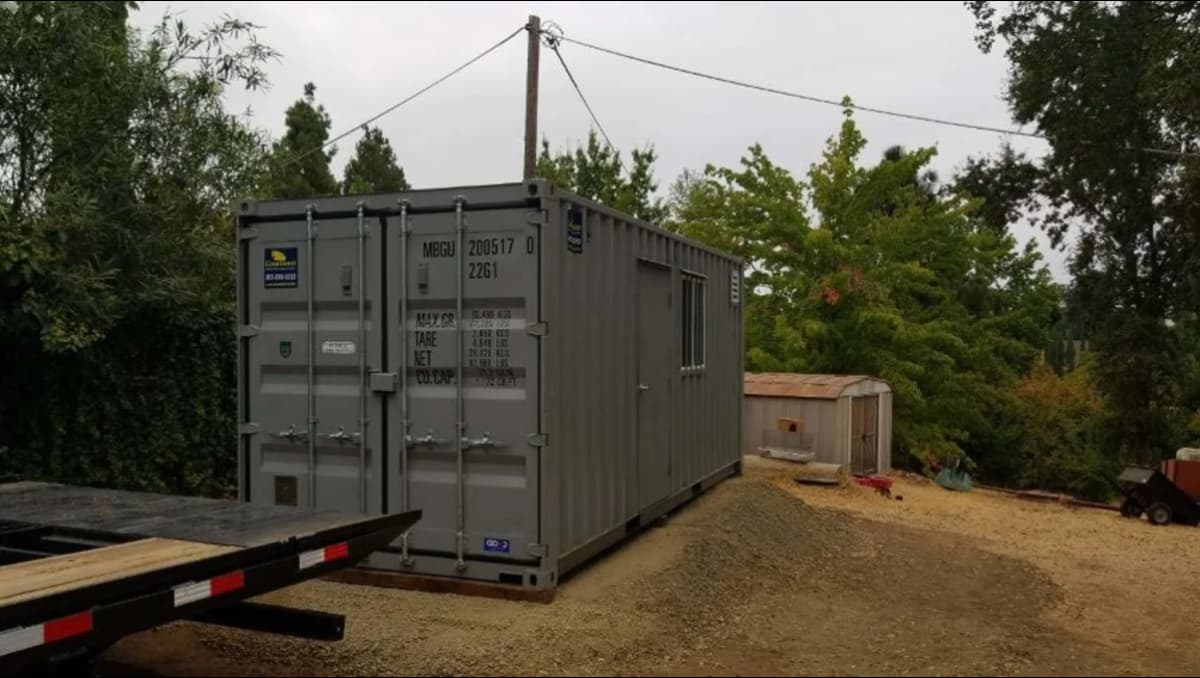
Above-ground, bermed, and partially sheltered container designs are often safer and easier to maintain than fully buried containers.
Partial Burial
Partial burial can reduce visual exposure and provide some temperature stabilization while avoiding some of the load problems of full burial. However, it still requires drainage, waterproofing, reinforcement, and inspection access. The exposed section can also make it easier to maintain the container over time.
Berming
Berming uses sloped earth around part of the structure rather than placing the container completely underground. This can provide earth-sheltered benefits while reducing roof load and lateral pressure. Berms can also be graded to move water away from the container.
Above-Ground Fortified Shelter
In many cases, an above-ground or partially protected structure may be safer, easier to permit, easier to ventilate, and easier to maintain than a fully buried container. Security, insulation, weather protection, and structural upgrades can still be added without taking on the full risk of deep burial.
Ready to plan the full concept? Start with Conexwest’s ultimate guide to building an underground bunker using shipping containers.
How Conexwest Can Help With Container-Based Shelter Projects
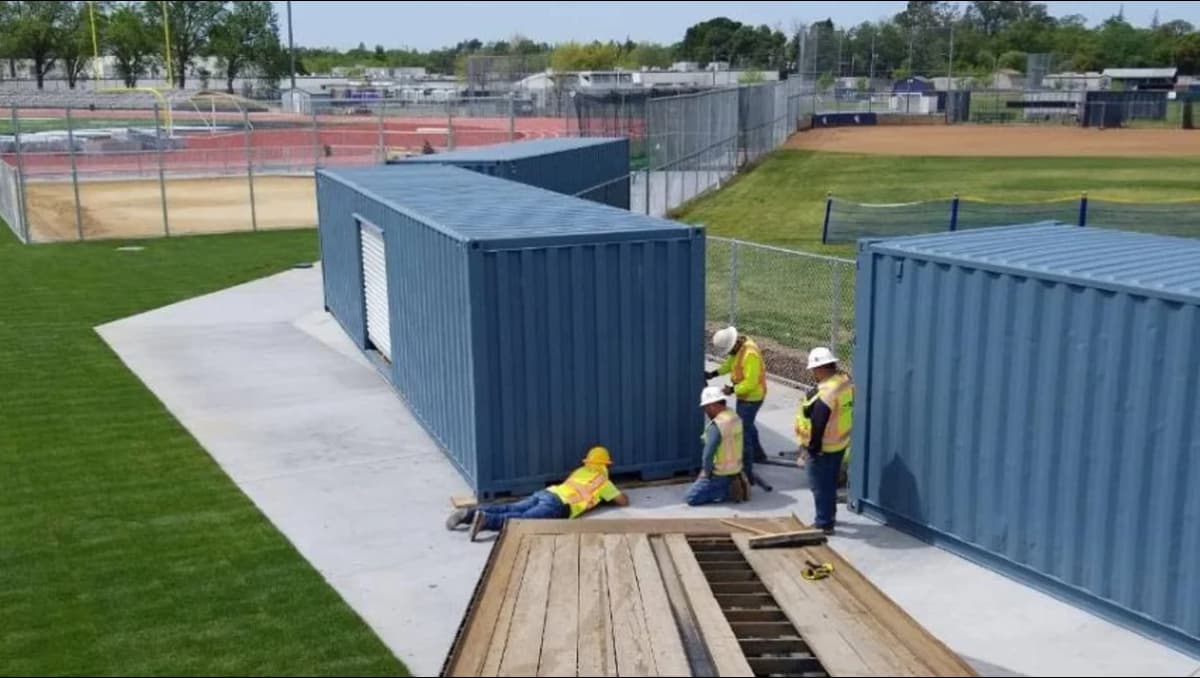
Container condition, structural integrity, and modification planning matter before any container is used for a specialized project.
Conexwest provides shipping containers, container sales, rentals, and modification services for many types of storage, shelter, office, and specialty container projects. For underground or partially buried use, Conexwest can help you choose a suitable starting container and explore modification options, but the final underground design must be handled by licensed engineers and local building professionals.
Conexwest can support your project with:
- Container selection: Choose from shipping containers for sale in multiple sizes and conditions.
- Custom modifications: Explore container customization options for doors, vents, insulation, electrical, shelving, and access features.
- Fabrication support: Review container fabrication services for project-specific modifications.
- Storage alternatives: Consider above-ground storage, storm-prep storage, workshop, office, or equipment storage solutions before choosing full burial.
- Related planning guides: Learn more from Conexwest’s shipping container bunker ideas and what to know before putting a shipping container underground.
If you are planning an underground container project, begin with engineering, permits, excavation safety, soil testing, and drainage design. Then choose the container and modifications that match the approved design.
Was this helpful?
Frequently Asked Questions
There is no universal safe depth. Burial depth depends on the container condition, soil type, groundwater, drainage, reinforcement, roof loading, and engineering design. Full burial should only be considered as part of a professionally engineered underground structure.
In many cases, yes. Partial burial or berming can reduce soil loads, improve maintenance access, simplify ventilation, and lower collapse risk compared with full burial. These approaches still require drainage, waterproofing, reinforcement, and professional design.
Earth can provide radiation shielding, but fallout protection requires more than burial. A true fallout shelter needs engineered shielding, filtered ventilation, safe entry and exit, contamination control, emergency supplies, and life-safety planning. A shipping container should not be assumed to be a nuclear shelter without specialized design.
Lifespan depends on container condition, drainage, waterproofing, corrosion protection, soil moisture, inspection access, and maintenance. Without proper protection, buried steel can corrode quickly. Long-term underground performance requires serious engineering and moisture-control planning.
In many locations, yes. Permits may be required for excavation, grading, retaining walls, foundations, drainage, electrical work, ventilation, occupied structures, shelters, or accessory buildings. Contact your local building department before starting work.
Standard containers were not designed for underground soil pressure. Conexwest can provide containers and modification options, but underground use requires licensed engineering, excavation planning, waterproofing, drainage, ventilation, and local approvals. In many cases, partial burial, berming, or above-ground reinforced solutions may be safer and more practical.