
A foundation is essential if you plan to keep the shipping container in the same location for weeks, months, years, or lifetime. It's especially important in wet areas to prevent water seepage and rust damage, on sloping or uneven ground to avoid damage to the floor, and for multi-container structures that may be too heavy for just the ground to support.
5 Best Foundations For Shipping Containers
Best Foundation Options for Shipping Containers
Key Takeaways
- Concrete slabs provide the most durable foundation, ideal for long-term shipping container placement.
- Concrete footings or piers provide stability and are excellent for uneven terrain.
- Proper foundation helps prevent containers from sinking and corrosion.
- Conexwest is your one-stop shop for shipping containers and customizations.
Why Foundation Matters For Shipping Containers
Prevents Sinking
Shipping containers are heavy, even empty ones. Without a proper foundation, the container could sink into the earth over time. A solid foundation distributes the container's weight evenly and prevents concentrated pressure points that could lead to sinking or damage.
Keeps the Container Level
Solid foundations provide stability and support, which keeps shipping containers level. This is especially important if the container is used as a living or workspace. Uneven settling or shifting can compromise the container's structural integrity and even cause doors to malfunction.
Minimizes Corrosion
Shipping containers are made of steel and are susceptible to corrosion when in contact with moisture or groundwater. A proper foundation minimizes this contact to reduce the risk of rust, corrosion, and rot.
Conexwest, a leader in shipping and storage solutions based in Northern California, offers new, used, and refurbished containers from 10ft to 45ft, with fast delivery within 3–7 days and container fabrication options like adding shelves and locks. We serve over 10,000 customers nationwide, including prestigious clients like the U.S. Navy and Google. As an ISO 9001 and AWS-certified company, we ensure top quality and competitive pricing. |
5 Best Shipping Container Foundations
1. Pier Foundation
This is a popular, affordable, and relatively easy-to-construct option. It involves placing concrete piers, sometimes reinforced with steel, at the corners of the container. For larger containers, additional piers can be placed along the sides for extra support. Pier foundations lift the container to promote ventilation and prevent condensation.
2. Slab Foundation
A concrete slab foundation is suitable for soft soils and warmer climates. It involves pouring concrete in an area that is slightly larger than the container's footprint. Slab foundations provide a solid, level base and can help prevent termite infestations. However, they require extensive excavation and can be more expensive and time-consuming than pier foundations.
3. Strip Foundation
Strip foundations, also known as trench foundations, combine elements of pier and slab foundations. They consist of concrete strips laid around the perimeter or along the top and bottom edges of the container. Strip foundations can be a cost-effective alternative to slab foundations, especially on less firm ground.
In areas with high rainfall, using a rubble strip foundation with loose stone beneath the concrete can improve drainage. However, they may have lower resistance to earthquakes and are best suited for small to medium-sized builds.
4. Pile Foundation
Pile foundations use solid steel piles (cylindrical tubes) driven deep into the ground and capped with concrete. This type of foundation is ideal for areas with softer soil.
5. Helical Pier Foundation
Also known as soil screws, screw piles, or helical piles, these involve twisting large metal screws into the soil using hydraulic machinery. They provide good uplift resistance and can be installed quickly without waiting for concrete to set.
Key Factors To Consider When Choosing A Foundation
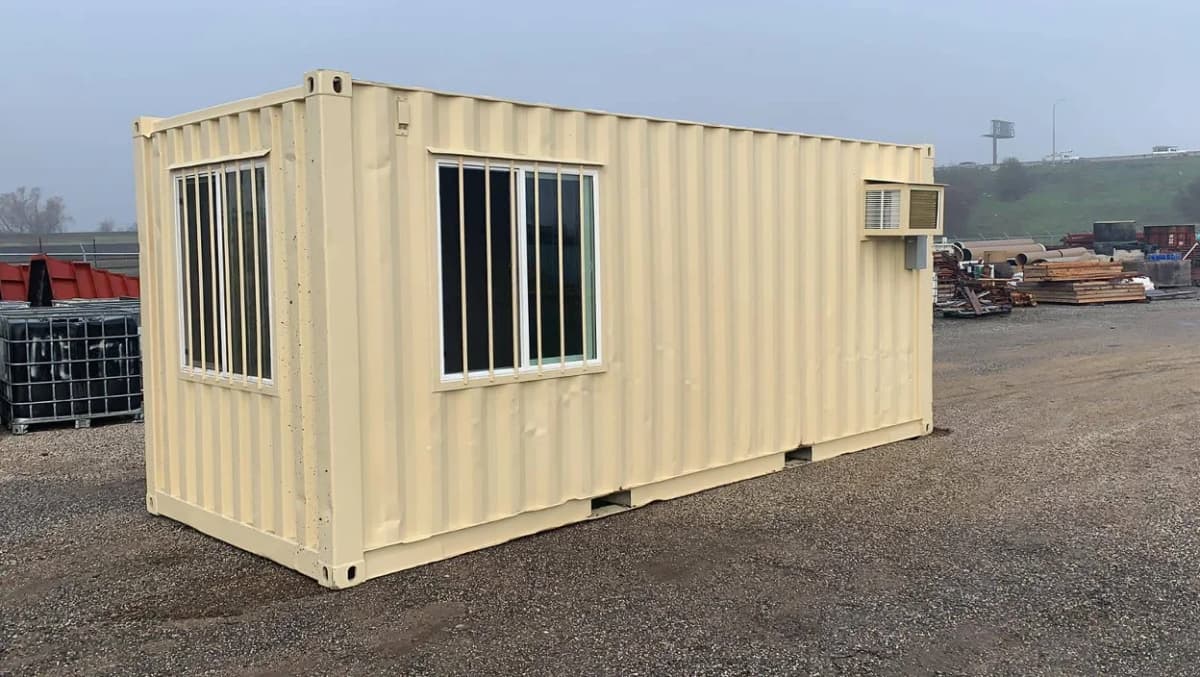
You don’t need a foundation if you’re placing a container for only a short period.
Usage and Location
Start by clearly defining how you'll use your container and where it will sit. A temporary storage container on a construction site has vastly different foundation needs than a permanent container home. Consider access requirements, local regulations, and if you might need to move the container in the future. Your usage directly impacts which foundation type makes the most sense.
Site Conditions
Thoroughly evaluate your site before choosing a foundation. The soil type makes a difference, so be sure to do a soil test beforehand. For example, clay behaves differently than sand or rocky soil.
Check drainage patterns during heavy rain to identify potential water issues. Measure the slope of your terrain, as grades over 5% typically require special consideration. Understanding these conditions prevents expensive surprises during installation.
Regulations
Local building codes often dictate minimum foundation requirements, especially for habitable structures. Some areas require engineer-stamped plans for any permanent foundation. Coastal regions may have additional requirements for wind uplift resistance. Research these regulations early in your planning process to avoid costly redesigns or failed inspections.
Total Weight of Your Container Construction
Calculate the complete weight your foundation must support, not just the empty container. Include the weight of modifications like insulation and drywall, furniture and equipment, and maximum occupancy if it's a living or work space. Foundations must handle this total load with a safety margin to prevent settling.
Soil Type
Different soils have dramatically different bearing capacities. Dense clay might support 3,000 pounds per square foot, while loose sand might only handle 1,000. Professional soil testing reveals your site's exact capacity, helping you choose a foundation that won't settle or shift over time. This information is especially critical for larger container structures.
Climate
Your local weather patterns significantly impact foundation performance. Areas with freeze-thaw cycles need foundations below the frost line to prevent heaving. Regions with heavy rainfall require excellent drainage to prevent water damage. Hot, dry climates may cause soil shrinkage that affects foundation stability. Design your foundation to handle these local challenges.
Budget
Foundation costs vary widely based on type and site conditions. While it's tempting to choose the cheapest option, foundation repairs are extremely expensive and disruptive. Factor in the initial installation costs, the long-term maintenance needs, and the potential cost of foundation failure when making your decision.
Choose Conexwest For All Your Shipping Container Needs
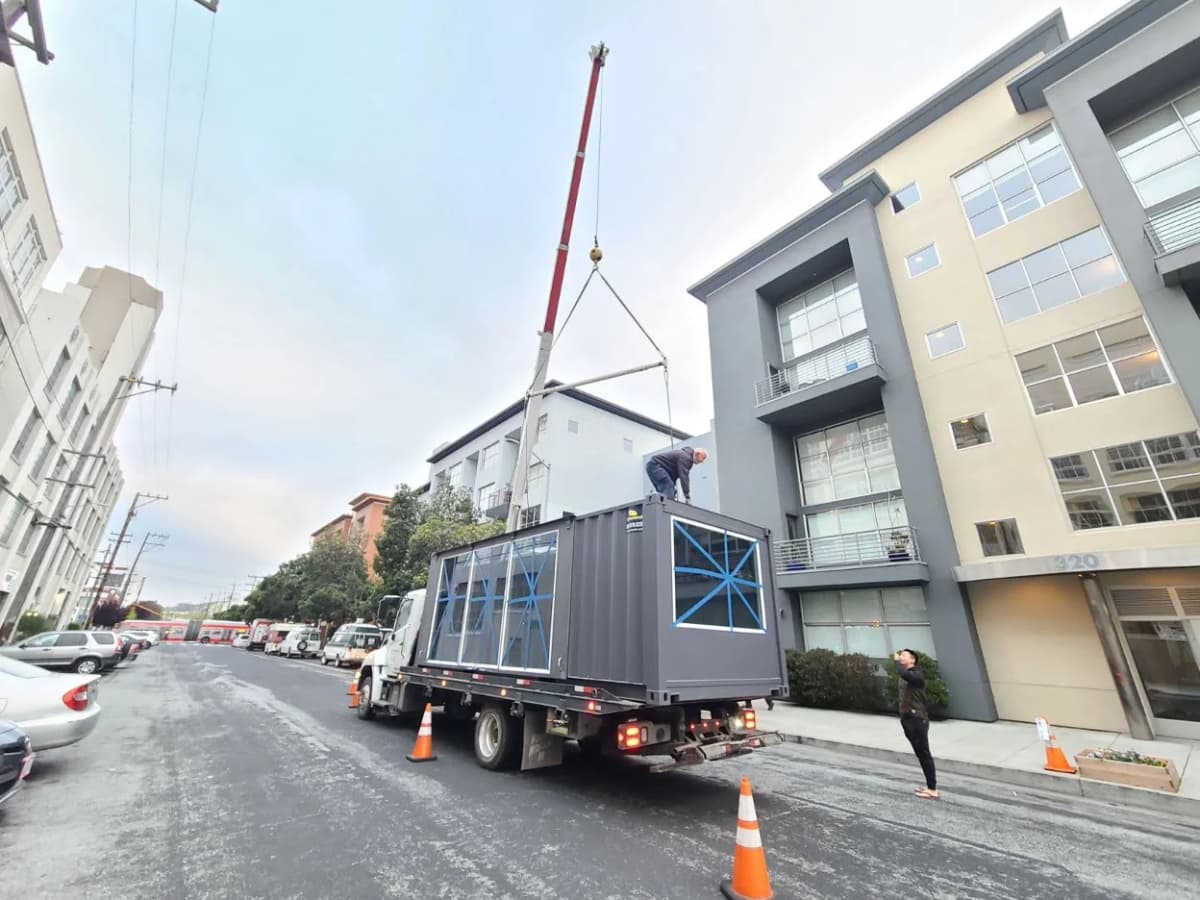
Conexwest also helps with the delivery and placement of your shipping container.
Over 10,000 customers nationwide have depended on Conexwest for their shipping container needs. Here’s why you should also choose us:
- Wide Selection: Be it a standard container, an insulated unit, a refrigerated container, or even a custom-designed office, we have it all. Plus, we carry a range of sizes from 10 ft to 45 ft, including standard and high cube.
- Customization Services: Want to turn a container into a barndominium, a restaurant, or extra storage? Our fabrication shops are equipped with skilled technicians who can add windows, HVAC, electrical power, specialty doors, custom paint, and much more.
- Transparent Pricing: We believe in upfront and honest pricing with no hidden fees.
- Warranty: Our new ISO shipping containers come with a 10-year warranty, and used cargo-worthy containers have a 5-year warranty.
- Delivery Services: We provide nationwide direct delivery services. On top of that, we’ll also guide you in choosing the best foundation for your container site.
Was this helpful?
Frequently Asked Questions
The most durable foundation for shipping containers is a concrete slab. This type of foundation provides a solid and level surface that evenly distributes the container's weight to provide long-term stability and protection against moisture.
Site preparation involves clearing debris and vegetation, leveling the ground, and compacting the soil.
You can use ground plates with twist-locks. Another option is attaching the container to a foundation through a steel plate pressed into the wet concrete.
Absolutely! We specialize in container customizations. No matter if you need a mobile office, a shed, or even a home, we can fulfill your needs.