
Shipping Containers for Retail & Grocery Businesses | Conexwest
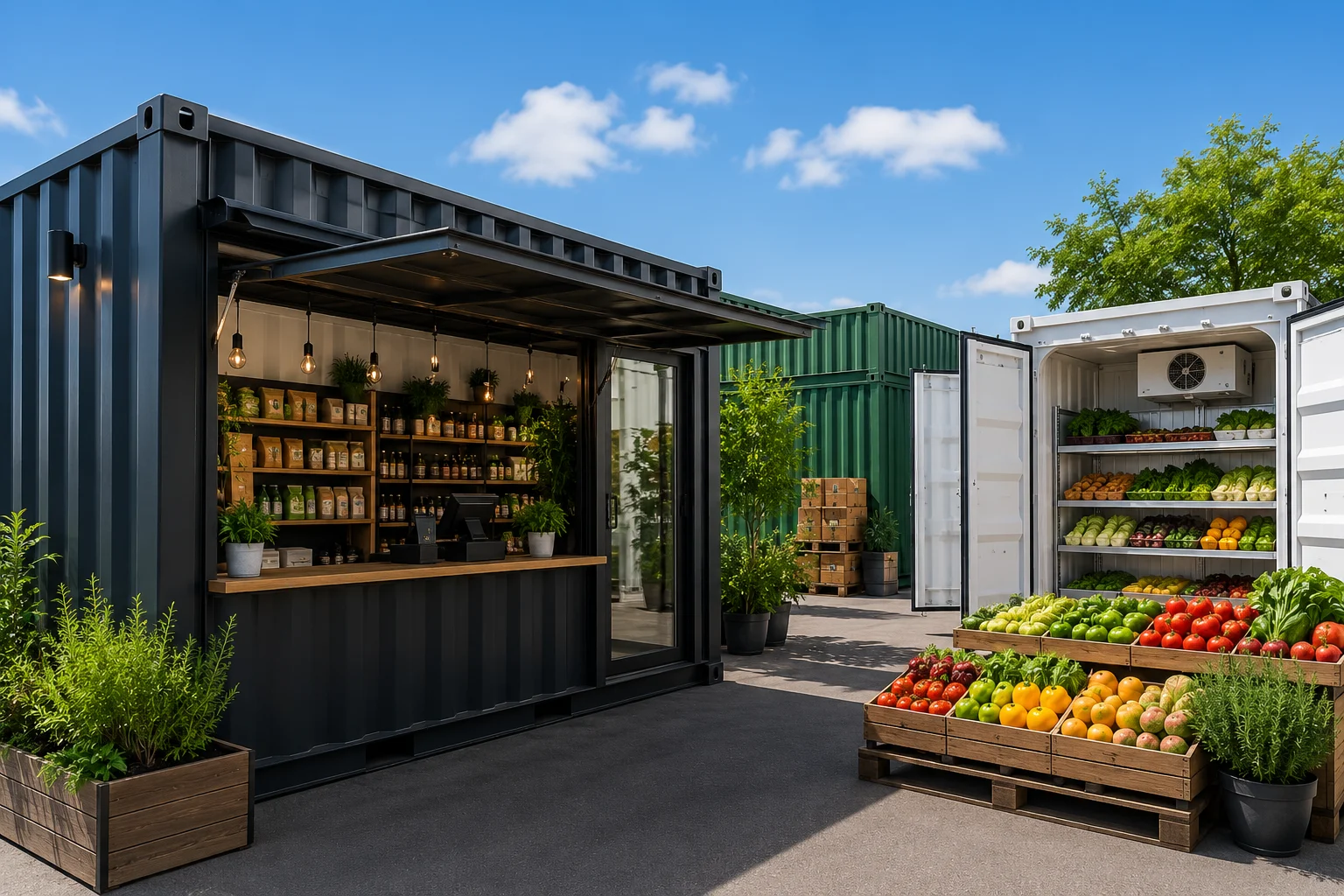
Shipping Containers for Retail and Grocery Businesses
Retail and grocery businesses need flexible space for customer-facing storefronts, back-of-house inventory, seasonal overflow, refrigerated products, frozen goods, event sales, and pop-up operations. Shipping containers can support these needs with secure dry storage, custom storefront buildouts, refrigerated containers, freezer containers, office-storage combinations, and modified food service units. Whether you run a grocery store, market, café, retail boutique, farm stand, concession business, or event-based brand activation, the right container setup can help you expand storage, protect inventory, and create a practical retail space without relying only on traditional construction.
Key Takeaways
- Retail businesses can use shipping containers for pop-up shops, storefronts, showrooms, inventory storage, seasonal stock, and event sales.
- Grocery businesses often need refrigerated or freezer containers for produce, dairy, meat, seafood, beverages, flowers, and other perishables.
- The best container depends on whether you need customer-facing space, dry storage, cold storage, frozen storage, or a custom food service setup.
- Common retail modifications include service windows, awnings, glass doors, shelving, lighting, HVAC, plumbing, counters, custom paint, and branding.
- Renting may work best for temporary overflow, seasonal demand, events, or renovations, while buying may make sense for long-term or heavily customized use.
How Retail and Grocery Businesses Use Shipping Containers
Shipping containers are useful in retail and grocery because they can solve several space problems at once. A store may need extra inventory storage during peak season. A grocery operator may need refrigerated overflow during holidays or supplier changes. A brand may need a mobile storefront for a product launch. A café or farm stand may need a compact customer-facing unit with service windows and storage.
Instead of treating every business as having the same storage need, it helps to separate container use into three main categories: storefronts, back-of-house storage, and cold storage.
| Business Need | Best Container Option | Common Uses |
|---|---|---|
| Customer-facing retail | Custom storefront container | Pop-up shops, boutiques, cafés, farm stands, ticket booths, showrooms, concession units |
| Dry inventory storage | Standard storage container | Fixtures, packaging, displays, seasonal merchandise, dry goods, event supplies |
| Perishable storage | Refrigerated or freezer container | Produce, dairy, meat, seafood, beverages, flowers, prepared foods, frozen goods |
| Food and beverage service | Modified café, bar, or concession container | Coffee shops, juice bars, food service counters, beverage stations, event bars |
| Temporary business expansion | Rental storage or refrigerated container | Renovations, seasonal inventory, holiday demand, emergency storage, temporary retail events |
Shipping Container Storefronts for Retail, Pop-Ups and Grocery Concepts
A shipping container storefront can turn a standard container into a compact retail space. These units can be modified with glass doors, hydraulic awnings, service windows, counters, lighting, electrical outlets, HVAC, custom paint, signage, and branded finishes. For retail businesses, that means the container can function as both a sales space and a visual marketing asset.
Storefront containers are especially useful for businesses that need a flexible presence at festivals, outdoor venues, farmers markets, shopping centers, campuses, construction-adjacent retail sites, and seasonal events. They can also support permanent or semi-permanent business setups when the site, permits, utilities, and local requirements allow it.
Best storefront use cases include:
- Pop-up retail shops
- Boutiques and product showrooms
- Cafés, coffee shops, and juice bars
- Farm stands and small grocery concepts
- Concession booths and ticket booths
- Outdoor bars and beverage service units
- Brand activations and event retail
- Merchandise booths for venues and festivals
For real storefront examples, read Conexwest’s shipping container storefronts showcase. For service-window ideas, see the guide to shipping containers with awnings.
Grocery Storage Containers for Back-of-House Inventory
Grocery stores, markets, food retailers, and convenience stores often need extra space for inventory that does not require refrigeration. A standard storage container can help store packaging, dry goods, fixtures, seasonal merchandise, displays, event supplies, and non-perishable inventory.
Ground-level access makes containers convenient for employees moving boxes, carts, fixtures, and supplies. Lockable cargo doors and durable steel construction also make them useful for securing inventory near the store, warehouse, market site, or event location.
Dry storage containers may be useful for:
- Seasonal retail inventory
- Store fixtures and displays
- Dry grocery goods
- Paper goods and packaging
- Event and farmers market supplies
- Cleaning supplies and maintenance items
- Temporary storage during remodels or expansions
- Overflow inventory during holidays or promotions
Conexwest offers shipping containers for sale and storage container rentals in multiple sizes and configurations. Rental storage containers can be useful when a business needs temporary inventory space without committing to a permanent purchase.
Refrigerated Containers for Grocery Stores and Food Retailers
Grocery and food businesses often need cold storage for products that must stay refrigerated or frozen. Refrigerated shipping containers, also called reefer containers, can provide ground-level temperature-controlled storage for produce, dairy, meat, seafood, beverages, flowers, and prepared foods.
Conexwest offers refrigerated container rental and sale options, including 20ft and 40ft refrigerated containers, dual-voltage refrigerated containers, single-phase units, and freezer options. Conexwest’s refrigerated container rental/sale comparison lists 20ft refrigerated containers at approximately $30,000 to $40,000 to purchase and about $799 per 4 weeks to rent. The same comparison lists 40ft refrigerated containers at approximately $35,000 to $45,000 to purchase and about $899 per 4 weeks to rent. Pricing can change based on location, availability, delivery, condition, and options.
| Cold Storage Need | Recommended Container | Best For |
|---|---|---|
| Small refrigerated overflow | 20ft refrigerated container | Restaurants, cafés, small grocers, events, compact sites |
| Large refrigerated inventory | 40ft refrigerated container | Grocery stores, distributors, food retailers, larger inventory needs |
| Frozen goods | Freezer or blast freezer container | Frozen food, seafood, meat, ice, bulk frozen products |
| Limited power availability | Single-phase or dual-voltage refrigerated option | Sites where standard industrial power may not be available |
| Temporary cold storage | Refrigerated container rental | Renovations, equipment repairs, holiday overflow, events, emergency backup |
For more information, explore Conexwest’s cold storage and freezer containers, temperature-controlled storage containers, and refrigerated container rental vs sale cost comparison.
20ft vs 40ft Refrigerated Containers for Grocery Businesses
The right refrigerated container size depends on storage volume, available space, delivery access, power, and how long the container will be used. A 20ft reefer is easier to place and may be enough for smaller businesses, restaurants, and event-based cold storage. A 40ft reefer provides more capacity and may be better for larger grocery stores, food distributors, and high-volume perishable inventory.
| Container Size | Best Fit | Planning Notes |
|---|---|---|
| 20ft refrigerated container | Small grocers, cafés, restaurants, floral shops, temporary event storage | Easier to place in tighter spaces and usually lower rental cost. |
| 40ft refrigerated container | Large grocery stores, food distributors, bulk produce, beverage storage, high-volume operations | More storage capacity but requires more delivery clearance and site space. |
| Freezer container | Frozen foods, seafood, meat, ice, long-term frozen inventory | Confirm required temperature range, power supply, and product handling needs. |
For a full size comparison, read Conexwest’s 20ft vs 40ft refrigerated container guide. If you are choosing between refrigerated and freezer storage, read reefer vs freezer containers.
Container Options for Retail and Grocery Businesses
Retail and grocery businesses can use different container types depending on the operation. Some need a storefront. Others need secure dry storage. Food businesses may need refrigeration, freezer space, plumbing, or a service-window layout.
| Container Type | Best For | Common Features |
|---|---|---|
| Standard storage container | Dry goods, fixtures, displays, packaging, seasonal retail inventory | Lockable cargo doors, ground-level access, durable steel construction |
| Refrigerated container | Produce, dairy, meat, seafood, beverages, flowers, prepared foods | Temperature control, ground-level access, weather-resistant storage |
| Freezer container | Frozen food, seafood, meat, ice, frozen grocery overflow | Low-temperature storage, insulated interior, refrigeration system |
| Storefront container | Pop-up shops, cafés, farm stands, boutiques, concession booths | Windows, awnings, glass doors, counters, lighting, paint, branding |
| Office and storage combo | Retail operations, site management, inventory control, event teams | Office area plus secure storage space in one unit |
| Custom modified container | Food service, grocery sampling, branded retail, specialty business concepts | Electrical, plumbing, HVAC, shelving, service windows, insulation, signage |
Custom Modifications for Retail and Grocery Containers
Container modifications can turn a basic steel unit into a business-ready retail, grocery, or food service space. The right modifications depend on how customers will interact with the container and what the business needs to store or serve.
Popular retail and grocery modifications include:
- Service windows and hydraulic awnings
- Glass doors and storefront windows
- Custom paint, vinyl decals, wraps, and signage
- Interior shelving and storage racks
- Counters and checkout areas
- Electrical outlets and lighting packages
- HVAC, insulation, and ventilation
- Plumbing, sinks, and drainage
- Non-slip flooring and washable wall panels
- Security lockboxes and reinforced access points
- Partitions for storage, prep, or customer areas
- Refrigeration or freezer support for perishable products
For customization ideas, review Conexwest’s container customization options, container fabrication services, and shipping container modifications guide.
Rent vs Buy for Retail and Grocery Containers
Renting or buying depends on how long you need the container, whether it will be customized, and how often your business will use it. A seasonal grocery overflow project may only need a rental. A permanent retail storefront or heavily modified café container may make more sense as a purchase.
| Option | Best For | Main Advantages | Things to Consider |
|---|---|---|---|
| Rent | Seasonal inventory, temporary cold storage, renovations, events, emergency overflow | Lower upfront cost, flexible timeline, easier to scale up or down | Rental costs can add up over time; customization may be more limited. |
| Buy | Permanent storefronts, long-term grocery storage, recurring cold storage, custom retail builds | Long-term value, ownership, more customization flexibility | Higher upfront cost and more responsibility for long-term maintenance. |
Browse storage container rentals for temporary needs or shipping containers for sale for long-term use.
Planning Checklist Before Ordering a Retail or Grocery Container
Before choosing a container, define how it will be used. This helps determine the size, container type, power requirements, delivery access, and modification package.
- Will the container be customer-facing, back-of-house, or both?
- Will customers enter the container or order from outside?
- Do you need dry storage, refrigerated storage, or freezer storage?
- What products will be stored, displayed, served, or sold?
- Do you need plumbing, sinks, drainage, or food service prep areas?
- Do you need HVAC, insulation, ventilation, or interior wall panels?
- Will the container need electrical outlets, lighting, or POS support?
- Does the site have enough delivery clearance and level placement space?
- Will the container be temporary, seasonal, or permanent?
- Are permits, zoning approvals, health department rules, or utility hookups required?
- How will the unit be branded with paint, wraps, signs, or lighting?
How Conexwest Can Help
Conexwest provides shipping containers for sale and rent, refrigerated containers, freezer containers, cold storage units, office containers, and custom container modifications for retail, grocery, restaurant, event, and food service businesses. Depending on your project, Conexwest can help with container selection, delivery coordination, shelving, lighting, HVAC, electrical features, plumbing, awnings, service windows, custom paint, branding, and temperature-controlled storage options.
Whether you need a compact pop-up retail container, a refrigerated grocery overflow unit, a branded café container, or secure back-of-house storage, Conexwest can help you choose the right container and modification package for your business.
Frequently Asked Questions
Can shipping containers be used for retail businesses?
Yes. Shipping containers can be modified into retail storefronts, pop-up shops, cafés, ticket booths, concession stands, showrooms, and storage units. Common modifications include windows, awnings, glass doors, lighting, shelving, HVAC, custom paint, and branding.
Can grocery stores use refrigerated shipping containers?
Yes. Grocery stores can use refrigerated containers for overflow cold storage, seasonal inventory, renovations, equipment downtime, produce, dairy, meat, seafood, beverages, flowers, and prepared foods. Confirm the required temperature range and power supply before ordering.
Is a 20ft or 40ft refrigerated container better for grocery storage?
A 20ft refrigerated container is usually better for smaller grocery overflow, compact sites, or temporary needs. A 40ft refrigerated container provides more capacity for larger stores, bulk inventory, and food distribution needs.
Should retail businesses rent or buy a shipping container?
Renting is often better for temporary storage, seasonal demand, events, renovations, or emergency overflow. Buying may be better for permanent storefronts, long-term storage, or custom retail builds.
Can a shipping container be used as a café or food service unit?
Yes. A container can be modified with service windows, awnings, plumbing, sinks, counters, electrical systems, lighting, HVAC, wall panels, and flooring to support café, beverage, concession, or food service use. Local health department and permit requirements should be reviewed before buildout.
What modifications are best for a retail container?
Popular retail modifications include glass doors, service windows, awnings, custom paint, signage, shelving, lighting, electrical outlets, HVAC, insulation, counters, flooring, and security upgrades.