
Shipping Container Sizes: Chart, Door & Payload Rules, Conexwest Steps
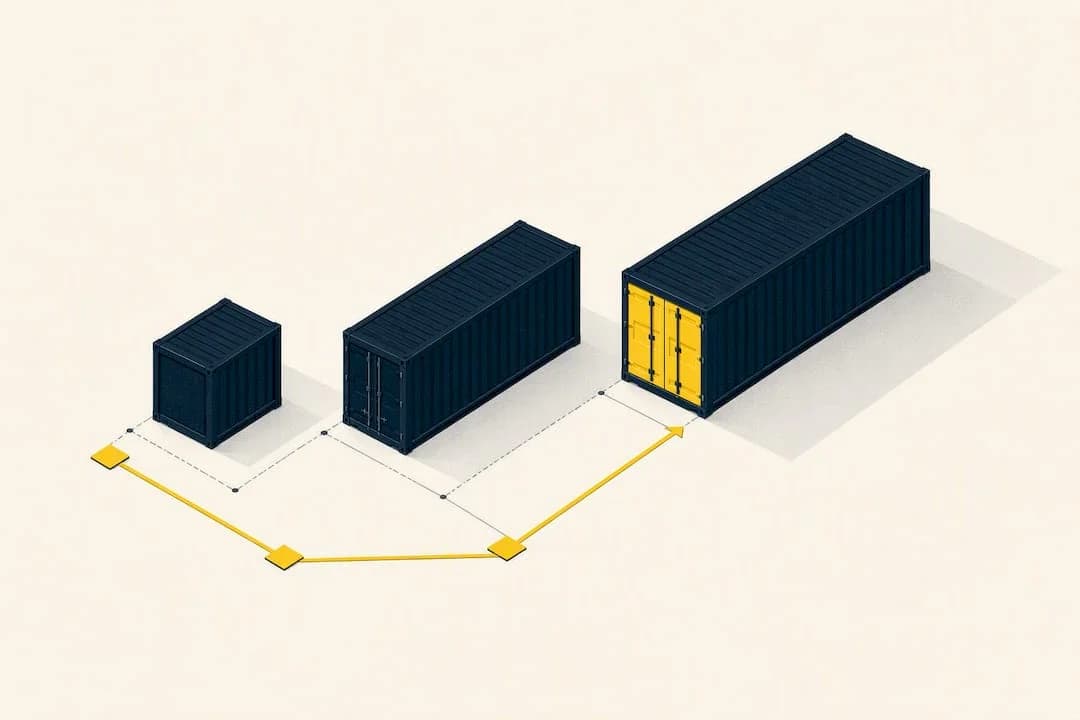
The two workhorse sizes are 20ft and 40ft, with 10ft, 45ft, and 48ft/53ft domestic units covering specialty needs. High-cube containers keep the same footprint as standard units but add about a foot of external height, reaching around 9’6" instead of 8’6" externally. Every one of these figures describes external dimensions only. What actually fits inside, and through the door, is smaller.
TL;DR:
- Door openings are approximately 7’8" wide and 7’6" tall on most standard containers, which can limit the size of cargo that can be loaded directly through the doors.
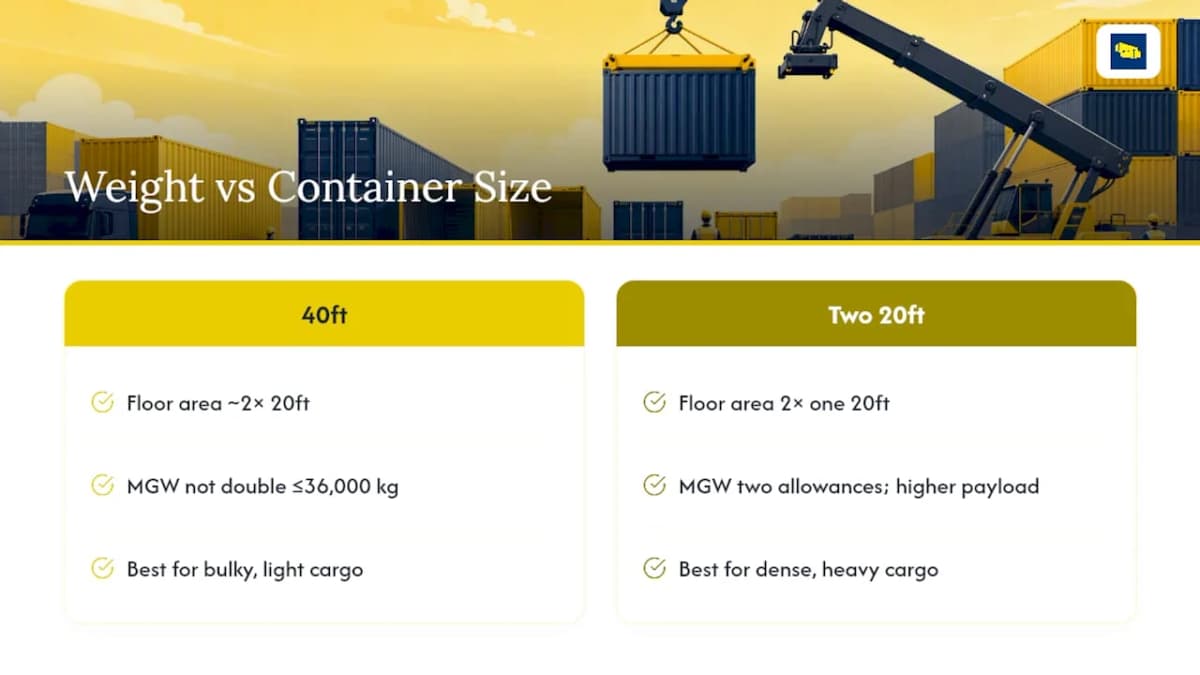
- For dense cargo, doubling the number of 20ft containers often allows more payload capacity than a single 40ft, due to higher gross weight allowances per unit.
- When planning, measure your tallest and widest cargo including pallets or crates and compare these dimensions with the actual door opening, not just the internal space.
- A 40ft high-cube container provides roughly 13 percent more internal volume than a standard 40ft and is better suited for bulky, lightweight freight such as furniture and appliances.
- Local trucking restrictions and weight limits can prevent a single container from maximizing its capacity, so always verify MGW ratings and road rules before finalizing your size choice.
Table of Contents
- What Are the Standard Shipping Container Sizes?
- Exact Dimensions and Best Uses for Each Container Size
- Why Door Openings and Internal Space Matter More Than Nominal Length
- How Weight Limits Shape Your Container Choice
- Specialty Container Types Beyond the Standard Box
- How to Choose the Right Container Size for Your Project
- What Conexwest Sees Most Often in Container Orders
- Get the Right Container Size Delivered and Ready to Use
- Where to Verify Exact Container Dimensions
- Sources
- FAQ
What Are the Standard Shipping Container Sizes?
Every standard shipping container built to ISO 668 shares one fixed dimension: an external width of 8 feet (2,438 mm). Length and height are where the variation lives, and that’s what determines which box fits your cargo.
The table below lists planning figures for the sizes you’ll encounter most often in the US market. Treat these as reference numbers, not box-plate figures. Every manufacturer builds within tolerance, and insulation or flooring on modified units shaves off usable space, so confirm exact dimensions with your supplier before finalizing a load plan.
| Size | External (L×W×H) | Internal (L×W×H) | Door Opening (W×H) | Usable Volume | Typical Pallets |
|---|---|---|---|---|---|
| 10ft | 10’×8’×8’6" | 9’3"×7’8"×7’10" | 7’6"×7’5" | ~560 cu ft | 4 (standard) |
| 20ft | 19’10.5"×8’×8’6" | 19’4"×7’8"×7’10" | 7’8"×7’6" | ~1,170 cu ft | 10 (standard) |
| 20ft HC | 19’10.5"×8’×9’6" | 19’4"×7’8"×8’10" | 7’8"×8’5" | ~1,320 cu ft | 10 (taller stacking) |
| 40ft | 40’×8’×8’6" | 39’5"×7’8"×7’10" | 7’8"×7’6" | ~2,390 cu ft | 20 (standard) |
| 40ft HC | 40’×8’×9’6" | 39’5"×7’8"×8’10" | 7’8"×8’5" | ~2,700 cu ft | 20 (taller stacking) |
| 45ft HC | 45’×8’×9’6" | 44’4"×7’8"×8’10" | 7’8"×8’5" | ~3,040 cu ft | 24 |
| 48’/53’ domestic | 48’/53’ × 8’6" × 9’6" | Varies by builder | Varies by builder | Varies by builder | 24 to 26 |
Domestic 48ft and 53ft units run wider, at 8’6" external, and dimensions vary more by manufacturer since they fall outside strict ISO classification. The Suaid Global dimension reference and the HZ Containers chart both break these figures down further if you need metric conversions.
Exact Dimensions and Best Uses for Each Container Size
The 10ft container measures approximately 10 feet long externally, about 9’3" internally, with usable space close to what is common for this size. It suits tight urban job sites, small equipment storage, or projects where a full 20ft footprint isn’t justified.
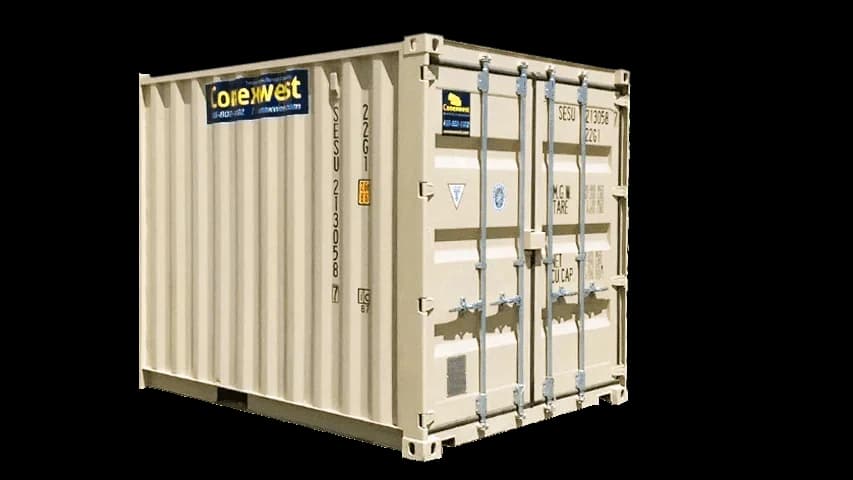
The 20ft standard container is the reference point for the whole industry. External length runs about 19’10.5", internal length closer to 19’4" once you account for wall thickness, and usable volume is typically around this range. This size is the default choice for weight-dense cargo. Steel coils, machinery parts, and palletized goods with high density per square foot fill a 20ft’s weight allowance long before they fill its floor space.
The 40ft standard and 40ft high-cube containers serve volume-dense cargo, meaning lighter goods that take up more room per pound. A 40ft high-cube adds roughly 13 percent more internal volume than a standard 40ft, often for a similar price, which makes the HC version the practical default for furniture, insulation batting, appliances, and other bulky but light freight.
The 45ft high-cube extends usable length further still, popular for retail and consumer goods shippers optimizing pallet count per container. Not every port or inland carrier accepts 45ft boxes on chassis without restriction, so confirm inland trucking compatibility before committing to this size for a domestic move.
For oversized machinery or vehicles that exceed any box’s internal envelope, a flat rack or open-top unit solves the problem better than trying to force a fit.
Why Door Openings and Internal Space Matter More Than Nominal Length
A container’s nominal length, its external size, tells you almost nothing about what will actually fit through the door. Three separate measurements matter: external dimension (the box’s outer shell, used for stacking and transport planning), internal usable dimension (the cargo space once you subtract wall thickness and flooring), and door opening (the narrower gap you actually load through).
On a standard 20ft or 40ft unit, door openings run around 7’8" wide and 7’6" tall, noticeably smaller than the internal cross-section behind them. Door headers and corner castings eat into that clearance further. A piece of equipment that technically fits inside the container’s internal footprint can still be too wide or too tall to pass through the doors themselves. This is the single most common loading mistake site planners make.
Before booking transport, run through this checklist:
- Measure your cargo including its pallet, crate, or lifting hardware, not just the item itself.
- Check the door opening height and width against your tallest and widest piece.
- Confirm the door swing radius clears any obstruction at the loading site.
- Leave clearance for packing material, dunnage, and lashing straps.
Pro Tip: Always measure the door opening, not the internal ceiling height, when planning to load anything tall. A generator or pallet jack that clears the internal roof by inches can still get stuck trying to pass through a door header that sits lower.
How Weight Limits Shape Your Container Choice
Every container carries three weight figures: tare weight (the empty container’s own weight), payload (what you can legally load inside), and maximum gross mass, or MGW (tare plus payload combined). ISO 668 amendments have raised MGW ratings over time, with many standard containers now rated up to 36,000 kg gross, though payload varies by unit condition and manufacturer.
Here’s where volume and weight planning diverge. A 40ft container has roughly double the floor space of a 20ft, but its MGW rating isn’t double a 20ft’s rating. For dense cargo like machinery, metal stock, or bagged aggregate, that math often works against a single 40ft. Two 20ft containers combined frequently carry more legal payload than one 40ft, simply because you’re working with two separate MGW allowances instead of one.
A practical rule of thumb: if your cargo’s density exceeds roughly 15 to 20 pounds per cubic foot, run the weight numbers before you commit to a box size. Volume-dense, lightweight freight rarely hits MGW limits. Heavy, compact cargo hits them constantly. US road weight limits add another layer. A loaded container that meets ISO MGW can still exceed state highway axle limits on a chassis, so check local trucking restrictions before finalizing your size choice.
Specialty Container Types Beyond the Standard Box
Not every shipment fits a standard or high-cube box, and forcing one usually costs more than choosing the right specialty type from the start.
- Reefer containers maintain controlled temperature for perishable goods, but the refrigeration unit and insulated walls reduce internal usable space compared to a dry container of the same external size.
- Open-top containers remove the roof entirely, letting overheight cargo load from above by crane when it won’t fit through any standard door.
- Flat rack containers strip away the sides and roof, ideal for wide or heavy machinery, vehicles, and industrial equipment that need open-air loading access.
- ISO tank containers carry bulk liquids and gases in a cylindrical tank framed within a standard footprint.
- Flexitanks turn a standard dry container into a bulk liquid carrier using a flexible bladder, useful for one-way liquid shipments without a dedicated tank.
Whenever you’re working with a converted or reconfigured unit, verify the door opening again. Custom modifications, roll-up doors, or added shelving change clearance in ways the base spec sheet won’t show.
How to Choose the Right Container Size for Your Project
- Measure your cargo at its largest dimensions, including packaging, pallets, or crating.
- Calculate total cubic volume (CBM or cubic feet) and map out a rough pallet layout.
- Check total weight against MGW limits for your candidate container size before assuming a bigger box solves the problem.
- Evaluate door clearance and handling method, since forklift access, crane loading, or roll-up doors all change what will actually work on site.
- Decide between standard, high-cube, or specialty type based on the results above.
A quick heuristic: if your shipment exceeds roughly 60 cubic meters of light freight, a 40ft high-cube is usually the more efficient choice over a standard 40ft. If your cargo is dense and heavy, price out two 20ft units before defaulting to one 40ft.
Before ordering, ask your supplier about site access for delivery trucks, whether a lift gate or crane is needed, any local permits for placement, and the exact internal door dimensions on the specific unit you’re renting or buying, since these can vary slightly between depots.
What Conexwest Sees Most Often in Container Orders
A large number of containers have been delivered nationwide through online ordering systems that let buyers customize dimensions, doors, and interior layouts before checkout. The most common mistakes we see: underestimating insulation thickness on converted units, which quietly shrinks usable interior space, and overlooking site access for delivery trucks until the container is already in transit. Confirm door clearance and drop off logistics before you order, not after.
— Conexwest
Get the Right Container Size Delivered and Ready to Use
Containers can be sold and rented with customization options like high-cube height, roll-up doors, insulation, and interior layouts, configured through online ordering tools instead of a back-and-forth quote process. Before you order, have your cargo dimensions, delivery site access details, and preferred size (20ft, 40ft, or high-cube) ready to go.
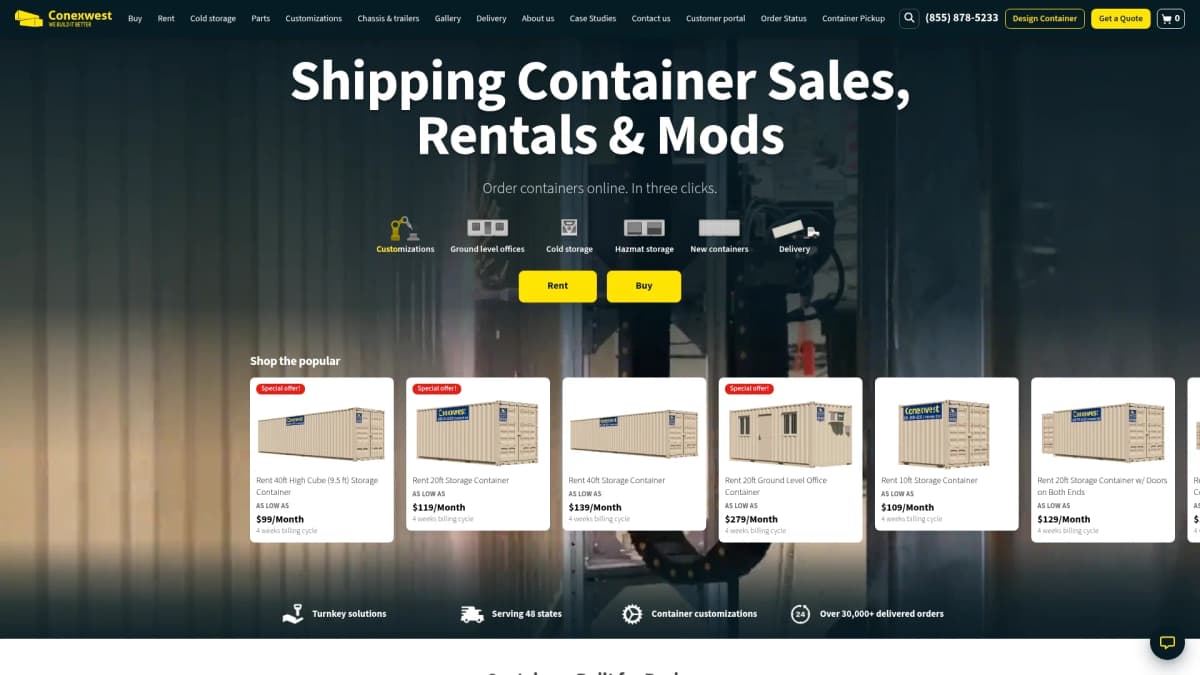
If your project calls for something beyond a stock unit, office conversion, cold storage, or hazmat-rated interior, the same customization tool lets you configure those specs before checkout. Start by browsing available sizes and configurations on the Conexwest container page to get a quote matched to your exact dimensions.
Where to Verify Exact Container Dimensions
For box-plate accuracy beyond planning figures, consult ISO 668 directly, the Wikipedia summary of ISO 668, and confirm final numbers with your seller before purchase.
Sources
- ISO 668: Series 1 freight containers — Classification, dimensions and ratings
- Shipping Container Dimensions and Types | Suaid Global
- Shipping container dimensions: Everything you need to know — GoFreight
- Container dimensions chart? - HZ CONTAINERS
FAQ
Are All Shipping Containers 8 Feet Wide?
Standard ISO shipping containers (10ft, 20ft, 40ft, and their high-cube versions) all share an external width of 8 feet. Domestic 48ft and 53ft units are an exception, often built 8’6" wide.
How Much Does a 40ft Shipping Container Cost?
Pricing depends heavily on condition (new versus used), modifications, and delivery location, so there’s no single fixed number. Contact a supplier directly with your specs, including any customization like insulation or roll-up doors, for an accurate quote.
How Many Cars Can Fit in a 20ft Container?
A standard 20ft container typically holds one to two standard-sized passenger vehicles, depending on the vehicle’s dimensions and how it’s loaded. Internal length of roughly 19’4" limits it to smaller vehicles or careful positioning for two.
What Size Is a 40ft and 20ft Container?
A 20ft container measures 19’10.5" long, 8’ wide, and 8’6" tall externally. A 40ft container doubles the length at 40’ long, keeping the same 8’ width and 8’6" height, unless it’s a high-cube version at 9’6" tall.
What’s the Difference Between a Standard and High-Cube Container?
High-cube containers share the same length and width as standard units but stand a foot taller externally, at 9’6" versus 8’6", adding roughly 13 percent more usable internal volume for the same footprint.