
What Size Shipping Container Do I Need for My Project?
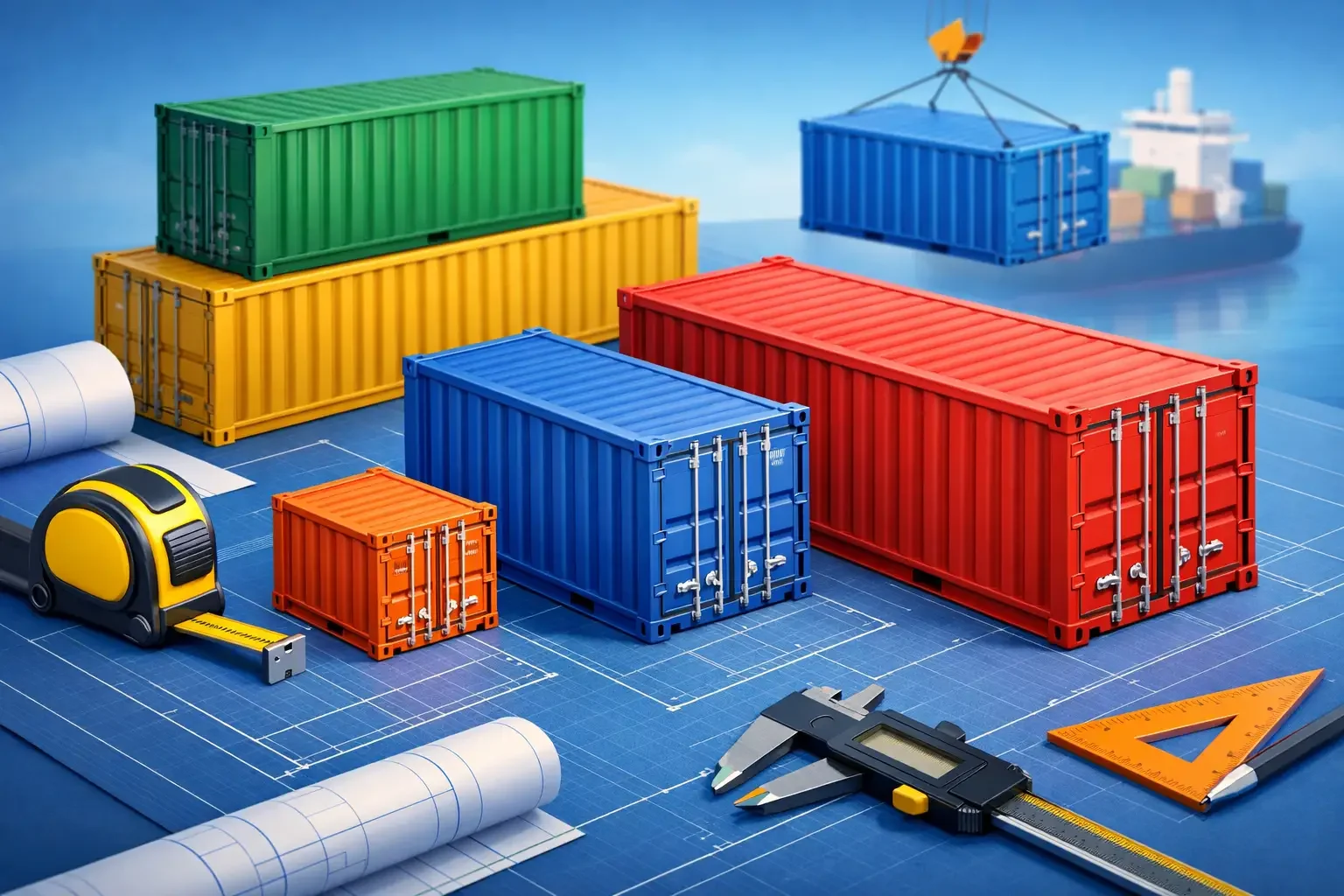
A container that is too small creates daily handling problems. One that is too large can consume valuable site space, increase delivery complexity, and add cost without improving the operation. If you are asking, “what size shipping container do I need,” start with the material, equipment, or workspace you need to protect - then work outward to access, site constraints, and delivery.
For most storage and jobsite applications, the decision comes down to a 20-foot or 40-foot unit. But height, door placement, container condition, and planned modifications can change the answer. A refrigerated container, for example, has less usable interior space than a dry storage container of the same outside length. An office container needs room for walls, insulation, electrical equipment, and HVAC, not just desks.
What Size Shipping Container Do I Need?
The right size is the smallest container that safely holds your inventory or supports your operation while leaving workable space for loading, unloading, and future growth. Measure the items you will store in their real-world configuration, including pallets, racking, carts, packaging, and aisle clearance. Do not calculate from product volume alone.
A contractor storing boxed tools may fit the inventory into a 10-foot container, but a crew that needs to access those tools throughout the day may be better served by a 20-foot unit with shelving and a personnel door. A manufacturer storing palletized parts may need a 40-foot container not because the goods exceed a 20-foot container's volume, but because a forklift needs a clear loading plan and organized rows.
Standard containers are generally 8 feet wide and 8 feet 6 inches tall externally. High-cube containers keep the same width and length but add approximately 1 foot of exterior height. Actual interior dimensions vary slightly by manufacturer, container condition, flooring, and installed modifications, so confirm the specifications for the unit being quoted.
| Common size | Approximate interior dimensions | Typical use | | --- | --- | --- | | 10-foot standard | 9 ft. 3 in. L x 7 ft. 8 in. W x 7 ft. 10 in. H | Tools, seasonal equipment, small sites | | 20-foot standard | 19 ft. 4 in. L x 7 ft. 8 in. W x 7 ft. 10 in. H | Jobsite storage, equipment, compact offices | | 40-foot standard | 39 ft. 5 in. L x 7 ft. 8 in. W x 7 ft. 10 in. H | Pallet storage, inventory overflow, larger builds | | 40-foot high cube | 39 ft. 5 in. L x 7 ft. 8 in. W x 8 ft. 10 in. H | Tall materials, racking, offices, custom facilities |
Match Container Length to the Application
Choose a 10-foot container for compact, controlled storage
A 10-foot container works well when the footprint is limited and the stored materials are relatively small or infrequently accessed. It is a practical fit for hand tools, landscaping equipment, event supplies, maintenance inventory, and residential projects. It can also be easier to position on a tight site than a 20-foot or 40-foot unit.
The trade-off is access. Once bulky items, shelving, or a workbench are installed, the usable aisle can disappear quickly. If multiple people will enter the unit daily, a 10-foot container may become restrictive sooner than expected.
Choose a 20-foot container for most jobsite and business storage
The 20-foot container is often the most versatile choice. It provides meaningful storage capacity without demanding the long delivery path and placement area of a 40-foot unit. For construction crews, facilities departments, agricultural operations, and small businesses, it is often large enough for materials, tools, spare parts, and equipment while remaining straightforward to secure and organize.
A 20-foot unit can also support a compact office, guard station, equipment room, or hybrid office-storage setup. If you plan to add shelving, electrical service, lighting, or a roll-up door, the 20-foot format gives fabricators enough room to create a functional layout without overbuilding the project.
Choose a 40-foot container when inventory needs room to move
A 40-foot container offers roughly twice the length of a 20-foot unit and is best suited to large inventory volumes, long materials, palletized goods, and operations that need designated loading and storage zones. It is common for manufacturing overflow, construction material storage, retail inventory, disaster response staging, and modular commercial projects.
Length is especially valuable when goods need to stay organized by type, project phase, or customer order. A 40-foot container can hold a substantial amount of product, but capacity alone is not the reason to choose one. The better reason is operational control: room for racks, aisles, carts, and deliberate placement rather than stacking items wherever they fit.
Choose a high-cube container when vertical clearance matters
A 40-foot high-cube container adds approximately 12 inches of height. That extra clearance can make a material difference for tall equipment, vertical racking, bulk storage, and custom interiors. It is also a strong starting point for offices, retail spaces, workshops, and other modified structures because insulation, ceiling finishes, ductwork, and lighting reduce interior headroom.
High-cube units can cost more and may not be available in every size or location. They also require careful attention to overhead clearance during transport and placement. When your equipment or layout needs the height, however, a high cube is usually more efficient than forcing the design into a standard-height container.
Calculate Space for Access, Not Just Storage Volume
A container's listed cubic capacity is useful, but it can be misleading. You may technically fit a certain number of pallets into a container while making the pallet at the far end inaccessible without unloading everything in front of it.
Start by mapping how goods enter and leave. Standard cargo doors are located at one end, which works for bulk storage and planned loading. If staff needs regular walk-in access, consider a personnel door. If forklifts, carts, or frequent deliveries are involved, a roll-up door or additional cargo-door access can improve workflow. These modifications affect the layout and should be planned before selecting the final size.
Allow for shelving depth, swing clearance for doors, a safe aisle, and any equipment that remains inside the unit. For temperature-controlled storage, reserve space for air circulation as well. Reefer containers require clearance around stored goods to maintain consistent airflow, so their usable capacity is different from a dry container with the same exterior dimensions.
Verify Your Site Can Receive the Container
The container must fit more than the pad. Delivery equipment needs a route into the property, room to turn, and sufficient clearance from trees, utility lines, gates, parked vehicles, and buildings. A 40-foot container may be ideal for storage but impractical if the delivery truck cannot safely access the location.
Prepare a level, stable base sized for the container footprint. Gravel, concrete, asphalt, railroad ties, or engineered supports may be appropriate depending on the site and intended use. The critical requirement is that the container remains level and supported at its corner castings. Uneven support can affect door operation, drainage, and the long-term condition of the structure.
For a container delivered by tilt-bed truck, account for the truck length and the rollout area needed behind the unit. A crane delivery can solve some placement challenges, but it introduces separate lift planning, ground-bearing, and clearance requirements. Discuss site conditions early, especially for urban locations, active jobsites, and facilities with limited maneuvering space.
Factor in Condition, Weight, and Modifications
Container condition should match the application. A used cargo-worthy container can be a cost-effective option for international transport and secure storage. A wind-and-water-tight unit is commonly selected for ground-level storage where shipping certification is not required. One-trip containers provide a newer appearance and are often preferred for customer-facing spaces or projects with significant modifications.
Modifications can change both the space plan and the budget. A roll-up door, windows, insulation, HVAC, electrical panels, plumbing, shelving, and interior finishes all occupy room or require structural reinforcement. For a portable office, it is usually better to begin with a container size that accommodates the finished layout rather than selecting the smallest possible shell.
Weight matters when the container will be moved, mounted on a chassis, or placed on a structure with load limits. Steel containers are durable assets, but the final weight can increase substantially after fabrication and equipment installation. Include loaded weight in your project planning, not only the empty container weight.
A Practical Sizing Decision
Use the 20-foot container when you need flexible, secure storage and want the most manageable all-around footprint. Move to a 40-foot unit when you need organized inventory, pallet capacity, long-material storage, or room for a larger custom layout. Select a high cube when vertical racking, tall equipment, or finished interiors make headroom valuable. Choose a 10-foot unit when the site is constrained and the contents are modest.
Before committing, walk through the loading process, the finished layout, and the delivery route with the same care you apply to the storage calculation. Conexwest can help translate those operational details into a container configuration that arrives ready to work, rather than a steel box you have to work around.