
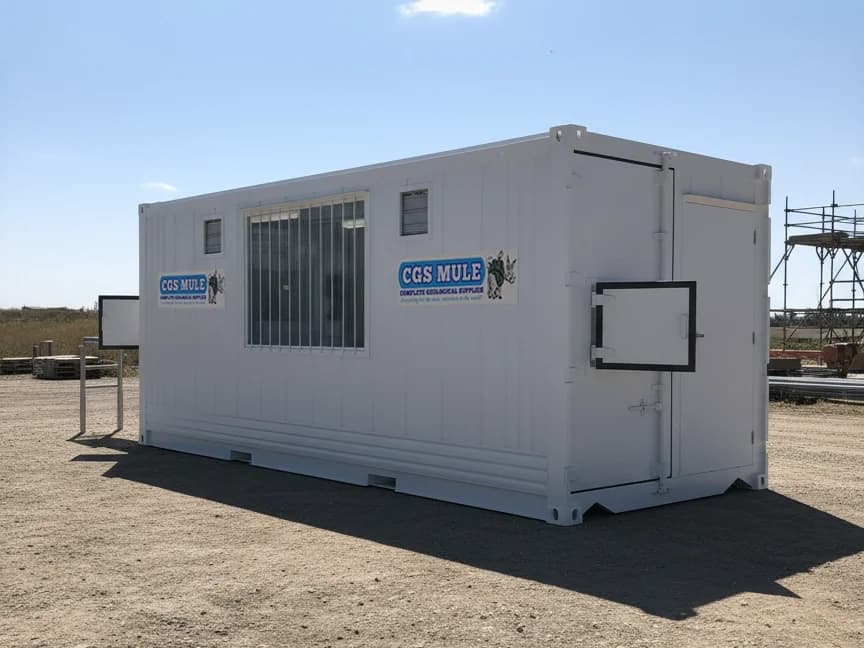
The unit was built from a 20ft non-working refrigerated shipping container. The insulated reefer shell provides a durable and more controlled workspace for equipment and operators.
How Conexwest Built the CGS MULE Mobile Concrete Core Sampling Unit
How Conexwest Built the CGS MULE Core Cutting Facility From a Reefer Container
Concrete core testing plays an important role in mining, drilling, construction, and geotechnical work. Accurate core samples help teams evaluate material strength, condition, and performance before making critical project decisions.
Preparing those cores in the field, however, is not always simple. Operators need specialized cutting equipment, reliable power, controlled material handling, and a workspace that can function safely in remote and demanding environments.
The client needed a mobile core cutting facility that could bring the cutting workflow directly to the job site. It also needed to be more than a one-time custom build. The goal was to create a standardized, repeatable product that could be manufactured for deployment across North America.
Conexwest transformed a 20ft shipping container with a non-working refrigeration system into a fully integrated core cutting facility designed for real-world field operations.
Starting With a 20ft Reefer Container
The project began with one 20ft refrigerated container with a non-working refrigeration system.
Although the refrigeration system was no longer operating, the insulated reefer shell offered several advantages for this industrial application. The durable enclosure helped protect equipment and provided a more controlled interior than a standard dry container.
That made the reefer a practical starting point for a unit expected to operate in changing temperatures, dusty environments, active mines, drilling locations, and construction sites.
The container still required extensive shipping container modifications before it could support concrete core cutting. The interior needed to accommodate a custom saw, automated controls, core-handling equipment, electrical systems, ventilation, lighting, and safe access for operators and materials.
For projects requiring specialized equipment, access points, interiors, and utility systems, Conexwest also provides custom container fabrication.
Designing the Unit Around the Core Cutting Workflow
The interior layout was developed around how concrete cores would move through the cutting process.
Large cores and equipment needed to enter without slowing down operations. Operators needed room to position, cut, and transfer materials safely. The control system also had to remain accessible without interfering with the main handling area.
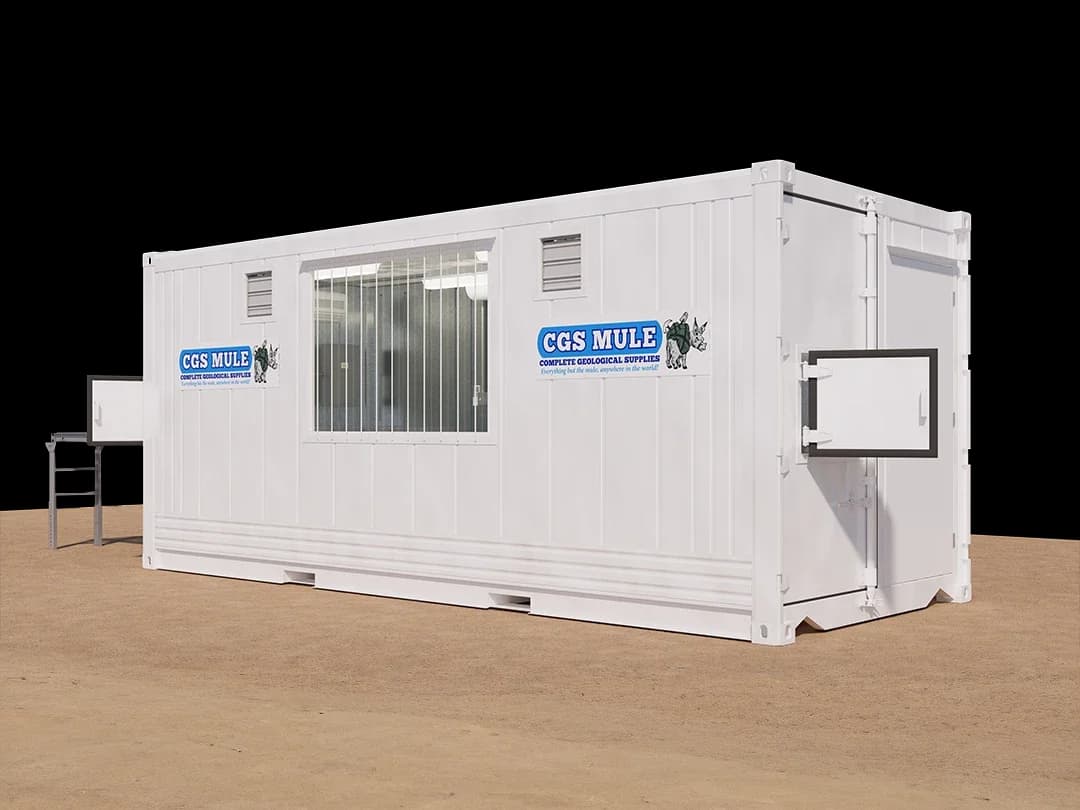
A 16ft shipping container roll-up door was added along the side of the container to create a wide opening for equipment and materials. This allowed concrete cores, tools, and larger components to move in and out more efficiently than they could through the original cargo doors alone.
Access hatches were also installed on both 8ft ends of the container. These additional openings created a direct path through the unit and gave operators more options when the container was positioned in a tight or active work area.
Together, the wide side opening and end hatches made the unit easier to operate from multiple directions instead of forcing the entire workflow through a single entry point.
A Custom Concrete Saw Integrated Into the Container
The custom concrete saw was the central piece of equipment in the project.
Rather than placing a portable saw inside a generic workspace, Conexwest integrated the saw directly into the container layout. The roller tables, electrical systems, access hatches, controls, and working clearances were organized around the cutting process.
This created a more consistent path from core entry through cutting, handling, and removal. It also reduced the amount of retrofitting required after delivery because the major equipment and supporting systems were coordinated during container fabrication.
The customer received a purpose-built core cutting facility rather than an empty container that still needed to be adapted around the equipment.
PLC Automation for Repeatable Field Operations
A fully integrated programmable logic controller, or PLC, was installed to manage the concrete saw and the broader operating sequence.
The PLC gives operators a centralized way to control the equipment and repeat the same process across different locations. That consistency is especially important when multiple teams use the units or when the product is deployed across several regions.
The automation system helps coordinate the saw, operating controls, and workflow while reducing the amount of manual setup required for each cutting cycle.
For the client, the PLC also supported the larger goal of turning the design into a repeatable product. Future units could follow the same equipment layout, control structure, and operating logic, creating a more standardized experience for end users.
Roller Tables for Controlled Core Handling
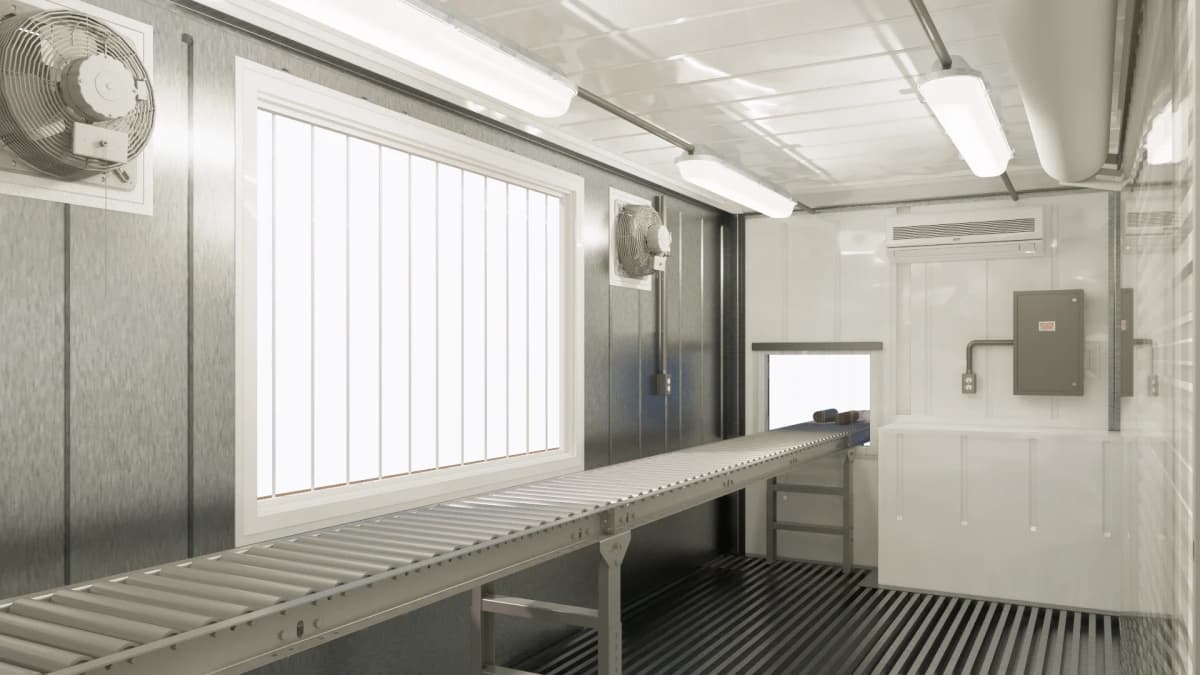
Concrete cores and cut sections can be heavy and difficult to move manually. Integrated roller tables were installed to support loading, positioning, cutting, and transfer through the unit.
Instead of repeatedly lifting and carrying cores, operators can guide materials along the rollers. This creates a more organized workflow and reduces unnecessary handling around the saw.
The roller system also establishes a defined path through the container. Cores can enter through an access hatch, move toward the cutting area, and continue through the unit without being placed temporarily on the floor or on unrelated work surfaces.
Electrical, Lighting, and Environmental Control
The container received a complete electrical package designed to support the concrete saw, PLC controls, lighting, ventilation, and other operating equipment.
Installing the electrical system during fabrication allowed the wiring, controls, panels, disconnects, and equipment connections to be coordinated with the interior workflow.
Interior lighting was positioned to provide clear visibility around the saw and roller tables. Ventilation fans helped move air through the workspace, while HVAC supported more stable working conditions inside the insulated reefer shell.
A large secured window was added to bring natural light into the unit and improve visibility around the equipment. The window also gave operators a view of the surrounding site while maintaining a protected interior.
The major systems were installed and tested before delivery so the container could arrive ready for final site connection and operation.
Project Specifications
| Project | CGS MULE Core Cutting Facility |
|---|---|
| Container | One 20ft reefer container with a non-working refrigeration system |
| Application | Mobile concrete core cutting and handling |
| Primary equipment | Custom-integrated concrete saw |
| Automation | Fully integrated PLC control system |
| Main access | 16ft roll-up door |
| Additional access | Custom access-door hatches on both 8ft ends |
| Material handling | Integrated roller conveyor tables |
| Electrical | Complete electrical package supporting equipment and workflow |
| Lighting | Interior industrial lighting package |
| Ventilation | Wall-mounted ventilation fans |
| Climate control | Interior HVAC system |
| Visibility | Large secured window for natural light and site awareness |
| Interior | Insulated reefer shell adapted for industrial field use |
| Exterior | Full white paint finish with high-visibility CGS MULE branding |
| Delivery | Tilt-bed transport |
| Deployment | Mines, drilling sites, construction projects, and geotechnical operations |
| Service region | Continental United States, Canada, and Mexico |
Built for Remote and Demanding Work Sites
The unit was designed for environments where a permanent core cutting facility may not be practical.
Mining operations, drilling projects, and construction sites often move as work progresses. A fixed cutting facility cannot easily follow that activity, and transporting cores long distances for cutting can add time and handling.
The containerized system can be positioned closer to where cores are collected, giving operators a dedicated place to cut and handle materials at the job site.
The insulated refrigerated container shell helps protect the equipment from surrounding conditions, while the roll-up door, end hatches, roller tables, ventilation, and electrical systems support a practical daily workflow.
The result is a mobile industrial facility capable of bringing specialized core cutting equipment to the locations where it is needed.
Core logging is not performed inside the CGS MULE Core Cutting Facility. If a project requires dedicated space for logging cores after cutting, a separate container can be supplied for that function.
Exterior Paint and Consistent Product Branding
After fabrication, the container received a complete exterior paint finish.
High-visibility vinyl graphics were added to the sides and end panels, giving the unit a professional appearance and making it easier to identify on large industrial sites.
Branding also supported the customer’s productization strategy. Since the client planned to deploy the units across multiple regions, each build needed to look like part of the same equipment line.
Consistent colors, graphics, and placement helped position the CGS MULE as a standardized product rather than a one-off container conversion.
More information about the product is available through the official CGS MULE Core Cutting Shed page.
Delivered Ready for Final Site Connection
Conexwest’s scope focused on container fabrication, system integration, equipment installation, testing, finishing, and delivery.
Before shipment, the saw, PLC controls, electrical systems, access points, ventilation, and material-handling components were installed and tested.
The finished unit was delivered using tilt-bed transport, allowing it to be positioned without requiring a permanent crane setup.
This reduced the work required after delivery and helped the customer move the unit into operation more quickly.
From One Custom Build to a Repeatable Product
One of the most important parts of the project was repeatability.
The client was not only solving one field-processing problem. They wanted a product that could be manufactured again for different end users and locations.
The repeatable platform included:
- A 20ft insulated reefer shell
- An integrated concrete saw
- PLC automation
- Roller-table core flow
- A 16ft roll-up door
- Access hatches on both ends
- A full electrical package
- Lighting, ventilation, and HVAC
- A secured window
- Standardized paint and branding
By developing a consistent layout and fabrication process, Conexwest helped turn the customer’s concept into a scalable, field-ready product.
The Finished CGS MULE Core Cutting Facility
The completed container became a mobile concrete core cutting facility capable of supporting controlled and repeatable work at remote industrial sites.
The saw, PLC automation, electrical systems, roller tables, access points, ventilation, climate control, and insulated workspace were brought together inside one durable enclosure.
Instead of transporting cores to a distant cutting facility or assembling a temporary cutting area at every location, operators can deploy a dedicated unit built around the core cutting process.
The project demonstrates how a non-working reefer container can be repurposed into a specialized industrial tool with a clear operational purpose.
Why a Reefer Container Worked for This Project
A 20ft reefer container provided a durable, insulated shell that could protect equipment and create a more stable working environment.
Its compact 20ft footprint also made the unit easier to transport and position at active job sites.
The container supplied the structure, but the modifications determined how the unit performed. The roll-up door improved access, the end hatches supported workflow, the roller tables simplified core handling, and the PLC provided repeatable control.
Together, those features transformed an inactive refrigerated container into a specialized mobile core cutting facility.
Similar Industrial Container Applications
The same custom container approach can support other field and industrial operations, including:
- Materials testing
- Mobile laboratories
- Soil and rock processing
- Mining support
- Equipment processing
- Quality-control stations
- Remote workshops
- Utility testing
- Environmental monitoring
- Specialized manufacturing
- Field inspection units
- Technical equipment enclosures
Each project can be developed around its equipment, process, access requirements, site conditions, and deployment plan.
Planning a Custom Industrial Container?
Conexwest designs and manufactures custom container systems for testing, processing, storage, equipment integration, and specialized field operations.
Available shipping container modifications can include automation, electrical systems, roll-up doors, access hatches, windows, equipment mounts, roller systems, insulation, HVAC, custom interiors, exterior paint, and branding.
A shipping container provides the shell. Conexwest builds the systems around how your team actually works.
Was this helpful?
Frequently Asked Questions
The CGS MULE includes a custom concrete saw, PLC automation, roller conveyor tables, electrical systems, lighting, ventilation, HVAC, and sample-handling equipment.
The unit includes a 16ft roll-up door for large equipment and materials, along with access hatches on both 8ft ends to improve workflow and provide multiple entry points.
Yes. The insulated reefer shell is supported by ventilation and HVAC systems to create a more stable working environment for operators and equipment.
Yes. Conexwest can customize shipping containers for materials testing, mobile laboratories, mining support, quality control, processing, field inspection, utility work, and other specialized industrial applications.