
Shipping containers are used across Louisville for construction storage, commercial inventory, equipment protection, residential moving, jobsite support, refrigerated storage, and custom projects. Before placing a container on a property, it is important to understand Louisville Metro zoning rules, permit requirements, building code considerations, and right-of-way restrictions.
Louisville Shipping Container Zoning Laws & Permit Guide | Conexwest
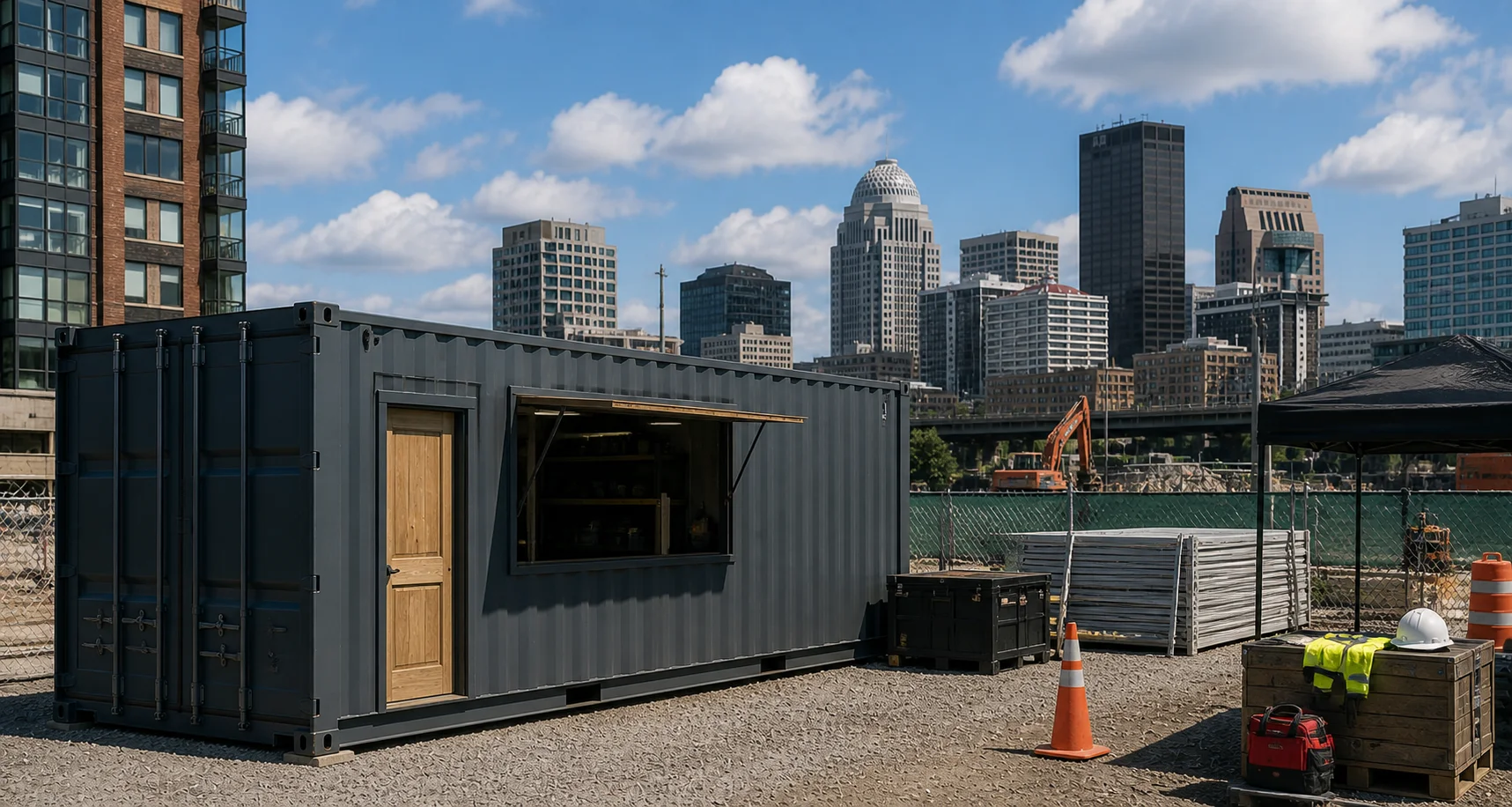
Louisville Shipping Container Zoning Laws, Permits & Building Code Requirements
Shipping containers are used across Louisville for construction storage, commercial inventory, equipment protection, residential moving, jobsite support, refrigerated storage, and custom projects. Before placing a container on a property, it is important to understand Louisville Metro zoning rules, permit requirements, building code considerations, and right-of-way restrictions.
This guide focuses on Louisville Metro and Jefferson County, Kentucky. If your project is located in a nearby city or jurisdiction, local rules may differ. Always confirm requirements with Louisville Metro Government, the correct local municipality, or the property’s zoning authority before scheduling delivery.
For container options, visit shipping containers for sale in Louisville, KY.
Are Shipping Containers Allowed in Louisville?
Shipping containers may be allowed in Louisville depending on the property type, zoning district, intended use, placement location, and length of time the container will remain on site. A short-term portable storage container used during a move is treated differently from a long-term commercial storage container, a modified office container, or a container placed in a public street or sidewalk area.
Louisville Metro’s Land Development Code includes rules for portable storage devices on residentially zoned or used property, as well as outdoor sales, display, and storage standards for certain commercial and industrial zoning districts.
For statewide background, read Conexwest’s guide to Kentucky shipping container zoning laws, permits, and building code requirements.
Residential Portable Storage Containers in Louisville
Louisville Metro Land Development Code Section 4.4.11 regulates portable storage devices, including containers, on residentially zoned or used property.
Under this section, portable storage devices or containers are allowed on residentially zoned or used property for a period not exceeding 30 days, or 7 days beyond the final inspection related to a permitted renovation or alteration activity, whichever is longer.
Review the official code section here: Louisville Metro Land Development Code Section 4.4.11 Portable Storage Devices.
Commercial and Industrial Outdoor Storage Rules
Louisville Metro Land Development Code Section 4.4.8 addresses outdoor sales, display, and storage. This section applies to certain commercial and industrial zoning districts and includes standards that may affect shipping containers used for temporary inventory storage.
Outdoor sales, display, and storage may be permitted in the C-1, C-2, C-M, EZ-1, M-2, M-3, PD, and PEC zoning districts only when the requirements of Section 4.4.8 are met.
For moveable storage containers, including semi-trailers and containerized freight boxes used for temporary inventory storage, Louisville Metro requires the container to be allowed on site only in accordance with a permit issued by the building permit issuing authority. A copy of the permit must be kept on site and available for inspection.
The code also states that this temporary container use is allowed for no more than two months in any 12-month period.
Review the official code section here: Louisville Metro Land Development Code Section 4.4.8 Outdoor Sales, Displays and Storage.
When Do You Need a Permit for a Shipping Container in Louisville?
Permit requirements depend on how the container will be used. A temporary residential storage container may have different requirements than a container used for business storage, outdoor inventory, construction staging, modified workspace, utilities, refrigeration, or long-term placement.
You should review permit requirements if the container will be used for:
- Commercial storage: Inventory, supplies, equipment, retail stock, or warehouse overflow.
- Construction storage: Jobsite storage for tools, materials, safety equipment, and project supplies.
- Outdoor inventory storage: Temporary storage of business inventory in a commercial or industrial zoning district.
- Modified container use: Offices, workshops, kiosks, pop-up spaces, studios, or other custom builds.
- Utility connections: Electrical, HVAC, plumbing, refrigeration, lighting, or mechanical systems.
- Public right-of-way placement: Placement on or near a sidewalk, street, alley, curb lane, or public way.
Louisville Metro also provides a Guide to Shipping Container Project through Construction Review. The guide is intended to outline zoning regulations, placement requirements, and permitting steps for shipping container projects.
Building Permits for Modified Shipping Containers
A building permit may be required when a shipping container is modified, installed as a structure, connected to utilities, occupied, or used in a way that changes the building or site conditions. Louisville Metro states that a building permit is required when an owner or authorized agent plans to construct, enlarge, remodel, or change the occupancy of a building.
A building or trade permit may apply when a container includes:
- Electrical wiring, outlets, lighting, or panels
- Heating, ventilation, or air conditioning systems
- Plumbing, sinks, restrooms, or water connections
- Refrigeration equipment or powered cold storage
- Windows, man doors, roll-up doors, or structural openings
- Interior framing, insulation, or finished workspace
- Permanent foundation, anchoring, or structural installation
- Use as an office, workshop, kiosk, studio, retail space, or other occupied structure
Review Louisville Metro’s building permit information here: Louisville Metro Building Permit.
Right-of-Way Permits for Containers, Pods, and Dumpsters
If a shipping container, storage pod, or dumpster will be placed in a public street, sidewalk, alley, curb lane, or other public way, a right-of-way permit may be required. Louisville Metro Public Works provides right-of-way permits and licenses for uses that may affect public access to sidewalks, streets, alleys, or public ways.
Before placing a container in or near the public right-of-way, review Louisville Metro’s Public Works permit requirements and confirm whether a pod or dumpster permit applies.
Review the official right-of-way permit page here: Louisville Metro Right of Way Permits and Licenses.
Temporary vs. Long-Term Shipping Container Placement
Temporary containers are commonly used for moving, renovations, construction storage, seasonal inventory, event support, and short-term business storage. Long-term containers are commonly used for commercial storage, warehouse overflow, industrial storage, agriculture, and custom container projects.
The difference matters because temporary residential portable storage devices are specifically addressed by Louisville Metro’s Land Development Code, while commercial outdoor storage and modified container uses may require permit review, site planning, or additional approvals.
- Temporary residential use: Portable storage devices on residentially zoned or used property are subject to time limits under Section 4.4.11.
- Temporary commercial inventory storage: Moveable storage containers used for temporary inventory storage may require a permit and are limited under Section 4.4.8.
- Long-term storage: Ongoing container placement may require zoning, site plan, building, or business-use review.
- Modified use: Containers with utilities, occupancy, structural openings, HVAC, plumbing, or electrical systems may require building and trade permits.
- Right-of-way use: Containers affecting streets, sidewalks, alleys, curb lanes, or public access areas may require Public Works approval.
Site Planning Before Delivery
Before ordering a shipping container in Louisville, confirm that the delivery site is accessible, level, and compliant with local rules. Delivery planning is especially important in dense urban neighborhoods, commercial corridors, construction sites, industrial yards, and properties with narrow access points.
Prepare the following before delivery:
- Container size: Confirm whether you need a 10ft, 20ft, 40ft, 45ft, or specialty container.
- Placement surface: Choose a stable, level surface such as concrete, asphalt, gravel, or another prepared area.
- Door orientation: Decide which direction the container doors should face before delivery.
- Access clearance: Check for low wires, tree branches, signs, fences, parked vehicles, and narrow turns.
- Setbacks and circulation: Avoid blocking driveways, sidewalks, fire access, parking areas, loading zones, or pedestrian paths.
- Duration: Confirm whether the container is temporary, seasonal, project-based, or long-term.
- Use: Identify whether the container is for storage, construction, business operations, refrigeration, or modified workspace.
For delivery planning and cost factors, read Conexwest’s guide to shipping container transport costs.
Documents to Prepare for Permit Review
If your Louisville shipping container project requires permit review, prepare accurate project details before applying. Requirements may vary based on property type, zoning district, use, and scope of work.
Useful documents and information may include:
- Property address and parcel information
- Current zoning district
- Container size and quantity
- Container condition and intended use
- Temporary or long-term placement timeline
- Site plan showing property lines, buildings, setbacks, driveways, parking areas, and container location
- Details for electrical, HVAC, plumbing, refrigeration, or other utility connections
- Modification plans for doors, windows, openings, insulation, interior framing, or structural changes
- Delivery access and public right-of-way impact information
How to Apply for Louisville Permits
Louisville Metro Construction Review provides permit information, project guides, and an online permitting portal. The city’s permit process includes preparing required documents, applying, submitting plans, project assignment, review, and inspections.
Useful Louisville Metro permit resources include:
- Louisville Metro Online Permitting Portal
- Louisville Metro Construction Review Permits
- Louisville Metro Step-By-Step Permit Process
- Louisville Metro Project Guides
- Louisville Metro Land Development Code
Common Louisville Shipping Container Use Cases
Shipping containers are used throughout Louisville for storage, business operations, construction support, and custom projects. Common use cases include:
- Construction site storage for tools and materials
- Commercial inventory and warehouse overflow
- Residential moving and renovation storage
- Agricultural equipment and supply storage
- Retail pop-up shops and kiosks
- Mobile offices and modified workspaces
- Food service and event support
- Refrigerated storage for temperature-sensitive products
- Emergency relief and disaster recovery storage
Explore available options here: buy shipping containers in Louisville, Kentucky.
Custom Container Modifications and Permit Planning
Custom modifications can make a shipping container more useful, but they may also affect permit requirements. Features such as electrical power, HVAC, plumbing, windows, doors, insulation, refrigeration, and occupancy-related improvements should be planned before delivery and reviewed with local authorities when required.
Conexwest offers shipping container fabrication and customization options, including windows, vents, roll-up doors, electrical power, heating and cooling systems, custom paint, security upgrades, shelving, and other modifications.
FAQs About Shipping Container Permits in Louisville
How long can a portable storage container stay on residential property in Louisville?
Louisville Metro Land Development Code Section 4.4.11 allows portable storage devices or containers on residentially zoned or used property for a period not exceeding 30 days, or 7 days beyond the final inspection related to a permitted renovation or alteration activity, whichever is longer.
Can a shipping container be used for commercial inventory storage in Louisville?
Moveable storage containers, including containerized freight boxes used for temporary inventory storage, are addressed under Louisville Metro Land Development Code Section 4.4.8. The code states that these containers must be allowed only in accordance with a permit issued by the building permit issuing authority and may be used for no more than two months in any 12-month period.
Do I need a permit to place a container in the street?
If a container, pod, or dumpster will affect a street, sidewalk, alley, curb lane, or public way, a Louisville Metro Public Works right-of-way permit may be required. Check the city’s Right of Way Permits and Licenses page before scheduling delivery.
Do modified shipping containers need building permits?
A building permit may be required if the container is modified, connected to utilities, used as an occupied space, placed on a foundation, or used in a way that changes building or site conditions. Electrical, HVAC, plumbing, refrigeration, and structural modifications may also require trade permits or additional review.
Can Conexwest customize containers for Louisville projects?
Yes. Conexwest provides container fabrication options such as doors, windows, vents, roll-up doors, shelving, insulation, HVAC, electrical systems, custom paint, security upgrades, and other modifications.
Buy Shipping Containers in Louisville, KY
Conexwest provides shipping containers for sale in Louisville, Kentucky, including new, used, and refurbished containers for storage, construction, commercial, industrial, agricultural, and custom applications. Before purchasing, review local zoning, permit, site placement, and delivery requirements so your container can be placed safely and used as intended.
Shop available containers here: shipping containers for sale.
Was this helpful?
Frequently Asked Questions
Shipping containers may be allowed in Louisville depending on the property type, zoning district, intended use, placement location, and length of time the container will remain on site. A short-term portable storage container used during a move is treated differently from a long-term commercial storage container, a modified office container, or a container placed in a public street or sidewalk area.
Louisville Metro Land Development Code Section 4.4.11 regulates portable storage devices, including containers, on residentially zoned or used property.
Louisville Metro Land Development Code Section 4.4.8 addresses outdoor sales, display, and storage. This section applies to certain commercial and industrial zoning districts and includes standards that may affect shipping containers used for temporary inventory storage.
Permit requirements depend on how the container will be used. A temporary residential storage container may have different requirements than a container used for business storage, outdoor inventory, construction staging, modified workspace, utilities, refrigeration, or long-term placement.
A building permit may be required when a shipping container is modified, installed as a structure, connected to utilities, occupied, or used in a way that changes the building or site conditions. Louisville Metro states that a building permit is required when an owner or authorized agent plans to construct, enlarge, remodel, or change the occupancy of a building.
If a shipping container, storage pod, or dumpster will be placed in a public street, sidewalk, alley, curb lane, or other public way, a right-of-way permit may be required. Louisville Metro Public Works provides right-of-way permits and licenses for uses that may affect public access to sidewalks, streets, alleys, or public ways.
Temporary containers are commonly used for moving, renovations, construction storage, seasonal inventory, event support, and short-term business storage. Long-term containers are commonly used for commercial storage, warehouse overflow, industrial storage, agriculture, and custom container projects.