
A portable refrigerated container can support food safety compliance, but the container alone does not make a food business compliant. Restaurants and food businesses must follow applicable local health department rules, FDA Food Code-based requirements, food handling procedures, temperature monitoring, cleaning practices, and inspection requirements.
FDA Food Code and Portable Refrigerated Containers: Food Safety Compliance Guide
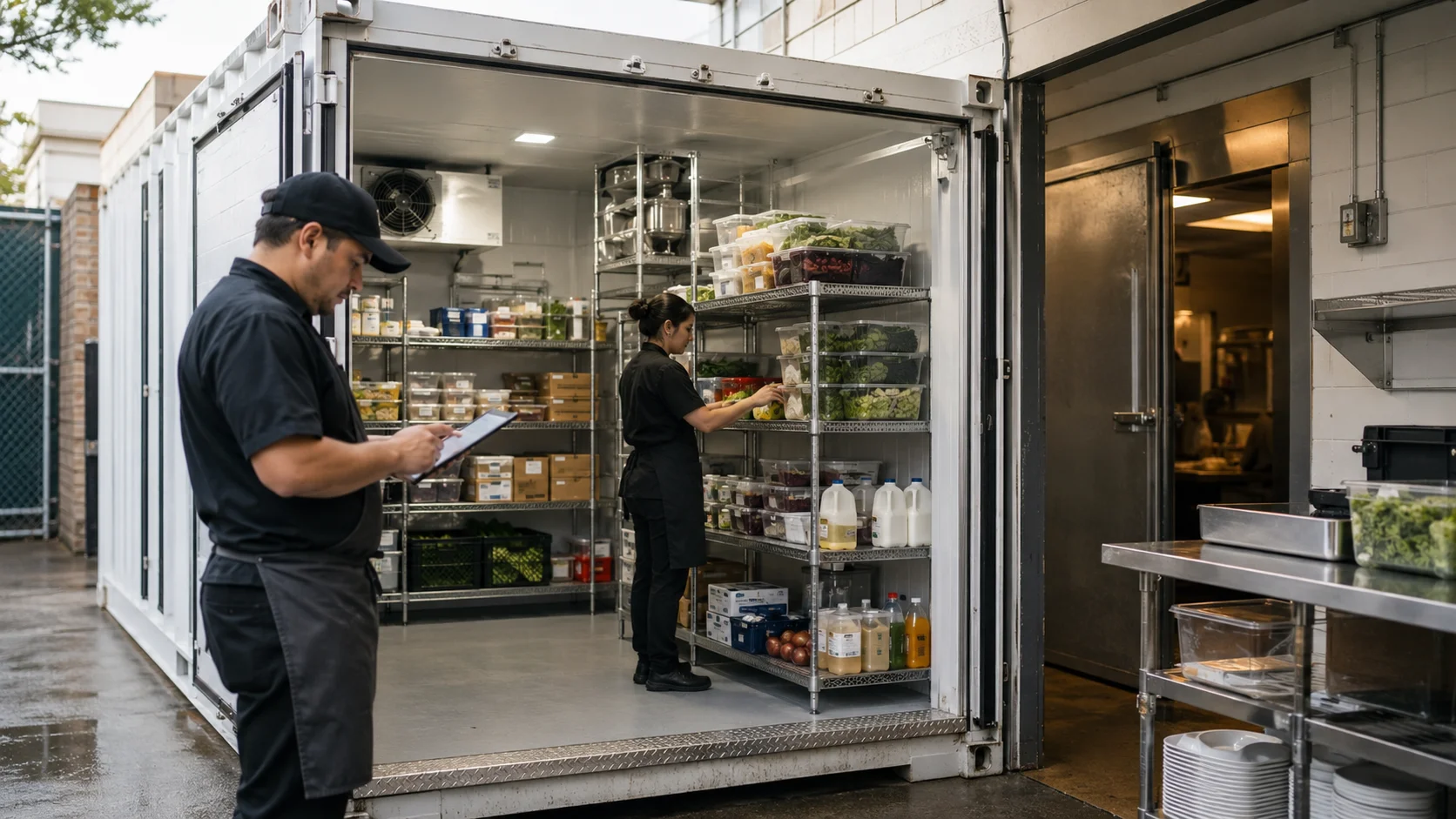
What Food Businesses Need to Know Before Using Portable Refrigerated Containers
Portable refrigerated containers can help restaurants, caterers, grocery operators, commissary kitchens, hotels, food distributors, and event teams add cold storage without building a permanent walk-in cooler. But when food is involved, the container is only one part of the compliance picture.
Food safety compliance depends on how the refrigerated container is selected, placed, powered, cleaned, monitored, loaded, and used. A refrigerated container can support safe cold storage, but it does not automatically make a restaurant or food business compliant with FDA Food Code guidance, local health department rules, or inspection requirements.
The FDA Food Code is a model used by local, state, tribal, territorial, and federal regulators to help develop food safety rules for restaurants, retail food stores, food vending operations, and other foodservice establishments. Because requirements can vary by jurisdiction, food businesses should always confirm local rules with the health department or regulatory authority responsible for their operation.
For food businesses that need flexible cold storage, portable refrigerated storage containers from Conexwest can provide temperature-controlled storage for food, beverages, perishables, and other temperature-sensitive inventory. This guide explains what restaurant and food business owners should know about health codes, cold-holding temperatures, temperature logs, cleanable surfaces, and best practices before using a refrigerated container for food storage.
What Does “FDA Compliance” Mean for Refrigerated Containers?
When food businesses talk about “FDA compliance,” they are often referring to food safety rules based on the FDA Food Code. The distinction matters.
The FDA Food Code is not automatically a federal law for every restaurant or food business. It is a model code that represents FDA guidance for a uniform system of food safety provisions. Local, state, tribal, territorial, and federal authorities may adopt parts of the Food Code into their own regulations and enforce those rules through permits, inspections, and operating requirements.
For a restaurant, caterer, grocery store, commissary kitchen, or food vendor, this means compliance is usually determined by the local authority having jurisdiction. A portable refrigerated container may be acceptable for food storage, but the business still needs to confirm:
- Whether temporary or outdoor cold storage is allowed
- Where the container can be placed
- Whether a permit or inspection is required
- What cold-holding temperature must be maintained
- Whether temperature logs are required
- How food must be covered, labeled, separated, and rotated
- What surfaces and shelving are acceptable for food storage
- Who is responsible for monitoring and corrective action
A refrigerated container should be treated as part of the food business’s overall food safety system, not as a standalone compliance solution.
Why Food Safety Matters in Portable Cold Storage
Cold storage is one of the most important controls for perishable food. The FDA Food Code identifies improper holding temperatures as one of the major risk factors associated with foodborne illness in retail and food service establishments. Other risk factors include contaminated equipment, unsafe food sources, inadequate cooking, and poor personal hygiene.
For restaurants and food businesses, that makes cold storage planning a business-critical issue. If food is held at the wrong temperature, stored in a disorganized way, exposed to cross-contamination, or left in a unit that is not being monitored, the risk increases.
Portable refrigerated containers are commonly used when a food business needs extra capacity quickly. Conexwest’s restaurant cold storage guide explains that refrigerated containers can be useful for seasonal overflow, catering operations, emergency refrigeration backup, kitchen renovations, commissary kitchens, holiday storage, festival storage, temporary freezer space, and bulk food storage.
For event-specific operations, Conexwest’s guide to temporary cold storage for catering events explains how refrigerated container rentals can support weddings, festivals, corporate events, farmers markets, outdoor events, and temporary venues.
Cold-Holding Temperatures: 40°F vs. 41°F
Food businesses should understand the difference between general food safety guidance and foodservice code requirements.
FDA consumer food safety guidance recommends keeping refrigerator temperatures at 40°F or below and freezer temperatures at 0°F or below. The FDA Food Code model uses 41°F or less for cold holding of time/temperature control for safety food, often called TCS food, unless a specific exception applies.
Because local rules may follow the FDA Food Code, modify it, or use additional requirements, the safest approach is to confirm the required cold-holding temperature with the local health department or inspector. Many food businesses choose to set their cold storage target slightly below the required maximum to create a safety buffer.
Common examples of foods that may require cold holding include:
- Meat and poultry
- Seafood
- Dairy products
- Cut produce
- Prepared foods
- Ready-to-eat refrigerated foods
- Egg products
- Sauces and dressings
- Desserts and perishable bakery items
For broader product temperature planning, Conexwest’s guide to reefer container temperature ranges explains how different products may require different refrigerated, frozen, or low-temperature conditions.
How Conexwest Refrigerated Containers Support Food Storage
Conexwest offers portable refrigerated storage containers designed for temperature-controlled storage of perishables, including food, pharmaceuticals, medical supplies, flowers, and other temperature-sensitive items.
Conexwest cold storage options include 10ft, 20ft, and 40ft refrigerated containers, with available features such as precise temperature control, durable insulation, remote monitoring, single-phase and three-phase power options, short-term and long-term rentals, nationwide delivery, and on-site maintenance.
For food and beverage applications, Conexwest identifies chiller temperature ranges of 34°F to 40°F for items such as meat and beer, and freezer temperatures of 0°F and below for items such as ice cream and frozen foods. Conexwest also notes NSF-approved materials for food and beverage storage, supporting safer use in commercial cold storage environments.
Depending on the location, available power, inventory type, and storage volume, food businesses may choose from options such as:
- 20ft refrigerated container rental
- 20ft single-phase refrigerated container
- 20ft dual voltage refrigerated container
- 40ft refrigerated container rental
- 40ft dual voltage refrigerated container
Temperature Logging and Monitoring
Temperature control is one of the most important parts of using a refrigerated container for food storage. The FDA Food Code model calls for food temperature measuring devices to be provided and readily accessible for checking food temperatures. In practice, many restaurants and food businesses also maintain temperature logs as part of their food safety procedures or local inspection requirements.
A temperature log helps show that food was held under controlled conditions. It can also help staff identify equipment problems, power interruptions, door-seal issues, overloaded storage, or operational mistakes before food safety is compromised.
A basic cold storage temperature log may include:
- Date
- Time
- Container or unit ID
- Air temperature reading
- Food temperature reading, when required
- Staff initials
- Corrective action, if temperature is out of range
- Manager verification
Temperature checks should be frequent enough to meet the business’s food safety plan and local requirements. Operators should also have a written corrective-action plan for situations such as power loss, temperature excursions, blocked airflow, refrigeration alarms, or doors left open too long.
Sample Temperature Log Format
| Date | Time | Unit ID | Target Temp | Actual Temp | Checked By | Corrective Action |
|---|---|---|---|---|---|---|
| MM/DD/YYYY | 8:00 AM | 20ft Reefer | 40°F or below | 38°F | Initials | None |
| MM/DD/YYYY | 12:00 PM | 20ft Reefer | 40°F or below | 39°F | Initials | None |
| MM/DD/YYYY | 4:00 PM | 20ft Reefer | 40°F or below | 42°F | Initials | Checked door seal, reduced door-open time, verified food temperatures, notified manager |
This is only an example. Restaurants and food businesses should use a log format that matches their local health department requirements, HACCP plan, standard operating procedures, or corporate food safety program.
Food-Grade Materials and Cleanable Surfaces
Food storage equipment should be easy to clean, durable, and appropriate for its intended use. The FDA Food Code model includes provisions for equipment and utensils to be durable under normal use and for food-contact surfaces to be smooth, free of cracks or other imperfections, and cleanable.
For refrigerated containers, the key issue is how the unit is being used. In most food storage operations, packaged or covered food should be stored in containers, boxes, pans, or wrapped packaging, rather than placed directly on container floors or walls. Shelving, racks, and storage containers should be appropriate for food operations and easy to clean.
Before using a refrigerated container for food storage, restaurant and food business owners should check:
- Interior condition
- Cleanliness before loading
- Floor condition
- Door gaskets and seals
- Shelving and rack materials
- Drainage or moisture concerns
- Odor or residue from prior use
- Ability to clean and sanitize surfaces as needed
- Whether food will be stored covered, sealed, or packaged
Conexwest’s cold storage page notes NSF-approved materials for food and beverage storage. Operators should still confirm that the specific unit, shelving, and storage setup are appropriate for their inventory and local inspection expectations.
Cross-Contamination Prevention
Refrigerated containers can hold a large volume of food, but more space does not automatically mean safer storage. Organization matters.
Food businesses should separate raw and ready-to-eat foods, keep products covered, prevent leaks, avoid storing food directly on the floor, and maintain clear airflow. FDA food safety guidance recommends separating raw meat, poultry, seafood, and eggs from other foods to help prevent cross-contamination.
A practical storage layout may include separate zones for:
- Raw meat and poultry
- Seafood
- Dairy
- Prepared foods
- Ready-to-eat foods
- Fresh produce
- Beverages
- Frozen products
- Catering or event inventory
Operators should also use clear labels, date marking, FIFO rotation, covered containers, and product separation that matches their food safety plan.
Airflow, Loading, and Capacity
A refrigerated container needs proper airflow to maintain consistent temperatures. Overloading the container, blocking evaporator fans, stacking products too tightly, or placing inventory directly against walls can reduce cooling performance and create uneven temperatures.
Before loading the unit, confirm how products should be arranged to allow airflow. Keep aisles clear, avoid blocking the refrigeration unit, and leave space around inventory where needed. Staff should also limit door-open time, especially during hot weather, high-volume service, or frequent restocking.
Conexwest’s restaurant cold storage guide recommends keeping airflow clear, avoiding overloaded storage space, cleaning shelves and surfaces, rotating inventory using FIFO procedures, checking temperatures regularly, and following local health department rules.
Power, Placement, and Delivery Considerations
A refrigerated container must have the right power source to maintain temperature. Power requirements vary by unit. Some Conexwest refrigerated containers require three-phase power, while single-phase options are available for certain applications.
Before renting or placing a refrigerated container, confirm:
- Available voltage
- Single-phase or three-phase power
- Amperage
- Generator or transformer needs
- Distance from power source
- Whether power remains active overnight
- Who is responsible for electrical hookup
- Whether the placement area is level, dry, and stable
- Delivery truck clearance
- Staff access and safety path
For restaurants, grocery stores, hotels, commissary kitchens, and food distributors, placement should also be reviewed for health department, landlord, fire lane, loading dock, and local zoning considerations.
When a Portable Refrigerated Container May Need Health Department Review
Food businesses should not assume that outdoor or temporary cold storage is automatically allowed. Depending on the location and operation, health department review may be needed.
Review may be required when the container is used for:
- Restaurant overflow storage
- Temporary food service
- Catering operations
- Festival or event food storage
- Grocery or retail food inventory
- Emergency replacement during walk-in cooler failure
- Food distribution or commissary storage
- Renovation-related cold storage
Food businesses should ask the local regulatory authority whether the refrigerated container needs to be listed on a permit, inspected before use, included in a food safety plan, or placed in a specific approved area.
Best Practices for Using a Refrigerated Container for Food Storage
Use these best practices to help make portable cold storage easier to manage and easier to inspect:
- Pre-cool the unit before loading temperature-sensitive food
- Verify the set point before inventory arrives
- Use a calibrated or verified thermometer as required by your food safety program
- Keep food covered, wrapped, sealed, or boxed
- Separate raw and ready-to-eat foods
- Keep food off the floor
- Maintain airflow around stored products
- Do not block fans or return-air pathways
- Limit door-open time
- Keep a temperature log when required
- Document corrective actions
- Clean spills promptly
- Inspect door gaskets and seals
- Use FIFO rotation
- Train staff on access and monitoring procedures
Portable Refrigerated Containers for Restaurants, Caterers, and Food Businesses
Different food operations use portable refrigerated containers in different ways.
Restaurants
Restaurants may use refrigerated containers for seasonal inventory, walk-in cooler overflow, holiday prep, catering volume, kitchen renovation, emergency backup, and bulk food storage. For a broader planning guide, read Conexwest’s article on how to choose the right cold storage for your restaurant.
Caterers and Event Teams
Caterers may use refrigerated containers to store prepared food, beverages, desserts, flowers, ice, and vendor inventory during weddings, corporate events, festivals, farmers markets, and outdoor service. For event-specific planning, read Conexwest’s guide to temporary cold storage for catering events.
Hotels and Banquet Operations
Hotels and banquet teams may need refrigerated storage for high-volume foodservice, conferences, weddings, conventions, and seasonal events. A portable refrigerated container can add capacity without a permanent expansion.
Grocery and Retail Food Businesses
Grocery stores and specialty food retailers may use temporary refrigerated storage during remodels, seasonal demand, delivery surges, equipment repairs, or emergency response.
Commissary Kitchens and Food Distributors
Commissary kitchens and distributors may need additional refrigerated or frozen storage for multi-location support, bulk inventory, meal prep, food production, or delivery staging.
Compliance Checklist Before Renting a Refrigerated Container
Before using a portable refrigerated container for food storage, review this checklist:
- Confirm the required storage temperature for each product type
- Confirm local health department rules
- Ask whether the unit needs inspection or permit approval
- Choose the right refrigerated, frozen, or low-temperature unit
- Verify power availability and electrical requirements
- Confirm delivery clearance and placement surface
- Plan shelving, racking, and food separation
- Confirm cleaning and sanitizing procedures
- Set up temperature monitoring and logs
- Assign staff responsibility for checks and corrective actions
- Train staff on door access, loading, and airflow
- Keep records available for management or inspection
Final Takeaway
Portable refrigerated containers can be a practical cold storage solution for restaurants, caterers, grocery stores, commissary kitchens, hotels, distributors, and event teams. They can help add flexible capacity for overflow inventory, seasonal demand, emergency refrigeration, catering operations, and temporary food storage.
However, food safety compliance depends on more than renting the right container. Food businesses need the right temperature range, reliable power, cleanable storage conditions, proper airflow, temperature monitoring, food separation, staff procedures, and local health department approval where required.
Conexwest refrigerated storage containers are available in multiple sizes and configurations, with options for short-term and long-term cold storage. Explore Conexwest cold storage solutions, compare refrigerated container options, or request a quote to find the right unit for your food business.
Find the Right Cold Storage Solution for Your Business
Need portable refrigerated storage for food, beverages, catering, events, or business overflow? Explore Conexwest cold storage containers and find the right unit for your temperature-controlled storage needs.
Was this helpful?
Frequently Asked Questions
The correct set point depends on the food type and local requirements. FDA consumer guidance recommends refrigerator temperatures at 40°F or below, while the FDA Food Code model uses 41°F or less for cold holding of time/temperature control for safety food. Food businesses should confirm requirements with the local regulatory authority.
Temperature logs may be required by a local health department, corporate food safety program, HACCP plan, or internal standard operating procedure. Even when not required, logs can help verify that cold storage conditions were monitored and corrective actions were taken when needed.
Food should generally be stored in covered, sealed, packaged, or protected containers and kept off the floor using appropriate shelving, racks, pallets, or storage systems. Operators should confirm local requirements for storage height, surfaces, and cleanability.
Restaurants should check product temperature requirements, container size, power availability, delivery clearance, placement location, health department requirements, shelving needs, cleaning procedures, temperature monitoring, and staff access.
Yes. Refrigerated containers can support catering events by storing prepared food, beverages, desserts, flowers, ice, and backup inventory. For event-specific planning, read Conexwest’s guide to temporary cold storage for catering events.
In some situations, a refrigerated container can provide temporary or overflow cold storage. For daily kitchen access, a walk-in cooler may still be the preferred permanent solution. The best choice depends on storage volume, workflow, placement space, power access, and whether the need is temporary, seasonal, or long-term.