
You may need a permit depending on where you live, how long the container will stay, how it will be used, whether it is modified, and whether it is connected to utilities. Always check with your local zoning office or building department before delivery.
Can I Put a Shipping Container on My Residential Property?
Can I Put a Shipping Container on My Residential Property?
In many areas, you can place a shipping container on residential property, but the rules depend on where you live and how the container will be used. A temporary storage container for moving or remodeling may be treated differently than a permanent backyard storage unit, workshop, garage, office, ADU, or container home.
Before ordering a container, check local zoning laws, building codes, HOA rules, setback requirements, permit requirements, and property-use restrictions. The same container may be allowed in one city but restricted in another, especially if it will stay long term, connect to utilities, or be modified for occupancy.
This guide explains what homeowners should check before placing a shipping container on residential property, common uses, permit considerations, and how Conexwest can help with container selection, customization, rentals, and delivery.
Key Takeaways
- Check local zoning rules before placing a shipping container on residential property.
- Permits may be required depending on placement duration, intended use, container size, foundation, utilities, and modifications.
- Temporary storage, backyard sheds, garages, workshops, offices, and living spaces may all be regulated differently.
- If your home is in an HOA or planned community, neighborhood rules may restrict container placement, appearance, screening, or duration.
- Conexwest offers shipping containers for sale and rent, with customization options for storage, offices, workshops, garages, and other residential property uses.
Can You Put a Shipping Container on a Residential Property?
Yes, a shipping container may be allowed on residential property, but approval depends on local rules. Cities, counties, townships, HOAs, landlords, and property managers may all have different requirements for container placement.
The first question is how the container will be used. A container used for temporary storage during a move may need little or no review in some areas. A container used as a permanent shed, garage, office, guest room, or home is more likely to require zoning approval, permits, inspections, foundation planning, or building-code review.
Zoning Laws
Zoning laws control how land can be used. Residential zoning may limit where shipping containers can be placed, how long they can remain, whether they must be screened from view, and whether they can be used as accessory structures.
Some residential areas allow containers for temporary storage, while others restrict or prohibit them unless they are inside a fenced area, placed behind the home, painted, screened, or approved through a permit process. Rules can also change if the container is used as a workshop, office, living space, or permanent structure.
Building Codes
If you plan to use a shipping container as a permanent structure, office, workshop, guest space, ADU, or home, building-code requirements may apply. The International Building Code includes provisions for intermodal shipping containers, and local jurisdictions may adopt or amend codes differently.
Building-code review may address structural integrity, foundations, anchoring, fire safety, insulation, ventilation, electrical systems, plumbing, mechanical systems, exits, and accessibility depending on use. Cutting openings for doors, windows, roll-up doors, or skylights can also require structural review.
Permits
Permit requirements vary by location and use. Some areas allow short-term storage containers without a building permit, while others require a temporary use permit, zoning clearance, or site approval. Permanent or modified containers are more likely to require permits.
You may need approval if the container will:
- Stay on-site for more than a short temporary period
- Be used as a shed, garage, office, workshop, ADU, or living space
- Connect to electricity, water, sewer, HVAC, or plumbing
- Sit on a permanent foundation
- Be modified with windows, doors, large openings, decks, or roofs
- Be visible from the street or neighboring properties
Homeowners Association Rules
If your property is part of an HOA, subdivision, planned community, or condo association, additional rules may apply. HOAs often regulate exterior appearance, storage structures, accessory buildings, fences, paint colors, setbacks, and temporary storage duration.
Even if your city allows a shipping container, your HOA may still restrict it. Always check HOA guidelines before scheduling delivery.
Common Residential Container Rules
When placing a shipping container on residential property, homeowners may encounter rules related to:
- Placement restrictions: Containers may need to be placed in side yards, backyards, driveways, or designated storage areas, depending on local rules.
- Surface requirements: Containers may need to sit on a stable surface such as gravel, concrete, asphalt, piers, or blocks to prevent shifting and moisture issues.
- Setbacks: Local rules may require containers to be a minimum distance from property lines, streets, easements, driveways, utilities, or other structures.
- Appearance and screening: Some areas require containers to be painted, screened by fencing or landscaping, or kept out of public view.
- Stacking limitations: Stacking containers on residential property may be restricted or require engineering and building approval.
- Duration limits: Temporary storage containers may only be allowed for a limited number of days or months.
Note: Every locality has its own rules. Always confirm current requirements with your local zoning office, building department, HOA, landlord, or property manager before placing a container on residential property.
Conexwest offers new, used, and refurbished shipping containers in sizes from 10ft to 45ft, including standard containers, high cube containers, insulated containers, refrigerated containers, mobile office containers, and custom modified containers. Customers can shop containers for storage, residential property projects, business use, jobsite needs, and specialty applications. |
Practical Uses of Shipping Containers on Residential Property
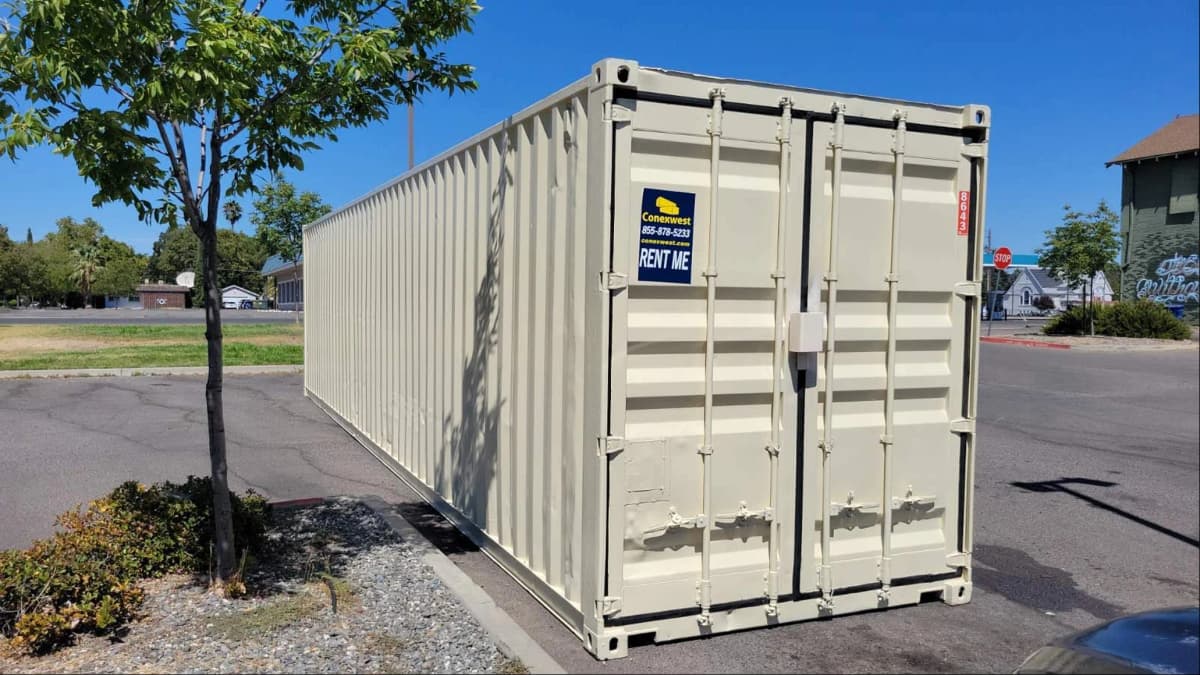
Shipping containers can be modified for sheds, garages, workshops, offices, storage rooms, and other residential property uses.
- Storage sheds: Containers can store tools, lawn equipment, seasonal items, furniture, household goods, and renovation materials.
- Garages: Containers can be used for motorcycles, compact cars, ATVs, tools, and equipment storage. Read more about shipping container garages.
- Workshops: A container can be modified into a hobby shop, repair space, woodworking area, or small professional workshop.
- Home offices: With insulation, electrical, windows, lighting, and HVAC, a container can become a detached office or studio.
- Garden rooms and grow spaces: Containers can support gardening, seed starting, tool storage, or controlled growing concepts. Read more about shipping container greenhouses.
- Pool or outdoor living concepts: With proper design, engineering, plumbing, and permits, containers can be modified for pools, decks, or outdoor entertainment features.
- Living spaces or ADUs: A container can be part of a residential living concept only if zoning, building code, utilities, permits, safety, and inspections are addressed.
- Temporary storage during renovations: Containers can keep belongings protected during remodels, moves, estate cleanouts, or home repairs.
Residential Shipping Container Planning Checklist
Before placing a shipping container on your property, confirm the following:
- Local zoning rules
- Whether the container is temporary or permanent
- Intended use: storage, garage, office, workshop, ADU, or living space
- Permit requirements
- Setbacks from property lines, roads, easements, and utilities
- HOA, landlord, or neighborhood restrictions
- Foundation or base requirements
- Drainage and moisture control
- Fire access and emergency access
- Electrical, plumbing, HVAC, or utility permits
- Screening, paint, or appearance rules
- Delivery access and placement area
Read More: Best Base Materials for Shipping Containers
Choose Conexwest for Your Shipping Container Needs
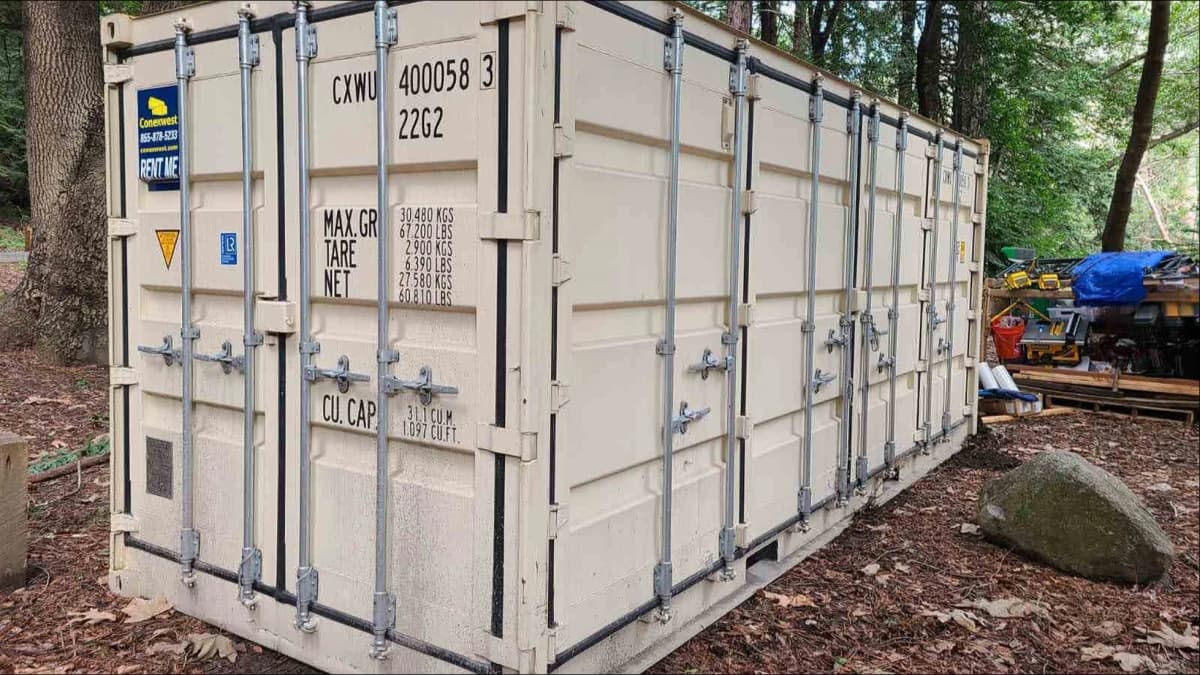
Conexwest has an extensive inventory of new, used, and refurbished shipping containers.
Choosing Conexwest for your residential shipping container project gives you access to container sales, rentals, delivery, fabrication, repair, and support for a wide range of storage and custom uses.
- Extensive range of containers: Our inventory of shipping containers includes standard, high cube, insulated, refrigerated, mobile office, and specialty containers in sizes from 10ft to 45ft.
- Customization options: Conexwest offers shipping container customization options such as doors, windows, insulation, ventilation, electrical, HVAC, shelving, partitions, and paint.
- Rental options: Customers can also explore shipping container rentals for short-term storage, home renovation projects, moving, construction, and seasonal needs.
- Project planning support: Conexwest can help you compare container sizes, conditions, delivery needs, and modification options. Local legal approval should still be confirmed with the correct authority.
- Delivery support: Conexwest can help coordinate container delivery based on container size, placement area, ground conditions, and site access.
Was this helpful?
Frequently Asked Questions
Yes, a shipping container can be converted into a living space, but it must comply with local zoning, building codes, permits, utility requirements, safety rules, and inspections. Residential projects usually require professional design and construction support.
A shipping container can last many years with proper placement, drainage, rust prevention, coatings, ventilation, and maintenance. Lifespan depends on condition, climate, use, exposure, and upkeep.
New containers, often called one-trip containers, usually have less wear and fewer cosmetic marks. Used containers may show dents, surface rust, repairs, or wear, but they can still be practical for storage and other uses when properly inspected.
Yes. Conexwest provides rental containers for short-term and long-term storage needs. Rental containers can be useful during moving, remodeling, construction, cleanouts, or seasonal storage.
The best size depends on available space, use, access, and local rules. A 10ft or 20ft container may work for smaller yards or storage needs, while a 40ft container offers more capacity but requires more placement space and delivery clearance.