
Yes, a 40ft container can be large enough for a compact studio, guest unit, office, or one-bedroom layout. It provides about 320 square feet before interior buildout. Larger homes often use multiple containers or combine containers with conventional construction.
40-Foot Shipping Container Home Plans: Ideas & Price
40-Foot Shipping Container Home Plans: Cost & Design Ideas
A 40-foot shipping container is one of the most popular starting points for a container home because it offers more usable space than a 20ft unit while still being manageable for delivery, placement, and modification. With a footprint of about 40 feet by 8 feet, a standard 40ft container provides roughly 320 square feet before interior framing, insulation, utilities, and finishes are added.
A single 40ft container can work for a compact studio, guest suite, office, tiny home, or one-bedroom layout. Multiple 40ft containers can also be combined to create larger homes with separate bedrooms, open living areas, covered patios, and more flexible layouts.
This guide covers 40ft shipping container home layout ideas, space-saving strategies, cost factors, planning tips, and how Conexwest can help with container selection, modifications, and delivery.
Key Takeaways
- A 40ft shipping container provides about 320 square feet before interior buildout, with finished space depending on insulation, framing, utilities, and layout.
- Popular layouts include studio homes, one-bedroom retreats, compact two-bedroom designs, work-from-home layouts, and eco-focused tiny homes.
- High cube containers are often preferred for homes because the extra height leaves more room for insulation, ceiling finishes, lighting, and mechanical systems.
- Container homes require planning for permits, foundations, structural modifications, insulation, ventilation, plumbing, electrical, HVAC, and local building-code requirements.
- For shipping containers and fabrication, Conexwest provides container options, modification services, and delivery support for custom projects.
Why Choose a 40-Foot Shipping Container Home?
A 40ft container gives you more design flexibility than a smaller 20ft unit. The longer footprint can support a real living layout with a kitchen, bathroom, sleeping area, storage, and flexible work or lounge space.
Shipping containers are also modular, which means one container can stand alone or become part of a larger build. A single 40ft unit may work for a small home, backyard studio, guest suite, or vacation cabin, while two or more containers can create a larger floor plan with more separation between bedrooms, bathrooms, and living areas.
For residential use, the container itself is only the starting point. A finished home still needs proper design, engineering, insulation, ventilation, utility connections, foundation planning, and local approval. Costs and timelines can vary significantly based on the site, finish level, climate, and local building requirements.
Conexwest offers new, used, and refurbished shipping containers in sizes from 10ft to 45ft, including standard containers, high cube containers, refrigerated containers, insulated containers, mobile office containers, and custom modified containers. Customers can also explore fabrication options such as doors, windows, insulation, electrical, HVAC, shelving, and custom paint. |
Layout Ideas for a 40-Foot Container Home
The narrow, rectangular shape of a 40ft container rewards smart planning. The best layouts usually keep circulation simple, place plumbing close together, use built-in storage, and connect the interior to outdoor living space.
1. Minimalist Studio
A studio layout keeps the living, sleeping, and kitchen areas in one open space. This approach works well for singles, guest accommodations, vacation rentals, backyard units, or compact retreats.
Built-in storage, a Murphy bed, a compact kitchenette, and a small bathroom can help the space feel organized. The bathroom should be planned carefully to save space and simplify plumbing.
2. One-Bedroom Retreat
A one-bedroom layout places a separate bedroom at one end of the container and keeps the kitchen, living area, and bathroom toward the center or opposite end. This gives more privacy than a studio while still keeping the design compact.
This plan can work for couples, remote workers, guest suites, rental units, or small vacation homes. Sliding doors, pocket doors, and built-in storage can help preserve floor space.
3. Compact Two-Bedroom Home
A two-bedroom design is possible in a 40ft container, but the rooms will be compact. This layout may work better when one room is used as a small office, bunk room, guest room, or flex space rather than a full-size bedroom.
For better comfort, many two-bedroom container homes use more than one container or combine the container with a framed addition, deck, or covered outdoor area.
4. Work-From-Home Layout
A 40ft container can also become a dedicated live-work space. One end can hold a compact office, studio, or creative workspace, while the rest of the container supports sleeping, cooking, and living functions.
This works well for remote workers, designers, artists, consultants, or small-business owners who need a separate workspace without building a full addition.
5. Eco-Tiny Home
An eco-focused 40ft container home may include solar panels, high-performance insulation, efficient windows, water-saving fixtures, passive ventilation, and outdoor growing areas. Some owners also add container-based gardens, green roofs, or nearby vertical gardens.
Off-grid or semi-off-grid designs require extra planning for power, water, wastewater, heating, cooling, and local code approval.
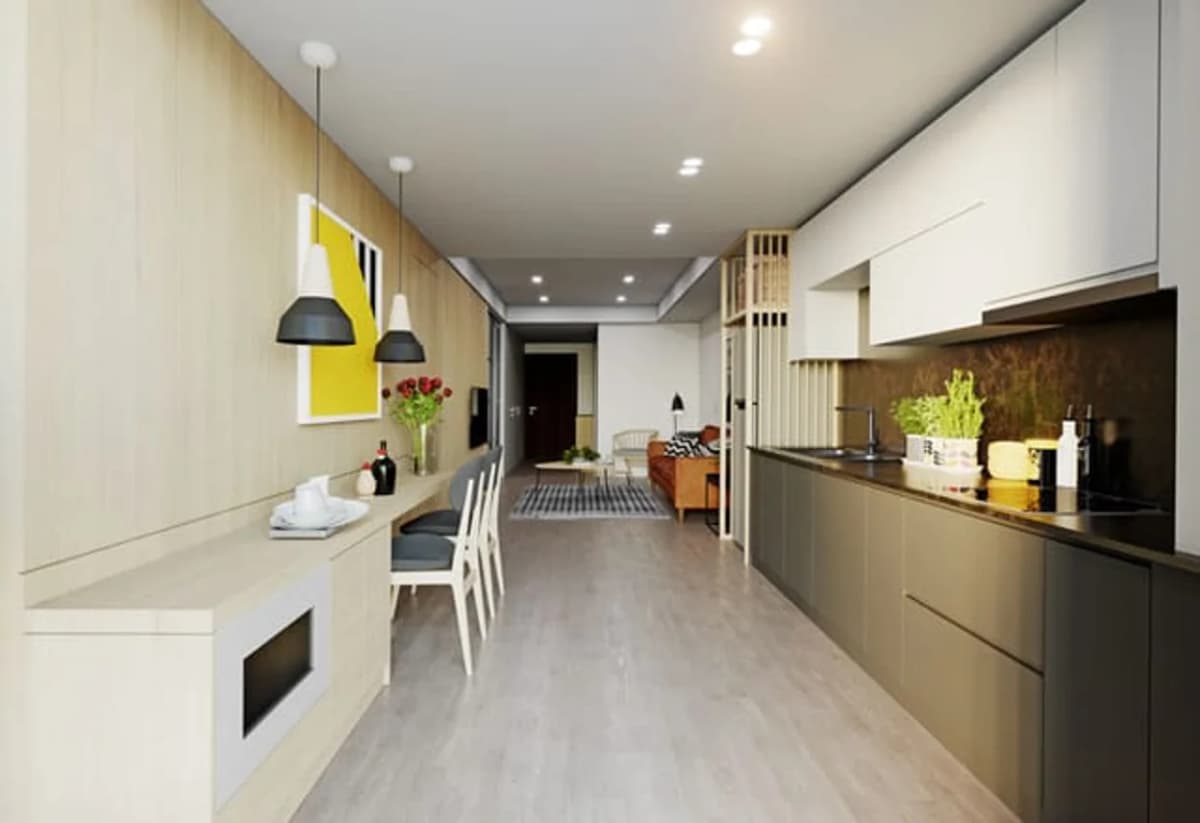
Use space-efficient techniques to make the most of the long, narrow interior.
Space Optimization Strategies
Vertical Storage
Use the container’s full height wherever possible. Run cabinets to the ceiling, add built-in shelving, use tall wardrobes, and place storage above doors, under beds, and below benches. A raised bed platform with drawers can turn sleeping space into valuable storage.
For residential-style projects, high cube containers can help because the extra height gives more room for ceiling finishes, insulation, lighting, and storage.
Multi-Use Surfaces
Every surface should do more than one job. A kitchen counter can double as a dining bar. A fold-down desk can become a work area during the day and disappear at night. A bench can provide seating, storage, and a sleeping area for guests.
Efficient Plumbing Layout
Keeping the kitchen, bathroom, laundry, and mechanical systems close together can reduce plumbing runs and make the build more efficient. This is especially important in a narrow container where every wall and chase affects usable space.
Indoor-Outdoor Living
Decks, patios, sliding doors, and shade structures can make a 40ft container home feel much larger. Outdoor space can become the dining area, lounge, entry zone, or workspace when the climate allows.
40ft Shipping Container Home Price
Base Container Prices
40ft containers are commonly used for container homes because they provide more floor area than smaller units. Pricing depends on condition, location, availability, and whether the unit is new, used, refurbished, standard height, or high cube.
For residential projects, many buyers consider 40ft high cube containers because the extra height can make the finished interior more comfortable after insulation, ceilings, flooring, HVAC, and lighting are installed.
Additional Costs and Conversion
The total cost of a 40ft container home depends on much more than the container price. A realistic budget should include delivery, site preparation, foundation, structural reinforcement, insulation, windows, doors, plumbing, electrical, HVAC, roofing, interior finishes, exterior finishes, permits, engineering, and labor.
A basic conversion may cost far less than a fully finished, code-compliant residence. More complex projects with bathrooms, kitchens, large openings, high-end finishes, decks, utility connections, and structural engineering can cost substantially more.
Read More: How Much Does a Shipping Container Home Cost?
Planning Tips Before Building Your Container Home
- Define the layout first: Decide whether you need a studio, one-bedroom, office layout, guest unit, or multi-container home.
- Use design tools: Use 2D or 3D planning tools like ConexBuilder to visualize layout, circulation, windows, and built-ins.
- Check local rules: Permits, zoning, setbacks, foundations, utilities, and residential building-code requirements vary by location.
- Inspect the container: Check for rust, dents, floor condition, odor, repairs, and structural damage before committing to a unit.
- Plan insulation early: Steel transfers heat and cold quickly, so insulation, ventilation, and moisture control are essential for comfort.
- Design the foundation properly: Soil, drainage, frost depth, seismic conditions, and local code can all affect the foundation choice.
Why Conexwest Is Your Container Home Partner
At Conexwest, customers can explore a wide range of shipping containers for residential concepts, custom builds, storage, offices, and specialty projects. Our inventory includes 10ft, 20ft, 40ft, and 45ft containers in new, used, and refurbished conditions.
Conexwest also offers customization services that can support container home planning, including doors, windows, insulation, electrical, HVAC, shelving, partitions, vents, custom paint, and other modifications.

Conexwest can help with container selection, fabrication options, and delivery planning for residential and custom projects.
Container home projects should also involve licensed architects, engineers, contractors, electricians, plumbers, and local permit offices where required. Conexwest can supply the container and modification options, while the final residential design and approval depend on the site, local rules, and construction team.
Was this helpful?
Frequently Asked Questions
High cube containers are often preferred for homes because they provide extra interior height. This helps preserve headroom after insulation, ceiling finishes, flooring, lighting, and mechanical systems are installed.
Insulation should be selected based on climate, code requirements, wall assembly, moisture control, and HVAC design. Spray foam, rigid foam, mineral wool, or hybrid systems may be used depending on the project. Ventilation and condensation control are also important.
Common foundation options include concrete piers, strip footings, grade beams, and full concrete slabs. The best choice depends on soil conditions, drainage, climate, local code, container layout, and whether the home is temporary, permanent, or multi-container.
Timelines vary widely. A simple conversion may move faster than traditional construction, while a code-compliant residential build with permits, engineering, utilities, inspections, and custom finishes can take several months or longer.
Conexwest offers shipping containers in multiple sizes and conditions, along with modification options and delivery support. Customers can shop standard, high cube, insulated, refrigerated, mobile office, and custom modified containers depending on project needs.