3 Container Workshop Roof Ideas for 2025: Build Smarter & Stronger
Key Takeaways
- Container workshops can be transformed with eco-friendly green roofs that provide insulation and look great.
- Solar panel roofing offers sustainable energy and can pay for itself within 3–5 years.
- Retractable roof designs let you work in any weather with flexible workspace options.
- Standard shipping containers can support 300–400 pounds per square foot when properly reinforced.
- At Conexwest, we provide containers suitable for workshop conversions and can handle structural modifications needed for advanced roofing systems.
Transform Your Workshop Space
Container workshops make excellent creative foundations, but their standard roofs leave much to be desired. The flat metal surface conducts heat, creates noise during rain, and doesn't look that great.
Transforming this space can improve how your workshop functions and feels. With thoughtful modifications, your container roof becomes an asset instead of an afterthought.
When planning your roof upgrade, think about your local climate, budget, and what you mainly use your workshop for. Each roofing solution offers unique benefits for different situations. For example, a woodworker in Arizona needs different things than a metalworker in Seattle.
Conexwest, a leader in shipping and storage solutions based in Northern California, offers new, used, and refurbished containers from 10ft to 45ft, with fast delivery within 3–7 days and container fabrication options like adding shelves and locks. We serve over 10,000 customers nationwide, including prestigious clients like the U.S. Navy and Google. As an ISO 9001 and AWS-certified company, we ensure top quality and competitive pricing. |
Get a quote
1. Green Roof Systems
Green roofs transform container workshops into eco-friendly spaces that blend with nature. These living roofs have vegetation growing in specialized soil on top of a waterproofing system.
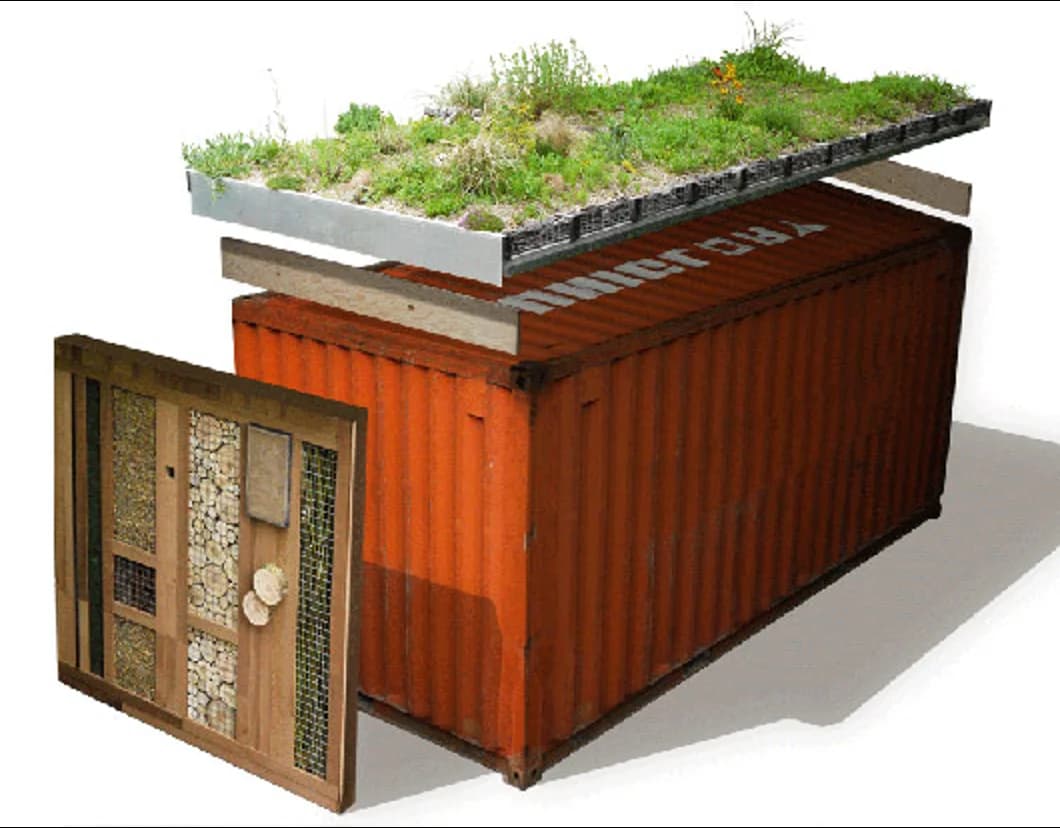
Green roofs use vegetation over waterproof membranes to make container workshops blend naturally with surroundings. (Image courtesy of Green Roof Shelter)
Plant Selection
Choosing the right plants for your container workshop's green roof is crucial for success. Sedum varieties and other succulents work best because of their shallow root systems, drought tolerance, and minimal maintenance needs. These hardy plants handle direct sunlight and dry spells, making them ideal for roof conditions.
In temperate climates, consider native wildflowers, herbs, and grasses that attract pollinators and create habitat. Whatever plants you choose, make sure they work for your local growing conditions and the shallow depth of your growing medium. Container roof gardens use 3–6 inches of specialized growing medium, so stick to plants with shallow root systems.
Waterproofing Requirements
Proper waterproofing is the critical foundation of any green roof system for container workshops. Start by thoroughly cleaning the container roof surface and applying a high-quality rubberized membrane or EPDM roofing material.
These specialized barriers prevent moisture penetration while standing up to constant pressure from soil and plant roots above.
Never cut corners on waterproofing materials or installation. A small leak can quickly damage your entire workshop, ruining tools, materials, and electrical systems.
Consider adding a root barrier layer above your waterproofing membrane to stop aggressive plant roots from penetrating the waterproof layer.
Weight Considerations
Container roofs weren't designed to support extensive green roof systems, so weight distribution needs careful planning.
Standard shipping containers can support 300–400 pounds per square foot when properly reinforced. A saturated green roof system weighs between 25–80 pounds per square foot, depending on soil depth and plant selection.
To handle this weight, install additional structural supports inside your workshop. Steel beams or columns placed strategically can transfer the load to the container's corner posts, which are designed to bear significant weight.
For extensive green roofs, consult a structural engineer to ensure your container can safely support the added mass.
DIY Installation Steps
Here's how to install your green roof:
- Reinforce your container roof structure with additional support beams.
- Apply a high-quality waterproofing membrane over the entire roof surface.
- Install a root barrier and drainage layer to manage excess water.
- Add filter fabric to prevent soil from clogging drainage paths.
- Spread specialized green roof growing medium at appropriate depth.
- Plant selected vegetation according to your design plan.
- Install edge restraints to prevent soil erosion.
2. Solar Panel Integration
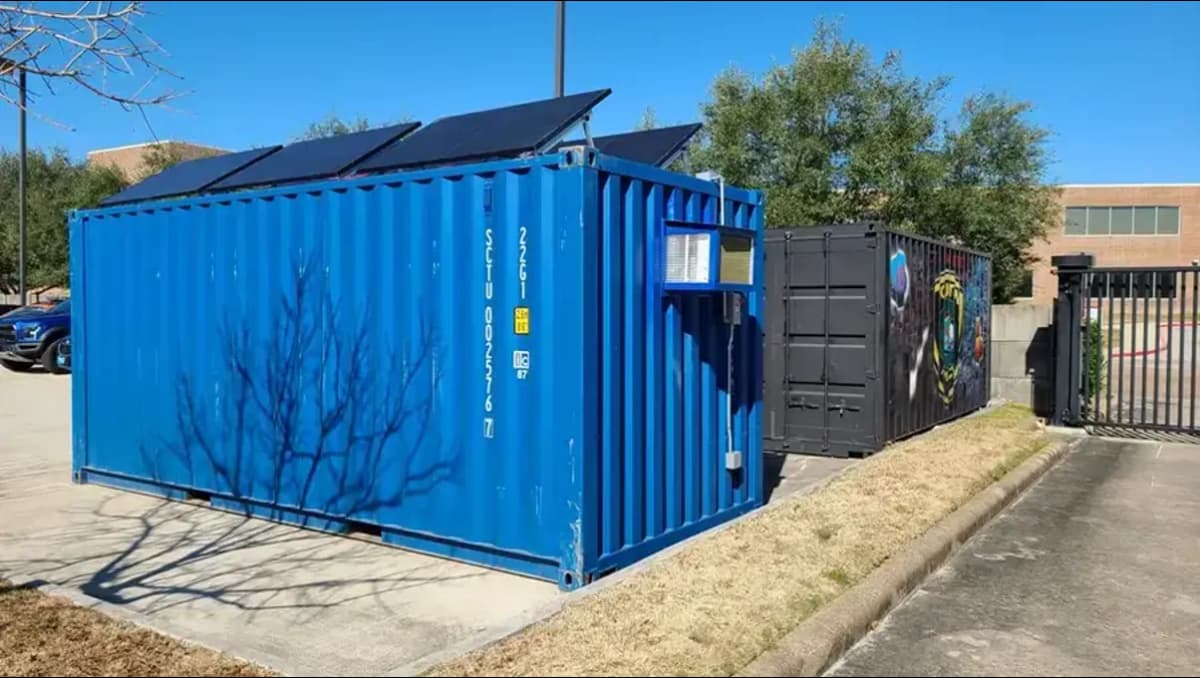
Modern solar panels are more affordable and efficient than ever. Systems pay for themselves within 3–5 years. The flat, rectangular shape of container roofs makes installation straightforward compared to traditional pitched roofs.
Mounting Options
You can mount solar panels to container roofs several ways. The simplest method uses specialized clamps and mounting rails secured to the roof's corrugated surface.
For best energy production, panels should tilt toward the sun at an angle matching your latitude, which means creating an angled mounting framework above the flat container roof.
Ballasted mounting systems offer another solution, using weighted bases rather than penetrating the container roof. This preserves the roof's integrity but adds significant weight.
Whatever mounting system you choose, ensure it can handle your area's maximum wind loads and weather conditions.
Cost vs. Savings
Initial investment for a container workshop solar system runs from $5,000–$15,000 depending on capacity and installation complexity. While this is a significant upfront cost, long-term savings often justify the expense.
A properly sized system can eliminate workshop utility bills entirely while potentially providing excess power for other uses.
For workshops used frequently or housing power-hungry equipment like welders, CNC machines, or dust collection systems, the payback period shortens considerably. Many areas also offer tax incentives, rebates, or net metering programs that improve the financial equation. Calculate your workshop's power needs and compare against local electricity rates to determine potential savings.
Beyond economics, solar power provides resilience during outages and reduces your carbon footprint. For many DIY enthusiasts, powering creative projects with clean, renewable energy adds another satisfying aspect to their workshop experience.
3. Retractable Roof Designs
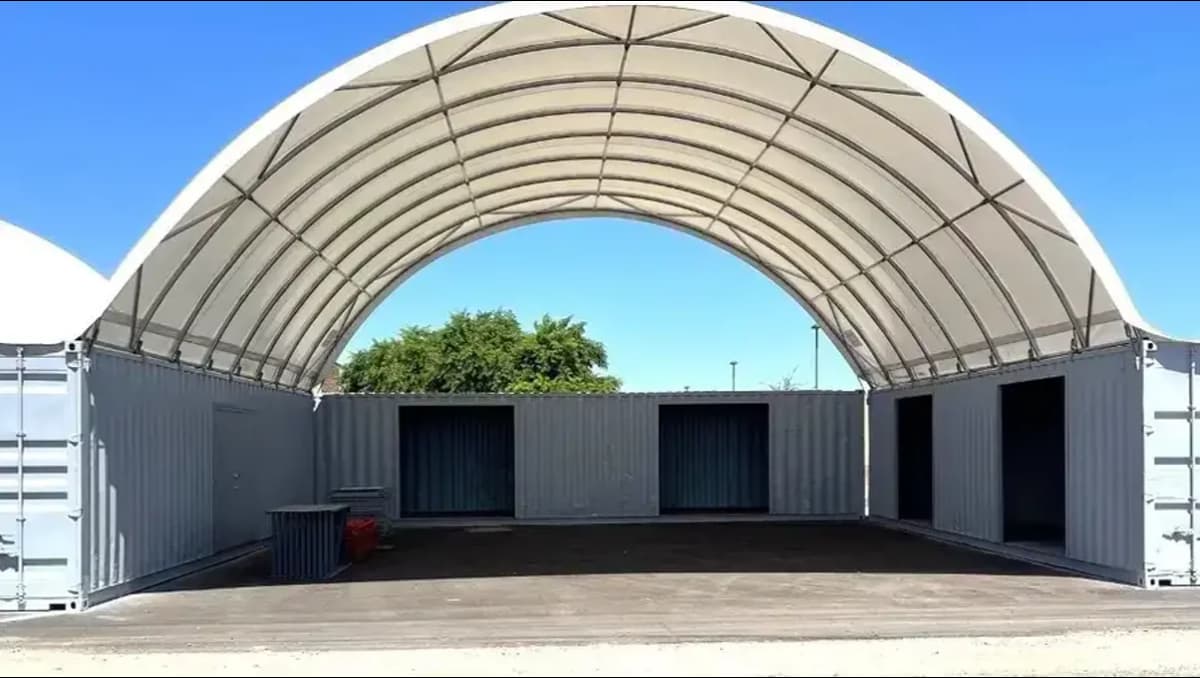
Retractable roofs offer unmatched flexibility for container workshops. Open your workspace to natural light and fresh air on nice days while maintaining protection during bad weather.
Material Choices
Several materials work well for retractable container roofs, each with distinct advantages. Polycarbonate panels offer excellent light transmission and good insulation, while blocking harmful UV rays. These lightweight panels resist impact damage and come in various tints to control light and heat.
Canvas options are affordable and easy to install, but need more frequent replacement. For premium installations, consider aluminum or steel panels with insulation cores that combine durability with thermal performance.
Your choice should balance the budget against longevity, weather resistance, and your workshop activities.
Pulley Systems
The mechanics behind retractable roofs vary from simple manual systems to sophisticated motorized solutions. Basic designs use marine-grade pulleys and track systems, allowing segments to slide manually using rope or hand crank. These economical options work well for smaller containers and need minimal maintenance.
Electric motors with remote controls offer convenience for larger systems or frequent use. These connect to rack-and-pinion drives or cable systems that distribute force evenly across roof panels.
Whichever system you choose, ensure components are rated for outdoor use and sized for your roof's weight and dimensions.
Weather Protection
Effective sealing is the biggest challenge for retractable container roofs. Quality weather stripping, overlapping panel designs, and properly engineered drainage channels prevent water intrusion when closed. Silicon gaskets at contact points provide reliable seals while allowing smooth operation.
Wind resistance needs special attention since partially open roofs can catch air like sails. Install automatic wind sensors that trigger closure during high winds, and include locking mechanisms securing panels firmly when fully closed or open. Create clear drainage paths to prevent water pooling, which leads to leaks and faster material degradation.
Seasonal Adjustments
Adjusting your roof configuration seasonally maximizes workshop comfort and efficiency. In summer, a partially open roof vents heat while strategically placed shade cloths block direct sunlight. During winter, close the system completely and benefit from insulated panels retaining workshop heat.
Some advanced systems have movable louvers or adjustable openings providing ventilation without fully retracting the roof. This versatility makes retractable designs valuable in regions with varied climates or dramatic seasonal changes.
*These numbers are estimates, and the actual price can vary. Thus, it’s best to reach out to us for an accurate quote.
Conexwest Can Help With Your Container Workshop Roof Project
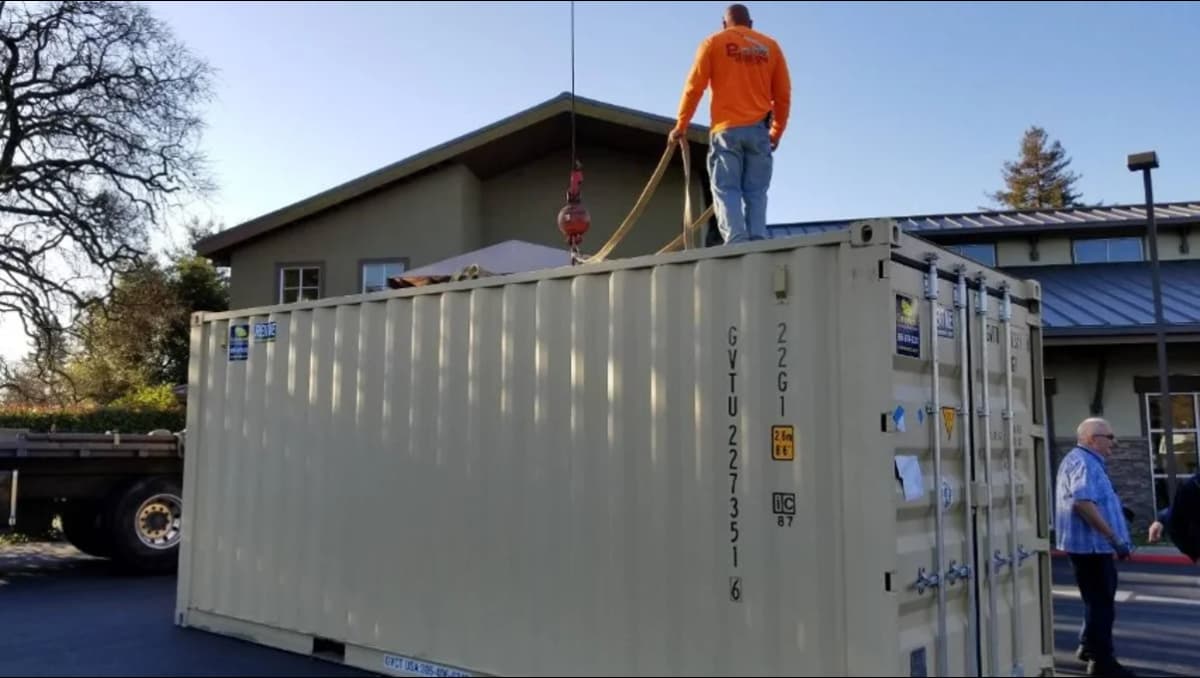
Our structural modification team can reinforce containers to safely support green roofs, solar panels, or retractable roof systems.
- Structural Assessment and Reinforcement: We evaluate your container's ability to handle additional roof loads and provide the internal reinforcement needed for green roofs, solar panels, or retractable systems. Our modifications maintain container integrity while enabling advanced roof features.
- Custom Roof System Design: Our team designs roof modifications that work with your specific workshop needs and local climate. Whether you want energy generation, natural cooling, or flexible workspace options, we create systems that actually function properly long-term.
- Professional Installation Services: We handle complete installation of roof systems including waterproofing, structural mounting, and electrical connections for solar systems. Our certified installers ensure your roof modifications meet code requirements and perform as designed.
- Hybrid Solution Planning: Want to combine solar panels with a green roof or add retractable sections to a solar array? We plan hybrid systems that maximize benefits while avoiding conflicts between different roof technologies.
- Workshop Layout Integration: We coordinate roof modifications with your workshop's interior layout, ensuring features like skylights align with workbenches and electrical systems work with your power tool requirements.
Get a quote
