
Air conditioning can lower the interior temperature and help reduce humidity, but performance depends on insulation, AC size, sun exposure, door-open frequency, ventilation, and climate. Proper sizing and maintenance are important.
20-ft Shipping Container with Air Conditioning: Features, Dimensions, Add-Ons, and Costs
20ft Shipping Container with Air Conditioning – Features, Dimensions & Costs
A 20ft shipping container with air conditioning can create a compact, secure, and more comfortable climate-controlled space for storage, work, equipment, or temporary operations. With the right insulation, ventilation, electrical setup, and HVAC system, a standard container can be modified for uses such as jobsite offices, equipment rooms, workshops, labs, event support, and temperature-sensitive storage.
The key is matching the container buildout to the use case. Cooling a container used for occasional tool storage is different from cooling one used daily as an office, workspace, or storage room for sensitive goods. Sun exposure, insulation, door openings, humidity, internal heat loads, and local climate all affect how well the air conditioning system performs.
This guide covers common features, dimensions, add-ons, cost factors, and applications for 20ft air-conditioned shipping containers.
Key Takeaways
- A 20ft shipping container with AC can support climate-controlled storage, jobsite offices, workshops, equipment rooms, and temporary workspaces.
- Steel construction provides a durable shell, but comfort and performance depend on insulation, ventilation, weather sealing, electrical work, and proper HVAC sizing.
- Air conditioning should be installed with the correct electrical setup, wall opening, mounting, drainage, and protection for the intended environment.
- Common add-ons include insulation, windows, doors, shelving, lighting, outlets, vents, flooring, security bars, skylights, and humidity monitoring.
- Conexwest supplies shipping containers and offers modification options for AC, insulation, electrical, ventilation, doors, windows, shelving, and custom container projects.
Introduction to 20ft Shipping Containers with Air Conditioning
A 20ft shipping container is compact enough for many jobsites, yards, warehouses, farms, schools, event spaces, and business properties, while still offering usable interior space. Adding air conditioning can make the container more suitable for people, equipment, and materials that need protection from heat, humidity, or temperature swings.
Air-conditioned containers are commonly used when customers need a more controlled interior environment but do not necessarily need a refrigerated container. For example, a modified container with AC may work well for office use, electronics storage, tool rooms, inspection stations, labs, temporary workspaces, and event support. For cold food storage or frozen goods, a refrigerated container may be the better option.
Before modifying a container with AC, consider how often the doors will open, whether people will work inside, how much heat the stored equipment produces, and whether humidity control is important. These details help determine the right insulation, HVAC capacity, electrical package, and ventilation strategy.
Conexwest offers new, used, and refurbished shipping containers in sizes from 10ft to 45ft, including standard containers, high cube containers, refrigerated containers, insulated containers, mobile office containers, and custom modified containers. Customers can explore sales, rentals, fabrication, delivery, and repair options for storage, office, jobsite, business, and specialty applications. |
Features of a 20ft Air-Conditioned Shipping Container
- Air conditioning system: AC options may include a wall-mounted HVAC unit, PTAC-style unit, mini-split system, or heavy-duty HVAC setup depending on the container use, climate, and insulation package.
- Insulation: Insulation helps reduce heat transfer through the steel walls and roof. Common options include spray foam, rigid board, polyurethane, or other insulation systems depending on the project.
- Electrical package: A modified container may include LED lighting, outlets, switches, conduit, and a dedicated electrical panel designed for the container’s equipment and occupancy needs.
- Ventilation: Vents, fans, or fresh-air options can help manage moisture, odors, and airflow, especially when the container is occupied or used for equipment storage.
- Security: Steel cargo doors, lockboxes, AC security bars, window bars, and reinforced access points can help protect stored items and installed equipment.
- Condensate drainage: AC systems produce condensation, so drainage should be planned to prevent water buildup, leaks, corrosion, or interior moisture problems.
Dimensions of a 20ft Shipping Container
Exact dimensions can vary slightly by manufacturer, container condition, and interior buildout. Insulation, wall panels, flooring, and HVAC equipment can reduce usable interior space.
Dimension Type | External Standard | Internal Standard | External High Cube | Internal High Cube |
Length | 20 ft | Approx. 19 ft 4 in | 20 ft | Approx. 19 ft 4 in |
Width | 8 ft | Approx. 7 ft 8 in | 8 ft | Approx. 7 ft 8 in |
Height | 8 ft 6 in | Approx. 7 ft 10 in | 9 ft 6 in | Approx. 8 ft 10 in |
Internal Volume | — | Approx. 1,165 cu ft | — | Approx. 1,320 cu ft |
Add-Ons and Customization Options
- Upgraded HVAC: Larger or dual systems may be used for high-heat climates, frequent occupancy, or equipment-heavy applications.
- Advanced insulation: Higher-performance insulation can improve comfort, cooling efficiency, and moisture control.
- Interior finishes: Wall panels, plywood, FRP, drywall, or other finishes can make the container more comfortable and easier to use.
- Flooring: Options may include vinyl flooring, epoxy flooring, rubber flooring, plywood, or other project-specific flooring systems.
- Lighting and power: Add interior lights, exterior lights, outlets, switches, dedicated circuits, and power for equipment or workstations.
- Security enhancements: Options may include reinforced doors, lockboxes, window bars, and AC security cages.
- Paint and branding: Custom colors, anti-corrosion coatings, and business branding can be added depending on use.
- Vents and dehumidifiers: Ventilation and humidity control can help protect moisture-sensitive items.
- Windows and skylights: Natural light can make the container feel more usable for offices, workshops, and occupied spaces.
- Monitoring systems: Temperature and humidity monitoring can help track interior conditions for sensitive inventory or equipment.
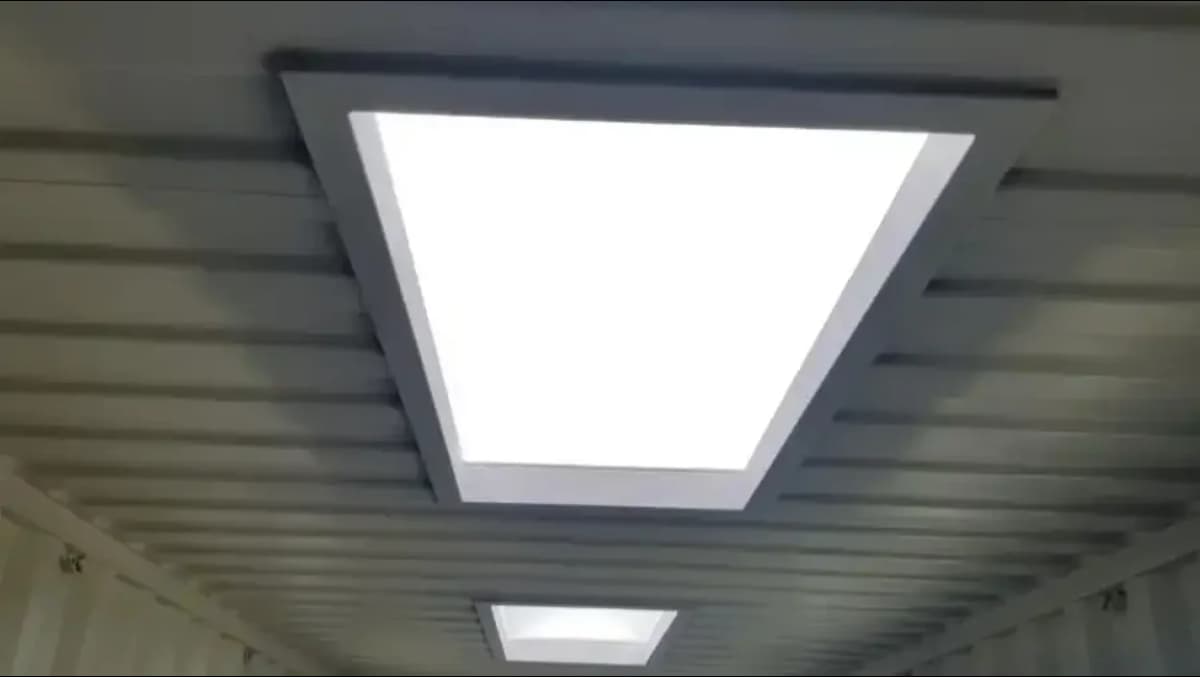
Skylights can bring natural light into a modified container, making the space feel more open and comfortable.
Costs: Purchase, Modification, and Operation
The cost of a 20ft shipping container with air conditioning depends on container condition, location, delivery distance, insulation, HVAC type, electrical work, finishes, and add-ons. A basic AC modification will cost less than a fully insulated, finished, utility-connected container designed for daily office or workshop use.
Major cost factors include:
- Container purchase: New, used, refurbished, standard, or high cube units vary in price and availability.
- HVAC system: Wall-mounted units, PTAC systems, mini-splits, or heavy-duty HVAC systems all have different cost and installation requirements.
- Insulation: Insulation improves cooling performance and reduces temperature swings.
- Electrical package: Lighting, outlets, switches, panels, and dedicated circuits may be needed for AC and equipment.
- Interior finish level: A storage unit may need minimal finishes, while an office or workspace may need walls, flooring, lighting, and ventilation.
- Delivery and setup: Distance, site access, ground conditions, and placement requirements affect final cost.
- Operating costs: Electricity use depends on climate, insulation, door-open frequency, AC efficiency, and how often the container is occupied.
| Cost Category | What Affects the Price |
|---|---|
| Container | Size, condition, location, availability, new vs. used vs. refurbished |
| Air conditioning | HVAC type, capacity, mounting, drainage, protection, electrical needs |
| Insulation | Material type, R-value, wall/roof/floor coverage, moisture-control needs |
| Electrical package | Panel size, outlets, lighting, dedicated circuits, exterior connections |
| Interior buildout | Wall panels, flooring, ceiling finishes, shelving, partitions, workstations |
| Security | Lockboxes, window bars, AC cages, reinforced doors, exterior lighting |
| Delivery and placement | Distance, truck access, site conditions, crane needs, placement difficulty |
| Operation | Electricity use, maintenance, filter changes, seals, HVAC servicing |
These costs are general planning factors only. Actual pricing depends on container availability, location, modification scope, labor, delivery, and site conditions.
Typical Applications
A 20ft air-conditioned container can be used in many business, jobsite, and specialty applications where basic storage is not enough.
- Jobsite office: A compact office or supervisor station for construction, utilities, events, and field operations.
- Electronics storage: Climate-controlled storage for equipment that may be sensitive to heat or humidity.
- Workshop: A cooled space for tools, workbenches, repairs, or light fabrication.
- Mobile office: A temporary or semi-permanent workspace. Read more about building a shipping container office.
- Lab or inspection space: A controlled area for testing, field operations, samples, or equipment inspection where appropriate.
- Event support: A cooled back-of-house room, staff space, storage room, or control center.
If you need food-safe refrigeration or freezer temperatures, explore Conexwest cold storage containers instead of a standard AC-modified container.
Bring Your Air-Conditioned Container Vision to Life with Conexwest
Your container should fit the way you plan to use it. Conexwest can help customers choose a container and explore shipping container customization options such as AC, insulation, lighting, doors, windows, electrical, shelving, security features, and interior finishes.
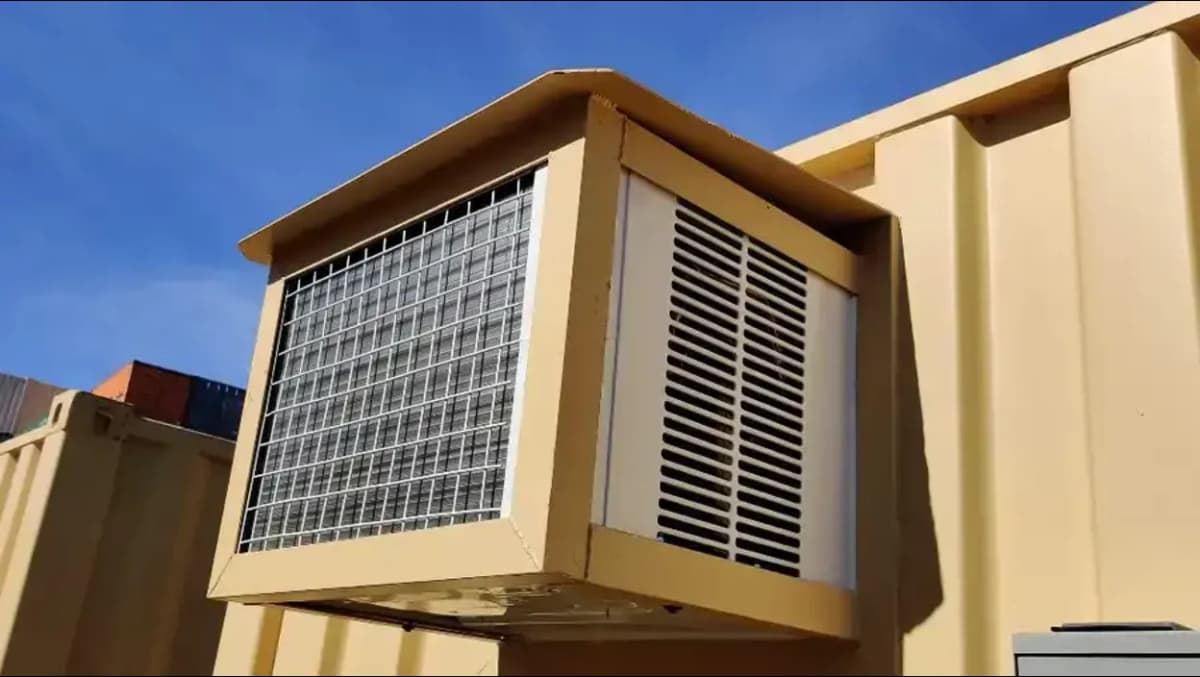
Wall-mounted HVAC units can help cool or heat modified containers when paired with proper insulation, electrical setup, and ventilation.
Conexwest supports projects ranging from jobsite offices and workshops to climate-controlled storage and custom modified containers. Customers can choose from multiple container sizes and conditions, then add modifications based on how the space will be used.
The process starts with understanding the use case: storage, workspace, office, equipment room, lab, event support, or specialty application. From there, Conexwest can help identify practical modification options, delivery requirements, and container choices that match the project.
For projects that require specific temperature ranges, humidity control, occupancy, electrical work, or code compliance, customers should also consult qualified electricians, HVAC professionals, engineers, and local building officials where required.
Was this helpful?
Frequently Asked Questions
A modified container can be used in hot or cold climates when it is properly insulated, ventilated, sealed, and equipped with the right HVAC system. Extreme conditions may require upgraded insulation, shading, dehumidification, or higher-capacity equipment.
Common uses include jobsite offices, workshops, equipment storage, electronics storage, event support rooms, labs, inspection rooms, and temporary workspaces.
No. An air-conditioned container is generally designed for comfort cooling or basic climate control. A refrigerated container is designed for controlled cold storage and may be needed for food, frozen goods, pharmaceuticals, or products requiring specific temperature ranges.
Maintenance may include cleaning or replacing filters, checking drainage, inspecting seals, keeping vents clear, confirming electrical connections, and scheduling professional HVAC service as needed.
Conexwest offers container sales, rentals, fabrication, repair, and customer support. Warranty terms can vary by container condition, product type, and modification scope, so customers should confirm current coverage when ordering.