
New shipping containers are newly manufactured units that have not yet been used in international cargo service. In practice, truly factory-new containers are rarely sold directly to individual buyers, as shipping empty containers is inefficient and costly.
Which Shipping Container Is Best for Your Container Home: New, Used, or Refurbished?
Choosing the right shipping container is one of the most important decisions when planning a container home. The condition of the container affects cost, appearance, modification complexity, long-term durability, and how smoothly the overall build process unfolds.
Shipping containers used for residential construction are commonly described as new, one-trip, used, or refurbished. While these terms are often used interchangeably online, they represent meaningful differences that can impact budget, design flexibility, and construction outcomes. Understanding these distinctions early helps avoid unexpected costs and delays later in the project.
New Shipping Containers (Factory-Built)
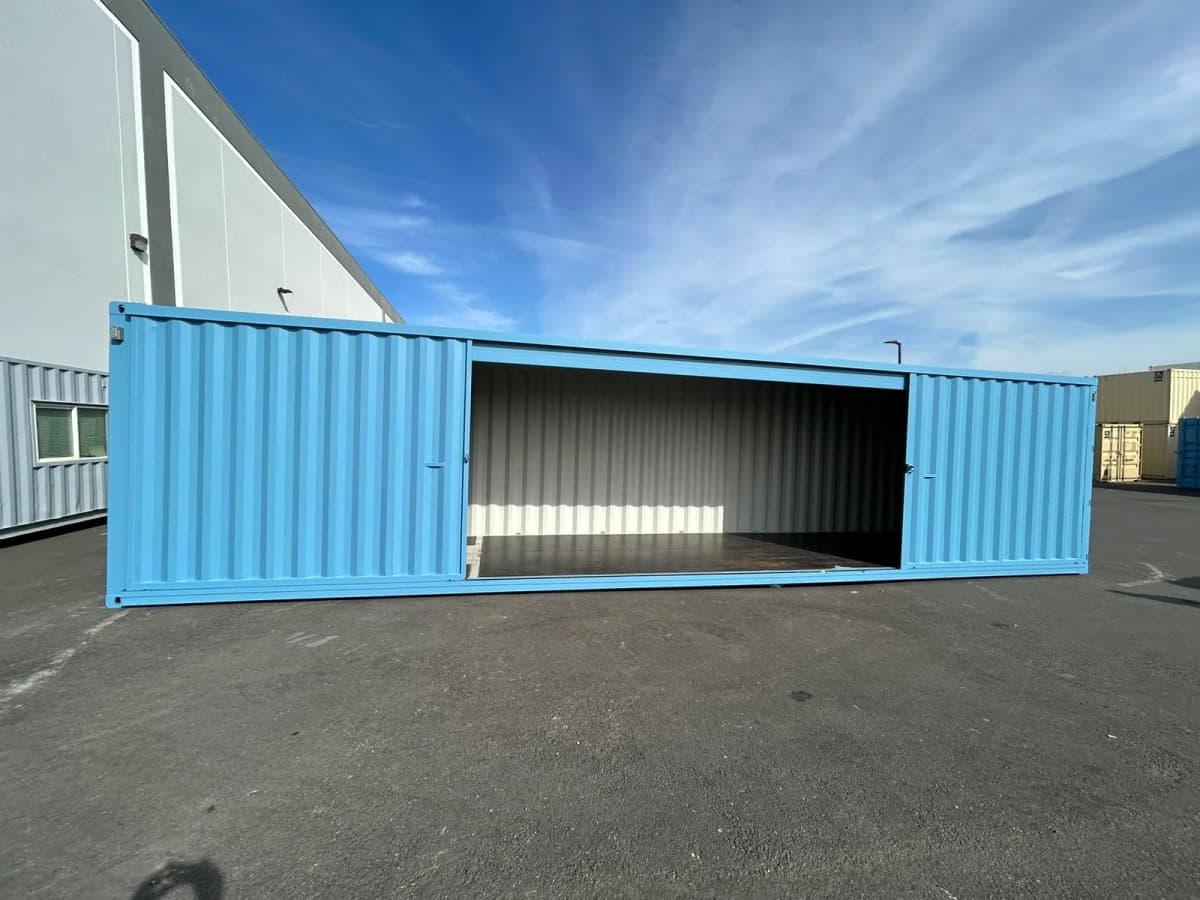
New shipping containers are newly manufactured units that have not yet been used in international cargo service. In practice, truly factory-new containers are rarely sold directly to individual buyers, as shipping empty containers is inefficient and costly.
When available, factory-new containers offer the highest level of uniformity, including straight panels, pristine steel surfaces, intact door seals, and original marine-grade plywood flooring. Due to limited availability and higher pricing, they are uncommon in residential container home construction.
Best suited for:
Specialized or large-scale projects
Buyers requiring maximum uniformity
- Projects with flexible budgets
One-Trip Shipping Containers
One-trip shipping containers are newly manufactured containers that have completed a single cargo journey, typically transporting goods from the factory to their first destination. In the container industry, this is the most common product sold as a “new” container.
One-trip containers are the cleanest and most predictable option widely available for container home builds. They typically show minimal wear, with straight walls, smooth-operating doors, little to no corrosion, and intact flooring. Because of their condition, they require less preparation before structural modifications such as cutting openings, welding reinforcements, installing insulation, or finishing interiors.
For container homes where the steel exterior remains visible, one-trip containers can significantly reduce cosmetic repair and surface preparation work.
While flooring is usually intact, original container floors are designed for marine cargo use and may be treated during manufacturing. Many residential projects choose to encapsulate or replace flooring to meet health, code, or design requirements.
Primary drawback: cost. One-trip containers are typically the most expensive option used in residential construction and may not make sense for heavily altered or fully clad designs.
Best suited for:
- Long-term or permanent container homes
- Designs with exposed steel exteriors
- Projects prioritizing clean finishes and predictability
Used (Cargo-Worthy) Shipping Containers
Used shipping containers are the most affordable and widely available option for container home projects. These units have spent years in active cargo service but remain structurally sound and certified for transport.
Common signs of use include dents, surface rust, worn or patched flooring, and cosmetic imperfections. While these issues generally do not affect structural integrity, they often require additional preparation before residential conversion. This may include rust treatment, surface refinishing, flooring replacement, sealing, or repainting.
Used containers are frequently chosen for container homes where the exterior will be clad, concealed, or heavily modified. They can also be a practical option for smaller builds or budget-conscious projects, provided buyers are prepared for additional refurbishment work.
Best suited for:
- Cost-conscious container home projects
- Builds where exterior appearance is not a priority
- Owners comfortable managing prep and repair work
Refurbished Shipping Containers
Refurbished shipping containers begin as used containers and undergo repairs and treatments to improve condition and extend service life. The scope of refurbishment varies by provider and is not governed by a single industry standard.
Typical refurbishment may include structural repairs, door and seal servicing, corrosion treatment, flooring replacement, and repainting or sealing exterior surfaces. High-quality refurbished containers can reduce many of the unknowns associated with fully used units, though cosmetic refurbishments may offer limited structural improvement.
For residential container home construction, refurbished containers can provide a balance between affordability and predictability, particularly when appearance matters but one-trip pricing is not required.
Best suited for:
Mid-range container home builds
Projects seeking improved appearance without new-container pricing
- Buyers wanting reduced prep work compared to used containers
How to Choose the Best Shipping Container for Your Container Home
There is no single best shipping container for every container home. The right choice depends on how visible the container will be, how much structural modification is planned, and how long the home is intended to last
- Choose one-trip containers for cleaner finishes, reduced prep work, and long-term residential use
- Choose used containers to minimize upfront costs when exterior appearance is less critical
- Choose refurbished containers for a balance of condition and affordability
- Choose factory-new containers when availability and budget allow
Before purchasing any container for residential construction, confirm that it is suitable for structural modification and complies with local building and zoning requirements. Container condition particularly corrosion, wall integrity, and overall structural consistency plays a direct role in engineering approvals, modification costs, and long-term durability.
Selecting the right container at the beginning of the project sets the foundation for a smoother design, permitting, and construction process.
Was this helpful?
Frequently Asked Questions
One-trip shipping containers are newly manufactured containers that have completed a single cargo journey, typically transporting goods from the factory to their first destination. In the container industry, this is the most common product sold as a “new” container.
Used shipping containers are the most affordable and widely available option for container home projects. These units have spent years in active cargo service but remain structurally sound and certified for transport.
Refurbished shipping containers begin as used containers and undergo repairs and treatments to improve condition and extend service life. The scope of refurbishment varies by provider and is not governed by a single industry standard.
There is no single best shipping container for every container home. The right choice depends on how visible the container will be, how much structural modification is planned, and how long the home is intended to last