
Warehouse Overflow Storage: Site Prep and SLAs for Operations Managers
For most seasonal or temporary warehouse overflow of dry, non-temperature-sensitive inventory, on-site shipping containers are the fastest, most cost-effective option. We recommend choosing between 10’, 20’, or 40’/45’ high-cube containers depending on pallet density and vertical storage needs. Before delivery, every site needs a prepared surface, a clear access plan, and a defined removal plan to prevent temporary capacity from becoming a permanent fixture.
TL;DR:
- Match container size to a sketched pallet layout: 10 or 20 foot units suit smaller loads, while high cube models add vertical clearance for stacked pallets.
- Prepare a level, compacted pad and confirm the delivery truck has 60 to 100 feet of straight approach; otherwise, placement or safe access may fail.
- Use containers for reserve or slow moving stock, not frequent picks, and assign an owner to track dwell time against a firm removal date.
- Ask the local fire marshal about permits, spacing, and fire access before delivery; standard dry containers also need upgrades for goods that need temperature control.
- Rent for seasonal surges lasting weeks or months; buying suits recurring, multiyear needs, but compare delivery, site preparation, permits, pickup, and security costs.
Table of Contents
- Which container sizes and configurations suit different overflow needs
- Site preparation and placement checklist for delivery and use
- Operational controls: select inventory, set SLAs, and plan removal
- Compliance and fire-code considerations to check with your AHJ
- Cost components and a simple rent vs. buy decision guide
- Climate control solutions and insulation options for overflow storage
- Customization options specific to overflow storage needs
- Turnkey service benefits and how they simplify warehouse overflow storage setup
- Typical delivery timelines from order to on-site placement for overflow storage containers
- Maintenance and servicing considerations for rented and owned containers used in overflow storage
- Publisher perspective: Conexwest experience and fit for overflow projects
- How to get started: quote and ordering steps
- FAQ
- Sources
Which container sizes and configurations suit different overflow needs
Choosing the right container starts with a simple tradeoff: floor area versus cubic volume. A standard container gives you usable square footage at a fixed ceiling height, while a high-cube unit adds roughly a foot of vertical clearance, which matters when you’re stacking pallets two or three high. For warehouses with tight yard space but room to go vertical, a 45’ high-cube container packs more pallet positions into the same footprint than a standard 40’ unit, as we cover in our guide to 45-foot high-cube storage capacity.
Smaller operations with limited overflow, think seasonal fixtures, slow-moving SKUs, or retail displays, often do better with a 10’ or 20’ unit rather than committing yard space to a larger box. Our comparison of 10-foot container options breaks down when a smaller footprint actually serves the operation better than maximum volume.
Before finalizing a size, sketch a rough pallet layout on paper or in a warehouse management tool to confirm the container fits your actual SKU dimensions, not just a generic pallet count. If overflow events require someone on-site to supervise receiving or staging, a combo office and storage unit puts a workspace and inventory in one footprint. Reefers belong in the mix only when inventory genuinely requires temperature control.
When reviewing product specs, confirm:
- Floor load rating relative to your heaviest pallet configuration
- Door orientation and swing clearance for your forklift’s turning radius
- Interior cube dimensions after accounting for corrugation and corner posts
- Whether the unit is single-door or double-end-door for drive-through access
Site preparation and placement checklist for delivery and use
A container is only as useful as the ground it sits on. Uneven or soft surfaces cause doors to bind, floors to flex, and forklifts to struggle with safe approach angles, so a level, compacted surface is non-negotiable before delivery day.
- Confirm the pad is level and compacted, gravel, asphalt, or concrete all work if properly graded.
- Verify truck unloading clearance: delivery trucks typically need 60 to 100 feet of straight approach to set a container down safely.
- Orient the unit for ground-level entry that matches your forklift or pallet jack traffic pattern.
- Keep required setbacks from building egress points and fire lanes so emergency access is never blocked.
- On delivery, photograph the container’s exterior and interior condition, inspect door seals and floor boards, and confirm you’ve received all keys or lockbox codes.
- Schedule a recurring inspection cycle, monthly is typical, to catch seal wear or floor damage early.
Site prep research consistently flags ground conditions as the most underestimated step in container deployment, since a container placed on an unstable surface can develop door operation problems that disrupt daily access.
Pro Tip: Walk the proposed container site with your delivery driver’s clearance needs in mind, not just where it looks convenient, since a tight turn radius can turn a one-hour delivery into a half-day problem.
Operational controls: select inventory, set SLAs, and plan removal
Overflow containers work best when they hold the right inventory and operate under clear rules from day one. Reserve stock, slow-moving SKUs, and seasonal fixtures are ideal candidates. Temperature-sensitive goods, high-hazard commodities, and anything requiring frequent picking are poor fits for a container sitting outside your main building envelope.
- Select low-pick-frequency or reserve SKUs rather than fast-moving items that need constant access.
- Avoid placing temperature-sensitive or regulated hazardous inventory in a standard container.
- Set a firm removal date at the time of deployment, not after the fact.
- Assign clear ownership for monitoring dwell time and triggering the return pickup.
Operational discipline is what separates temporary overflow from accidental permanent storage. Industry guidance on inventory overflow management stresses that businesses planning removal triggers in advance, whether tied to a sale’s end date, a target inventory level, or a calendar deadline, avoid the creeping costs that come with containers nobody tracks.
Before deploying a unit, calculate how its dwell time interacts with your dock-to-stock service level agreements. If replenishment cycles require inventory back on the floor within a set window, confirm the container’s access frequency supports that cadence without adding labor steps that slow fulfillment.
Material handling inside the container matters too. Single-face loading, accessing pallets only from one end, works for infrequent retrieval, while double-face loading through end doors supports higher turnover but requires more yard space for forklift maneuvering. Match your internal layout and equipment plan to how often staff will actually open the doors.
Pro Tip: Treat every overflow container like a mini dock location in your warehouse management system, with its own bin location and inventory record, so nothing gets forgotten once it’s parked outside.
Compliance and fire-code considerations to check with your AHJ
Many jurisdictions treat on-site shipping containers used for non-transit storage as structures rather than temporary equipment, which can trigger permit requirements, separation rules, and access standards you won’t find by reading the container spec sheet alone. Ventura County’s administrative ruling on sea cargo and metal storage containers is a useful example: it specifies cluster separation distances, fire department access road requirements, and water-supply triggers once a grouping of containers exceeds a certain footprint.
Storage height and commodity class also matter. The International Fire Code’s Chapter 32 sets requirements for high-piled combustible storage, including thresholds that apply when stacked inventory exceeds certain heights or when stored materials carry elevated fire hazard ratings. If your overflow plan involves stacking combustible goods several pallets high, this is worth reviewing before committing to a layout.
Before scheduling delivery:
- Draft a site plan showing the proposed container footprint and spacing between units.
- Contact your local fire marshal early, before delivery, not after a cluster is already in place.
- Confirm whether your jurisdiction requires a permit for non-transit container placement.
Rules vary significantly by county and municipality, so verifying with your authority having jurisdiction remains the only reliable way to avoid a stop-work order after the container is already on-site.
Cost components and a simple rent vs. buy decision guide
Total landed cost for an overflow container goes well beyond the sticker price. Budget for the unit itself, delivery and eventual pickup, site preparation (grading, gravel, or paving), any required permits, security measures like lockboxes, and the cost of repositioning the unit if your yard layout changes mid-project.
- Unit cost: purchase price or rental rate for the size and condition you need.
- Delivery and pickup: trucking charges that vary with distance and site access difficulty.
- Site prep: grading or compacting the pad, which can range from minimal to substantial depending on existing ground conditions.
- Permits and compliance: fees tied to your jurisdiction’s structure classification.
- Security: lockboxes, seals, or fencing depending on inventory value.
As a general rule, renting makes sense for short seasonal surges, holiday inventory builds, a single construction project, or a one-time promotional push, where you need capacity for weeks or a few months and then want the unit gone. Buying tends to fit better when overflow is a recurring, multi-year pattern, since ownership avoids repeated rental fees and the container retains resale value afterward. Capital budget constraints often tip smaller operations toward renting even when the math favors buying over a longer horizon.
A useful way to compare options is a cost-per-pallet-per-week template: add up total costs for the rental or ownership period, divide by the number of pallet positions you’re actually using, then divide again by the number of weeks. Broader sector pricing trends for general warehousing can help you sanity-check whether your container-based cost per pallet compares favorably to leasing additional warehouse square footage.
Climate control solutions and insulation options for overflow storage
Standard containers handle dry goods well, but inventory sensitive to temperature swings or humidity needs additional protection. Insulated panel kits line the interior walls, ceiling, and floor to reduce heat transfer, which helps moderate interior temperature swings between day and night without the cost of full refrigeration.
For inventory that genuinely requires temperature control, a dedicated cold storage or blast freezer unit is the better fit rather than retrofitting a standard dry container. We offer cold storage configurations, including SuperFreezer and blast freezer options, built specifically for inventory that cannot tolerate ambient temperature exposure.
HVAC add-ons, whether a through-wall unit or a ducted system tied into an existing building, are worth considering when a container holds staff workspace alongside inventory, or when stored goods are sensitive to humidity even without needing full refrigeration. Ventilation louvers are a lower-cost option for reducing condensation risk in units holding paper goods, electronics, or packaging materials that can warp or degrade in trapped moisture.
Matching the climate solution to the actual inventory matters more than defaulting to the most robust option available. A dry goods overflow project rarely needs a full reefer, while electronics or pharmaceuticals staged temporarily may need more than basic insulation. Reviewing your inventory’s actual sensitivity profile before ordering saves both cost and lead time.
Customization options specific to overflow storage needs
Overflow storage rarely fits a one-size container off the lot. We build in modifications that match how operations teams actually use these units day to day. Roll-up doors replace standard swing doors where forklift access needs a wider, faster opening, which speeds up high-turnover staging areas.
Interior shelving and racking configurations help when overflow includes mixed SKU types rather than uniform palletized goods, turning a single container into organized bin locations instead of a stack of boxes. Lockboxes and enhanced security hardware matter for containers holding higher-value inventory sitting outside the main warehouse’s monitored perimeter.
For operations that need a supervisor or receiving clerk on-site during an overflow event, a combination office and storage configuration solves two problems in one footprint, workspace and inventory capacity together, as detailed in our breakdown of the office combo unit. Paint and exterior branding options exist for operations that want the container to visually match existing facility signage or safety color coding.
Specialized needs like hazmat-rated configurations are available for inventory that falls under regulated storage categories, though these require coordination with your local AHJ regardless of the container’s build quality. Customization adds lead time, so operations managers should confirm modification needs early in the ordering process rather than after a standard unit has already shipped.
Turnkey service benefits and how they simplify warehouse overflow storage setup
Coordinating a container delivery involves more moving pieces than most first-time buyers expect: sourcing the right size, arranging transport, confirming site access, and handling any custom fit-out work. A turnkey approach consolidates these steps into a single point of contact rather than leaving operations managers to coordinate separate vendors for the unit, the delivery truck, and any modifications.
An online ordering system lets you browse available container sizes and configurations, select customizations, and submit a request without the back-and-forth quoting process that typically slows down container sourcing. That matters most when overflow needs arise on short notice, a sudden inventory surge or a construction timeline shift rarely gives operations teams weeks to shop around.
Turnkey service also reduces the coordination burden on internal teams who already have a warehouse to run. Instead of separately managing a trucking company, a modification shop, and a container seller, one order covers unit selection, delivery scheduling, and any fit-out work. For operations managers balancing overflow logistics against daily warehouse operations, that consolidation often matters more than shaving a small percentage off the unit price.
Typical delivery timelines from order to on-site placement for overflow storage containers
Delivery timing depends on container availability, distance from the nearest depot, and whether the unit requires customization before shipping. A standard, unmodified container in stock typically moves faster than a unit requiring roll-up doors, shelving, or insulation work, since fabrication adds time before the truck ever leaves the yard.
Operations managers planning for a seasonal surge or a known construction timeline should place orders as early as the project allows, since last-minute requests compete for the same trucking capacity as everyone else managing a similar seasonal push. Site readiness also affects the overall timeline from order to functional storage: a pad that still needs grading or compacting on delivery day pushes back when the container actually becomes usable, even if the truck arrives on schedule.
Confirming delivery windows and site access requirements at the time of ordering, rather than discovering a clearance problem when the truck shows up, is the most reliable way to keep the timeline from order to placement as short as possible.
Maintenance and servicing considerations for rented and owned containers used in overflow storage
Containers sitting in an outdoor yard face different wear patterns than warehouse racking, and maintenance needs differ depending on whether you’re renting or own the unit outright. For rented containers, servicing and major repairs typically fall under the rental agreement, but routine checks, door seal condition, floor cleanliness, hinge lubrication, still fall to the operations team using the unit day to day.
Owned containers carry more direct maintenance responsibility. Periodic inspection of the floor boards, roof seams, and door seals catches small issues, a worn gasket, early rust spots, before they become water intrusion problems that damage stored inventory. A monthly visual inspection cycle is a reasonable baseline for most overflow applications, with more frequent checks for units in exposed coastal or high-humidity climates.
Keeping the surrounding yard clear also factors into container longevity: standing water near the base accelerates rust, and vegetation growing against the exterior walls traps moisture against the metal. Scheduling pickup for rented units promptly once overflow needs end avoids extended rental fees, while owned units benefit from periodic repositioning checks if yard layouts shift over time. Clear fire-lane striping around container clusters, which a commercial line striping service can handle alongside other yard marking needs, also helps maintain the access clearances your AHJ expects during inspections.
Publisher perspective: Conexwest experience and fit for overflow projects
Overflow needs take many forms: seasonal retail promotions needing a 20’ unit for three months, construction sites staging materials in a 40’ high-cube, and logistics hubs running mixed fleets of standard and combo units year-round. An online ordering system lets you configure size and customization options directly. When operations teams request a quote, the details that speed things up most are delivery dates, site address, container size, and any access constraints like narrow gate widths or overhead obstructions.
— Conexwest
How to get started: quote and ordering steps
Once you’ve confirmed your container size, site readiness, and AHJ clearance, requesting a quote takes just a few details: delivery dates, site address, container size, and any access constraints. Our storage container rental page covers short-term overflow needs, while our shipping containers for sale page fits recurring or long-term capacity plans. For specialized needs like hazmat storage or roll-up door conversions, our container modification page covers available fit-out options.
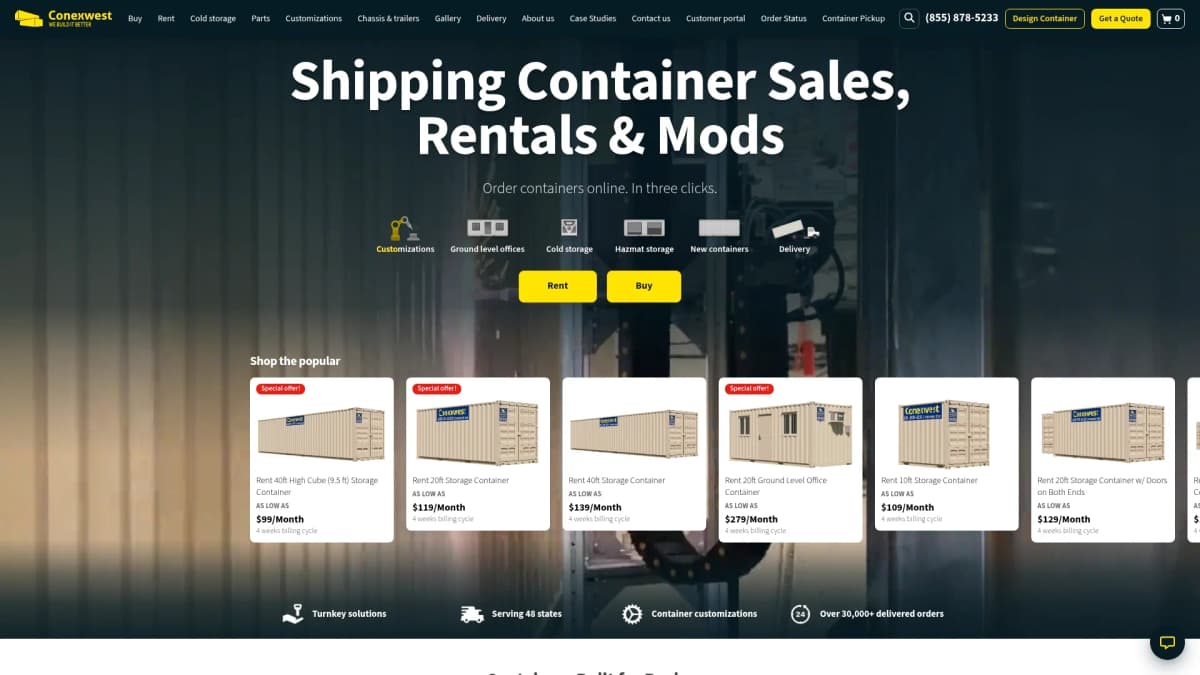
Before scheduling delivery, confirm your site prep and any required fire marshal sign-off so the container arrives ready to use rather than sitting idle while permits catch up.
FAQ
What size shipping container works best for warehouse overflow?
It depends on pallet density and vertical clearance needs: a 20’ container suits smaller overflow projects, while a 40’ or 45’ high-cube unit fits larger volumes or stacked pallets. Reviewing your actual SKU dimensions against each size’s usable cube is more reliable than picking based on footprint alone.
Do I need a permit to place a storage container on-site?
Many jurisdictions treat non-transit containers as structures, which can trigger permit and separation requirements, as outlined in Ventura County’s container ruling. Rules vary by location, so confirming with your local authority having jurisdiction before delivery is the safest approach.
How long can I keep inventory in an overflow container?
There’s no universal limit, but setting a firm removal date when you deploy the container prevents temporary storage from becoming a permanent cost. Matching dwell time to your dock-to-stock service level agreements keeps overflow storage from disrupting replenishment cycles.
Should I rent or buy a container for overflow storage?
Renting fits short seasonal surges or one-time projects lasting a few weeks to months, while buying suits recurring, multi-year overflow needs where ownership and resale value offset the upfront cost. Our rental and purchase pages outline both paths.
Can shipping containers store temperature-sensitive inventory?
Standard containers are not built for temperature-sensitive goods unless insulated or refrigerated, since ambient conditions fluctuate throughout the day. For inventory requiring true temperature control, a dedicated cold storage unit is the appropriate option rather than a modified dry container.
Sources
- How Shipping Container Rentals Solve Inventory Overflow! - Supply Chain Game Changer™
- ADMINISTRATIVE RULING 23-800 SEA CARGO/METAL STORAGE CONTAINERS
- CHAPTER 32 HIGH PILED COMBUSTIBLE STORAGE - 2024 INTERNATIONAL FIRE CODE (IFC)
- PPI industry data for General warehousing and storage