
Used Container Condition: What Buyers Should Check
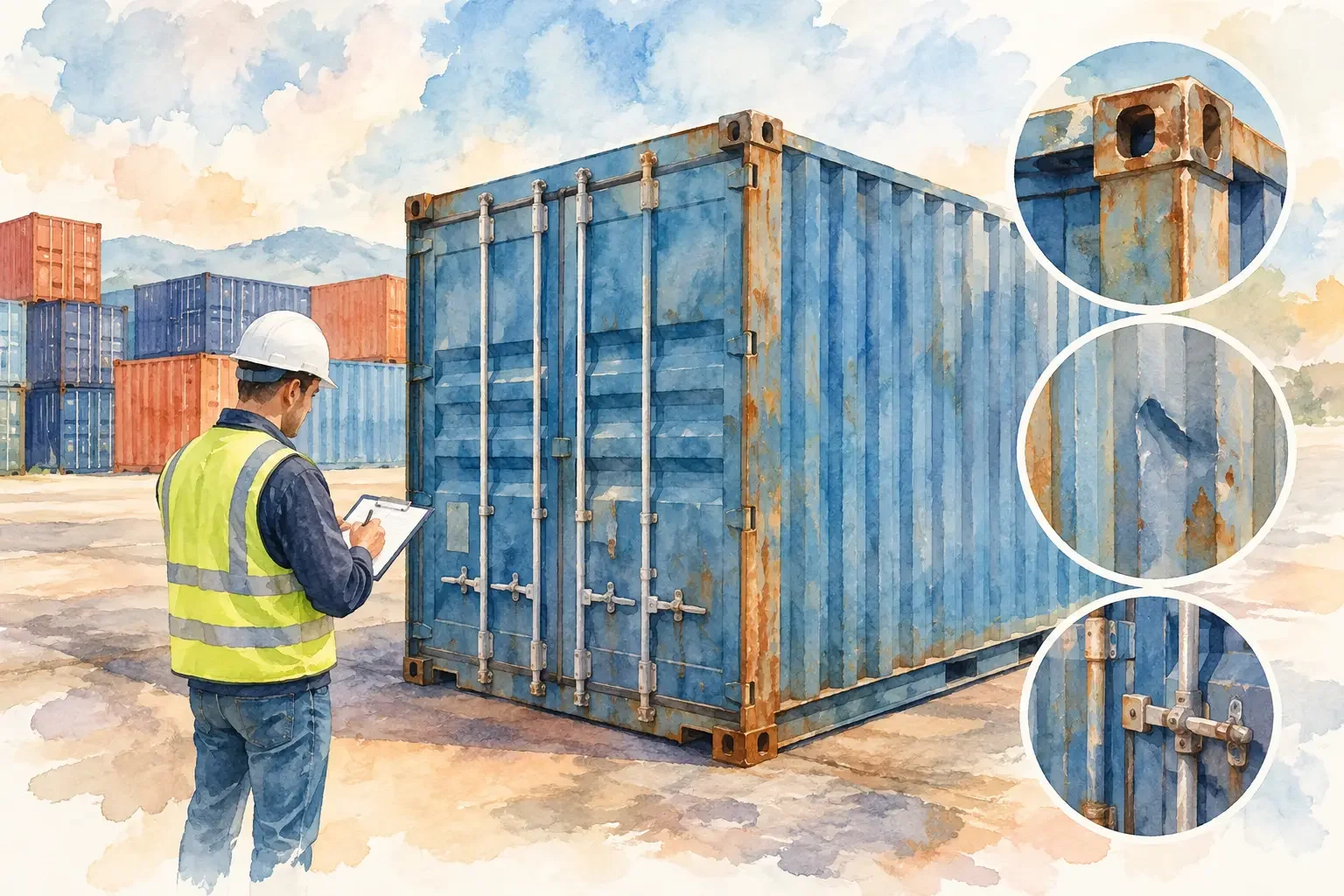
A used container can be an excellent operating asset, but the right unit for a jobsite tool room is not always the right starting point for a refrigerated conversion, retail build, or export shipment. Used container condition affects security, weather protection, modification scope, delivery planning, and total project cost. The key is to evaluate the container against its intended use rather than buying on appearance or price alone.
A few dents, surface rust, and patched areas are normal on a container that has spent years in intermodal service. Those cosmetic signs do not automatically reduce its value for ground-level storage. However, door operation, floor integrity, roof condition, and frame alignment can matter far more when the unit will hold inventory, receive electrical upgrades, or become part of a customer-facing structure.
Used Container Condition Is a Fit-for-Purpose Decision
Container condition terms are useful shorthand, but they are not a substitute for a clear specification. A seller may use similar language differently depending on inventory, inspection practices, and the market. Buyers should ask what the stated condition means operationally: Is the unit wind and watertight? Do the doors open and seal correctly? Is it suitable for ocean transport? Has it been repaired? Are there floor or structural issues that affect the planned use?
For most storage applications, weather resistance and secure access are the practical priorities. A construction contractor storing tools may accept exterior dents and faded paint if the container keeps out rain, locks securely, and can be delivered where needed. A facilities team converting a unit into an office has a different threshold. They may need a straighter exterior for finish work, a sound floor for interior buildout, and a roof that is ready for insulation, electrical routing, and HVAC installation.
The lowest-cost container is not always the lowest-cost solution. If a heavily worn unit requires extensive repairs before doors, windows, insulation, or branding can be added, a better-condition container may reduce fabrication time and uncertainty.
Common Container Condition Terms
Wind and watertight containers
A wind and watertight, often shortened to WWT, container is generally intended to keep wind and water out under normal ground-level use. It is a common choice for equipment, materials, seasonal inventory, agricultural supplies, and jobsite storage. These units can show visible wear from prior handling and transport, including dents, scratches, surface corrosion, repaired patches, and aged paint.
WWT is often the practical value point for buyers who need secure enclosed storage rather than a container approved for international cargo movement. Still, weather resistance should be confirmed at the time of purchase. Ask about the roof, door gaskets, floor condition, and any repairs that may affect your application.
Cargo-worthy containers
Cargo-worthy, or CW, usually describes a container that meets standards for international shipping at the time of inspection and certification. This can matter when a buyer plans to load cargo and move the container through an ocean freight supply chain. Cargo-worthy status is not simply a visual grade. It relates to structural condition and the ability to obtain or maintain the required inspection documentation for transport.
For stationary storage or a domestic container conversion, cargo-worthy certification may provide more capability than the project requires. It can still be a good choice when a straighter frame, sound doors, or a stronger starting point is valuable, but buyers should not pay for export readiness unless it supports the plan.
As-is or lower-grade containers
As-is containers may have more pronounced cosmetic damage, corrosion, patches, floor wear, or operational limitations. Some can still serve useful roles, especially where appearance is not a concern and the buyer has the ability to repair or modify the unit. Others may be unsuitable for applications requiring reliable weather protection, secure doors, or finished interiors.
This category demands specificity. “As-is” should prompt questions about known defects, not assumptions. If the container will support a business operation, a short-term price advantage can disappear quickly when repairs delay deployment.
One-trip and newer containers
One-trip containers have typically made a single loaded journey after manufacture. They are often selected for projects where exterior appearance, cleaner interiors, and a more uniform finish matter. They can be a strong foundation for offices, retail spaces, hospitality concepts, branded installations, and high-visibility facilities.
Newer condition does not eliminate the need to inspect the unit. It does, however, usually reduce the amount of cosmetic remediation and preparation needed before a custom build. The trade-off is higher upfront cost compared with a used WWT unit.
What to Inspect Before Selecting a Used Container
A container is a steel structure, a weather enclosure, and a delivery-sized asset. Each part should be evaluated with the final use in mind. Request current photos when possible, and make sure they show more than one exterior angle.
The following areas deserve attention:
- Roof and upper rails: Look for major depressions, patching, standing-water risk, and corrosion that could affect weather protection or future roof-mounted equipment.
- Doors, locking bars, and gaskets: Doors should operate without excessive binding, locking bars should engage, and gaskets should be capable of sealing against weather and dust.
- Flooring: Inspect for soft spots, significant gouges, contamination, loose boards, and prior cargo odors. Floor condition matters especially for food-related storage, finished offices, and equipment with concentrated point loads.
- Corner castings and frame: These components support lifting, stacking, and transport. Damage or misalignment can affect handling and may limit certain uses.
- Side panels and interior: Dents are often cosmetic, but severe deformation, advanced corrosion, or interior damage can influence insulation, wall finishes, shelving layouts, and usable space.
It is also wise to ask whether the container has been used to carry materials that could leave odors or residues. For general construction storage, this may have little impact. For consumer goods, food-adjacent operations, healthcare applications, or an enclosed workspace, it should be part of the selection process.
Match Condition to the Application
A clear use case makes condition decisions easier. For a temporary equipment enclosure, a used WWT container may be the right balance of cost, durability, and speed. Adding a lockbox, shelving, ventilation, or a personnel door can turn it into a more efficient site asset without paying for a near-new exterior.
For office containers, the condition baseline should be higher because the conversion adds finishes, electrical systems, windows, HVAC, and occupied space requirements. Existing roof damage or uneven walls can create extra work during fabrication. Starting with a cleaner, structurally sound unit usually supports a more predictable schedule and a better finished appearance.
Retail, hospitality, and branded installations are another case where exterior condition carries more weight. Surface wear can be repaired and repainted, but extensive damage may require more preparation to achieve a polished result. A newer container may make sense when the container itself is part of the customer experience.
For cold storage, reefer requirements are separate from dry-container grades. Insulation performance, refrigeration equipment condition, door sealing, electrical compatibility, and temperature needs should drive the decision. A dry used container is not a substitute for a purpose-built refrigerated unit when temperature control is operationally necessary.
Condition Also Affects Modification Planning
Every cut made for a roll-up door, personnel door, window, louver, or pass-through changes the work required of the container structure. A qualified fabrication plan accounts for reinforcement, weather sealing, finish requirements, and the placement of electrical or mechanical systems. Starting condition influences how much preparation is needed before those modifications begin.
Used containers can be excellent candidates for custom work, particularly when the project prioritizes function and budget. The best approach is to define the required outcome first: secure storage, a mobile office, an equipment room, a concession space, or a specialized enclosure. Then select a container condition that supports that outcome without paying for features that do not add operational value.
Conexwest can help buyers align container inventory, modifications, and delivery requirements in one project scope. That coordination is useful when the container needs to arrive ready for use rather than become another jobsite task.
Include Delivery in the Condition Conversation
Condition does not change a container's basic delivery footprint, but it can affect handling considerations. Containers need suitable access, a stable placement area, and adequate clearance for the delivery method. If the unit is being placed in a tight urban site, behind an active facility, or on an uneven construction property, share those details before scheduling.
Buyers should also consider whether the container will remain movable after installation. A unit used as temporary storage may need to be relocated as a project progresses. A customized office or utility enclosure may require planning for power disconnection, site restoration, and safe lifting before it moves.
The right used container condition is the one that performs reliably in its intended role, supports the required modifications, and arrives ready for the realities of the site. Define those requirements early, and the container becomes dependable working infrastructure instead of a compromise waiting to be repaired.