
Shipping Container Security 2026: Locks, Seals, Electronics, CTPAT
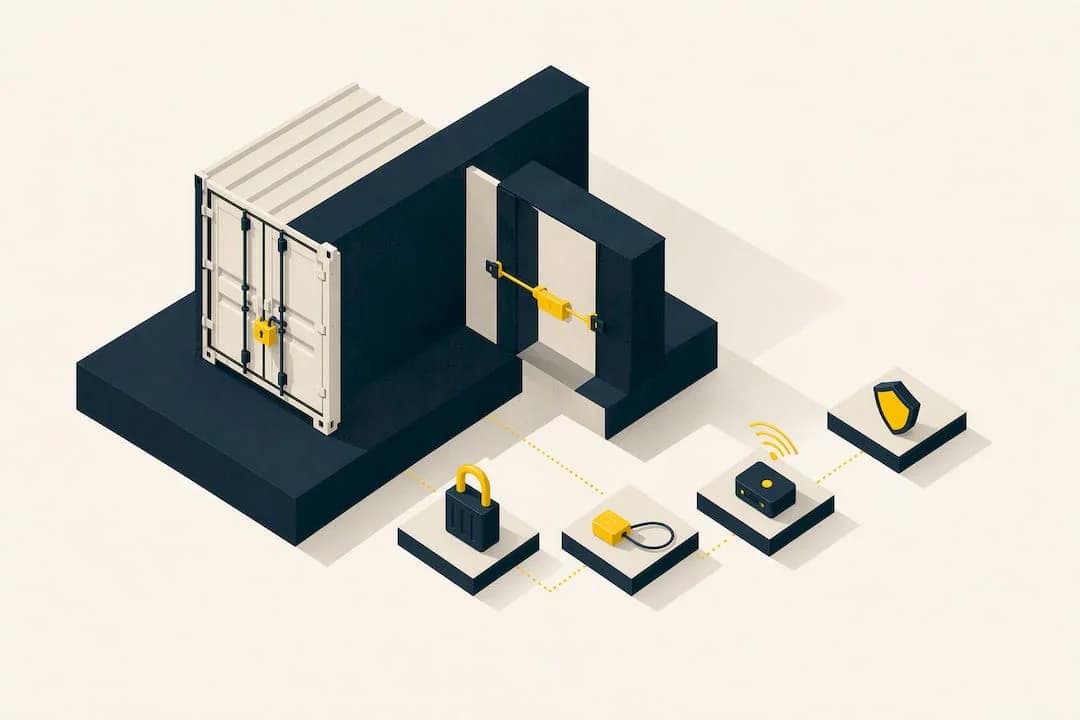
Secure a shipping container by combining a hardened lock and welded lock box, an ISO 17712-compliant seal for anything in transit, and a monitoring-plus-procedure layer on top. Single fixes fail because thieves swap seals, cut hasps, or exploit unlogged handoffs. Layering these four protections—mechanical, sealed, electronic, and procedural—closes the gaps that any one measure leaves open. Some providers build these layers into container orders from the start rather than treating them as an afterthought.
TL;DR:
- Mechanical locks and seals should be combined with electronic monitoring and procedural controls to prevent common theft exploits like seal swapping and unlogged handoffs.
- High-security measures such as ISO 17712 bolt seals, welded lock boxes, and GPS trackers are essential for containers with extended dwell times or valuable cargo.
- Proper anchoring, perimeter controls, and layered physical reinforcements significantly slow attackers, giving time for detection or intervention.
- Documented procedures, including seal logs and real-time reporting, are critical for verifying container integrity during handoffs and supporting insurance claims.
- Security hardware can be pre-configured into container orders, ensuring they arrive ready for the appropriate risk environment without post-delivery modifications.
Table of Contents
- What’s the Best Lock for a Shipping Container?
- Physical Reinforcements That Slow Down an Attacker
- Electronic Monitoring: Alarms, Cameras, GPS, and RFID
- Written Procedures and Seal Control That Actually Get Followed
- Layered Security Checklist by Risk Level
- Insurance Considerations Related to Container Security
- Common Mistakes We See in the Field
- Get a Secure Container Configured and Delivered
- Sources
- FAQ
What’s the Best Lock for a Shipping Container?
There is no single “best” lock. The right choice depends on where the container sits, what it holds, and how long it stays exposed. Mechanical locks and seals fall into two categories: tamper-evident seals for cargo in transit, and reusable locks for containers in storage.
Bolt seals are the industry standard for closing container doors during shipping. ISO 17712 “H” (high-security) rated bolt seals resist bolt cutters and require a hacksaw or grinder to defeat, which makes tampering slow and visible. Cable seals work similarly but flex around irregular closure points. Metal strap seals and plastic pull-tight seals offer lighter security and suit low-value domestic loads where the goal is tamper evidence, not brute-force resistance. RFID-enabled seals add a digital ID that automated readers log at each checkpoint, creating a paper trail that a torn paper tag never could.
For containers parked on-site, hidden-shackle puck locks, sometimes called block or bullet locks, cover the shackle almost completely, leaving attackers with no leverage point for bolt cutters. A welded lock box goes further, encasing the entire lock mechanism in steel so the only way in is an angle grinder, which is loud, slow, and hard to use unnoticed.
When choosing hardware, weigh these factors:
- Grade and shackle diameter (thicker hardened steel resists cutting longer)
- Corrosion resistance for outdoor, coastal, or high-humidity sites
- Price: basic puck locks run in the $30 to $60 range, welded lock boxes cost more but need one-time installation
- Whether the container has secondary openings, vents or roof hatches, that also need sealing
Pro Tip: A $200 lock on a container with an unsealed roof vent is money wasted. Walk the entire unit, not just the doors, before deciding you’re covered.
Physical Reinforcements That Slow Down an Attacker
Every reinforcement you add has one job: force a thief to switch from bolt cutters to a grinder, and from thirty seconds to several loud minutes. That trade buys time for a neighbor, a passing patrol, or a camera to notice.
Welded lock boxes and shrouded puck locks accomplish this directly by removing any exposed shackle or padlock body. Crossbars, steel bars that run across both container doors and lock into brackets welded to the frame, add a second barrier that has to be defeated even after a primary lock fails. Hinge guards protect the door hinge pins, a weak point attackers target when the lock itself proves too strong.
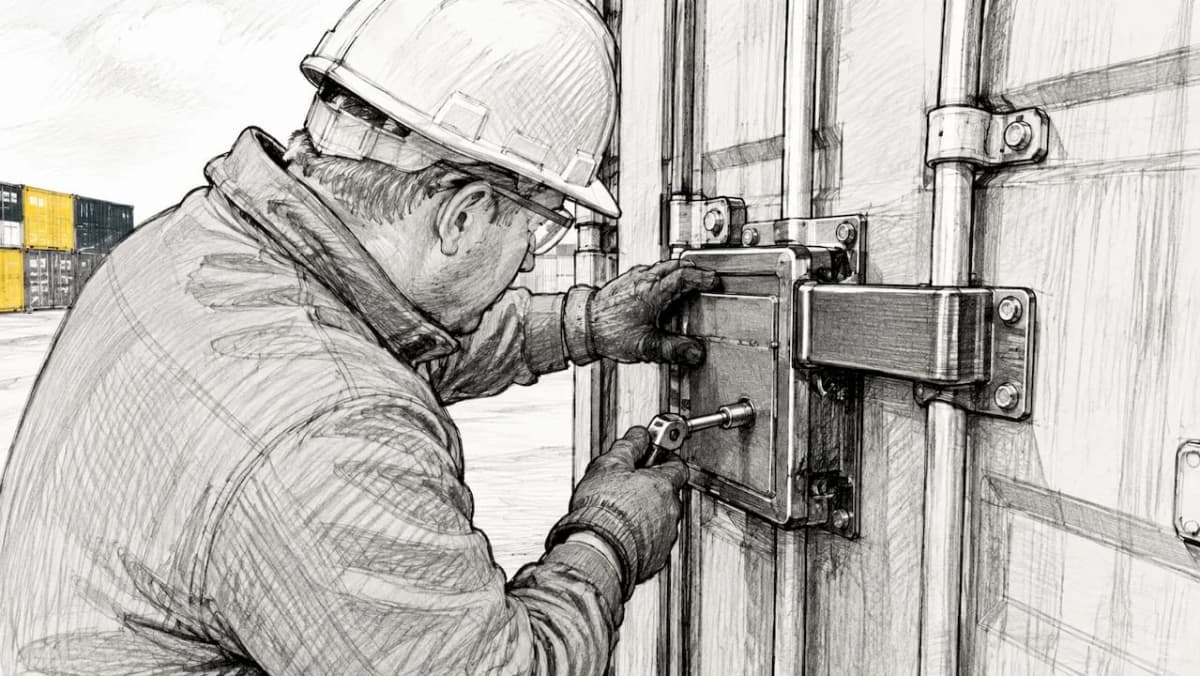
Anchoring matters more than most buyers expect. A container that sits loose on skids can be dragged, tipped, or pried at the base. Bolting it to a concrete pad, or using chassis tie-downs and ground anchors, keeps it from being pulled or leveraged open, and it protects against wind events, since containers built from corten steel resist weather and impact well but are not immune to being shifted or flipped in extreme wind without secure footing
Perimeter controls round out the picture:
- Motion-activated lighting on all approach angles, not just the front
- Fencing or barrier placement that removes casual walk-up access
- CCTV positioned for a clear line of sight to doors and secondary openings, not just a wide establishing shot
- Container placement in view of regular foot or vehicle traffic rather than tucked behind a building
Electronic Monitoring: Alarms, Cameras, GPS, and RFID
Mechanical barriers stop or slow an intrusion. Electronics tell you it happened, or catch it while it’s happening. Vibration alarms detect cutting or prying and send a cellular alert, which fits remote yards where nobody is close enough to hear a physical breach. Motion-sensor alarms cover the interior once doors open, useful as a second trigger after a vibration alert.
Camera choices depend on power access. Battery-powered wireless units and solar cameras suit remote or off-grid sites; wired systems suit yards with existing infrastructure and offer more reliable uptime. Whatever you choose, position cameras to capture faces and license plates, not just motion, and store footage off-site or in the cloud so a stolen camera doesn’t erase the evidence with it.
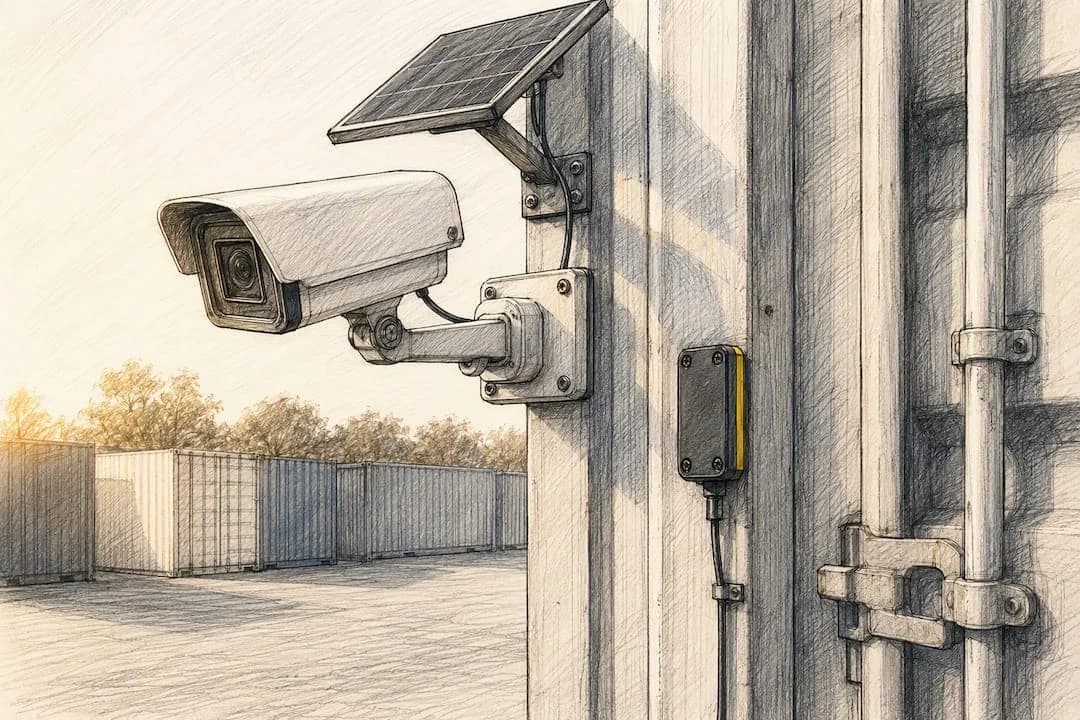
Hidden GPS trackers with geofencing serve recovery more than prevention. A tracker doesn’t stop a break-in, but it dramatically improves the odds of getting the container or its contents back once it moves. Additionally, rapid reconciliation after a geofence alert improves recovery outcomes. RFID readers at yard exits or gates automate custody logs, matching seal IDs against shipping documents instead of relying on a clerk checking numbers by hand.
The stakes are real: a recent field analysis put global cargo theft losses above $22 billion, with counterfeit seal swaps as a common failure mode. That single data point explains why security teams are moving past one seal, one lock, and adding a detection layer behind it.
- Vibration alarms for remote, unattended sites
- Battery or solar cameras where power access is limited
- Hidden GPS for high-value or high-dwell-time cargo
- RFID readers at choke points to automate reconciliation
Written Procedures and Seal Control That Actually Get Followed
Hardware fails without process behind it. CTPAT guidance treats documentation as equal to physical security, not an afterthought to it, advising members to maintain written high-security seal procedures, record every seal number, and transmit that number to the consignee before the container moves.
A workable procedure covers three points every handoff:
- Who issues the seal and logs its number before departure
- What the receiving party checks against that number on arrival
- How anomalies, a broken seal, a mismatched number, get reported immediately rather than at end of day
CTPAT-aligned businesses use ISO 17712 seals wherever compliance requires them, and they report anomalies to CBP rather than quietly swapping a broken seal and moving on.
Seal control isn’t paperwork for its own sake. A logged, mismatched seal number is often the only evidence that a container was opened between origin and destination, which is exactly the gap thieves exploit with a convincing counterfeit.
Drivers and handlers need a simple checklist at every stop: confirm the seal number matches the manifest, photograph the seal before breaking it, and flag anything that looks re-applied or slightly off in color or finish.
Layered Security Checklist by Risk Level
Match your protections to the container’s exposure, not to a flat budget number.
- Low risk (fenced yard, regular staff oversight): a puck lock or welded lock box, container placed where staff pass by daily, and periodic visual checks.
- Medium risk (remote job site, valuable tools or materials): lock box plus puck lock, a crossbar, motion lighting, and a basic vibration alarm or battery camera.
- High risk (extended port dwell time, high-value cargo, long-haul transit): ISO 17712 bolt seals paired with RFID or supplementary seals, hidden GPS with geofencing, and full CTPAT-style documentation and seal-control procedures.
Escalate one tier whenever cargo value rises, dwell time extends, or the site loses regular human oversight, whichever happens first.
Insurance Considerations Related to Container Security
Insurers price container coverage based on the security measures you can document, not just the ones you’ve installed. A welded lock box and monitored alarm system can lower premiums because they reduce claim frequency, but only if you can show proof of installation and, ideally, maintenance records.
Most cargo and property policies also expect a minimum standard of care. If a policy requires a specific lock grade or seal type and a claim comes in with a bolt cutter left at the scene of a lock the policy considered inadequate, insurers can dispute the payout. Read the fine print on “reasonable security measures” clauses before you assume a basic padlock satisfies your coverage.
Documentation matters as much as hardware for claims. Seal numbers, photos taken at each handoff, and alarm or GPS logs give an adjuster something concrete to work with instead of a verbal account. Containers without any monitoring history often face slower claims processing and more scrutiny on the loss estimate.
If you rent or lease a container, check whether the owner’s policy or your own business coverage applies during the rental period, since gaps between the two are common and rarely surface until after a loss. For high-value cargo, ask whether your policy differentiates between theft in transit and theft in storage. The two carry different risk profiles, and a policy written around one may leave the other underinsured.
Common Mistakes We See in the Field
Most container theft traces back to a skipped secondary seal, a container sitting unanchored on loose skids, or a handoff nobody logged. Buyers often secure the front doors and stop there, leaving vents and hatches wide open to inspection. Security can be built into the order itself, with lockbox placement, anchoring points, and hardware add-ons configured before delivery, so the gaps get addressed before the container ever reaches your site.
— Conexwest
Get a Secure Container Configured and Delivered
You don’t need to bolt security onto a container after the fact. Some companies configure lockboxes, reinforced doors, and other security hardware into orders before they leave the yard, so containers arrive ready for the risk level faced. Whether you need a storage unit for a job site or a container built for long-term secure storage, the online customization tool lets you specify hardware, paint, and layout in a few clicks instead of chasing down a welder after delivery.
Some providers have delivered tens of thousands of containers across many states and configured units for logistics yards, schools, and government sites where security wasn’t optional. Start a quote today and specify your lock box, crossbar, or interior layout before your container ships.
Sources
- CTPAT Alert – Surge in Cargo Theft and Security Best Practices (CBP)
- Container security best practices 2026: A field guide to protecting every shipment (Woseal)
- 2024 Bentzel cargo-theft report (Federal Maritime Commission)
FAQ
What Is the Best Way to Secure a Shipping Container?
Combine a hardened lock or welded lock box with an ISO 17712-compliant seal for anything in transit, then add monitoring and written handoff procedures so no single point of failure exists.
What Is the Best Anti-Theft Lock for a Shipping Container?
Hidden-shackle puck locks paired with a welded lock box give storage containers the strongest resistance, since they eliminate any exposed shackle for bolt cutters to grab.
Can a Tornado Flip a Shipping Container?
Corten steel construction resists severe weather and impact well, but an unanchored container can still shift or tip in extreme wind, so bolting it to a concrete pad or using ground anchors is advisable in high-wind zones.
How Do You Secure a 40-Foot Container?
Apply the same layered approach as smaller units, scaled up: a welded lock box on both door sets, crossbars, secondary seals on vents or hatches, and anchoring at multiple points since the longer frame has more leverage points to protect.
Does Conexwest Offer Security Hardware With Container Orders?
Yes. Some customization tools let buyers specify lockboxes, reinforced doors, and other security hardware before delivery, so the container arrives configured for the intended risk level.