
Good glass installations last as long as regular building systems. Commercial-grade tempered or laminated glass handles weather and use well. The container's steel frame actually helps by limiting movement that can stress glass.
Shipping Container with Glass Walls: Features, Dimensions, Add-Ons, and Costs
Shipping Container with Glass Walls – Features, Dimensions & Costs
Key Takeaways
- Glass walls turn shipping containers into bright, open spaces while keeping them structurally sound.
- You can choose from floor-to-ceiling panels, sliding doors, fixed windows, or storefront designs.
- Standard containers come in 20-foot and 40-foot sizes with predictable dimensions
- Glass containers cost 30–100% more than regular ones but offer great ROI for retail and workspace use.
- At Conexwest, we provide custom glass container solutions and handle everything from structural modifications to glass installation.
Glass Containers Change Everything
When you add glass walls to a shipping container, you get something special. These steel boxes become light-filled spaces that connect indoors with outdoors. The mix of rough steel and smooth glass creates a look that architects love for shops, homes, and public spaces.
Glass walls don't just change how containers look; they change how they work. You get natural light, views, and a feeling of openness in what used to be a closed box. The steel frame becomes part of the design instead of something to hide.
Conexwest, a leader in shipping and storage solutions based in Northern California, offers new, used, and refurbished containers from 10ft to 45ft, with fast delivery within 3–7 days and container fabrication options like adding shelves and locks. We serve over 10,000 customers nationwide, including prestigious clients like the U.S. Navy and Google. As an ISO 9001 and AWS-certified company, we ensure top quality and competitive pricing. |
Types of Glass Walls
Floor-to-Ceiling Panels
Full-height glass panels give you maximum views and light. These panels use safety glass that's 10–12 mm thick to stay strong. You can install them with minimal framing for a clean look or use bigger frames that match the container's industrial style.
These walls of glass work great for retail displays, galleries, or homes where you want the outside view to become part of your interior. Fixed panels give you better insulation and soundproofing than doors or windows you can open.
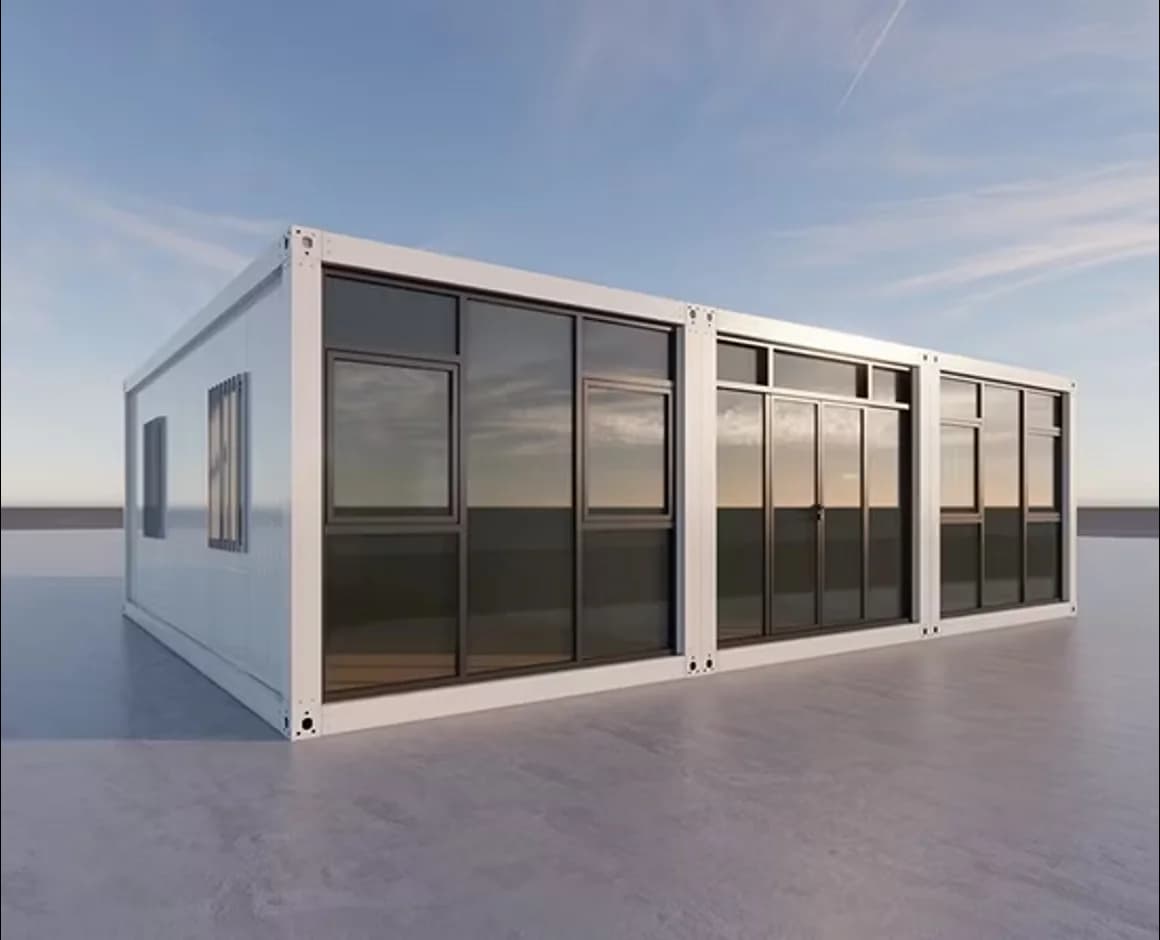
The contrast between rugged corrugated steel and sleek glass creates a look that architects and designers love for commercial, residential, and public projects. (Image courtesy of Ningbo Qixin Technology)
Sliding Doors
Sliding glass doors let you open up your container completely. They run on heavy-duty rollers that handle the weight of large glass panels. When you open them all the way, your indoor space flows right into outdoor areas like decks or patios.
These doors work well for pop-up shops, cafes, and homes. Good systems have multi-point locks, thermal breaks, and weather seals to keep the weather out when closed. Some designs let panels stack or slide into pockets so they disappear completely.
Fixed Windows
Fixed windows cost less than full glass walls but still bring in lots of light. You cut openings in the container walls and install commercial-grade window units. This keeps more of the original structure intact while giving you targeted views.
This approach works for offices, studios, and homes where you need climate control. You can arrange windows in different patterns to create unique designs while keeping the container's industrial look.
Storefront Designs
Commercial storefront systems give you a professional look that handles heavy use. These aluminum-framed systems include doors, windows, and fixed panels arranged however you need them.
Storefront glass offers great security with multi-point locks and laminated safety glass. The standard parts make repairs easier than custom glass solutions. Many systems include thermal breaks and efficient glazing to save energy.
Container Sizes for Glass Walls
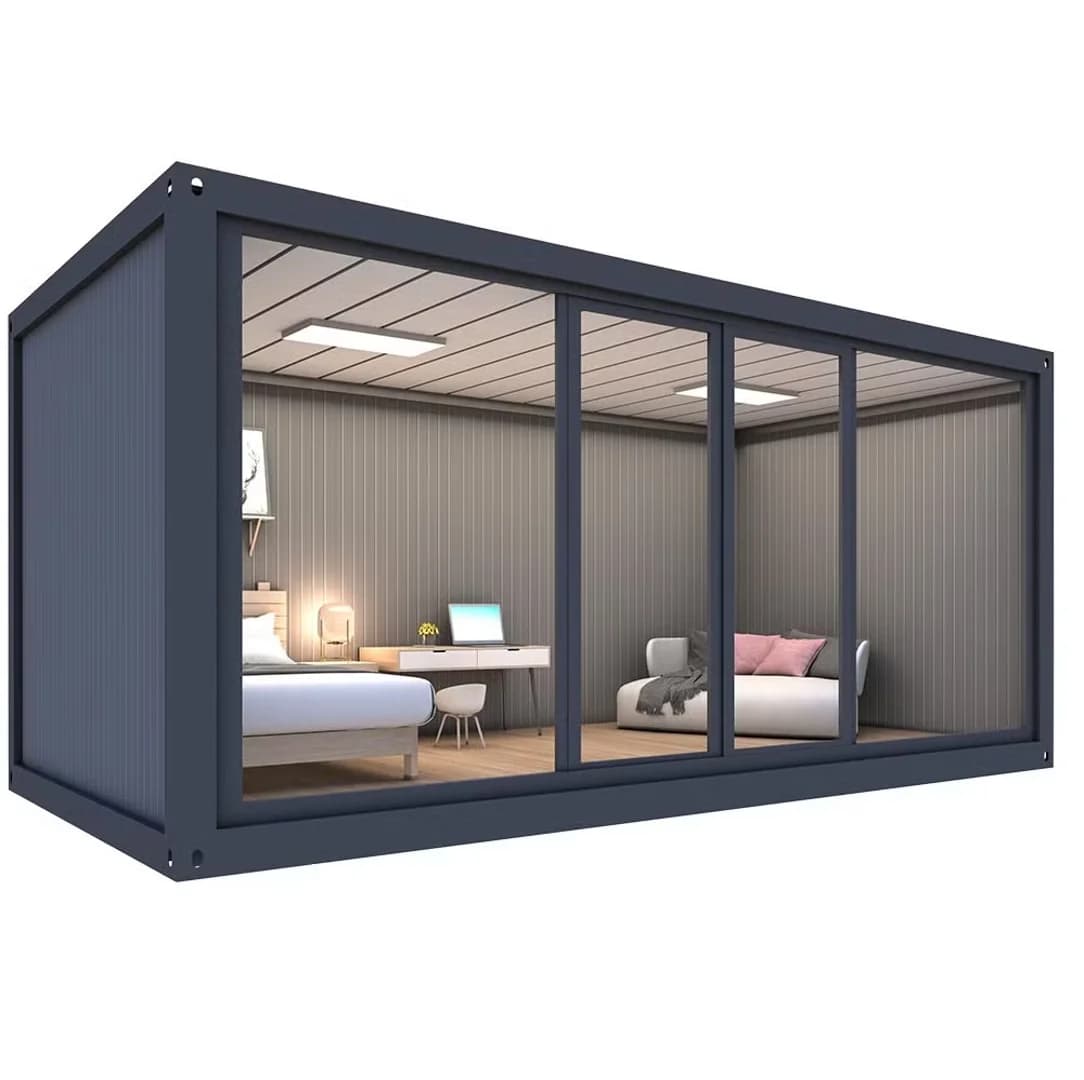
The rigid framework of shipping containers actually creates an excellent canvas for glass because the structural integrity stays mainly in the corner posts and floor/ceiling rails. (Image courtesy of Hamon Industry)
20-Foot Containers
A 20-foot container gives you about 160 square feet inside. When you add glass walls, especially on the 8-foot ends, these small spaces feel much bigger. They work great for pop-up retail, small offices, or studios.
Standard containers have 7'8" interior height, which can feel tight. Many people choose high-cube containers with 9'6" exterior height for an extra foot of headroom. This extra space balances better with glass walls.
40-Foot Containers
The 40-foot container gives you about 320 square feet inside. The extra space lets you segment your container, like adding glass at both ends or along one long side for gallery-style lighting.
The length also lets you mix solid and glass sections. If you’re setting up a store, you might have glass display areas up front with storage in the back. Glass along the long sides needs extra reinforcement since these walls normally provide more structure.
Custom Setups
You can combine containers or cut and extend them for unique designs. Some projects have cantilever sections with glass floors and walls, while others join units with glass connectors between them. These custom jobs need careful engineering to stay stable.
Structural Aspects to Consider
Keeping It Strong
Containers get strength from their corrugated walls. When you cut these out for glass, you need to add steel framing around the openings. This extra steel transfers loads properly and keeps the container rigid.
Wind Resistance
Big glass panels catch wind like sails. Your glass needs to be thick enough, usually 10–12 mm tempered glass for normal areas and laminated glass for hurricane zones. The connections between the glass and container frame matter most. If they’re installed well, they’ll use structural silicone, strong mechanical fasteners, or both.
Temperature Control
Glass walls affect your heating and cooling needs; without planning, containers turn into greenhouses. Modern glass has low-E coatings and argon-filled double panes to help with insulation. Good systems achieve U-values below 0.30.
Smart designs use overhangs and shading for hot exposures. The steel that's left needs insulation to prevent condensation. Done right, the thermal mass can actually help regulate temperature.
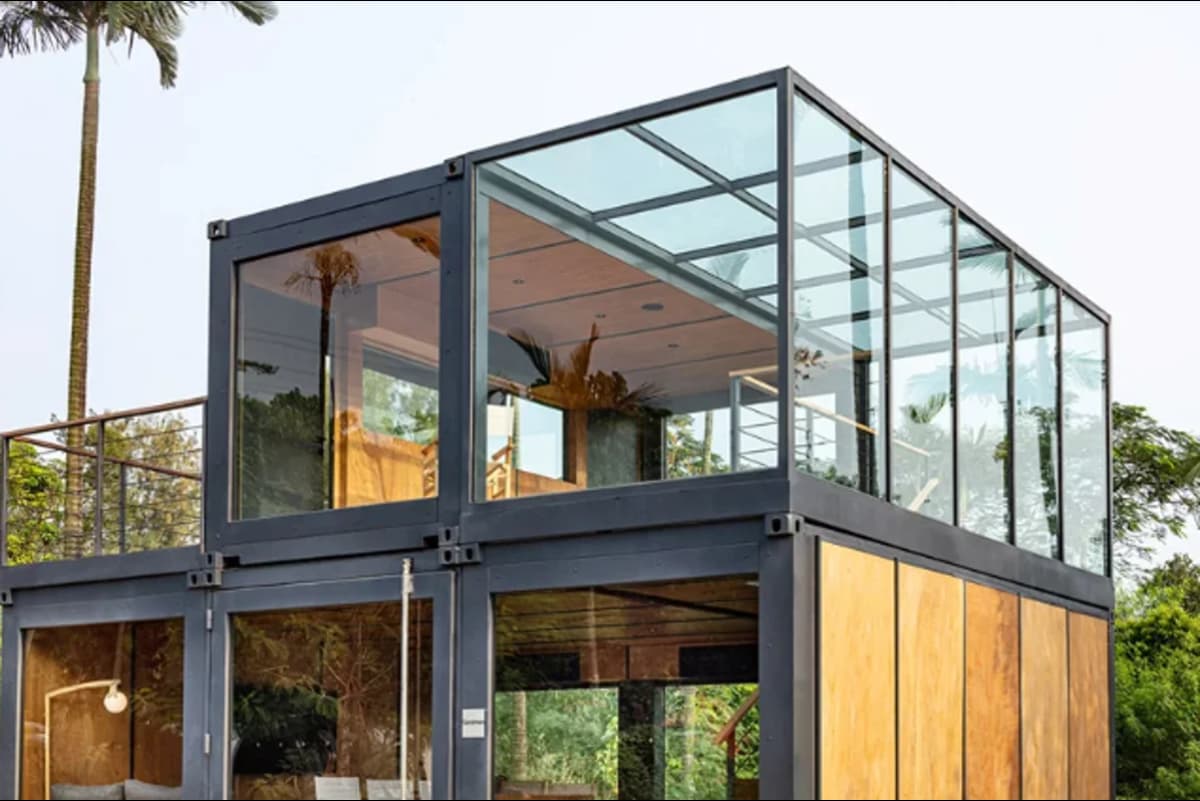
Adding glass walls to shipping containers requires a careful structural analysis to keep the container's strength while introducing large transparent openings. (Image courtesy of Decorate my Sett)
Security
Glass has different security requirements than steel walls. Commercial projects use laminated glass that stays together if broken, plus multi-point locks and tamper-proof hardware. If you’re serious about security, you might add wire mesh in the glass or alarm sensors in frames.
Popular Add-Ons
HVAC Systems
For climate control in glass-walled containers, mini-split systems have become the go-to choice. Unlike traditional HVAC systems that require extensive ductwork running through walls and ceilings, mini-splits deliver heating and cooling through small refrigerant lines connecting outdoor and indoor units. This matters in containers where every inch of space counts, and cutting holes for ducts would compromise the structure.
The system is straightforward: the outdoor compressor unit mounts on the container's exterior wall, while one or more indoor air handlers go inside where they can best distribute conditioned air. Each indoor unit controls its own zone, so you can keep the bedroom cool while letting the workshop stay warmer, saving energy and improving comfort.
Since metal containers conduct heat and cold so readily, you need excellent insulation to help any HVAC system work efficiently. Most pros recommend 2–3 inches of closed-cell spray foam, which creates both insulation and a moisture barrier. To preserve the clean, modern aesthetic of your glass walls, you can hide the indoor units in custom cabinets, recess them into ceiling spaces, or choose slim-profile models designed to blend into the decor.
Smart Glass
Electrochromic glass lets you change from clear to dark at the flip of a switch, which eliminates the need for shades or blinds that would clutter your clean glass walls. It costs $150–250 per square foot but gives you amazing control over your lighting for hospitality or executive spaces. The technology requires careful planning since the low-voltage wiring needs to be concealed within the frame channels during installation. Control options range from simple wall switches for basic on/off functionality to sophisticated automated systems that adjust transparency based on the sun's position throughout the day or when sensors detect someone entering the space.
Custom Lighting
Glass containers need thoughtful lighting design that works with, not against, all that natural light. Track lighting mounted on the ceiling gives you flexibility to adjust fixtures as your needs change, no matter if you're highlighting artwork or creating task lighting for work areas. For evening ambiance, LED strips integrated into architectural details, like where walls meet ceilings or along steel beams, add a warm glow without competing with daylight views.
Commercial spaces face the additional challenge of display lighting that illuminates products without creating distracting reflections on the glass. Since containers have limited space for hiding infrastructure, you'll need creative cable management solutions. Many designers install raised floors (4–6 inches high) with removable panels for cable access, while others specify hollow furniture pieces that cleverly double as cable runs, which keeps everything organized and out of sight.
Deck Extensions
Decks transform your container from a simple box into an expansive indoor-outdoor living space, essentially doubling your usable area in good weather. The beauty lies in using the container's existing structure: steel frames attach directly to the corner fittings (those reinforced corners used for stacking containers) to create a solid connection without compromising the container's integrity.
For decking materials, composite boards offer the look of wood without the maintenance headaches of staining and sealing every year. Natural hardwoods develop a beautiful silver patina over time but need more care. The secret to seamless flow is creating level transitions at doorways so you don't trip going in and out. Cantilevers—sections that extend beyond the supporting structure—let you push your deck space outward without needing additional foundation posts, almost like the deck is floating. For businesses, built-in features like seating benches, integrated planters, or even outdoor kitchen setups turn these extensions into true entertainment spaces.
Solar Power
Solar panels naturally complement container architecture's sustainable ethos while helping offset energy costs. Container flat roofs provide perfect mounting surfaces for 2–4kW systems using ballasted racks that sit on top without drilling holes that could cause leaks.
Beyond traditional panels, innovative projects incorporate building-integrated photovoltaics like solar glass (transparent panels that generate electricity) or thin-film applications that stick directly to the container's metal surfaces. Battery storage systems, housed in weatherproof enclosures mounted to the container's exterior, store excess power for use during outages or peak rate periods. A complete system includes inverters to convert DC to AC power, charge controllers to protect batteries, and monitoring equipment so you can track your energy production and usage patterns.
Cost Breakdown
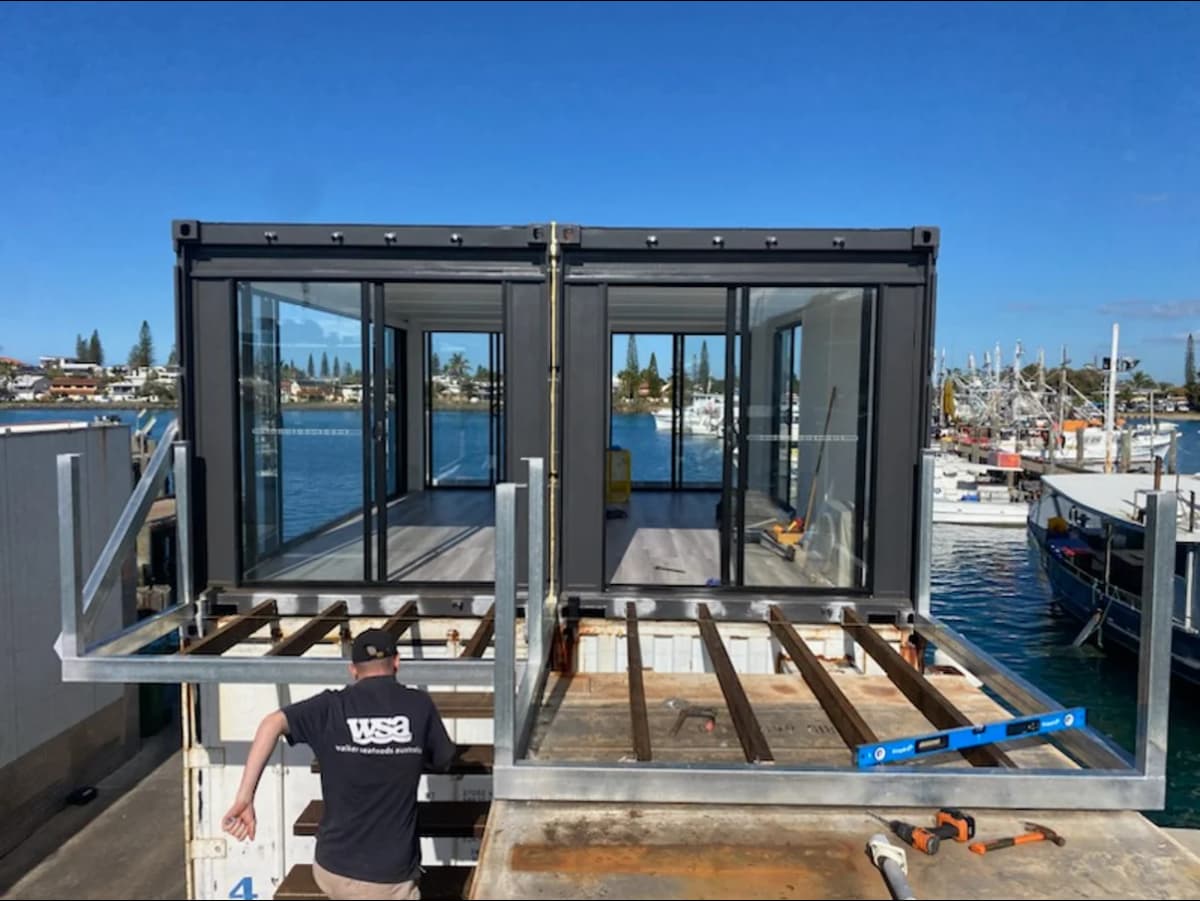
While glass walls add significant expense compared to standard conversions, they transform basic structures into architectural statements with enhanced functionality and visual appeal. (Image courtesy of Granny flat)
Basic Models
Basic glass containers cost around $15,000–25,000 for a 20-foot unit with one glass wall. If the used container is in good shape, you can expect to add $2,000–4,000; the glass takes 30–40% of the budget.
Basic builds have simple electrical systems, basic lighting, and minimal climate control. They work for garden studios or temporary spaces but may not be comfortable year-round in extreme climates.
Premium Builds
High-end glass containers run $50,000–120,000 for single units. They use new containers, premium glass with special coatings, and integrated systems like motorized screens and custom hardware.
Installation Costs
Don't forget site work—it’ll add 25–40% to your budget. You need proper foundations (concrete piers or footings), crane service ($1,000–5,000), and utility connections.
Delivery costs $2–5 per mile. Many people install glass on-site to avoid oversize load fees. Permits vary widely; some areas love containers while others require extensive documentation.
These prices are just an estimate and are subject to change. Contact us to get the exact pricing.
Expert Tips for Glass Container Projects
Planning Stage
- Check your site first: Glass containers are heavy; make sure your ground can handle 15,000+ pounds without settling. Soft soil means bigger foundations and higher costs.
- Face north when possible: North-facing glass gives you consistent light without harsh sun. South and west faces need serious shading or you'll cook inside.
- Order glass early: Custom glass takes 6–8 weeks to fabricate. Order it as soon as your openings are finalized to avoid project delays.
Design Tips
- Use the container's module: Design glass sections in 4-foot increments; it matches the container's natural structure and saves on custom steel work.
- Don't cut corner posts: These four posts carry all the weight. Cutting them means major (expensive) engineering to compensate.
- Plan for condensation: Steel and glass both get cold. Install thermal breaks and use closed-cell spray foam to prevent water problems.
Money-Saving Tips
- Buy used containers locally: Shipping costs kill budgets. A local container that needs paint beats a perfect one from across the country.
- Install glass on-site: Pre-installed glass makes containers oversize loads. On-site installation saves thousands in transport fees.
- Skip the smart glass: Regular glass with good roller shades costs 80% less and gives you the same privacy control.
How Conexwest Can Help With Your Glass Container Project
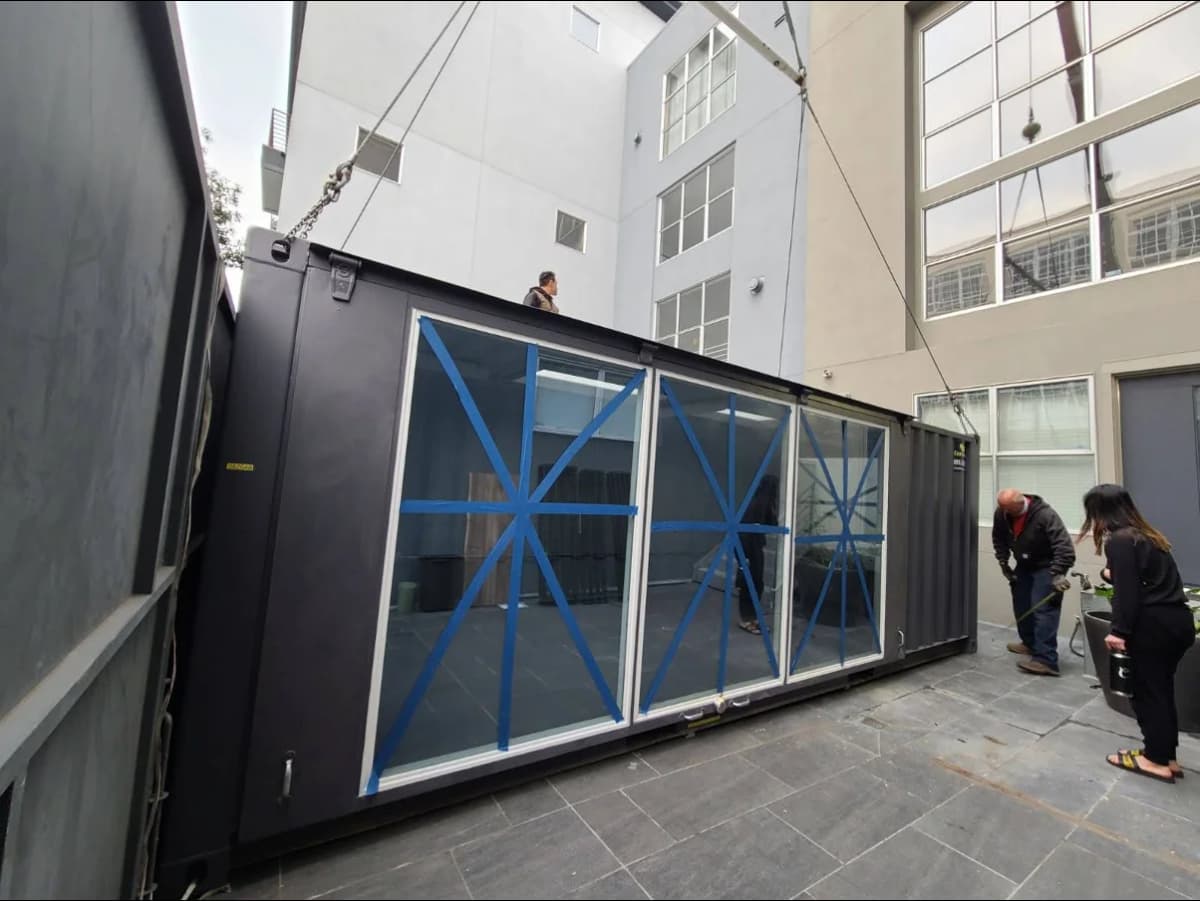
Our fabrication team specializes in the precise structural work needed to safely install glass walls while maintaining container integrity.
- Expert Structural Modifications: We handle the tricky engineering required for glass walls, like reinforcing openings, adding steel framing, and making sure your container stays strong. Our team knows exactly where you can cut and where you can't touch the structure.
- Custom Glass Solutions: We work with commercial glass suppliers to get you the right type, whether that's tempered safety glass, laminated security glass, or energy-efficient double-pane systems. We handle sizing, ordering, and coordinating delivery with your project timeline.
- Complete Installation Services: Our team installs glass with precise container measurement to avoid oversize shipping costs and potential damage. We use proper sealants, thermal breaks, and weatherproofing to make sure your glass walls perform well long-term.
- Climate-Appropriate Design: We understand how glass affects heating and cooling in different climates. Our designs include proper shading, insulation, and ventilation to keep your space comfortable without crazy energy bills.
Was this helpful?
Frequently Asked Questions
Yes, with the right specs. Cold climates need triple-pane glass with low-E coatings and good insulation, while hot climates need glass that blocks solar heat. Regardless of climate, we suggest installing an HVAC system.
Plan on 8–16 weeks from final design to delivery. This includes engineering (2–3 weeks), ordering materials (3–6 weeks), modifications (1–2 weeks), glass installation (1–2 weeks), and finishing (1–3 weeks).
Glass containers cost 30–100% more than standard conversions. But for retail and hospitality, the better customer experience and increased sales often justify the cost.
Yes, but it's harder than starting fresh. You need to reinforce the structure where you cut walls. Retrofits cost 15–25% more due to extra work and potential surprises. Get a structural engineer involved early.
For your glass container project, Conexwest specializes in architectural conversions. Our team has a mix of engineering, glass tech, and container work expertise.