How to Build a Shipping Container Fortress: 2025 Features & Cost Guide
Key Takeaways
- Shipping container fortresses offer great structural integrity and can withstand winds up to 175 mph and protect against most natural disasters.
- The modular nature of containers lets you customize designs and expand over time as needs and budget allow.
- Budget expectations range from $15,000 for a basic single-container setup to $200,000+ for a comprehensive multi-container compound.
- Proper container selection is vital—inspect for structural integrity, minimal rust, and certification markings before purchase.
- At Conexwest, we provide containers suitable for fortress construction and can handle the structural modifications needed for secure living spaces.
Container Fortresses Transform Self-Sufficient Living
Shipping containers were designed to protect valuable cargo while being transported across oceans in harsh conditions. This basic characteristic makes them ideal building blocks for secure structures. Their standard dimensions (20' or 40' long) allow for predictable design and planning, while their steel construction provides immediate security benefits that traditional construction methods can't match without spending a lot more.
The modular nature of containers means you can start small and expand your fortress as time and budget allow. Start with a single 20-foot container as your core structure, then add more units later to create additional living space, storage areas, or specialized rooms. This approach spreads the cost over time while letting you refine your design based on actual living experience.
Here are some of the benefits of using shipping containers to build fortress:
- Rapid deployment compared to traditional construction
- Built-in security features that deter intrusion
- Ability to place containers in remote locations
- Resistance to fire, mold, and most pests
- Lower foundation requirements than stick-built structures
Conexwest, a leader in shipping and storage solutions based in Northern California, offers new, used, and refurbished containers from 10ft to 45ft, with fast delivery within 3–7 days and container fabrication options like adding shelves and locks. We serve over 10,000 customers nationwide, including prestigious clients like the U.S. Navy and Google. As an ISO 9001 and AWS-certified company, we ensure top quality and competitive pricing. |
Get a quote
6 Key Features That Make Container Fortresses Practical
1. Inherent Structural Strength Against Natural Disasters
Shipping containers are built to withstand extreme conditions at sea, including stacking forces up to 192,000 pounds. This means great performance during natural disasters when properly anchored.
Most containers can handle winds up to 175 mph (Category 5 hurricane force) without structural failure. Their rigid steel frame distributes forces evenly and prevents the progressive collapse that affects many conventional buildings during earthquakes.
This built-in resilience provides immediate protection against most environmental threats without needing the extensive reinforcement required in traditional construction. For those in disaster-prone areas, this feature alone justifies the container approach.
2. Modular Design For Easy Expansion
The standard dimensions of shipping containers (8' wide × 8'6" high × 20' or 40' long) create a building-block approach to construction. This allows for virtually unlimited configuration options, from simple stacked designs to complex compounds with multiple access points and security zones.
The modularity extends to the interior too, where standard framing techniques can create any layout within the steel shell.
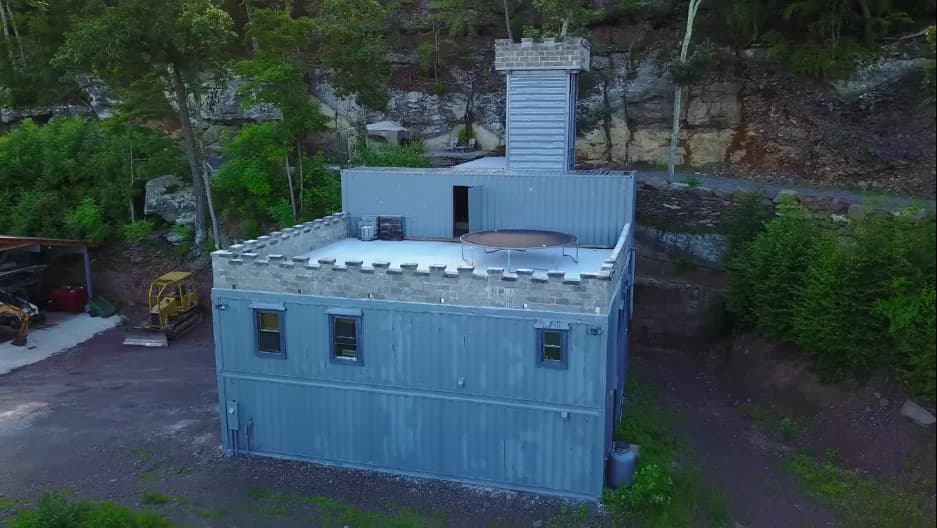
The flexibility of shipping containers means your fortress can evolve over time. Start with essential living space, then add areas for food production, water collection, security monitoring, or whatever priorities. (Image courtesy of Ryan Bent)
3. Mobility Options For Relocation
Unlike traditional structures, container fortresses keep some mobility even after modification. With proper planning, your fortress can be relocated if threats or opportunities change. This mobility provides a strategic advantage rarely found in conventional fortress designs.
A container home on skids or with minimal foundation attachments can be loaded onto a flatbed truck with minimal notice for tactical repositioning if needed.
4. Built-In Security Features
The nature of shipping containers offers immediate security advantages. Standard container walls measure 1.5–2mm thick corrugated steel, making them hard to breach without power tools. The limited entry points (just one door end) create natural choke points that are easier to defend than structures with multiple entries.
Container doors come with industrial-grade locks designed to prevent theft during international shipping. You can reinforce these with additional hardware to create strong barriers against unwanted entry. The steel construction also provides good resistance to ballistic threats compared to traditional wood-frame or even brick construction.
5. Off-Grid Capability Integration Points
Containers provide ideal mounting surfaces for solar panels, water collection systems, and other off-grid infrastructure. Their flat roofs offer clear space for solar arrays, while their sturdy walls support water tanks, antenna systems, and other equipment without extra reinforcement. The corrugated sides create natural channels for running conduit, plumbing, and other utilities without major modification.
This structural compatibility with off-grid systems reduces installation complexity and cost while increasing reliability. The container's thermal mass can also work as part of passive heating and cooling strategies to reduce energy needs.
The Real Cost of Building a Container Fortress
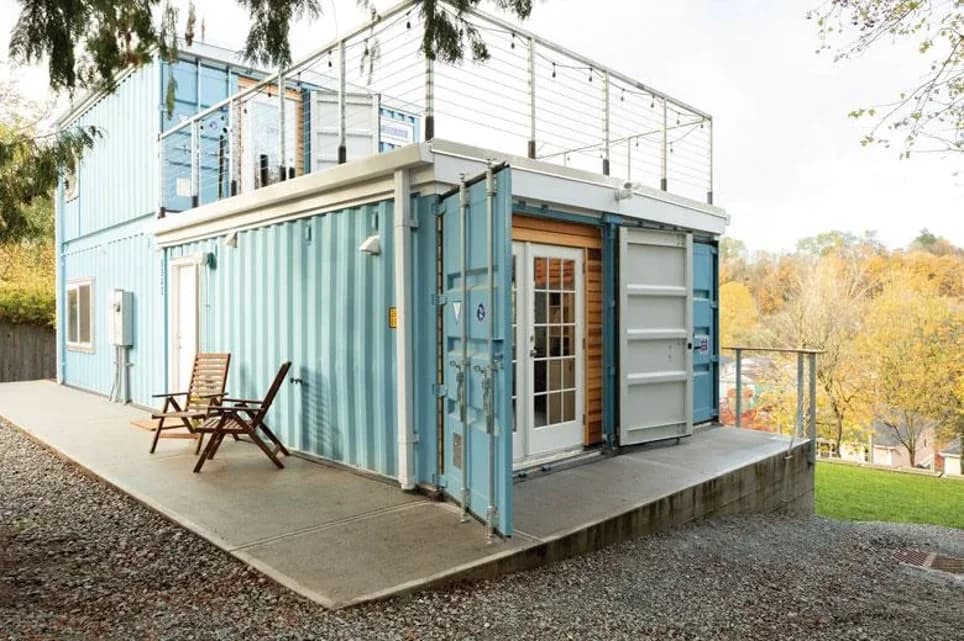
The investment required for building a container fortress scales with your ambitions, but even modest budgets can create functional, secure spaces when properly allocated. (Image courtesy of Reddit)
Container Acquisition: $1,250–$6,000 per Unit
Container prices vary a lot based on condition, size, and location. A used 20-foot container in fair condition might retail from $1,250, while a new 40-foot high-cube container could run from $5,645 or more. Transportation from seller to building site adds $300–$2,000 based on distance and accessibility.
Buying directly from shipping yards often gets the best prices but requires careful inspection skills to avoid containers with hidden structural issues. Container brokers charge more but provide more consistent quality and delivery services.
Foundation & Site Preparation Expenses
Site work represents one of the most variable cost factors. At minimum, containers need level support at their corners to prevent structural twisting. This might be as simple as concrete pier blocks ($15–25 each) on compacted ground. More permanent installations benefit from full perimeter foundations or concrete slabs, which add $5,000–$15,000 to your budget.
Don't underestimate site prep costs, including grading, drainage improvements, utility trenching, and access road development. In challenging locations, these can easily exceed the container cost itself. Proper drainage is absolutely critical—pooling water underneath your container fortress will cause rust problems no matter how well you protect the steel.
Modification Costs: Windows, Doors & Interior Walls
Cutting openings in containers requires structural reinforcement to maintain integrity. Each window opening costs about $200–$500 in materials for proper framing and reinforcement, while door openings run $300–$700. The windows and doors themselves add another $200-1,000 each based on security features and energy efficiency.
Interior framing, insulation, and finishing represent the largest variable in your budget. A minimalist approach might cost just $1,500 per container, while comfortable living spaces with quality finishes can exceed $10,000 per container. Specialized tools like metal-cutting circular saws, welding equipment, and heavy-duty grinders represent additional investments unless rented.
Utilities & Off-Grid Systems Budget
Connecting to existing utilities costs $3,000–$10,000 based on distance and local connection fees.
Off-grid alternatives require big upfront investment: a basic solar power system starts around $5,000, while comprehensive systems with battery storage can exceed $25,000. Water and waste management add similar costs, with rainwater collection systems starting around $2,500 and composting toilet systems starting at $1,000.
Total Budget Range: $15,000–$200,000
A bare-bones single-container fortress with minimal amenities can be done for about $15,000 if you do most labor yourself. A comfortable multi-container compound with off-grid capabilities requires $80,000–$200,000 based on size, finish quality, and systems complexity.
The good news is that with proper planning, you can spread these costs over time as you add containers and upgrade systems.
*These numbers are estimates, and the actual price can vary. Thus, it’s best to reach out to us for an accurate quote.
How to Build a Container Fortress
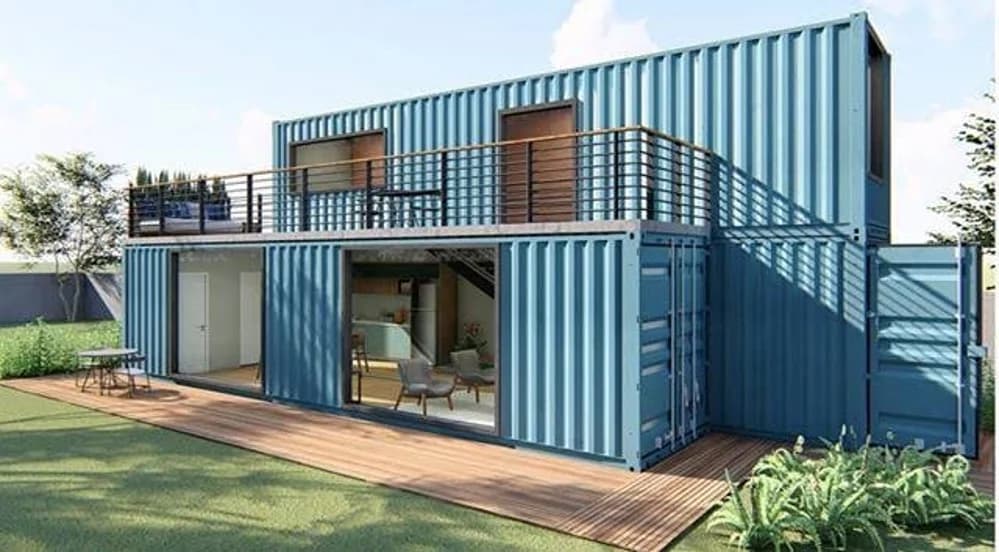
To build your container fortress, you must first choose the right container unit. The quality and condition of your base containers determine both the work required and how long your finished structure lasts. (Image courtesy of IndiaMART)
New vs. Used: Making the Right Choice
New containers offer pristine condition, no unknown history, and come with warranties. They cost 2–3 times more than used containers but eliminate concerns about chemical contamination, structural damage, and hidden rust. For food production areas or living spaces, the extra cost often justifies the peace of mind.
Used containers require careful inspection but offer major savings. Look for "one-trip" containers that have made a single ocean voyage—they balance cost and condition well. Avoid containers with extensive rust, damaged corner posts, or floors that flex under weight. The few hundred dollars saved on a compromised container get eaten up quickly by repair costs.
Establish a Solid Foundation Design
Build your container fortress on pier foundations positioned at corner castings and main rails to maintain structural integrity. This approach prevents the water accumulation issues common with continuous slab foundations that can accelerate rust and floor failure.
Design your foundation with proper drainage using gravel beds and slope the surrounding terrain away from your structure. Maintain air circulation beneath the container while providing adequate support at all critical load points. This foundation strategy prevents moisture infiltration while preserving the container's structural capabilities.
Plan Strategic Openings Carefully
Preserve your container's structural integrity by limiting wall cuts to no more than 60% of any single wall. The container's strength comes from its box design, where corner posts and rails work together to distribute loads effectively.
Install proper steel headers and supports before making any cuts, not after. Position major openings near corner posts when possible and avoid placing cuts directly opposite each other on parallel walls to prevent creating weak points. This planning ensures your fortress maintains its structural strength while accommodating necessary doors and windows.
Design Comprehensive Ventilation Systems
Address condensation issues inherent in steel structures by installing passive ventilation at strategic high and low points. This creates natural airflow while using baffles and filters to maintain security.
For living spaces, install mechanical ventilation systems like heat recovery ventilators (HRVs) or energy recovery ventilators (ERVs) to maintain air quality while minimizing heat loss.
Choose low-VOC materials for all interior finishes to prevent indoor air quality issues, as the sealed nature of containers makes them particularly vulnerable to off-gassing from interior materials.
Select Appropriate Insulation Systems
Combat steel's thermal conductivity with spray foam insulation, which provides optimal thermal performance and creates a seamless vapor barrier preventing condensation on metal surfaces. This prevents the temperature extremes that make uninsulated containers unlivable in most climates.
Avoid fiberglass insulation unless completely isolated from container walls with continuous vapor barriers, as contact with steel walls causes moisture accumulation and insulation failure. For extreme environments, consider external insulation systems that keep the container's thermal mass inside the insulated envelope for superior temperature stability.
How Conexwest Can Help Build Your Container Fortress
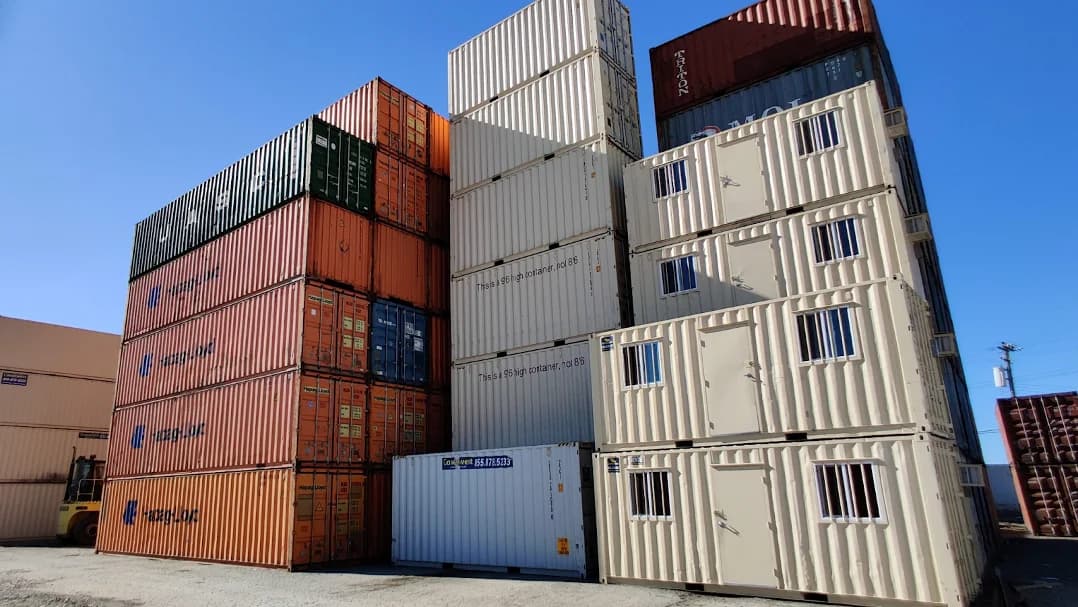
At Conexwest, our team specializes in selecting and modifying containers for secure living applications, ensuring structural integrity while adding the features you need.
- Fortress-Grade Container Selection: We help you choose containers with the structural integrity needed for fortress applications. Our team knows which containers have the thickness and condition to handle extensive modifications while maintaining security features.
- Structural Modification Services: Our certified welders and fabrication team handle all modifications needed for fortress construction, including reinforced openings, security upgrades, and structural connections between multiple containers. We maintain container strength while adding functionality.
- Security Enhancement Options: We can install reinforced doors, security windows, ballistic protection, and other defensive features that transform standard containers into secure structures. Our modifications are designed by professionals who understand both security needs and structural requirements.
- Off-Grid System Integration: Our team coordinates installation of solar systems, water collection, waste management, and other off-grid infrastructure that makes container fortresses self-sufficient. We design systems that work together efficiently.
- Multi-Container Compound Planning: For complex fortress designs using multiple containers, we provide engineering and project management that ensures proper connections, load distribution, and expansion capabilities for future growth.
Get a quote
