
Shipping Container Event Space Rental Options
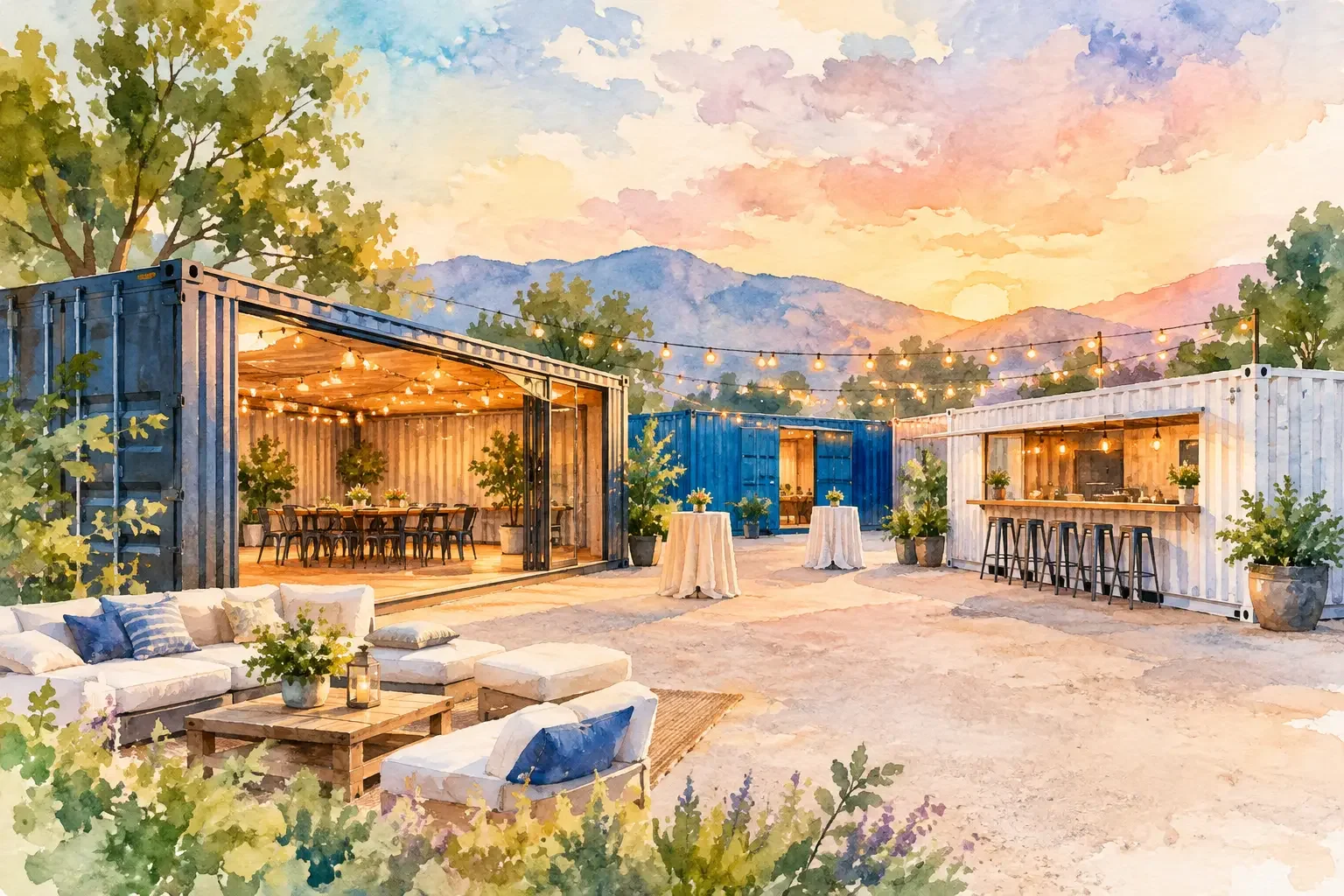
Name the job for setup, event hours, and teardown before you pick a 20-foot or a 40-foot container.
Secure storage, guest entry, food service, and staff work do not use the same layout.
Pick the size from the traffic
A 20-foot container can fit a compact activation, a check-in, a small retail setup, or back-of-house storage.
A 40-foot container has more floor for product displays, hospitality, more than one work zone, or a larger branded wall.
A high-cube container adds interior height. That height can fit lighting, shelves, an insulated ceiling, or a more open guest space.
If guests enter, plan the traffic. A personnel door can suit a controlled staff area. Retail or hospitality may need a wider opening, a roll-up door, windows, or more than one way in and out.
Choose how far to modify the unit
Most events use one of these approaches:
- A standard container for secure support
- A light modification for access and presentation
- A fully branded build
The choice depends on the event length, what the audience expects, the budget, and how much labor you have on site.
A wind and watertight container can store fixtures, promotional material, audiovisual equipment, furniture, and high-value inventory. It cuts daily loading and protects supplies overnight.
A modified unit can add:
- A personnel door
- A roll-up door
- Windows
- Interior lights
- Outlets
- Insulation and HVAC
- Shelves
Exterior paint and graphics can make the container part of the event identity. They need lead time when the work includes fabrication, paint, electrical gear, or a special interior.
A short event may not justify a full build. A multi-city tour or a repeat seasonal program can.
Plan power, climate, and water first
List the electrical loads before you choose features. A point-of-sale system, a refrigerated display, lights, air conditioning, and a coffee station do not draw the same power.
Confirm whether the site supplies shore power, a generator, or a temporary distribution system.
An uninsulated steel container can get uncomfortable quickly in summer heat or winter cold.
Treat insulation and HVAC as operating needs when the unit holds guests, staff on long shifts, temperature-sensitive products, or electronics.
Task lights can suit storage or staff. Retail and hospitality need a lighting plan. Exterior lights improve visibility, support the branding, and make the entry safer after dark.
A bar or a food unit may need a health approval, handwashing, potable water, wastewater handling, and an approved surface. The rules depend on the site and the city. Confirm them before you lock the layout or the menu.
Treat delivery as part of the rental
The truck needs a clear route, turning room, overhead clearance, and a place to set the container.
These items can block a safe set:
- Trees
- Utility lines
- Soft ground
- Parked vehicles
- A narrow gate
- An active pedestrian zone
The support must be stable and reasonably level so the doors work and the unit does not settle.
The support can be compacted gravel, concrete, asphalt, blocks, or another engineered base approved for the site.
Do not assume a grass field stays the same after rain, heavy foot traffic, or repeat vehicle access.
Leave room for door swing, a queue, emergency access, and a service path. A unit tight against a fence can block the cargo doors and restocking.
For a guest-facing unit, leave room for the line, an accessible approach, signs, and staff movement.
Permits, fire rules, occupancy, and zoning depend on the city and the event. Storage often has fewer rules than a unit open to the public.
If people occupy the container, coordinate early with the venue, the producer, the local authority, and the fire or building official the event requires.
Match the rental term to the build
A rental fits a one-time event, a pilot, or a temporary need. It can also let you test demand and layout before you buy a branded unit.
Custom openings, a finished interior, integrated HVAC, a special electrical system, or a high-end exterior can change the cost and the lead time. Get a detailed quote.
For a repeat event, compare a modified rental with ownership when the same configuration will travel again.
The written scope must name:
- The rental term
- Size and condition
- Modifications
- Delivery location and pickup time
- Placement limits
- Power
- Branding
- Who prepares the site, gets the permits, connects the utilities, and restores the site
Design for the crew and the guest
Plan restocking, lockup, cleaning, trash, cable routes, security for cash or devices, and weather exposure.
A guest must be able to see where to enter, where to stand, where to pay or register, and how to leave.
Windows, a roll-up door, a counter, exterior signs, and lighting can make that path clear.
Conexwest can match the size, the modifications, and the delivery to the event use in the contiguous United States.