
Shipping Container Electrical Installation Guide
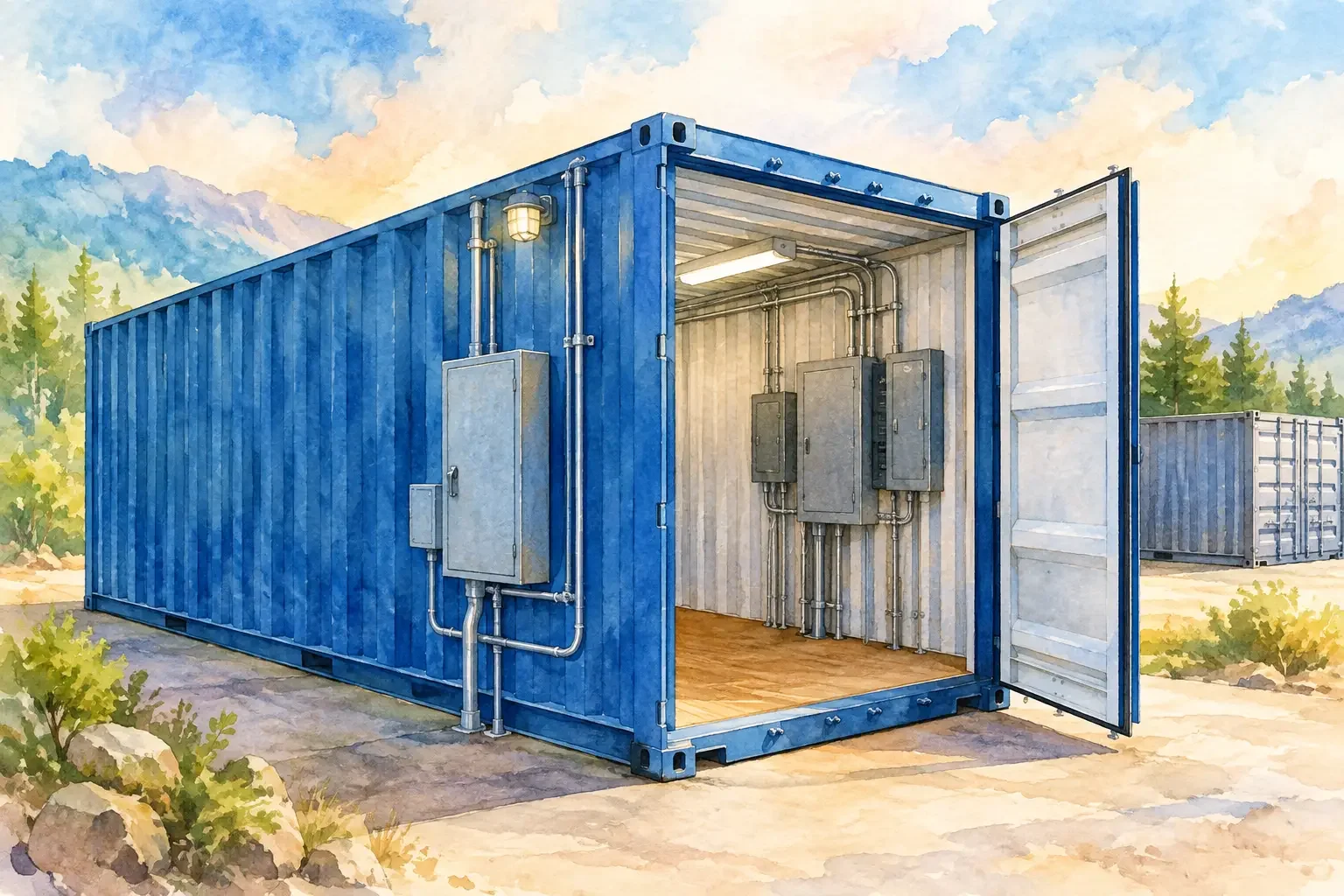
A shipping container electrical installation is not simply a matter of mounting outlets inside a steel box. The container itself is conductive, the use case may change over time, and the available site power often drives the entire design. A jobsite office, refrigerated storage unit, fabrication bay, mobile retail space, or controlled-environment equipment enclosure will each require a different electrical plan.
The best time to make those decisions is before fabrication begins. A clear load schedule, equipment layout, and site-power plan allow electrical components to be installed where they are protected, accessible, and ready for inspection. It also prevents a common and expensive problem: cutting into finished insulation or interior wall panels to add circuits after delivery.
Start With the Operating Load
Electrical capacity should follow the container's actual purpose, not its exterior dimensions. A 20-foot container used for basic secure storage may only need lighting and a few receptacles. A 40-foot ground-level office may need HVAC, lighting, computer circuits, exterior lighting, and convenience outlets. A container supporting compressors, pumps, kitchen equipment, charging stations, or process equipment can require substantially more service capacity.
Start by identifying every planned electrical load, including equipment that may be added later. Record the voltage, amperage, phase, and duty cycle for each item. HVAC is often the largest load in an office or insulated container. Refrigeration equipment, electric heaters, welders, and large motors can quickly change the service requirement as well.
A qualified electrical professional should use this information to prepare a load calculation and determine the appropriate feeder, disconnect, panelboard, and branch circuits. The answer may be 120/240V single-phase power for a small office or storage application, or 208V or 480V three-phase power for commercial and industrial equipment. Selecting a panel based on what is readily available rather than what the load requires can limit the container's useful life.
It is also practical to reserve panel capacity. Empty breaker spaces and a properly sized panel create room for a future mini-split, security system, exterior lighting, battery charger, or specialized equipment. That modest allowance is usually far less costly than replacing a full panel later.
Plan the Shipping Container Electrical Installation Before Build-Out
The steel shell affects how every component is placed and protected. Electrical pathways need to coordinate with insulation, framing, doors, windows, shelving, HVAC penetrations, and interior finishes. A well-planned container modification treats those systems as one coordinated build rather than separate add-ons.
For most occupied spaces, wiring is routed through framing and protected behind interior wall finishes. Surface-mounted raceway or conduit may be the better option in a utility container, workshop, or equipment enclosure where easy access matters more than a finished appearance. The right approach depends on the environment, the likelihood of future changes, and applicable code requirements.
Panel location matters. It should be readily accessible, protected from damage, and located where required working clearances can be maintained. Avoid placing it behind storage racks, directly beside a door swing, or in a wet or high-heat equipment area. If the container will sit on an active jobsite, consider how personnel will reach the panel without moving materials or entering a restricted work zone.
Receptacle placement should follow the work being done inside the container. In an office, that means outlets for desks, printers, network equipment, and cleaning equipment. In a workshop, it may mean circuits positioned for bench tools and wall-mounted equipment. Exterior weather-resistant receptacles can support temporary work, signage, or maintenance, but they need suitable covers and protection for the site conditions.
Lighting deserves the same planning. LED fixtures provide efficient, durable illumination and generate less heat than older technologies. In a narrow container, fixture layout should avoid shadows along shelving or work surfaces. Occupancy sensors can be useful in storage and utility applications, while emergency lighting and exit signage may be required for occupied commercial spaces depending on the use and local jurisdiction.
Grounding and Bonding Are Central to Safety
A steel shipping container must be properly grounded and bonded as part of the electrical system. This is not a cosmetic detail. The metal structure can become energized if a fault occurs, creating a serious shock hazard without a safe fault-current path and correctly designed overcurrent protection.
The final grounding and bonding method depends on whether the container is fed as a separate structure, connected to a larger building system, or used as a temporary installation. Requirements can vary based on the electrical configuration and the authority having jurisdiction. The container shell, electrical panel, metallic raceways, and equipment must be addressed in the design by a licensed electrician familiar with the applicable National Electrical Code and local amendments.
Do not assume the container's contact with soil provides grounding. It does not replace a properly designed grounding electrode system or equipment grounding conductor. Likewise, a portable generator or temporary site connection requires its own review for grounding, neutral bonding, disconnecting means, and transfer equipment.
Ground-fault circuit-interrupter protection is also common where receptacles are exposed to damp, outdoor, utility, or service conditions. Use equipment rated for the environment, especially when containers are used around washdown areas, agriculture operations, coastal environments, or construction sites.
Choose an Appropriate Site Power Strategy
A container can be configured for utility power, a facility feeder, generator power, solar and battery equipment, or a combination of sources. The best choice depends on whether the container is permanent, mobile, remote, or deployed across multiple locations.
For a fixed installation, a feeder from the main facility service may be the most straightforward option. The route to the container should account for trenching, conduit, disconnect location, vehicle traffic, and protection from physical damage. If the unit is placed far from the source, voltage drop becomes a design consideration, particularly for HVAC and motor loads.
For temporary jobsite use, a generator or temporary distribution system can provide flexibility, but it should not become an improvised setup. The electrical connection needs a defined inlet, rated cord set or feeder, disconnecting means, and protection suited to the available source. Running household extension cords through a door opening is not an operational power plan. It invites damaged cords, water intrusion, security issues, and unreliable equipment performance.
Solar can be effective for low-load applications such as lighting, security, communications, and remote monitoring. It is less predictable as the sole power source for high-demand cooling, heating, refrigeration, or production equipment unless the system includes sufficient battery storage and generation capacity. A hybrid design may be more practical for remote operations.
Build for Weather, Movement, and Service Access
Containers routinely experience conditions that conventional interior spaces do not. They are transported by truck, lifted by equipment, exposed to driving rain, and subject to temperature swings that can create condensation. Electrical equipment selection should reflect that reality.
All exterior penetrations need to be properly sealed to prevent water entry and preserve the container's weather resistance. Cable entry points, HVAC connections, conduit hubs, and exterior boxes should be selected and installed for the exposure. Where the unit will be relocated, protect conduit and equipment from lifting operations, forklift activity, and shifting cargo.
Inside the container, avoid routing wiring where it can be struck by stored materials. Use guards where needed around panels, fixtures, and exposed conduit. Keep service paths clear so electricians can inspect and maintain components without dismantling shelving or moving equipment.
Climate control also affects electrical reliability. An uninsulated container can become extremely hot, while a cooled container may experience condensation at poorly detailed penetrations. Insulation, vapor management, ventilation, and HVAC should be planned alongside electrical work, especially when the container will house controls, electronics, medical equipment, or sensitive inventory.
Coordinate Fabrication, Inspection, and Delivery
A complete electrical scope should specify the intended voltage, service amperage, panel size, circuit schedule, receptacle and lighting locations, exterior connections, HVAC requirements, and any owner-furnished equipment. Photos or a simple floor plan can resolve many questions before the build starts.
For custom units, factory-installed electrical work can reduce field labor and keep the interior layout coordinated with framing and finishes. Conexwest can integrate electrical modifications into a container build alongside insulation, doors, windows, HVAC, shelving, and other operational features. The final field connection, permitting, and inspection process should still be planned for the project location.
Before energizing the unit, verify that the installation has been inspected as required, circuits are labeled, grounding and bonding are complete, and all equipment operates as intended. Test GFCI devices, lighting controls, HVAC disconnects, and any emergency systems. Delivering a container with power-ready components is valuable; delivering one that is safe, labeled, and ready for its actual workload is what keeps the operation moving.
The strongest container electrical plan leaves room for change. When the container's use, site conditions, and future equipment are considered early, the finished unit can support work reliably long after the first delivery day.