
10 Retail Container Examples That Work Harder
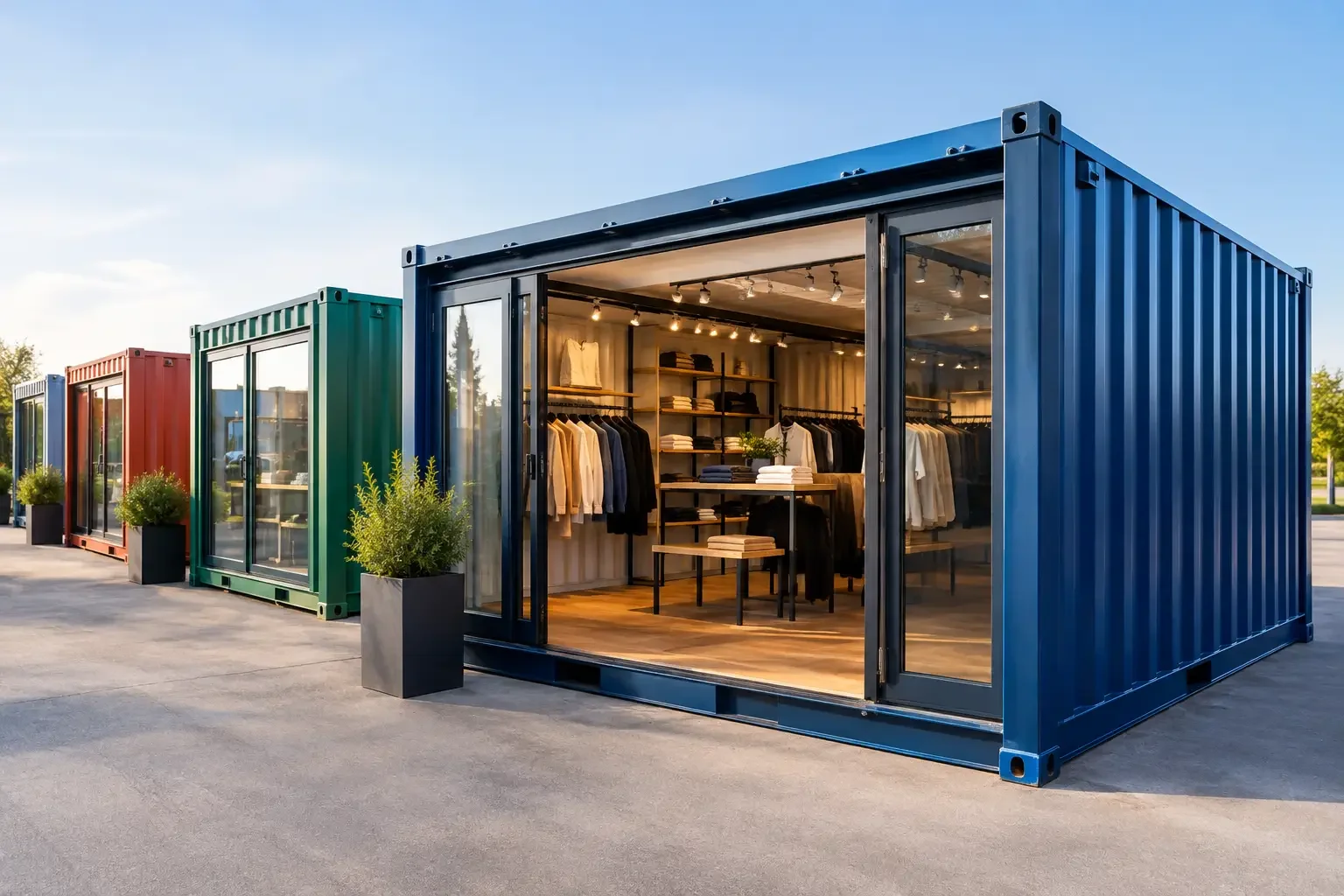
A retail location does not always need a long lease, a conventional build-out, or months of site work. The strongest retail container examples start with a more practical question: what must the space do for customers and staff on day one? For some operators, that means a branded pop-up that can move between events. For others, it is a secure stockroom behind a busy store, a seasonal farm stand, or a compact service counter at a job site.
A steel shipping container provides a durable shell, but the retail result depends on the layout, customer flow, utilities, exterior finish, and delivery plan. The right configuration can create a customer-facing space that feels intentional rather than temporary, while retaining the portability that makes container retail attractive in the first place.
Retail Container Examples by Operating Need
1. Pop-up apparel shop
An apparel pop-up is one of the most recognizable container retail applications. A 20-foot container can support a tightly edited collection, fitting rooms, wall-mounted display systems, and a point-of-sale counter. A 40-foot unit provides more room for separated product zones, backstock, and a more comfortable customer path.
Large glass storefront doors or roll-up doors help the shop feel open during operating hours. Insulation, HVAC, and electrical service matter just as much as the display fixtures, especially for warm-weather markets or multi-day activations. Exterior paint, graphics, and lighting turn the unit into a visible extension of the brand.
The trade-off is inventory capacity. A pop-up designed to look spacious cannot carry every size and SKU on the floor. Plan replenishment storage or use a second container as a nearby stockroom when product volume requires it.
2. Food and beverage service counter
Coffee, packaged foods, specialty beverages, and quick-service concepts can operate effectively from a modified container. A serving window facing the customer queue creates a clear order-and-pickup workflow. Inside, the layout can accommodate counters, refrigeration, handwashing stations, electrical equipment, and storage based on the menu.
Food service builds require more coordination than simple merchandise retail. Local health department requirements, plumbing, ventilation, grease management, fire protection, and utility connections can determine the design before fabrication begins. A refrigerated reefer container may also support cold storage for ingredients, beverages, or packaged inventory.
For a site with limited square footage, a 20-foot service container paired with outdoor seating can be more efficient than leasing a larger permanent space. For high-volume operations, a 40-foot unit gives staff more usable prep and storage area, reducing congestion during peak periods.
3. Farmers market stand and farm store
A container-based farm stand gives growers a secure retail presence without moving tables, tents, and inventory in and out every day. Roll-up doors can open the selling side of the unit, while the closed container protects equipment and product after hours. Shelving, produce bins, and a simple checkout counter create an orderly setup.
This format works well for seasonal produce, flowers, packaged goods, and value-added farm products. If products require controlled temperatures, a reefer unit or a refrigerated section should be considered early rather than added after operations begin.
A farm store also benefits from a location plan. Customer parking, ADA access, drainage, signage visibility, and safe entry points often have more effect on sales than the container footprint itself. The unit is the store, but the site is still part of the customer experience.
4. Mobile brand activation shop
Brands that sell at festivals, sporting events, campuses, and regional tours need a structure that travels well and sets up quickly. A container activation shop can be fitted with fold-out service counters, display walls, lighting, branded cladding, and lockable storage. When closed, the same unit protects merchandise and equipment in transit or between events.
This is a strong use case for container durability, but delivery logistics deserve attention. Confirm where a truck can access the event site, whether ground conditions can support the container, and how the unit will be positioned for customer traffic. A striking build is less useful if it cannot be delivered safely or opened toward the crowd.
5. E-commerce pickup and return center
Retailers with online sales can use a container as a compact pickup point near a warehouse, shopping center, campus, or event venue. Customers collect orders from a staffed counter or secure locker system, while associates process returns and stage packages inside.
This model can reduce pressure on a primary storefront and place fulfillment closer to where customers already travel. It works particularly well for seasonal demand, local product launches, and markets where a full store would be premature.
The configuration should separate customer-facing activity from order handling. A personnel door for staff, a transaction window for customers, shelving for staged orders, and adequate lighting create a safer, faster workflow. If the unit will operate after dark, exterior lighting and a clearly marked pedestrian route are essential.
6. Retail stockroom and overflow storage
Not every retail container needs to sell directly to the public. A weather-resistant storage container behind a store can solve the immediate problem of excess seasonal inventory, fixtures, packaging, promotional materials, and maintenance supplies. This is often the fastest way to recover valuable sales-floor space.
A standard 20-foot or 40-foot container offers secure ground-level access. Adding shelving, lockboxes, lighting, or a roll-up door can make daily inventory handling more efficient. Used containers are often practical for this application when appearance is less critical, while new or one-trip units may be preferable for highly visible locations or sensitive merchandise.
Before placing a storage unit behind a retail building, verify property restrictions, setback requirements, fire lanes, and the path for delivery equipment. The simplest projects are usually those with a clear, level placement area and direct truck access.
7. Garden center and outdoor equipment outlet
Garden supplies, plants, patio products, and outdoor equipment naturally suit a container retail layout because much of the customer experience occurs outside. The container can serve as a secure cash wrap, enclosed product display, tool storage area, or equipment check-out point. A roll-up door allows the retail space to open directly onto a covered display yard.
The shell protects high-value tools and seasonal merchandise after hours, while the outdoor area handles bulky inventory that would be difficult to merchandise inside. In hot climates, staff comfort still requires planning. Insulation and HVAC may be necessary if employees spend extended shifts inside the unit.
8. Campus, hospital, or workplace convenience store
Large campuses often have a need for quick retail access where a permanent store is not justified. A container convenience shop can sell drinks, snacks, personal care items, branded merchandise, and basic supplies near construction phases, employee parking, recreation areas, or remote facilities.
The best layouts prioritize a fast customer path. Customers should be able to enter, select items, pay, and exit without crossing through a crowded backstock area. Windows bring daylight into the space, but they should be paired with security measures appropriate to the location and operating hours.
Institutional buyers should also account for accessibility, electrical capacity, sanitation requirements, and site approvals. A container can shorten the build timeline, but it does not remove code obligations.
9. Ticketing, merchandise, and event kiosk
A container kiosk can combine ticketing, credential distribution, merchandise sales, and equipment storage for concerts, fairs, and sports venues. Its strongest advantage is operational control: staff have a lockable workspace, protected inventory, and a defined customer counter instead of relying on temporary tents.
A compact 10-foot or 20-foot container may be enough for a focused event function. Larger units are better when merchandise volume, multiple registers, or staff circulation becomes a factor. Service windows should be placed according to queue direction, shade, and emergency access rather than simply centered on the container wall.
10. Showroom for products that need a physical presence
Manufacturers and distributors can use a retail container as a field showroom for flooring, fixtures, building products, outdoor gear, or specialty equipment. The container creates a controlled environment where samples, product demonstrations, and consultations can happen close to the customer or project site.
This approach is especially effective when products are expensive to transport repeatedly or difficult to explain through a catalog. Interior wall systems, sample racks, work surfaces, lighting, and climate control make the space useful for sales teams rather than just visually impressive.
Design Decisions That Determine Retail Performance
Retail container projects succeed when the modification package matches the daily operation. Start with the number of customers and employees expected inside at one time. A retail space that looks efficient on a floor plan can become uncomfortable if staff, inventory, and customers share the same narrow aisle.
Next, decide how the container opens. Personnel doors offer controlled entry, while roll-up doors support wider access and a more open storefront. Windows, glass doors, awnings, and exterior lighting help create a welcoming customer experience, but each opening changes the fabrication scope and should be reinforced properly.
Climate control is another operational decision, not an upgrade to leave until later. Uninsulated steel absorbs heat and cold quickly. For staffed retail, insulated walls and ceilings, HVAC, and appropriately sized electrical service generally make the space more usable across seasons.
Finally, plan delivery alongside design. Container size, truck access, placement conditions, local permits, utility connections, and foundation or leveling needs can shape the project as much as the interior finish. Conexwest can help buyers configure the container, modifications, and delivery around the actual site rather than a generic concept drawing.
The most useful retail container is not necessarily the one with the most features. It is the one that gives customers a clear reason to enter, gives staff a workable place to operate, and gives the business a durable asset ready for the next location or season.