
Refrigerated Container Power Guide for Job Sites
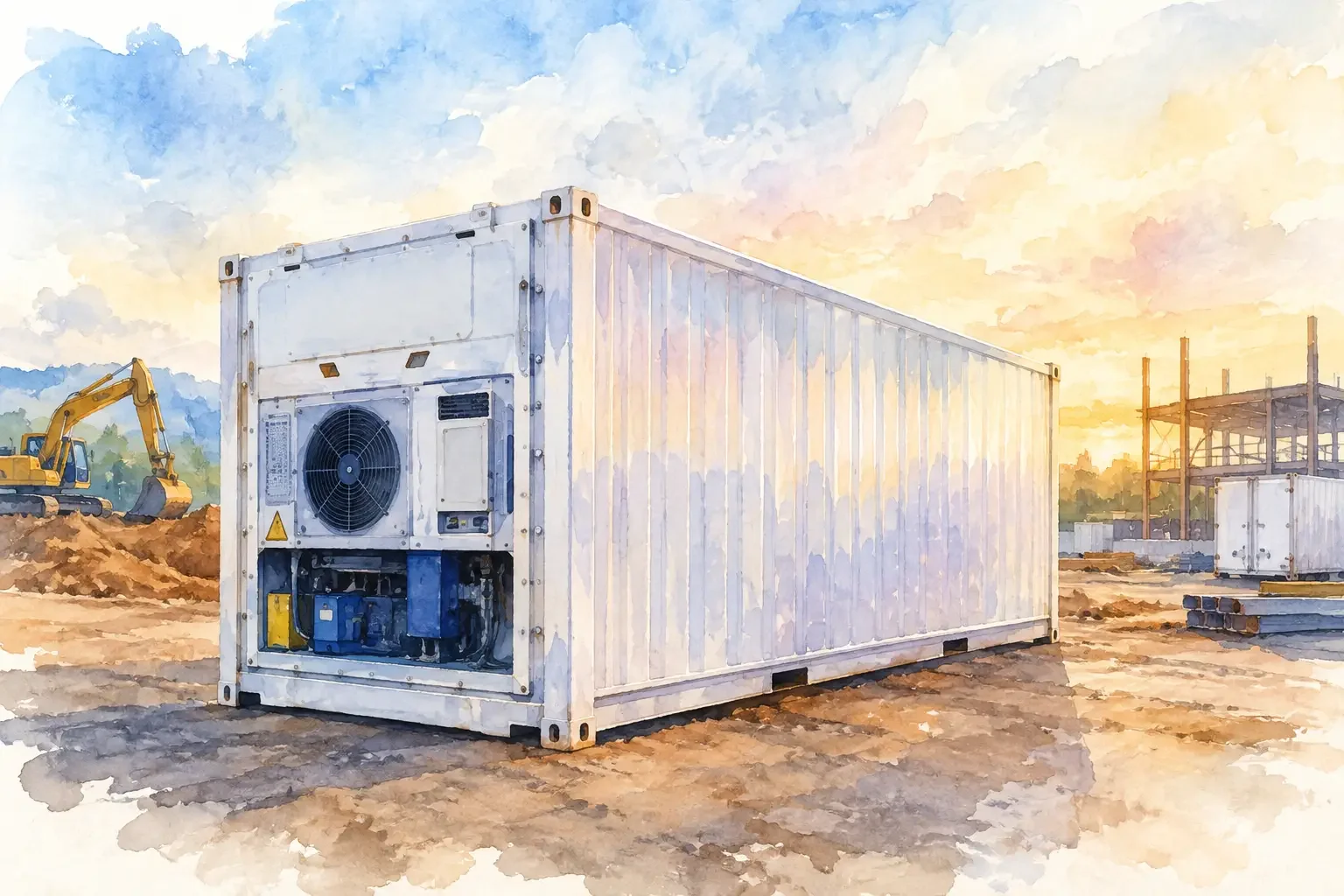
Read the unit nameplate before you choose a power source. It lists the voltage, the phase, the frequency, and the maximum current for that machine.
Do not size the source from the container length. A 20-foot reefer and a 40-foot reefer can use different machines. Units built for different markets can use different power.
Match the nameplate
Many refrigerated containers in U.S. commercial use run on 460-volt, three-phase, 60 Hz power.
Other units are built for 208V, 230V, or another listed service.
The voltage and the frequency must match the machine. The wrong voltage or the wrong phase can stop the unit or damage parts.
Before dispatch, give the nameplate data to the electrician, the facility engineer, or the generator supplier.
Confirm the service at the set-down point. A reading at the main panel is not enough. A long run, a small conductor, or a shared circuit can change what the reefer gets under load.
The draw changes with the work. A unit that holds frozen goods on a mild day does not draw the same current as a unit that cools a warm load in summer heat.
These items change the demand:
- Compressor cycling
- Fans
- Defrost
- Outdoor temperature
- The product load
- Door openings
- The setpoint
Size the circuit from the manufacturer's electrical data and the applicable code. A licensed electrician must size the conductors, the breakers, the disconnects, and the grounding for that unit and that site.
Make the connection
The setup needs a matching receptacle or a hardwired connection, an accessible disconnect, conductors rated for the load, and protection for the cable.
The plug and the receptacle must match. Do not force a plug. Do not use an improvised adapter. Do not use an extension cord that is not rated for the load and the site.
Keep the connection dry, reachable, and out of traffic.
On a construction site, in a warehouse, on a farm, or at an event, protect the cable from forklifts, trucks, foot traffic, and standing water.
Do not pinch the cable in the doors. Do not drag it over a sharp edge. Do not let a vehicle drive over it.
If the cable crosses a travel path, use a rated cable protector and set site controls.
Put a disconnect near the reefer so a qualified person can isolate power for service or an emergency. Label it. Keep it reachable after the container is set.
Do not set the reefer so close to a wall, a fence, or stacked equipment that a technician cannot reach the machine or the connection.
Ground and bond the installation to the equipment instructions and the local electrical rules. Use a qualified electrician where the power is temporary, the site is wet, or a generator is the source.
Choose utility power or a generator
Utility power is the simpler source for storage that lasts weeks or months. It fits grocery overflow, food production, pharmaceutical staging, agriculture, and a facility that needs continuous cold storage.
A generator fits a temporary jobsite, a remote farm, disaster response, an outdoor event, or a site with no permanent service.
Size the generator from the nameplate. Do not use a kilowatt guess from a similar unit. Ask the generator supplier or the electrician.
Include the other loads on that generator:
- Lights
- Office trailers
- Pumps
- Tools
A generator that holds a light reefer load can fail during high heat or during pull-down.
For high-value goods, plan backup power. That can be a standby generator, a second unit, an automatic transfer arrangement, or a written plan to move the product. The choice depends on the temperature limit, the value, the rules for the goods, and how fast the site can recover.
Plan pull-down apart from holding
Pull-down brings the product down to the setpoint. It loads the machine harder than holding goods that are already cold.
Load the reefer with product that is already at the storage temperature when you can.
A setpoint of 35°F does not make the reefer a blast chiller. If warm product must cool quickly, confirm the capacity, the loading plan, the airflow, and the food-safety procedure before you rely on the container.
Leave the airflow path the cargo requires. Do not block the return air. Use pallets or racks where the product needs them.
A load from the floor to the ceiling can make the temperature uneven. The right gap depends on the product, the packaging, the target temperature, and how often people open the doors.
Watch the temperature and the cable
Check these items on a schedule that matches the goods:
- Setpoint
- Supply-air temperature
- Return-air temperature
- Alarms
- Door condition
- Visible cable damage
Frozen food, vaccines, temperature-sensitive chemicals, and regulated products need tighter checks than short-term beverage overflow.
Remote monitoring can show an unmanned site. An alarm for temperature, power loss, or an open door shortens the time to a response. It does not replace a physical check.
Keep the condenser clear of debris, packaging, weeds, and equipment. The machine needs airflow to reject heat.
Direct sun, a solid wall, or a crowded yard can make the unit work harder. Shade must not block service access or condenser airflow.
Check these items on delivery day
Before the truck arrives, confirm:
- The service is on and verified
- The correct receptacle or connection is installed
- The cable route is protected
- The spot leaves room for the truck and for the machine
- The surface is level and can carry the loaded container
After the set, inspect the cable and the connection before you energize the unit.
Set the temperature. Let the container stabilize. Confirm that the controller runs normally.
Record the first temperature and the alarm status when goods will go in the same day.