
Shipping containers can be used in Philadelphia, but approval depends on the property, zoning district, intended use, placement location, and duration of use. Philadelphia does not treat every container placement the same. A temporary storage container for a short-term project, a container used on a construction site, a refrigerated container for commercial cold storage, and a modified container used as an office may all trigger different requirements.
Philadelphia Shipping Container Zoning Laws, Permits & Placement Guide
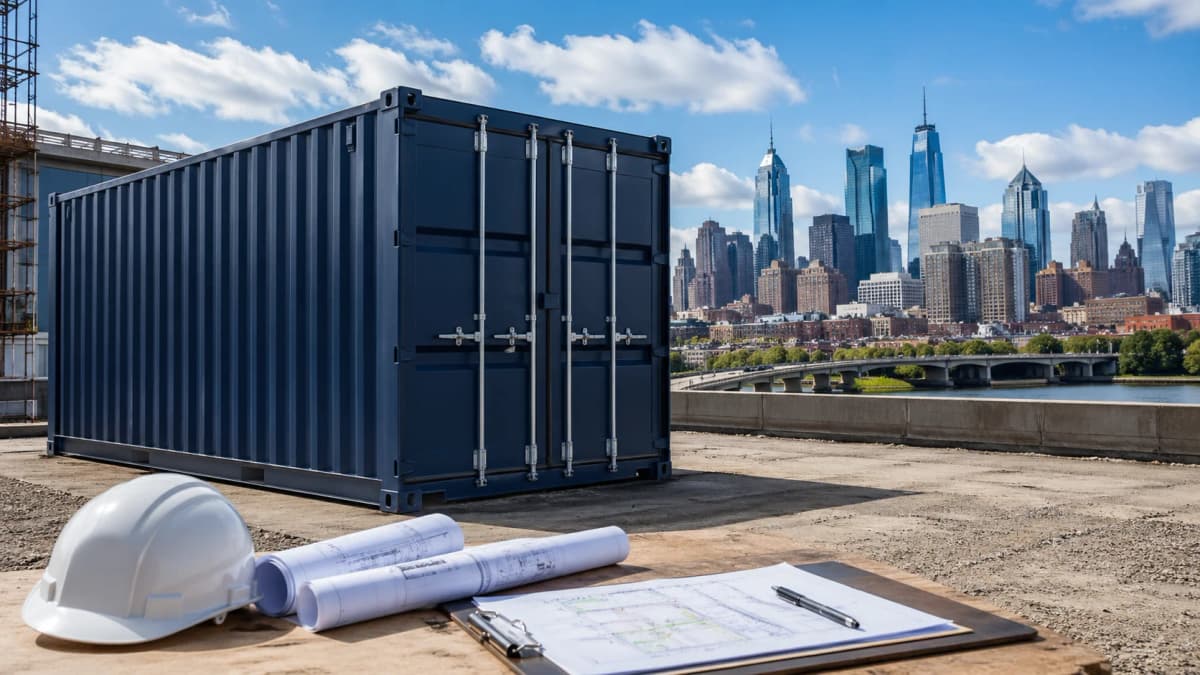
Shipping containers are a practical storage solution for Philadelphia businesses, contractors, homeowners, schools, retailers, and logistics operations. Whether you are using a container for temporary jobsite storage, commercial inventory overflow, refrigerated storage, or a modified workspace, placement matters. Philadelphia has specific zoning, building, right-of-way, and permitting requirements that can affect where a container can be placed and how long it can remain on site.
Before ordering a container, it is important to understand whether your project requires approval from the City of Philadelphia Department of Licenses and Inspections, the Department of Streets, or another local agency. A container placed on private property may be treated differently than one placed on a public street, sidewalk, or curb lane. Planning ahead can help avoid delivery delays, fines, removal issues, or project interruptions.
Are Shipping Containers Allowed in Philadelphia?
Shipping containers can be used in Philadelphia, but approval depends on the property, zoning district, intended use, placement location, and duration of use. Philadelphia does not treat every container placement the same. A temporary storage container for a short-term project, a container used on a construction site, a refrigerated container for commercial cold storage, and a modified container used as an office may all trigger different requirements.
The City of Philadelphia’s zoning rules regulate how property is used and developed. That means a container placed on private property may require zoning approval if it changes the use of the lot, functions as an accessory structure, affects setbacks, occupies required parking or loading areas, or becomes part of a longer-term commercial operation.
For a broader statewide overview, you can also review our guide to Pennsylvania shipping container zoning laws, permits, and building code requirements.
When Do You Need a Zoning Permit for a Shipping Container in Philadelphia?
A zoning permit may be required when a shipping container is placed on private property in a way that affects land use, site layout, building coverage, parking, loading, or long-term storage activity. Philadelphia’s zoning permit process is handled through the Department of Licenses and Inspections, commonly known as L&I.
You may need to review zoning requirements if your container will be used for:
- Commercial storage: Inventory, supplies, tools, equipment, or business materials stored on site.
- Construction storage: Temporary jobsite storage for tools, materials, and project equipment.
- Modified container use: Office containers, workshops, pop-up spaces, or containers with electrical, HVAC, windows, or doors.
- Long-term placement: Containers kept on a property beyond a short temporary use period.
- Accessory structure use: Containers used as a support structure for an existing business, facility, or property.
If the container is only being used for short-term storage during a move or project, requirements may be different. However, it is always best to confirm before delivery, especially in dense Philadelphia neighborhoods where lot lines, alleys, parking areas, and right-of-way restrictions can be tight.
Private Property vs. Public Right-of-Way
One of the most important distinctions is whether the shipping container will be placed on private property or in the public right-of-way.
Private property placement may require zoning approval, building review, or site plan review depending on how the container is used and whether it is temporary, permanent, occupied, modified, or connected to utilities.
Public right-of-way placement typically involves the Department of Streets. If a moving container, portable storage container, or pod will occupy a curb lane or parking space, you may need a Temporary No Parking permit from the City of Philadelphia.
The City states that a Temporary No Parking permit can be used for moving trucks, storage containers or pods, temporary dumpsters, and similar curbside uses. For a moving container or pod, the permit cost is listed as $50, and the container may be parked for a maximum of five days. Always confirm current requirements directly with the City before scheduling delivery.
You can review Philadelphia’s Temporary No Parking permit information here: Apply for a Temporary No Parking permit.
When Is a Building Permit Needed?
A building permit may be required if the shipping container is being modified, installed as a structure, occupied, connected to utilities, added to an existing building, or used in a way that changes the site or building conditions. Philadelphia generally requires building permits before projects that construct a new building, enlarge or add to a structure, change interior or exterior conditions, change occupancy classification, or involve major repairs or large earth disturbance.
For shipping container projects, a building permit may be relevant when the container includes:
- Electrical power or lighting
- HVAC or mechanical systems
- Plumbing or drainage
- Windows, man doors, roll-up doors, or structural openings
- Foundation work or anchoring
- Occupancy as an office, workshop, retail space, or other usable structure
- Integration with another building or permanent site improvements
In most cases, Philadelphia requires a zoning permit before a building permit can be issued. This is why container projects should start with the intended use and placement plan before fabrication or delivery.
You can review Philadelphia’s building permit guidance here: Get a Building Permit.
Temporary Shipping Containers in Philadelphia
Temporary container use is common for construction sites, moving projects, renovations, retail overflow, seasonal inventory, and event support. However, “temporary” does not always mean “no permit.” Philadelphia may still require zoning, building, right-of-way, or event-related approvals depending on where the container is placed and how it is used.
Temporary containers are often used for:
- Construction material storage
- Tool and equipment protection
- Residential moving or renovation storage
- Retail inventory overflow
- Event operations and staging
- Cold storage support for food, beverage, and medical products
If the container is placed on a public street, curb lane, or parking space, review Temporary No Parking requirements before scheduling delivery. If the container is placed on private property, check whether zoning or building approval is needed for the site and use.
Permanent or Long-Term Shipping Container Placement
Long-term container placement typically requires more planning than short-term storage. A container kept on a commercial, industrial, residential, or mixed-use property may be reviewed as an accessory structure, storage use, or site improvement. Depending on the property, L&I may look at the zoning district, setbacks, lot coverage, screening, parking, loading, drainage, access, and the proposed use of the container.
Long-term placement is especially important for businesses using containers for ongoing inventory storage, equipment storage, refrigerated storage, or modified workspace. If the container is part of daily operations, it should be planned as part of the overall site layout instead of treated as a temporary drop-off.
For businesses comparing storage options, see our guide to shipping container rental in Philadelphia, Pennsylvania.
Special Rules for Refrigerated Containers
Refrigerated shipping containers, also called reefer containers, may require additional planning because they need power access, ventilation clearance, safe placement, and operational space around the refrigeration unit. Businesses using reefers for food, beverage, pharmaceutical, floral, or temperature-sensitive inventory should confirm that the site can support the required electrical connection and safe operating conditions.
In Philadelphia, refrigerated containers are commonly used by restaurants, grocery distributors, caterers, food processors, medical suppliers, and event operators. If a reefer will be placed outside a business, near a loading area, or in a parking lot, zoning, electrical, access, and noise considerations may apply.
For more information, read our guide to refrigerated shipping containers in Philadelphia, Pennsylvania.
What to Prepare Before Applying for a Permit
Before applying for a zoning or building permit, gather the basic details of your container project. Having accurate information upfront can help reduce delays and avoid incomplete applications.
Useful information to prepare includes:
- Container size: 10ft, 20ft, 40ft, 45ft, or specialty container size.
- Placement location: Private lot, driveway, parking area, loading zone, construction site, or public street.
- Duration: Temporary use, project-based use, seasonal use, or long-term placement.
- Purpose: Storage, office, workshop, refrigerated storage, retail support, or construction use.
- Modifications: Doors, windows, vents, insulation, electrical, HVAC, shelving, refrigeration, or security upgrades.
- Site plan: Container location, property lines, access points, curb cuts, parking, loading, and nearby structures.
Philadelphia zoning applications that require plans generally need a site plan showing property lines, structures, yards, streets, alleys, driveways, easements, parking, loading, and other site details. Applications can be submitted online through eCLIPSE or in person by appointment at the Permit and License Center.
You can review Philadelphia’s zoning permit process here: Get a Zoning Permit.
Common Philadelphia Placement Challenges
Philadelphia’s dense streets, older properties, narrow alleys, and mixed-use neighborhoods make delivery planning especially important. Even when a container is allowed, the delivery location must be accessible for the truck and safe for placement.
Common placement issues include:
- Limited street width or tight turning access
- Insufficient clearance for delivery equipment
- Overhead wires, tree limbs, signs, or building projections
- Sloped or uneven surfaces
- Blocked fire lanes, loading zones, driveways, or sidewalks
- Parking restrictions or curbside permit requirements
- Historic property review or additional approvals
Before delivery, confirm that the container location is level, accessible, and clear of obstructions. If the container will be placed near a curb, sidewalk, alley, public street, or required parking area, verify whether additional approval is needed.
Do Residential Properties Need Permits?
Residential properties may need permits depending on the container’s size, location, use, and duration. A small temporary moving container placed in a permitted curbside space for a short period is different from a long-term storage container placed in a yard, driveway, or side lot.
Homeowners should check zoning before using a container for long-term storage, renovation staging, accessory structure use, or any modified use involving utilities or occupancy. If the property is located in a historic district, floodplain, or area with special controls, additional review may apply.
Do Commercial Properties Need Permits?
Commercial properties are more likely to require zoning or building review when containers are used for long-term storage, inventory overflow, jobsite operations, refrigerated storage, or modified workspace. Businesses should confirm that container storage is compatible with the property’s approved use and zoning district.
Commercial users should also consider access, loading, parking, screening, electrical connections, refrigeration needs, and whether the container will affect required site circulation. For modified containers, offices, workshops, and temperature-controlled units, building and trade permits may also be required.
Renting vs. Buying a Shipping Container in Philadelphia
The right choice depends on your timeline and use case. Renting is often best for temporary projects, construction sites, moving, seasonal storage, and short-term inventory overflow. Buying may make more sense for long-term storage, permanent business use, custom fabrication, or repeated project needs.
If you need a container for a temporary project, review your placement and permit requirements first, then explore Philadelphia shipping container rental options. If you need a long-term solution, custom features, or ongoing business storage, explore shipping containers for sale in Philadelphia, PA.
How Conexwest Helps Philadelphia Customers
Conexwest provides shipping container solutions in Philadelphia for storage, rental, cold storage, and custom fabrication. Our inventory includes new, used, and refurbished containers in multiple sizes, with modification options such as roll-up doors, windows, vents, shelving, insulation, HVAC, electrical power, security upgrades, and custom paint.
Whether you need a standard storage container, a refrigerated container, or a modified container for commercial use, Conexwest can help you choose the right size and configuration for your project. We also help customers think through delivery access, placement needs, and container features before the order is finalized.
Explore Philadelphia container options:
- Buy shipping containers in Philadelphia, PA
- Shipping container rental in Philadelphia, Pennsylvania
- Refrigerated shipping containers in Philadelphia, Pennsylvania
Final Thoughts
Shipping containers are a flexible and secure solution for Philadelphia storage, construction, commercial operations, refrigerated storage, and modified workspace needs. However, zoning, building, and right-of-way rules can affect where a container can be placed and how it can be used.
Before scheduling delivery, confirm whether your container will be placed on private property or in the public right-of-way, determine whether zoning or building permits apply, and prepare a clear site plan. A little planning upfront can help prevent delays, violations, or added costs later.
Conexwest offers durable shipping containers for sale and rent in Philadelphia, including refrigerated containers and custom modifications for specialized business needs.
Was this helpful?
Frequently Asked Questions
A zoning permit may be required when a shipping container is placed on private property in a way that affects land use, site layout, building coverage, parking, loading, or long-term storage activity. Philadelphia’s zoning permit process is handled through the Department of Licenses and Inspections, commonly known as L&I.
One of the most important distinctions is whether the shipping container will be placed on private property or in the public right-of-way.
A building permit may be required if the shipping container is being modified, installed as a structure, occupied, connected to utilities, added to an existing building, or used in a way that changes the site or building conditions. Philadelphia generally requires building permits before projects that construct a new building, enlarge or add to a structure, change interior or exterior conditions, change occupancy classification, or involve major repairs or large earth disturbance.
Temporary container use is common for construction sites, moving projects, renovations, retail overflow, seasonal inventory, and event support. However, “temporary” does not always mean “no permit.” Philadelphia may still require zoning, building, right-of-way, or event-related approvals depending on where the container is placed and how it is used.
Long-term container placement typically requires more planning than short-term storage. A container kept on a commercial, industrial, residential, or mixed-use property may be reviewed as an accessory structure, storage use, or site improvement. Depending on the property, L&I may look at the zoning district, setbacks, lot coverage, screening, parking, loading, drainage, access, and the proposed use of the container.
Refrigerated shipping containers, also called reefer containers, may require additional planning because they need power access, ventilation clearance, safe placement, and operational space around the refrigeration unit. Businesses using reefers for food, beverage, pharmaceutical, floral, or temperature-sensitive inventory should confirm that the site can support the required electrical connection and safe operating conditions.
Before applying for a zoning or building permit, gather the basic details of your container project. Having accurate information upfront can help reduce delays and avoid incomplete applications.