
New Versus Used Containers: Which Fits Your Site?
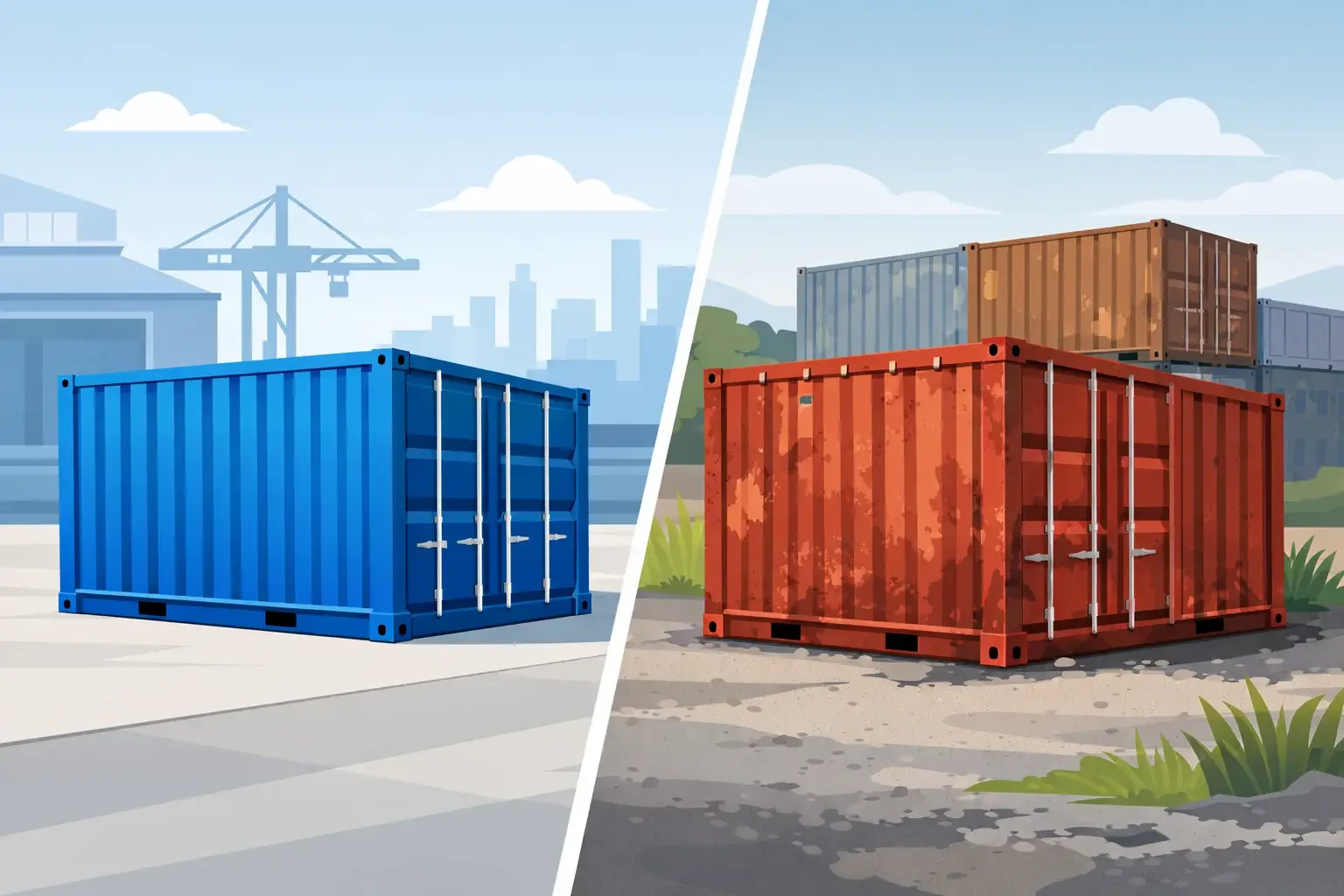
A container that looks economical at purchase can become expensive if it needs floor repair, door work, repainting, and modification prep before it can serve the site. That is why the new versus used containers decision should start with the job the unit must perform, not simply the lowest advertised price.
For a construction superintendent, that may mean secure, weather-resistant tool storage delivered quickly. For a facilities team, it may mean an office container with HVAC, power, insulation, and a professional exterior. The right condition depends on how long the asset will remain in service, where it will sit, who will use it, and what must be added before delivery.
New Versus Used Containers: The Practical Difference
New containers are commonly called one-trip containers. They are manufactured overseas, loaded with cargo for a single shipment, and then made available in the U.S. market. They have minimal wear, newer flooring and door hardware, clean interiors, and consistent exterior paint. They are typically the best starting point when appearance, predictable condition, and long service life matter.
Used containers have already worked in international cargo service. Their exact age, repair history, dents, surface rust, and exterior appearance can vary. A properly inspected used unit can still provide secure, wind- and water-resistant storage for years. For many job sites and industrial applications, cosmetic wear is irrelevant compared with steel construction, locking doors, and dependable delivery.
The key distinction is not whether one option is "good" and the other is "bad." It is the amount of condition uncertainty, remaining cosmetic life, and preparation work built into each choice.
Start With the Application, Not the Container Grade
A used 20-foot or 40-foot container is often the practical choice for equipment, materials, seasonal inventory, agricultural supplies, or construction tools. These applications need security and protection from weather, but the container does not need to present like a new commercial asset. If the unit will stay at a remote site for a limited period, a used container can preserve capital for more urgent project needs.
A new container is generally a stronger fit for customer-facing environments, long-term facilities use, and projects with a detailed modification scope. Retail spaces, branded activations, municipal projects, healthcare support areas, food and beverage operations, and finished modular builds often benefit from a cleaner baseline. The exterior is easier to paint and brand, while the interior starts with less evidence of prior cargo use.
For office containers, the decision is more nuanced. A used container can become a capable ground-level office after insulation, electrical work, windows, personnel doors, HVAC, and interior finishes are installed. However, a new unit may reduce prep work and provide a more consistent foundation for a polished workspace. The right answer depends on the finish level, budget, and expected occupancy period.
Appearance is more than a cosmetic issue
Dents and paint wear do not usually reduce a cargo container's ability to store materials securely. They can, however, affect how a facility, client, tenant, or inspector perceives the installation. A new container is often preferred when the unit will be highly visible from a storefront, campus, event entrance, or public roadway.
For back-of-house storage, a used unit can be the more disciplined procurement decision. Spending on a clean exterior makes sense only when it supports the operating purpose. Otherwise, funds may be better directed toward shelving, lockboxes, lighting, ventilation, or a roll-up door that improves daily use.
Compare Total Project Cost, Not Just Purchase Price
The purchase price difference between new and used containers is real, but it is only one line in the project budget. A container that requires extra surface preparation, structural repair, replacement door seals, or floor attention can narrow the initial savings. This matters most when the unit will be extensively modified.
A practical comparison should account for the container, required upgrades, site preparation, transportation, unloading, and the expected service period. If a used unit meets the condition requirement and needs only basic accessories, it may be the clear value choice. If the project calls for a finished office, commercial enclosure, or branded customer space, a new container can make fabrication more predictable.
Condition also affects resale potential. A one-trip container may retain stronger appeal after several years of local use, particularly if it has been maintained and only lightly modified. A used container may still have resale value, but it begins its domestic service life with more prior wear. Buyers planning to keep a unit for a decade or more should weigh that difference against their upfront budget.
Modification scope can change the recommendation
Modifications place new openings and systems into the container shell. Adding personnel doors, windows, roll-up doors, vents, electrical packages, insulation, or HVAC requires careful fabrication regardless of container age. But the starting condition influences the amount of preparation needed before work begins.
A new container is often preferred for projects requiring precise finish work, large glazing areas, polished interiors, or a painted exterior that will represent the business. It provides a cleaner, more uniform canvas. Used containers remain a practical base for many custom builds, especially industrial enclosures, secure storage rooms, workshops, utility spaces, and temporary operational facilities.
The correct approach is to define the modification package first. Then select a container condition that supports that package without paying for appearance or remaining life the project will not use.
What to Verify Before Buying a Used Container
Used does not mean unserviceable, but the condition description should match the application. A storage container should have functional doors, a sound floor, and a shell that protects contents from normal weather exposure. For sensitive inventory, inspect the condition requirements more closely and consider whether added ventilation, moisture control, or insulation is needed.
Ask how the unit is graded and what the stated condition means in practice. Terms such as wind and water tight or cargo worthy refer to different requirements. A wind- and water-tight unit is generally suited to ground storage, while cargo-worthy condition is relevant when a container must move in ocean freight. Do not pay for transport certification if the unit will remain at a local site, unless future intermodal use is part of the plan.
Review photos when available, but do not treat photos as a complete inspection. Container inventory changes quickly, and an individual unit may show dents, paint variation, prior repair marks, or surface rust. The objective is not to find a used container that looks new. It is to confirm that its condition supports the work it needs to do.
For specialized equipment, apply a higher standard. A used refrigerated container, for example, needs evaluation of the refrigeration machinery, controls, electrical requirements, insulation, and operating performance. The condition of the steel box alone does not establish whether it can support a cold-chain operation.
Delivery and Site Access Apply to Both Options
New and used containers share the same logistical realities. A 20-foot unit may be easier to position in constrained areas, while a 40-foot container delivers more storage capacity per footprint. High-cube containers provide additional vertical clearance, which can be valuable for racking, tall equipment, or interior buildouts.
Before ordering, confirm the delivery path, gate widths, overhead clearance, turning room, ground conditions, and final placement area. The site must support the truck and the container's loaded weight. A level, stable foundation helps doors operate correctly and protects the container from unnecessary stress over time.
Delivery method matters as well. Tilt-bed delivery requires clearance to slide the container off the truck, while other placements may require lifting equipment or a crane. These requirements do not change because a container is new or used, but they can affect project cost and scheduling more than buyers expect.
A Straightforward Decision Framework
Choose a used container when the priority is economical, secure storage; cosmetic condition is secondary; and the unit needs limited modification. It is often the right operational asset for job sites, yards, farms, warehouses, and temporary capacity needs.
Choose a new container when appearance matters, the project involves a substantial fabrication package, the asset will remain in service for many years, or you want the most consistent starting condition. It is commonly the better fit for offices, customer-facing spaces, branded installations, and high-finish container structures.
There is also a middle path. A refurbished container can make sense when a project needs a better exterior presentation or targeted repairs without the cost of a one-trip unit. The value depends on what refurbishment includes and whether that work aligns with the finished application.
Conexwest can help align container condition, modifications, and delivery requirements in one project scope, which is particularly useful when the unit must arrive ready for work rather than as an unfinished steel shell.
Specify the function first, set the condition standard second, and leave room in the budget for the details that make a container useful on day one. A container chosen for its real operating role will deliver more value than one chosen only because it was new or inexpensive.