
LuxFit: An Open-Air Container Gym in San Francisco’s Hayes Valley
In the heart of San Francisco’s Hayes Valley, LuxFit reimagines what a neighborhood gym can look like. Instead of placing every workout station inside a conventional building, the facility uses modified shipping containers to support an open-air training environment with strength equipment, boxing stations, cable machines, storage, and recovery space.
The result feels less like a traditional enclosed gym and more like an urban fitness campus. Members can train outdoors while still having access to organized equipment zones, secure container-based storage, and specialty amenities built into the site.
LuxFit also shows how modified shipping containers can support far more than storage. With the right layout and custom features, they can become part of a flexible commercial space designed around the people who use it every day.
Rethinking the Traditional Gym
Most gyms are built around the same basic formula: a large enclosed room divided into cardio, weight-training, and group-fitness areas. LuxFit takes a different approach by using the outdoor plaza as the main training floor and shipping containers as functional anchors throughout the facility.
The containers help organize the gym without closing it off from the surrounding neighborhood. Equipment can be stored securely, specialty zones can be separated by use, and the overall layout can remain open and adaptable.
As Conex Mike described it:
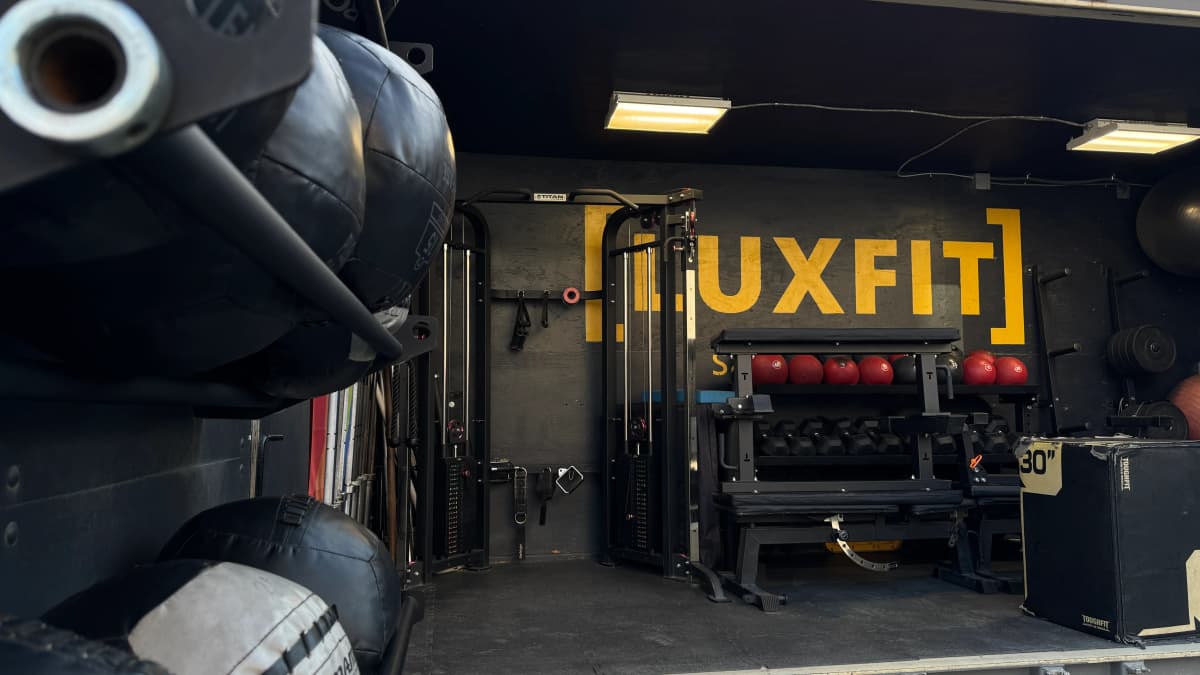
“It’s all open-air. You’ve got kettlebells, boxing, cables, free weights, and even a sauna inside the containers. You can train outdoors while still having access to high-quality gym equipment.”
The concept works because the containers are not treated as decorative backdrops. They are active parts of the gym’s operations, supporting storage, equipment access, training, and recovery.
How the Container Gym Layout Works
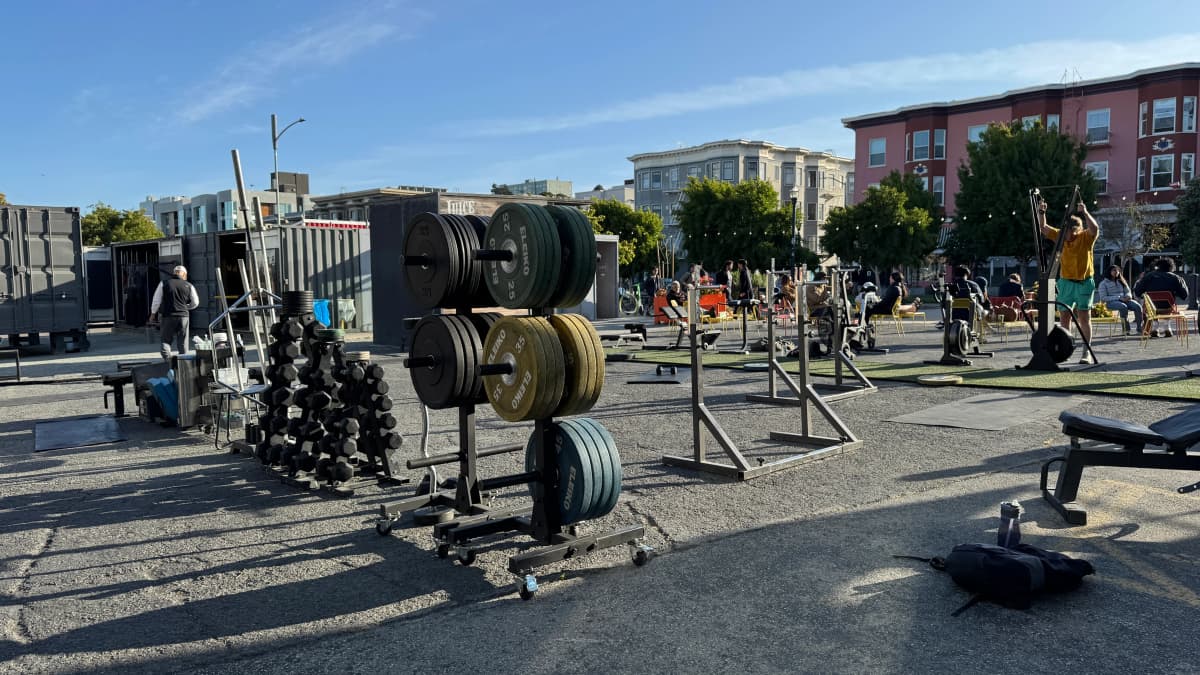
LuxFit’s layout creates several distinct training areas without relying on permanent interior walls. One zone supports kettlebell and free-weight training, another includes boxing equipment, and another is arranged around cable machines and functional fitness.
This distributed setup allows members to move naturally between different types of training. It also keeps the plaza open, which gives the facility a very different atmosphere from a conventional indoor gym.
The containers provide structure around that open layout. Depending on the area, they may support:
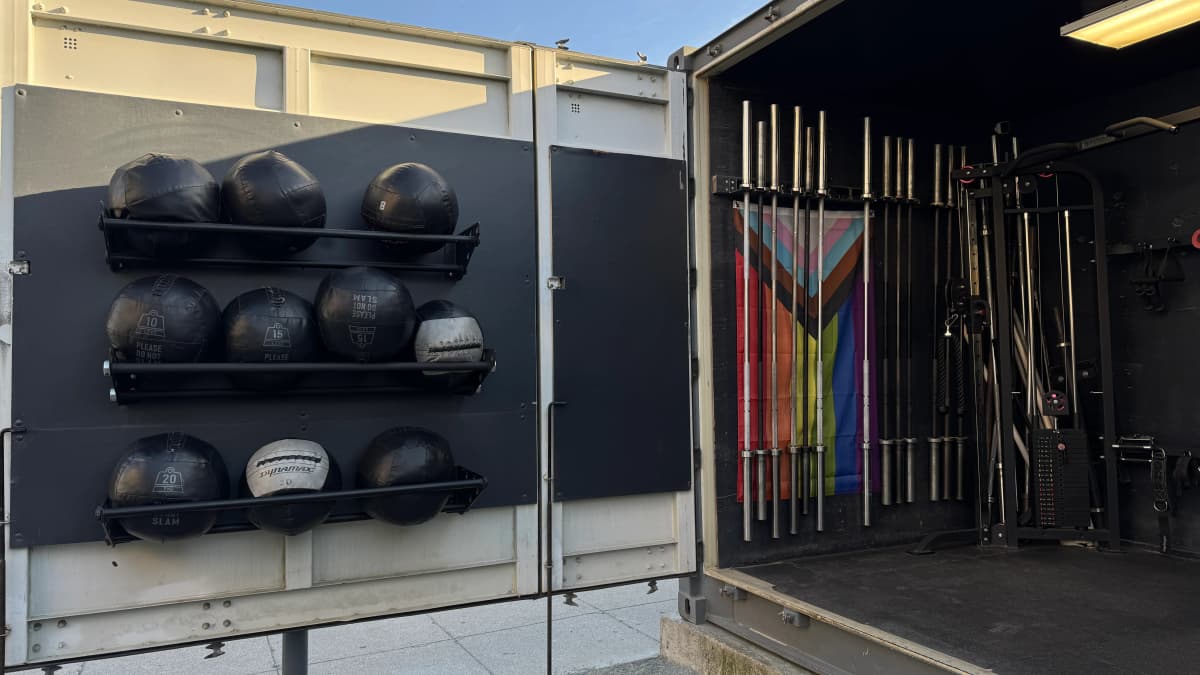
- Secure equipment storage
- Specialized workout stations
- Covered or partially enclosed training areas
- Electrical and lighting systems
- Recovery amenities
- Staff and operational storage
One of the most distinctive features is the sauna built into the container environment. Adding a recovery-focused amenity gives members something not commonly found in an outdoor gym and helps LuxFit offer a more complete fitness experience.
Designed Around the Hayes Valley Setting
LuxFit’s location is an important part of the concept. Hayes Valley is a dense, active San Francisco neighborhood where commercial space is limited and every square foot has to work harder.
A container-based layout gave the gym a way to establish defined spaces without turning the entire plaza into a conventional enclosed building. The containers create visual identity, support daily operations, and help the facility feel intentional while preserving the open-air character of the site.
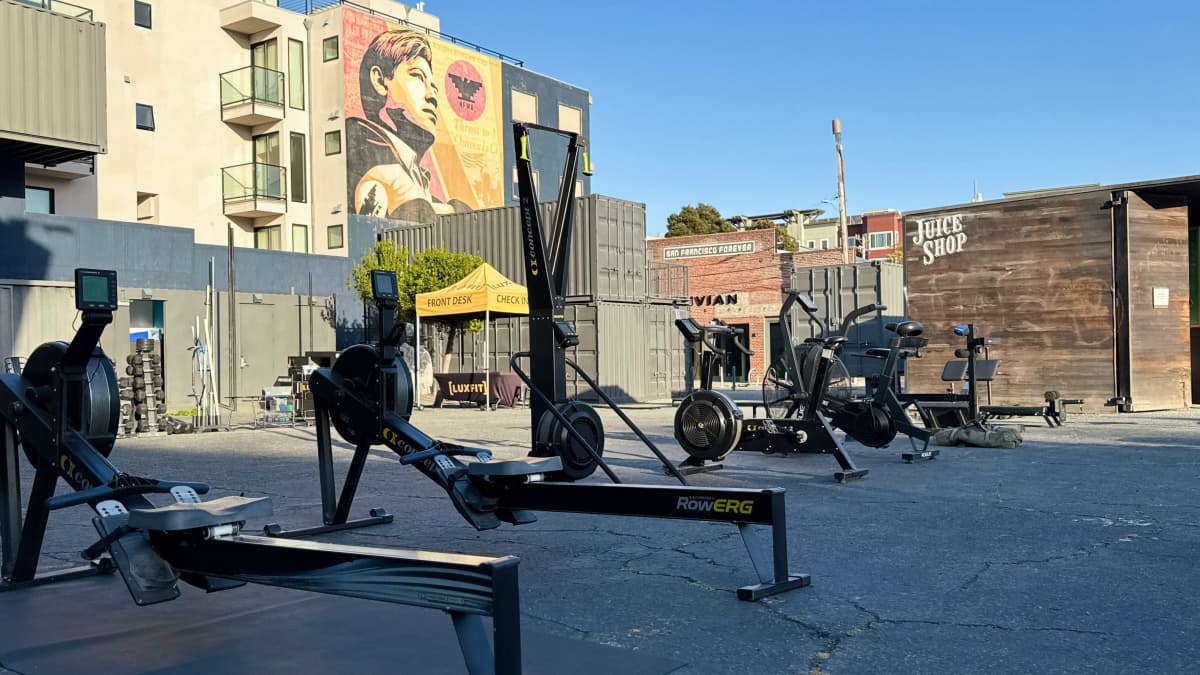
The industrial steel exterior also fits the urban setting. Rather than hiding the container format, LuxFit uses it as part of the brand and customer experience.
That visual identity matters for a fitness business. The facility is recognizable, highly photographable, and different from the standard gym environment. The structure itself becomes part of the marketing.
More Than a Fitness Facility
The plaza is not used for workouts alone. On select evenings, the area can support community activities such as outdoor movie screenings, with a shipping container used as part of the event setup.
This shared use demonstrates one of the biggest advantages of container-based commercial spaces: they can support multiple activities without requiring the site to be rebuilt each time.
During the day, the plaza functions as a gym. At other times, it can become an event space or community gathering area. The containers remain useful in both settings because they provide secure storage, power, equipment access, and defined operational zones.
This kind of flexibility can be valuable for businesses and organizations that want one site to serve several purposes.
Why Shipping Containers Worked for LuxFit
Shipping containers made sense for LuxFit because the project needed durability, flexibility, secure storage, and a strong visual identity within a compact urban setting.
The containers also offered several practical advantages:
- Modular layout: Individual units can support different functions across the site.
- Secure equipment storage: Fitness gear can be protected when the facility is closed.
- Flexible configuration: The layout can be adjusted as training programs and equipment needs change.
- Distinctive appearance: The industrial container design gives the gym a recognizable identity.
- Off-site fabrication: Many modifications can be completed before the container reaches the final location.
- Future expansion: Additional containers or equipment zones can be added when the business grows.
Container construction does not eliminate the need for site planning, engineering, utilities, permits, or accessibility review. However, it provides a flexible starting point that can be customized around the business instead of forcing the business into a standard building layout.
Explore container modifications
A Strong Example of Container-Based Commercial Design
LuxFit demonstrates what happens when shipping containers are designed around a real commercial use rather than treated as a novelty.
The containers help define the workout environment, protect equipment, support specialty features, and connect the gym to the surrounding plaza. Their role is practical, but they also give the facility a distinctive look that members remember.
The open-air setup may not work for every fitness business or climate, but it shows how a container gym can be adapted around local conditions, available space, customer experience, and operational needs.
Where Similar Container Gyms Can Be Used
The same general concept can be adapted for a wide range of fitness, recreation, and community applications, including:
- Outdoor strength-training facilities
- School and campus fitness areas
- Sports-complex training centers
- Corporate wellness spaces
- Military and public-safety training sites
- Community recreation facilities
- Event-based fitness activations
- Mobile coaching and personal-training studios
- Equipment storage and recovery centers
- Temporary or semi-permanent gyms
Containers can be customized with roll-up doors, personnel doors, windows, electrical packages, HVAC, insulation, flooring, mirrors, storage racks, equipment mounts, lighting, custom paint, branding, and multi-container layouts.
For more ideas, explore Conexwest’s custom container fabrication services or review the complete guide to shipping container modifications.
The Finished Result
LuxFit turned an urban plaza into a distinctive open-air fitness facility supported by modified shipping containers.
The final space combines strength training, boxing, functional fitness, equipment storage, recovery, and community programming within one flexible environment. Instead of trying to make the site feel like a conventional indoor gym, the design embraces the outdoor setting and uses the containers to give the space structure and purpose.
The project shows how shipping containers can support commercial fitness operations while also creating a memorable brand experience.
Planning a Custom Container Gym?
Conexwest builds custom container structures for gyms, sports complexes, schools, events, recreation facilities, equipment storage, retail, offices, and other commercial applications.
Available modifications can include electrical systems, HVAC, insulation, equipment access, personnel doors, roll-up doors, flooring, lighting, secure storage, custom paint, branding, and multi-container configurations.