
How to Secure Container Doors on Active Sites
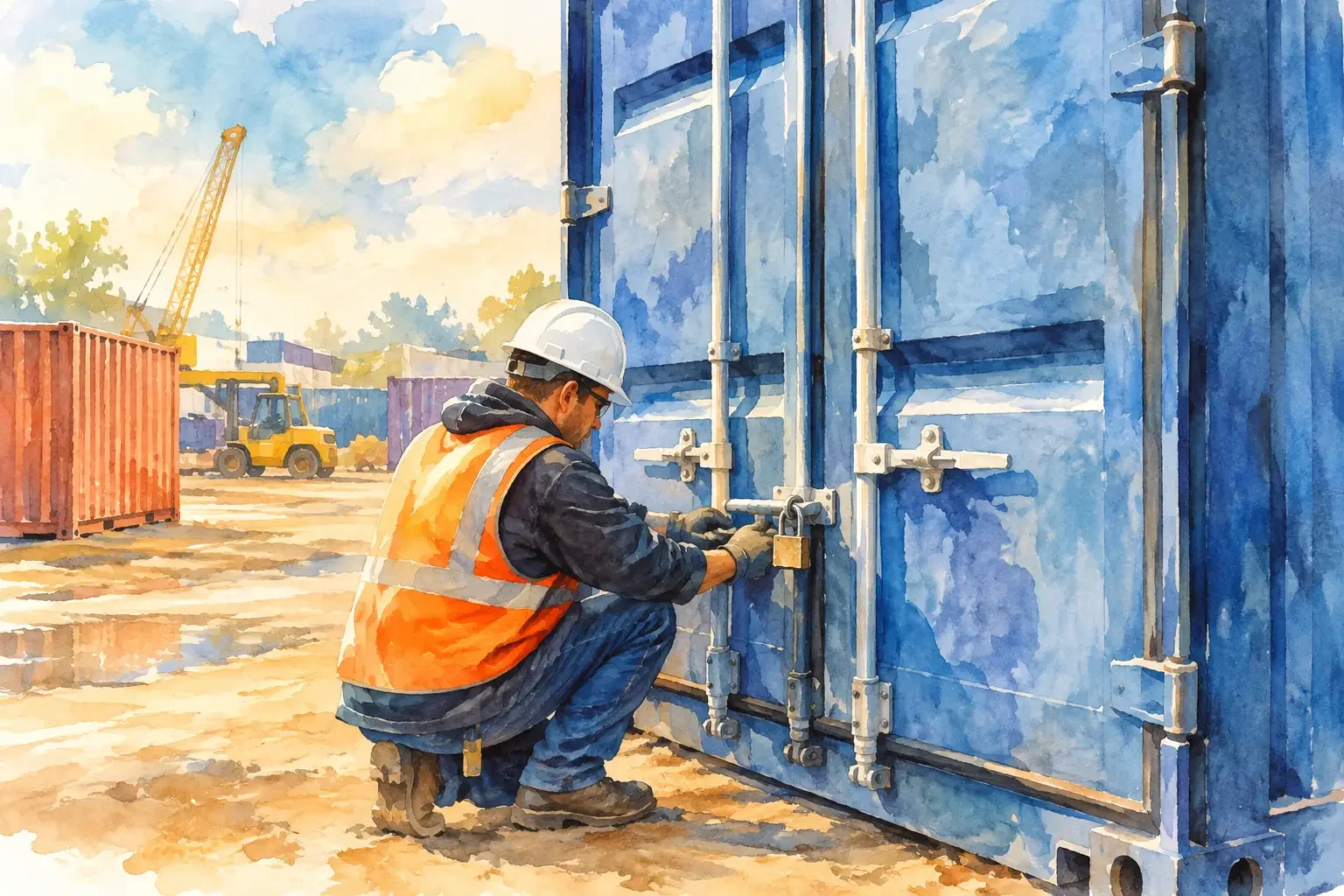
A shipping container can hold tools, materials, records, inventory, or equipment worth far more than the container itself. Knowing how to secure container doors starts with understanding the actual threat: opportunistic theft, forced entry with cutting tools, unauthorized employee access, or a door left unsecured during a fast-moving workday. The right setup protects the contents without slowing down the people who need legitimate access.
Container security is not one accessory. It is a layered decision involving the container’s condition, its locking hardware, the site layout, and the operating routine around keys and access. A lock that performs well at a remote storage yard may be impractical for a crew opening a container several times a day.
Start With the Container Doors and Locking Gear
Standard cargo doors are built around two vertical locking bars per door. Each bar turns into cam keepers welded to the container frame, drawing the doors tight when the handle is secured. Before adding an aftermarket lock, inspect this system closely. A premium padlock cannot compensate for bent locking bars, loose handle brackets, damaged cam keepers, or door alignment that leaves a visible gap.
Close the doors and confirm that both door panels sit evenly against the frame. The locking bars should rotate without excessive force and the cams should fully engage. If a door has been struck by a forklift, shifted during transport, or repeatedly forced shut around overfilled storage, have the door hardware repaired before relying on it for security.
Pay attention to container condition when purchasing or renting. A used container can be an excellent storage asset, but its doors should be evaluated as carefully as its roof and floor. For high-value contents, a wind and watertight container with sound door gear provides a better starting point than a unit with heavily worn hardware.
Use a Lockbox for the Best Everyday Protection
For most ground-level storage containers, a welded steel lockbox is the most practical first upgrade. A lockbox is a steel enclosure installed over the door-hasp area. It shields the padlock body and shackle from bolt cutters, saws, pry bars, and direct hammer strikes while still allowing authorized users to unlock the doors.
A lockbox works best when it is properly fitted to the container doors and paired with a high-quality, weather-resistant padlock. Look for a lock designed for outdoor exposure, with a hardened shackle or a protected-shackle design. The lock should fit the lockbox correctly. A padlock that is too small can leave exposed shackle space, while a poorly sized lock may be difficult for crews to operate with gloves.
For a container opened only occasionally, a lockbox and premium padlock offer a strong balance of cost, protection, and serviceability. For active job sites, choose a lock system that supervisors can manage without distributing too many duplicate keys. Rekeyable locks, controlled keyways, and commercial-grade combination systems can reduce the disruption when a key is lost or a subcontractor leaves the project.
A lockbox does not make a container invulnerable. Determined theft can involve power tools, time, and noise. Its value is that it raises the effort, delays entry, and removes the easy attack points that make an unsecured container attractive.
Choose Security Hardware Based on Access Frequency
The best locking method depends on what is inside and how often the crew needs access. An infrequently opened container holding surplus materials needs a different approach than a field office supply container accessed throughout every shift.
A practical security hierarchy often includes these options:
- A hardened padlock on the factory door hasp for low-risk, short-term storage.
- A lockbox with a protected-shackle padlock for general jobsite tools, equipment, and materials.
- A crossbar or cargo-door lock that spans both doors for containers that remain closed for extended periods.
- Electronic access control or monitored door contacts for high-value inventory, sensitive records, or controlled facilities.
Crossbar locks can provide another visible barrier because they secure both cargo doors together. They are useful at remote sites, seasonal facilities, and storage yards where containers are not opened daily. The trade-off is speed. Workers must remove and store the bar each time they enter, and the unit needs enough clearance around the doors to operate it safely.
Electronic hardware adds accountability rather than just physical resistance. A keypad, credential reader, or door sensor can show when access occurred and reduce dependence on physical keys. These systems need reliable power, weather-rated components, and a plan for outages. They are generally most appropriate when the container has already been modified with electrical service, lighting, or a broader security system.
Protect the Hinge Side and Door Frame
Many security plans focus only on the locking side of cargo doors. That leaves a gap in the assessment. Check the exterior hinges, welds, and the door frame for corrosion, cracking, or evidence of tampering. Standard container hinges are heavy-duty, but deteriorated welds or damaged door geometry can create weak points.
If the container is being customized for long-term use, discuss added security features during fabrication. Steel security bars, reinforced door hardware, personnel doors with commercial deadbolts, and roll-up door security options can be integrated into the finished layout. This is usually more efficient than trying to retrofit multiple accessories after the container has been delivered and loaded.
Personnel doors require their own security plan. A well-secured cargo door does little if an added side entry door has a residential-grade lock, exposed hinges, or weak strike hardware. Specify commercial-grade hardware, reinforced strikes, and appropriate exterior lighting for every entry point.
Make the Site Work for Your Security Plan
Where the container sits affects how well its doors are protected. Position the doors where they are visible from an office, gate, active work area, or camera coverage. Avoid placing the door end against a fence, berm, stacked materials, or another container where a thief can work out of sight.
At the same time, leave sufficient clearance for legitimate access. Crews need room to swing both cargo doors wide, unload safely, and operate forklifts or pallet jacks without striking the locking gear. A container positioned too tightly against another structure often leads to rushed door handling, damaged hardware, and doors that are left partly secured.
Good lighting is a practical deterrent and a safety feature. Motion-activated fixtures can work well where permanent site power is limited. Cameras, fencing, gates, and alarm monitoring add value when they are matched to site operations. A camera aimed at a dark, obstructed doorway is not meaningful protection, and an alarm without a response plan may only create noise.
For remote locations, consider the full removal risk as well. A container can be targeted for theft by truck, not just by door entry. Keep identifying numbers recorded, control access to the site, and consider placement that makes unauthorized pickup difficult without interfering with planned delivery or relocation.
Control Keys, Codes, and Daily Closing Procedures
Most container break-ins receive attention. Unlocked doors are more common than many teams want to admit. Establish one person or role responsible for opening and closing the unit each day, especially on sites with changing subcontractors and rotating shifts.
Keys should not circulate informally among multiple toolboxes, trucks, and temporary workers. Maintain a key log or use a controlled combination code. Change codes when staffing changes, and retrieve issued keys at the end of a project. If the contents include regulated materials, high-value tools, or customer inventory, document who has access and when the container was checked.
The final check should be simple: both doors closed, locking bars fully engaged, padlock seated inside the lockbox, and no equipment blocking the door swing or hiding damage. This routine takes less than a minute and catches many avoidable problems.
Build Security Into the Container Specification
Security is easiest to manage when it is part of the initial container plan, not an emergency purchase after a loss. Before ordering, define what will be stored, the replacement value, who needs access, how frequently doors will open, and whether the container will move between sites. Those answers determine whether a basic lockbox is sufficient or whether the project needs reinforced access points, lighting, electrical provisions, or monitored controls.
For customized storage, office, or specialty units, Conexwest can incorporate security-oriented modifications alongside the doors, shelving, electrical systems, and access features that support daily operations. The goal is not to add every possible accessory. It is to create a container that is difficult to compromise and easy for authorized teams to use correctly.
A secure container door is one that remains protected after the first busy week on site. Select hardware your crew will use, place the container where activity can see it, and make door checks part of the operating routine rather than an afterthought.