
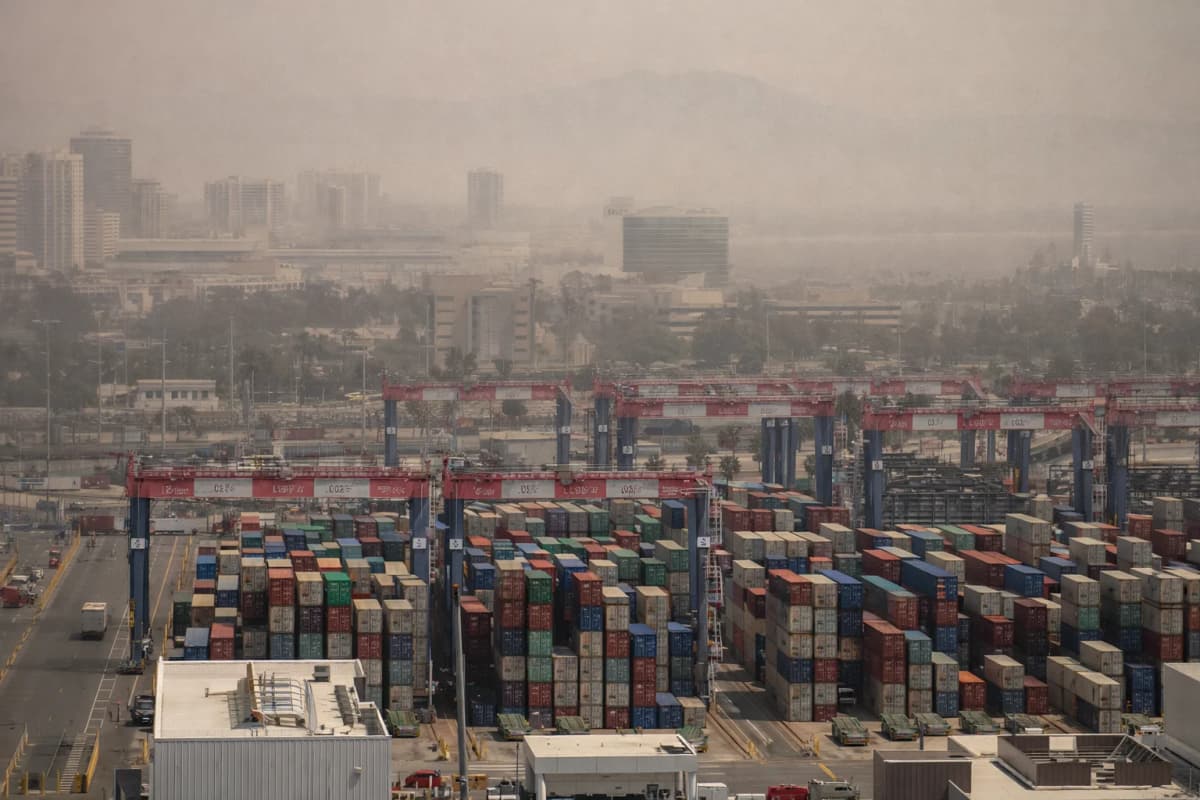
The Ports of Los Angeles and Long Beach handle roughly 40% of all containerized cargo entering the United States. Millions of shipping containers move through these terminals every year, and each one arrives on a vessel powered by heavy diesel fuel.
How a Long Beach Startup Is Cleaning Shipping Container Emissions | Conexwest
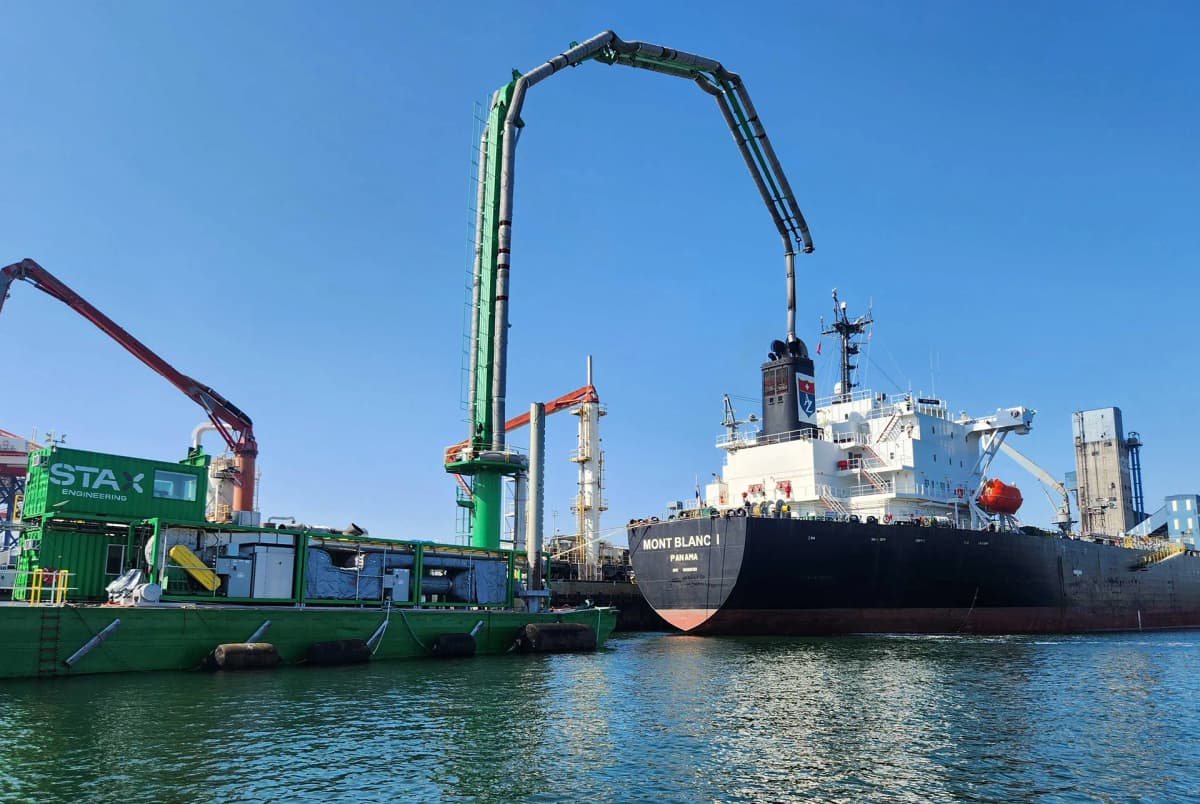
Every shipping container that arrives at the Port of Long Beach has traveled thousands of miles on a diesel-powered vessel. What happens next is less visible and far more impactful. STAX Engineering is making sure the last mile of that journey doesn’t come at the expense of the surrounding communities.
The Problem No One Talks About
The Ports of Los Angeles and Long Beach handle roughly 40% of all containerized cargo entering the United States. Millions of shipping containers move through these terminals every year, and each one arrives on a vessel powered by heavy diesel fuel.
When those ships dock, their engines don’t simply shut off. Auxiliary engines continue running to power onboard systems while vessels are at berth, often for 24 to 72 hours at a time. During that period, they emit nitrogen oxides, diesel particulate matter, and sulfur compounds directly into the surrounding air.
The port complex is one of the largest sources of air pollution in Los Angeles County. Communities in Wilmington, Carson, and West Long Beach have lived with the consequences for decades. Childhood asthma rates in these neighborhoods are roughly double the state average, and residents are exposed to elevated levels of pollutants on a daily basis.
This is the hidden cost of global shipping. Every container that reaches the U.S. passes through this system, and the environmental impact begins long before it arrives at its final destination.
Enter STAX Engineering
STAX Engineering, headquartered at 65 Pine Avenue in Long Beach, developed a solution designed to address emissions at the source. Instead of waiting for ships to adopt new technology, STAX brings the solution directly to them.
Their approach is straightforward: a barge that pulls alongside a docked vessel, connects to its exhaust system, and captures emissions before they are released into the air.
The performance metrics are significant:
- 99% of diesel particulate matter removed
- 95% of nitrogen oxides (NOx) eliminated
- One STAX barge = equivalent impact of removing approximately 27,000 cars from the road
The system runs on renewable diesel and produces primarily oxygen, nitrogen, and water vapor after filtration.
How It Works
STAX barges are mobile emissions capture units. Each one carries proprietary filtration technology developed by founder Bob Sharp.
- Barge positions alongside a vessel at berth
- Flexible ducts connect to the ship's exhaust stacks – no vessel modification required
- Onboard system captures and filters exhaust in real time
- Clean gas released; pollutants captured and processed
Key advantage over shore power (cold ironing): STAX works with any vessel, right now, no retrofits needed.
The Growth Story
Since launch, STAX has scaled rapidly as regulatory pressure and industry demand have increased:
- $40M funding (July 2024, led by Upper90)
- $70M additional funding (April 2025)
- 126+ tons of pollutants captured
- 8 barges deployed across California ports
- 27 barges planned by 2027
- CARB-approved for container ships, auto carriers, and tankers
- Active in Ports of LA, Long Beach, Oakland, Hueneme, Benicia, Richmond
- Industry-first 5-year exclusive deal for tankers at Port of LA
In April 2025, STAX partnered with Seabound to demonstrate the first integrated emissions and carbon capture solution on a vessel.
The company is also expanding into adjacent sectors, including emissions capture for data center infrastructure — another high-energy industry facing increasing scrutiny.
What This Means for the Container Industry
Every container delivered in Southern California passes through this port system. That means the environmental footprint of a shipping container begins long before it reaches a warehouse, job site, or customer.
Solutions like STAX are targeting one of the most concentrated sources of emissions in the global supply chain: ships at berth. As California’s At-Berth regulations continue to tighten, including expanded requirements for tankers and additional enforcement in Northern California by 2027, operators will be required to adopt solutions that reduce emissions in real time.
For container buyers, logistics companies, and port operators, this represents a shift in how environmental impact is managed. Sustainability is no longer limited to materials or end-use — it is becoming embedded into the infrastructure of the supply chain itself.
The Bigger Picture
What STAX represents is not just a single solution, but a broader shift in how shipping infrastructure is evolving. Ports, regulators, and operators are moving toward systems that reduce emissions without requiring complete overhauls of existing fleets.
Rather than waiting decades for ships to be replaced, technologies like mobile emissions capture allow the industry to adapt in the present. This approach incremental, deployable, and scalable is likely to define how other parts of the supply chain address environmental challenges moving forward.
The Bottom Line
Long Beach is where shipping containers begin their American life. It is also where some of the industry’s most impactful environmental changes are taking place.
Every container has a footprint before it arrives. The difference now is that the industry is beginning to reduce it at the source.
Was this helpful?
Frequently Asked Questions
STAX Engineering, headquartered at 65 Pine Avenue in Long Beach, developed a solution designed to address emissions at the source. Instead of waiting for ships to adopt new technology, STAX brings the solution directly to them.
STAX barges are mobile emissions capture units. Each one carries proprietary filtration technology developed by founder Bob Sharp.
Since launch, STAX has scaled rapidly as regulatory pressure and industry demand have increased:
Every container delivered in Southern California passes through this port system. That means the environmental footprint of a shipping container begins long before it reaches a warehouse, job site, or customer.
What STAX represents is not just a single solution, but a broader shift in how shipping infrastructure is evolving. Ports, regulators, and operators are moving toward systems that reduce emissions without requiring complete overhauls of existing fleets.
Long Beach is where shipping containers begin their American life. It is also where some of the industry’s most impactful environmental changes are taking place.