
Container Logistics for Reliable Site Operations
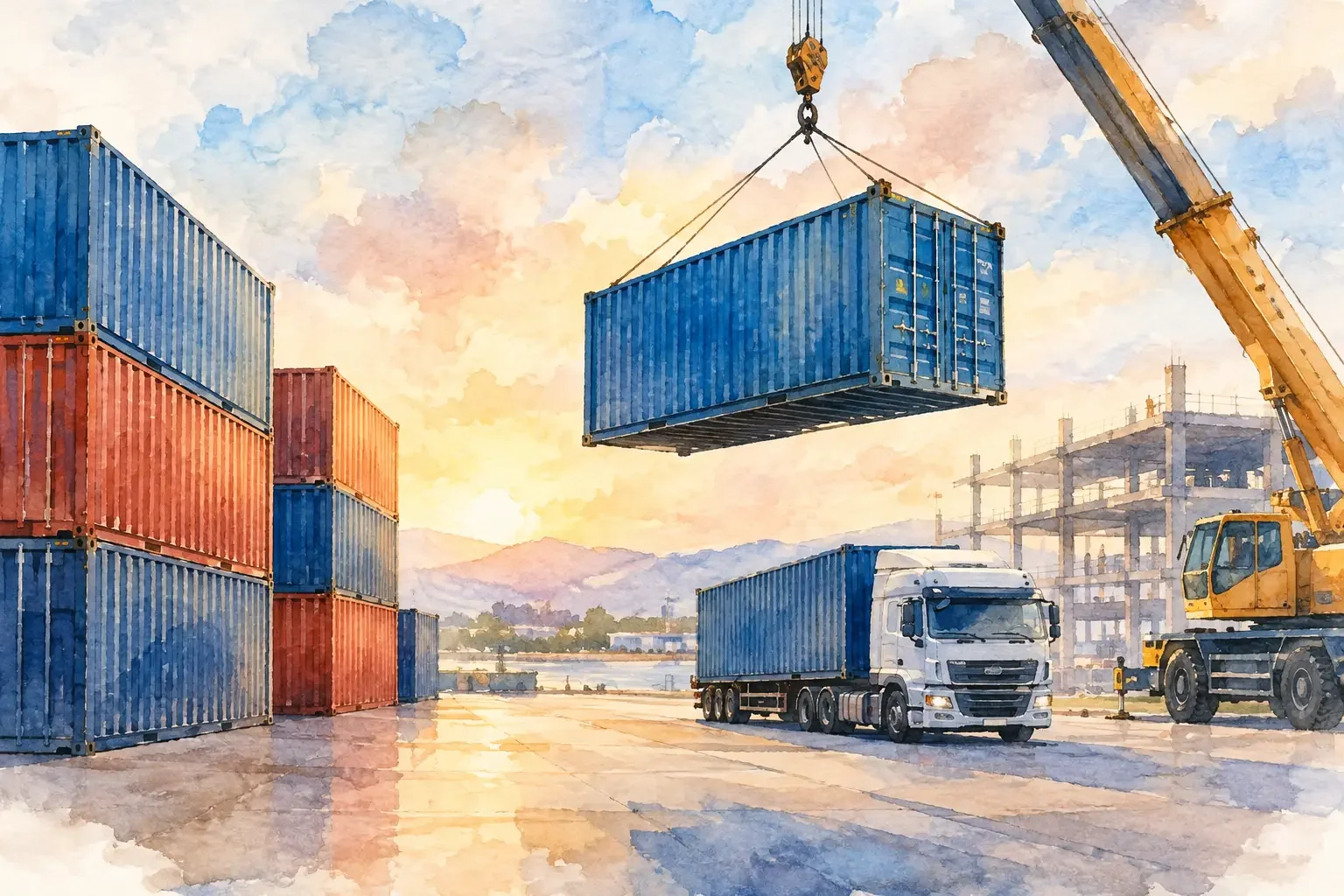
A container arriving at the right site on the wrong day can still delay a project. It may block equipment access, miss a crane window, or arrive before the pad, utilities, and receiving crew are ready. Effective container logistics is the work of aligning the asset, site conditions, delivery equipment, schedule, and final use before the truck is dispatched.
For contractors, facilities teams, and procurement managers, this is not merely freight coordination. It is how a storage container, ground-level office, reefer, or custom-fabricated unit becomes usable infrastructure when operations need it.
What Container Logistics Covers
Container logistics covers the movement and handling of shipping containers from available inventory to their working location. For a project-based purchase or rental, that process starts well before delivery. The right container must be selected based on dimensions, condition, intended use, required modifications, and the limits of the destination site.
A standard 20-foot container may be the right answer for secure tool storage on a constrained job site. A 40-foot high-cube unit may provide needed vertical clearance for shelving, equipment, or a larger office layout. If temperature-sensitive inventory is involved, a reefer container needs electrical planning in addition to transport planning. Each choice affects cost, lead time, unloading requirements, and site placement.
Container logistics also differs from international ocean freight. Ocean freight involves port handling, customs, drayage, and vessel schedules. Site-focused logistics is concerned with getting a container safely from a supplier or depot to its final U.S. location, then positioning it so the customer can put it to work.
Start With the Operating Requirement
The strongest delivery plan begins with the operational problem, not the container size. A team that needs secure overnight storage may need a weather-resistant used container with a lockbox and shelving. A field superintendent may need an insulated office with personnel doors, windows, HVAC, lighting, and power distribution. A grocery operator adding seasonal cold capacity may need a reefer unit, electrical service, and dependable access for loading.
Defining the job first prevents specification gaps later. Consider what will go inside, how frequently people need access, whether the unit needs climate control, and whether it will stay in one location or move between projects. Security, internal layout, exterior branding, and code-related requirements can all affect the fabrication scope.
Container condition matters as well. New or one-trip containers are often selected when appearance, long-term service life, or a cleaner base for custom construction is a priority. Used containers can be a practical choice for durable storage where cosmetic wear is acceptable. Refurbished units can suit buyers who need a cost-conscious asset that has been inspected and prepared for continued service.
The best option depends on the application. Paying for a one-trip unit for a short-term materials storage need may not add value. Choosing a lower-cost container for a customer-facing retail build may create avoidable finishing work.
Plan the Site Before Scheduling Delivery
Many container delivery issues are site-access issues. Before a delivery date is set, evaluate the complete route from the nearest public road to the final placement area. A container truck needs adequate width, turning space, overhead clearance, and a stable travel surface. Low branches, narrow gates, soft ground, parked vehicles, overhead utilities, and tight corners can change the delivery method or make a planned placement impossible.
The placement surface deserves equal attention. Containers are engineered to carry loads at their corner castings. A level, well-compacted surface helps doors operate correctly and reduces uneven loading over time. Depending on the application and ground conditions, customers may use gravel pads, concrete slabs, railroad ties, blocks, or engineered foundations. Permanent builds, occupied spaces, and multi-container structures may require a more formal foundation design and local approvals.
A site plan should identify the container's final orientation. This determines where doors open, where personnel enter, how equipment approaches, and where electrical connections or HVAC clearances are located. It is much easier to specify door placement during fabrication than to discover after delivery that the opening faces a fence or active traffic lane.
Match the Delivery Method to the Site
Delivery equipment is not interchangeable. Tilt-bed and roll-off style delivery can be efficient where there is sufficient straight-line clearance to slide the container off the truck. This method requires room behind the placement area and a route free of low obstructions.
A truck-mounted crane or separate crane may be needed when a container must be lifted into position, placed over an obstacle, or set in a tight area where sliding is not practical. Crane placement requires a clear lift plan, stable setup area, verified load capacity, and coordination with site personnel. If the unit is part of a modular configuration, lifting points, set sequence, and connections should be established before the first container arrives.
Do not assume a driver can reposition a unit after it has been set. A container is simple to transport but not simple to move without the proper equipment. Final placement should be confirmed in advance.
Coordinate Fabrication, Utilities, and Delivery
Customized containers require a sequence that protects schedule and quality. Structural modifications such as roll-up doors, personnel doors, windows, vents, and pass-throughs should be engineered into the build before finishing work begins. Insulation, interior wall systems, electrical components, HVAC equipment, shelving, and paint follow in a coordinated order.
This sequencing affects logistics because completed modifications can change a container's weight, lifting considerations, external clearances, and delivery readiness. For example, an office container may need temporary protection for windows and exterior equipment during transport. A reefer requires confirmation that the site has compatible electrical service before it is delivered with product-ready expectations.
Utility coordination should happen before the container reaches the property. Determine who will provide electrical hookup, what voltage and amperage are available, where conduit will enter, and whether local permits or inspections apply. Water, sewer, data, fire protection, and accessibility requirements can be relevant for more complex office, restroom, retail, or institutional deployments.
A provider that can manage inventory, customization, and delivery through one project team reduces handoffs between separate container sellers, fabricators, and carriers. For complex projects, that coordination helps keep the unit specification connected to the actual delivery plan.
Build a Schedule Around Real Constraints
Container schedules often fail because delivery is treated as the final, simple step. In reality, it depends on inventory availability, modification lead time, transportation capacity, site readiness, permits, weather, and the receiving team's availability.
A practical project schedule includes a decision date for container selection, a fabrication release date, a site-readiness checkpoint, and a confirmed delivery window. If a container needs a crane, coordinate the crane company, trucking provider, rigging crew, traffic control, and site contact around the same window. For occupied sites, arrange access instructions and designate a person who can make placement decisions on delivery day.
Weather can also be a factor. Rain may soften an unpaved access road or staging area. High winds can prevent a safe crane lift. In northern climates, frozen ground and snow removal can change access conditions. These risks do not always require a delayed project, but they should be accounted for rather than discovered when the truck arrives.
Common Container Logistics Mistakes
The most expensive problems are usually preventable. Ordering a container before confirming access can lead to redelivery charges or last-minute equipment changes. Measuring only the final pad, while ignoring the approach route, can produce the same result.
Another common issue is underestimating working clearance. A container may physically fit in a space but still be impossible to unload there with the selected delivery equipment. Door swing, forklift access, personnel paths, and required clearance for reefer machinery all need room beyond the container footprint.
Teams also lose time when modification decisions are delayed. If a container needs electrical service, a roll-up door, or a branded exterior, define those needs early enough to avoid rushing fabrication or sending a temporary unit that does not support the intended operation.
Finally, avoid treating the container as a standalone asset. Its value comes from what it enables: protected inventory, an organized job site, a functioning workspace, additional cold storage, or a ready-to-use customer environment. The logistics plan should support that outcome.
A Practical Path From Requirement to Placement
For most buyers, the process is straightforward when decisions are made in the right order. First, define the use case and required container features. Next, verify the site, placement surface, access route, and utility needs. Then select the container condition, dimensions, modifications, and delivery method that fit those realities.
Conexwest helps customers move through that process by combining container inventory, custom fabrication, project quoting, and delivery coordination across the contiguous United States. For a standard storage unit, the path may be quick. For a multi-unit office, refrigerated operation, or customer-facing container build, early project support can prevent logistics decisions from becoming field problems.
A well-planned container should arrive ready for its job, not create a new one for the site team. Confirm the operating need, prepare the site, and treat delivery as part of the build - that is how container infrastructure starts producing value on day one.