
Container Delivery 101: Reno Project and The Uncommon Way To Deliver Containers
Container Delivery 101: Reno Project and The Uncommon Way To Deliver Containers
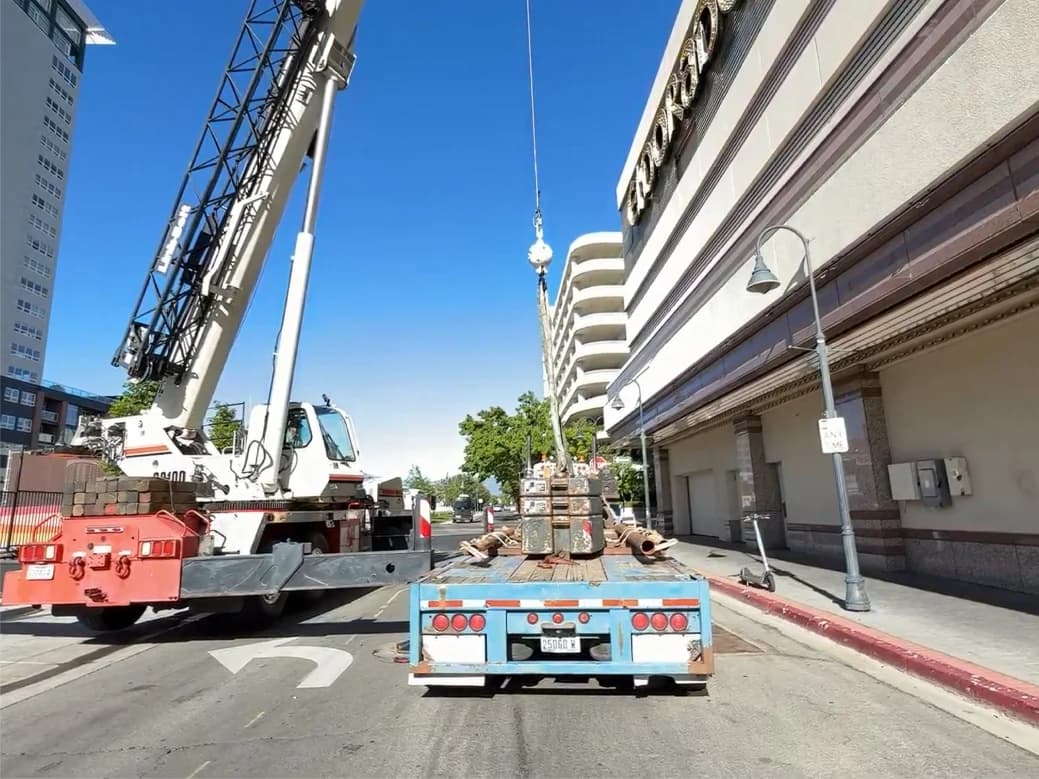
At our Reno Project, right in the heart of Nevada, our team tackled a truly unique container installation — one that required more than the good old tilt-bed delivery.
A typical container installation uses tilt-bed delivery, which requires about 100 feet of clearance for a 40-footer and around 60 feet for a 20-footer.
However, at our Reno Project in Nevada, that option wasn’t available. The site’s unusual location, narrow streets, and overhead power lines left no room for a delivery truck to maneuver with the required clearance.
We had to come up with a different solution: a crane. With a crane, no clearance is required, and a container can be positioned anywhere on the lot accurate to within an eighth of an inch.
Cranes eliminate clearance issues completely: they can lift and place containers over obstacles like power lines, fences, or other buildings. And because of their precise placement, the containers can be better aligned, bolted or stacked on each other.
A lot of clients ask us about permitting and street closures. Typically, Conexwest handles traffic control, but permitting is usually the customer’s responsibility, since it often involves approvals from HCD or local housing departments in different states.
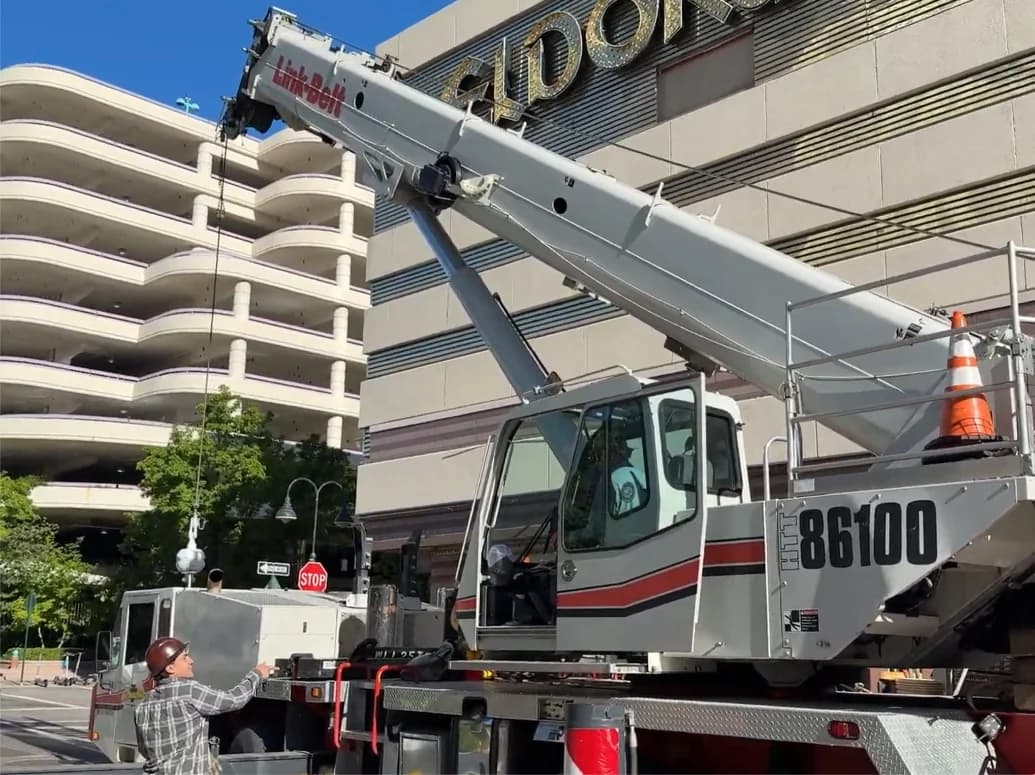
Customers are also curious about what delivery methods we offer and what to expect when a container arrives.
We offer three main methods of container delivery:
Tilt Bed: the most popular method, where a specialized truck tilts and rolls the container off its bed.
Flatbed: requires additional equipment, such as a crane or forklift, to unload the container.
Side Lifter: a highly specialized truck that combines a crane and a trailer, lifting the container off and placing it directly beside the truck.
Therefore, Reno Project is definitely one of our unusual methods of delivery, but is still an option!
However, it does not come without a challenge! Some of the most common challenges we face with the crane are trying to avoid hitting the overhead power lines and aerial obstructions such as light posts. Another common challenge is permitting, since many projects require containers to be bolted or welded to a foundation.
That process calls for two to three of our team members to be on site, assisting crane operators and ensuring containers are positioned precisely so the corner posts can be secured.
Hopefully, we’ve answered all of your questions about what to expect when you’re expecting, and of course, we’d be happy to answer any more you have left at conexwest.com or give us a call!
CONEXWEST
We Build It Better
BUY
RENT ONLINE