
Drywall, also known as gypsum board, is a building material made of a gypsum core sandwiched between two sheets of heavy paper. It is commonly used in shipping containers to create smooth, finished walls that improve insulation, enhance aesthetics, and provide a ready-to-paint surface.
Can You Drywall A Shipping Container? Here's What You Need To Know
Can You Drywall a Shipping Container?
Key Takeaways
- Drywall installation in a shipping container requires careful planning and consideration of moisture control.
- Moisture-resistant drywall is essential to prevent mold and damage.
- Proper insulation is important for temperature regulation inside the container.
- Preparation of the container surface is a critical step for durability and longevity.
- Conexwest is a trusted partner for shipping container fabrication, including drywalling a container.
Can You Drywall A Shipping Container
Yes, you can drywall a shipping container, and it's a practical option for turning it into a comfortable or functional space.
Advantages of Using Drywall
- Aesthetic Appeal: Drywall provides a clean, smooth finish that can make the interior look like a traditional building.
- Fire Resistance: The drywall is non-combustible, which adds an extra layer of safety compared to some other materials, like plywood.
- Cost-Effectiveness: It is generally one of the cheaper options for wall finishing compared to alternatives like plywood or specialized panels.
Conexwest, a leader in shipping and storage solutions based in Northern California, offers new, used, and refurbished containers from 10ft to 45ft, with fast delivery within 3–7 days and container fabrication options like adding shelves and locks. We serve over 10,000 customers nationwide, including prestigious clients like the U.S. Navy and Google. As an ISO 9001 and AWS-certified company, we ensure top quality and competitive pricing. |
Step-by-Step Guide To Drywall Installation

Hire professionals to get the most out of your drywalled shipping container.
1. Prepare the Container
- Clean the Interior: Clear out any debris, rust, or dirt. A clean surface is essential for proper installation.
- Inspect for Moisture: Check for leaks or damp areas. Fix any issues before moving forward to avoid long-term problems.
2. Insulate the Container
- Choose Insulation Material: Spray foam or fiberglass are common options. They help control temperature and reduce condensation.
- Apply Insulation: Fill the container’s corrugated walls completely for a snug fit to prevent air gaps.
3. Frame the Walls
- Select Framing Material: Use wood or metal studs based on your project needs and local codes.
- Install Vertical Studs: Secure vertical studs to the container’s ribs, spacing them 16 inches apart for drywall compatibility.
- Add Top and Bottom Plates: Attach horizontal plates at the top and bottom of the studs for stability.
4. Cut and Hang Drywall
- Measure and Cut Sheets: Measure each section of the wall and cut drywall sheets using a utility knife. Standard thicknesses are 1/2 inch for walls and 5/8 inch for ceilings.
- Position Drywall Panels: Start from one corner and place each sheet against the frame such that the edges line up properly.
- Secure with Screws: Use drywall screws to fasten the panels, spacing screws every 12 inches along the edges and 16 inches in the middle.
5. Install Electrical Outlets (if needed)
- Mark Locations: Decide where outlets will go before attaching drywall.
- Cut Openings: Once the drywall is in place, use a jab saw to cut out spaces for the electrical boxes.
6. Finish Seams and Corners
- Apply Joint Tape: Cover all seams with self-adhesive joint tape, pressing it firmly in place.
- Mud the Joints: Spread the joint compound over the tape using a drywall knife to blend it smoothly into the wall surface.
- Smooth Corners: For outside corners, apply corner beads and coat them with joint compound for a clean edge.
7. Sand and Prime
- Sand the Compound: After it dries, use fine-grit sandpaper to smooth out the dried compound until it’s level with the drywall.
- Prime the Surface: Apply a primer to make sure the paint adheres well and provides an even finish.
8. Paint and Finish
- Choose Paint: Pick a durable interior paint, especially one suited for areas with potential humidity.
- Apply Paint: Use a roller or brush to paint the walls, applying even coats for a polished look.
9. Install Trim (Optional)
- Add baseboards, crown molding, or other decorative trims to enhance the appearance of the finished space.
Read More: Do Shipping Containers Need Plywood Wall Panels Fabrication?
8 Common Mistakes To Avoid When Drywalling A Shipping Container
- Inadequate Insulation: Failing to properly insulate shipping containers can make them uncomfortable, as they’re not designed for temperature control. Without insulation, you may experience extreme heat in the summer and cold in the winter.
- Incorrect Drywall Thickness: Using the wrong drywall thickness can lead to safety and durability issues. For walls, 1/2 inch drywall is typically sufficient, but 5/8 inch is recommended for ceilings due to its added fire resistance and strength.
- Poor Measurement and Cutting: Not measuring drywall accurately before cutting can result in misaligned pieces. This often causes gaps that need additional patching, wasting materials and time.
- Failing to Check Fit Around Outlets: A common mistake is fastening drywall in place before checking if it fits properly around electrical outlets. Trimming after fastening can cause the drywall to crack or chip.
- Overloading Joint Compound: Applying too much joint compound ("mud") during taping can create bulges and uneven surfaces. Instead, use a thin, even coat and gradually build up layers as needed to achieve a smooth finish.
- Not Notching Around Openings: Aligning drywall edges directly with door or window frames can lead to cracking over time as the structure settles. Always notch around these areas to prevent future issues.
- Ignoring Moisture Control: Without proper vapor barriers, condensation can build up behind drywall, particularly in humid areas like kitchens and bathrooms. This moisture can lead to mold growth, so it’s essential to install barriers where needed.
- Over-cutting Steel from the Container: While cutting openings for windows or doors is necessary, removing too much steel can weaken the container’s structure. Reinforce areas where significant cuts are made to maintain integrity.
Read More: Do Shipping Containers Need Drywall Interior Finish Fabrication?
Choose Conexwest For Shipping Container Fabrication
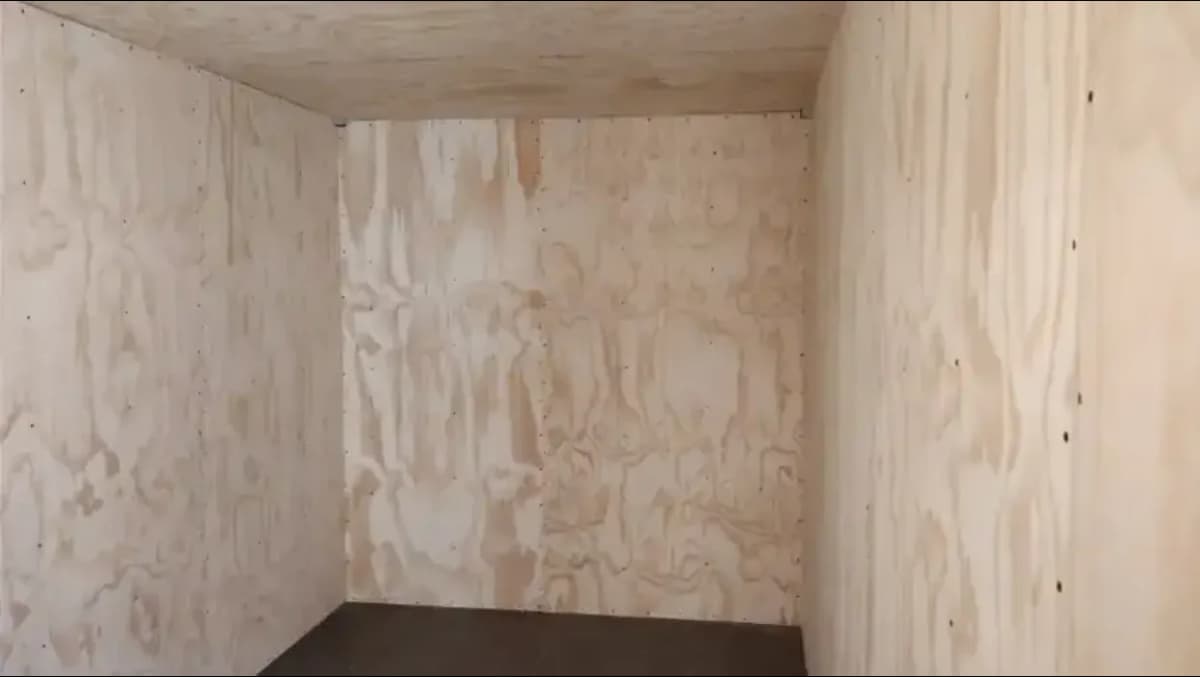
Plywood is a stronger alternative to standard drywall.
For modifying shipping containers, Conexwest stands out as a leader in the industry. Here’s why:
- Comprehensive Fabrication Services: We provide a full range of container modification services in one place. Windows, vents, partitions, drywall, and shelving systems - this is just the beginning of our customization options.
- Expertise and Reliability: Our highly skilled technicians make sure your container is built to last and customized with precision. Thus, if you have a vision for your container, we can turn it into reality with our superior craftsmanship.
- Transparent Pricing and Warranty: We keep pricing upfront and transparent, so there are no hidden fees or unexpected charges. Plus, we back our work with strong warranties: 10 years for new ISO containers and 5 years for used cargo-worthy containers.
- Unmatched Support: We prioritize customer satisfaction. Thus, our team is available by phone or email to answer your questions or assist with purchases.
Was this helpful?
Frequently Asked Questions
While drywall can be installed before transportation, it is generally recommended to finish it at the final location. This helps prevent cracking of the joint compound (mud) during transport due to vibrations and movement.
One disadvantage is that drywall can crack under stress from transportation vibrations if not properly finished. Additionally, it may not be as durable as plywood for heavy-duty applications where items will be hung directly on the walls.
- Standard drywall (1/2 inch thick) is typically suitable for most applications.
- For areas prone to moisture, moisture-resistant drywall is recommended.
- In high-traffic or heavy-use spaces, consider using impact-resistant drywall for added durability.
We provide a wide variety of shipping containers ranging from 10 feet to 45 feet in length. You can choose from new, used, or refurbished options based on your budget and requirements.