
Buy or Rent Containers: Choose the Right Option
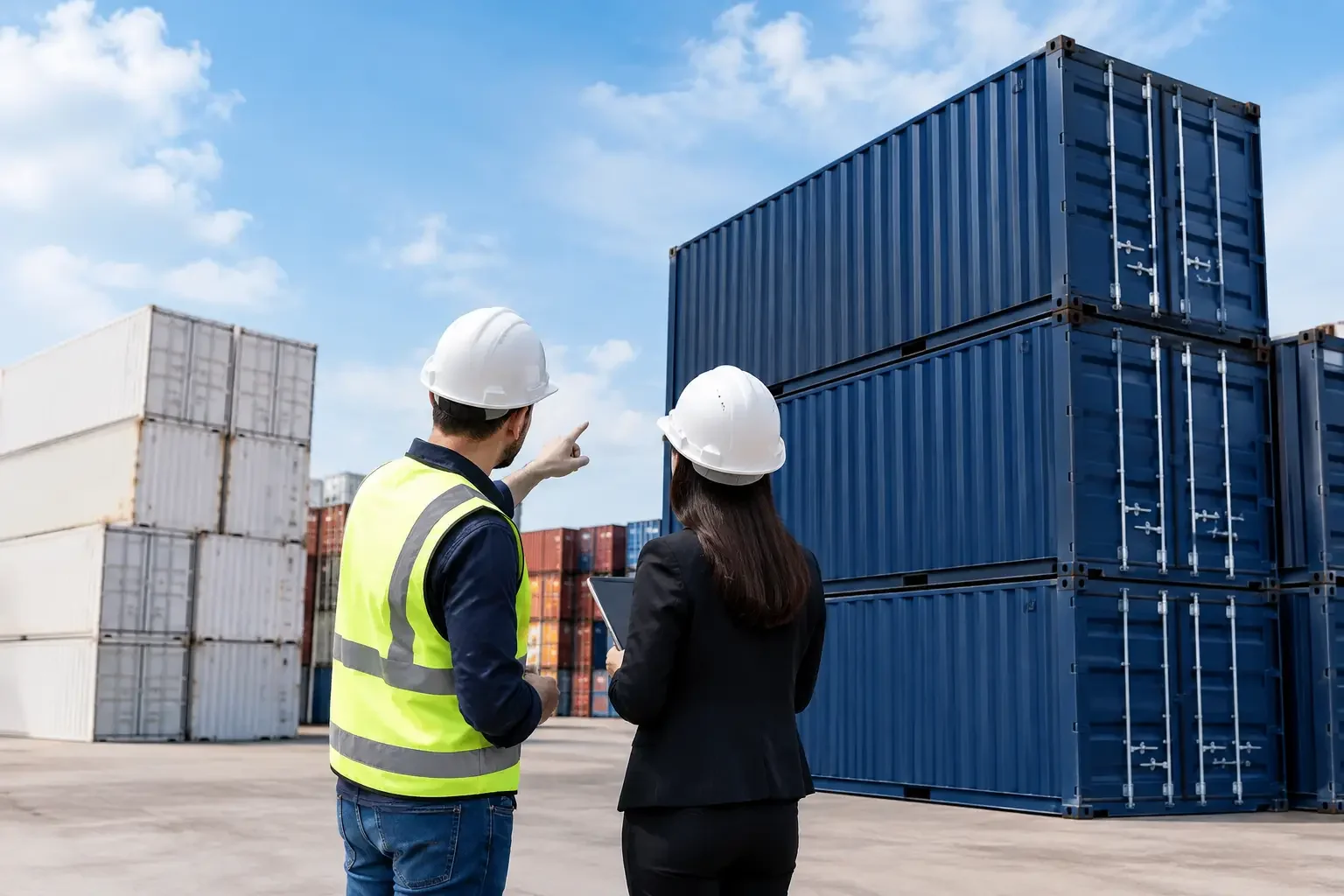
Compare the full cost for the real term. Do not compare the purchase price with one month of rent.
The term, the size, the condition, the delivery distance, the modifications, local availability, and the resale value all change the break-even point.
Include pickup or return freight for a rental, later moves for an owned unit, and the site work.
Buy when the unit stays in the operation
Buy when the container will serve the operation for years, needs a permanent modification, or still has a use after the first project.
Ownership lets you control the condition, the configuration, the paint, the security upgrades, and the placement.
You can move it to the next job, use it as overflow at a permanent site, or change the use later.
A manufacturer can use a purchased 40-foot container for spare parts and seasonal material.
A farm can keep feed, tools, and supplies near the work.
A utility, an energy crew, or a public-works department can use the same field-storage standard at more than one site.
A personnel door, a roll-up door, windows, electrical service, insulation, shelves, HVAC, or a branded exterior turns the shell into working infrastructure.
Those changes fit a jobsite office, a maintenance shop, a retail pop-up, an equipment room, or a specialty commercial space.
Some rental units can be modified. Extensive or permanent fabrication usually points to ownership.
A new or one-trip container fits when the look, a long service life, and a clean interior matter.
A used container can fit secure storage when cosmetic wear is acceptable.
A refurbished unit can fix function or appearance without a new container.
A 20-foot container is easier to place on a tight site.
A 40-foot container holds more volume. It needs clearance for the delivery equipment and for the doors.
A high-cube container adds vertical space for shelves, equipment, or taller goods.
Rent when the end date is known or the demand is a test
Rent for temporary construction storage, disaster-recovery staging, seasonal retail inventory, an event, or a short office need.
A rental keeps a short problem from becoming a capital project. It preserves capital. You do not have to find the next use, store the unit, or sell it when the demand ends.
If you are testing demand, a lease of several months gives time to check warehouse use, product volume, and a later expansion. That is a clearer decision than a purchase made for a short spike.
A reefer rental can fit food and beverage, a grocer, a caterer, healthcare, or a farm when the cold load changes with a harvest, a promotion, a remodel, or an equipment outage.
Confirm the temperature range, the electrical connection, the access pattern, and the monitoring plan for that product.
Put delivery in the first specification
The site needs a firm, reasonably level surface that can carry the container and the delivery equipment.
The road must fit the truck. The set-down area must be clear of low wires, branches, and structures.
If crews enter every day for tools, face the doors toward the work.
If a forklift loads the container, leave room to maneuver and confirm the approach.
For a longer installation, plan drainage and the foundation. The container carries weight through the corner castings. Support at those points helps the doors work and reduces problems from settling or standing water.
Zoning, permits, property rules, and fire requirements can change the placement. This is more likely for an office, a retail unit, or a customer-facing structure.
Write the work, then the specification
Write what the container holds, who enters, how often goods move, and what the site is like.
For secure storage, the priorities are often:
- Lock protection and a lockbox
- Cargo doors
- Shelves
- Ventilation
For a jobsite office, the priorities are often:
- A personnel door
- Windows
- Insulation
- Outlets and lights
- HVAC
- A durable interior finish
A custom commercial build may also need exterior cladding, branded paint, an accessible approach, plumbing, a service counter, and engineered openings.
Do not overbuild a temporary need. Do not under-specify a long-term asset.
A low-cost container with poor access or no ventilation creates daily friction.
A full office is the wrong unit for a six-week project that only needs locked equipment storage.
Use four questions
- Will you need the container for more than one project cycle, or for several years?
- Does the job need custom doors, electrical systems, HVAC, refrigeration, or a branded finish?
- Is the site temporary, or will the container stay in one place?
- What happens to the unit when this need ends?
Recurring use, customization, and redeployment usually point to a purchase.
A defined short term and an uncertain next use usually point to a rental.
Conexwest can supply the container, configure it, fabricate it, and plan delivery in the contiguous United States.