
Shipping containers are used throughout Boston for construction storage, commercial inventory, equipment protection, moving support, event operations, refrigerated storage, and custom container projects. Before placing a container on private property, a construction site, a parking area, or a public street, it is important to understand Boston zoning rules, permit requirements, right-of-way restrictions, and building code considerations.
Boston Shipping Container Zoning Laws & Permit Guide | Conexwest
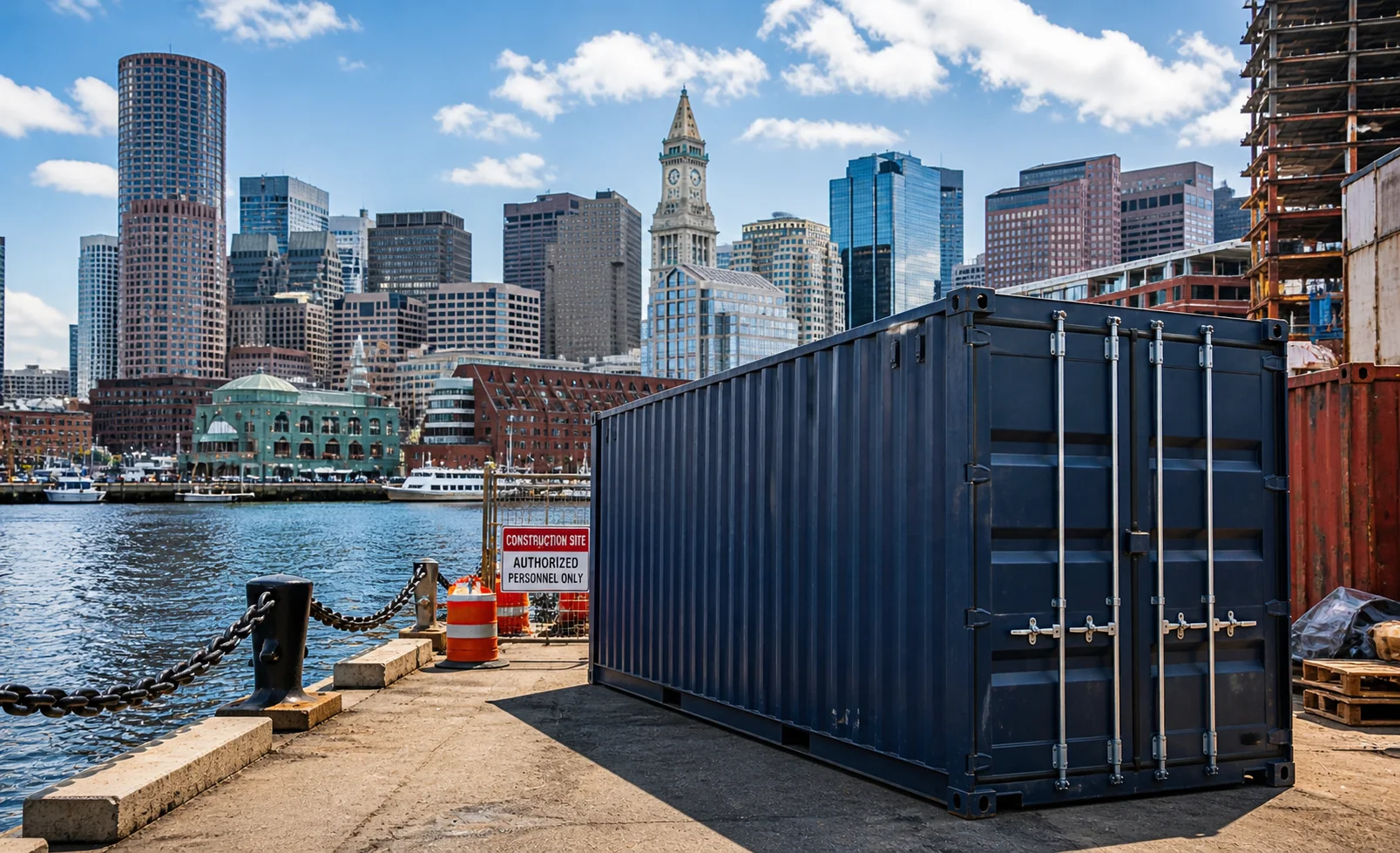
Boston Shipping Container Zoning Laws, Permits & Building Code Requirements
Shipping containers are used throughout Boston for construction storage, commercial inventory, equipment protection, moving support, event operations, refrigerated storage, and custom container projects. Before placing a container on private property, a construction site, a parking area, or a public street, it is important to understand Boston zoning rules, permit requirements, right-of-way restrictions, and building code considerations.
This guide focuses on Boston, Massachusetts. If your project is located outside city limits, including Cambridge, Brookline, Somerville, Quincy, Revere, Chelsea, Everett, or another nearby municipality, local rules may differ. Always confirm requirements with the correct city or town before scheduling delivery.
For container availability, visit shipping containers for sale in Boston, MA.
Are Shipping Containers Allowed in Boston?
Shipping containers may be allowed in Boston depending on the property address, zoning district, placement location, duration of use, and intended purpose. Boston does not treat every container placement the same. A short-term moving container, a construction storage container, a long-term commercial storage container, a refrigerated container, and a modified container office may each trigger different requirements.
Boston zoning is site-specific. The Boston Planning & Development Agency provides a Boston Zoning Code resource and a Boston Zoning Viewer to help property owners identify zoning information for a specific parcel. Boston’s Inspectional Services Department, commonly known as ISD, makes the final determination on how a project fits within zoning and building rules.
For statewide background, read Conexwest’s guide to Massachusetts shipping container zoning laws, permits, and building code requirements.
Boston Zoning Review for Shipping Containers
Boston’s zoning rules regulate how land and structures can be used in each zoning district. Under the Boston Zoning Code, uses are generally listed as allowed, conditional, or forbidden depending on the district and use category. Outdoor storage, commercial storage, accessory storage, construction activity, and special outdoor land uses may be treated differently depending on the property.
Before placing a shipping container, confirm:
- Zoning district: Use the Boston Zoning Viewer to identify the property’s zoning district.
- Approved use: Confirm whether the container use is allowed for the property.
- Placement area: Review setbacks, yards, parking areas, loading areas, and access routes.
- Duration: Determine whether the container is temporary, seasonal, project-based, or long-term.
- Modifications: Identify whether the container will include electrical, HVAC, plumbing, doors, windows, refrigeration, or occupancy features.
- Public access impact: Confirm whether the container affects sidewalks, streets, curb lanes, fire access, driveways, or pedestrian circulation.
Use of Premises Permit for Outdoor Land Use
A Use of Premises Permit may apply when a shipping container changes how outdoor land is being used. Boston states that a Use of Premises Permit is needed when adding certain outdoor features to land or creating a special outdoor land use.
This may be relevant when a container is placed on private property for:
- Long-term outdoor storage
- Commercial inventory overflow
- Construction staging
- Equipment storage
- Retail, seasonal, or event-related outdoor use
- Modified container offices, kiosks, or workspaces
- Changes to parking, loading, or site circulation
Boston’s Use of Premises guidance states that applicants may need a certified plot plan showing how the land will be used, a diagram for temporary structures or changes to land use or utilities, and additional documentation depending on the project.
Review Boston’s official guidance here: How to get a Use of Premises Permit.
Building Permits for Modified Shipping Containers
A building permit may be required if a shipping container is modified, occupied, placed as a structure, connected to utilities, installed on a foundation, or used as part of a construction project. Boston’s ISD issues building permits, and the exact permit type depends on the scope of work.
A modified container may need review if it includes:
- Electrical wiring, outlets, lighting, panels, or temporary power
- Heating, ventilation, air conditioning, or mechanical systems
- Plumbing, sinks, drains, restrooms, or water connections
- Refrigeration equipment or powered cold storage systems
- Windows, man doors, roll-up doors, or structural openings
- Interior framing, insulation, finished walls, or workspace buildouts
- Foundation work, anchoring, or permanent structural installation
- Use as an office, workshop, retail kiosk, studio, restaurant support space, or occupied structure
Boston’s Long-Form Permit guidance applies to major alterations, renovations, or work that changes the structure or use of a home, building, or lot. Short-form permits may apply to minor work that does not change a building’s use, exits, fire protection, or living area. The right permit depends on the project scope.
Review Boston permit resources here:
- Boston Permitting
- Boston Long-Form Permits
- Boston Building Forms and Applications
- Boston Inspectional Services Portal
Massachusetts State Building Code
Shipping container projects that become structures, occupied spaces, or utility-connected builds must also consider the Massachusetts State Building Code. The Massachusetts State Building Code, also known as 780 CMR, consists of international model codes and Massachusetts-specific amendments adopted by the Board of Building Regulations and Standards.
Review the official state resource here: Massachusetts State Building Code - 780 CMR.
Street Occupancy Permits for Containers in the Public Way
If a shipping container, storage container, dumpster, truck, fence, staging, or related project equipment occupies a public street, curb lane, sidewalk, or other public space, Boston Public Works permit requirements may apply.
Boston Public Works states that if storage containers occupy the street, applicants must provide a letter of authorization from the company that owns the containers, and the company must hold a bond with the City. Applicants also need to describe the scope of work, including the amount of street space used and the length and width of the equipment or container.
Review Boston’s official street occupancy guidance here: How to get a Street Occupancy, Excavation, or Driveway Permit.
Moving Containers in Boston
Moving containers are handled differently from standard moving truck permits. Boston states that moving truck permits are for moving trucks, not personal vehicles, and moving containers require in-person permitting. If you are using a moving container, Boston requires a letter of authorization from the container company, and the company must hold a bond with the City.
Boston also states that if you are using PODS, you need to contact Permit Puller to get the moving permit. For moving permits, the requested street space must be a legal parking spot, and signs must be posted before the permitted date.
Review Boston’s official moving permit guidance here: Reserve a parking spot for your moving truck.
Public Works Permits and City Streets
Boston Public Works and the Transportation Department issue permits for use of City streets. Common permit types include street occupancy, excavation, and driveway permits. If your container placement affects a public street, curb lane, sidewalk, or travel path, review Public Works requirements before delivery.
Useful Public Works resources include:
Fire Prevention Permits and Safety Review
Some shipping container projects may require Boston Fire Department review, especially if the container involves electrical systems, generators, temporary heat, fuel storage, construction site safety, fire alarm systems, sprinkler systems, tents, food service, or temporary event use.
Fire review may be relevant for:
- Refrigerated containers powered by generators or temporary electrical service
- Modified office containers with electrical or HVAC systems
- Construction site containers with fuel, generators, or temporary heat
- Event containers used near tents, vendors, or public assembly areas
- Containers with fire alarm, sprinkler, or suppression systems
Review Boston Fire Prevention resources here: Boston Fire Forms, Permits, Applications, and Fees.
Temporary vs. Long-Term Shipping Container Use
The length of time a shipping container remains on site can affect which approvals apply. A short-term moving container may require a parking or street occupancy permit if it uses the public street. A construction container may require review through a construction permit or street occupancy permit. Long-term private-property storage may require zoning, Use of Premises, building, or other review depending on the site and use.
- Temporary moving use: Review moving container and parking permit requirements.
- Construction use: Review street occupancy, site safety, building, and fire requirements if applicable.
- Commercial storage: Confirm zoning, Use of Premises, site layout, access, and outdoor storage requirements.
- Long-term placement: Review whether the container is considered a structure, accessory use, or special outdoor land use.
- Modified use: Review building, electrical, mechanical, plumbing, fire, and occupancy requirements.
Residential Shipping Container Placement in Boston
Residential container placement in Boston should be reviewed carefully because of dense neighborhoods, limited setbacks, parking restrictions, narrow driveways, historic districts, and right-of-way concerns. A temporary moving container on a public street may require an in-person moving container permit. A container placed on private property may require zoning review, Use of Premises review, or building review depending on the use and duration.
Homeowners should confirm requirements before using a container for:
- Moving or renovation storage
- Backyard or driveway storage
- Long-term residential storage
- Accessory structure use
- Home office, workshop, or studio conversions
- Utility-connected or occupied container projects
Commercial and Industrial Shipping Container Placement
Commercial and industrial properties should confirm that shipping container use is allowed under the site’s zoning, legal occupancy, and approved business use. A container used for temporary jobsite storage may be treated differently than a container used for long-term inventory storage, refrigerated storage, retail operations, or a modified workspace.
Commercial users should review:
- Property zoning and approved use
- Use of Premises requirements
- Outdoor storage permissions
- Parking, loading, and circulation impacts
- Fire access and emergency access
- Screening, visibility, and neighborhood impacts
- Electrical, HVAC, refrigeration, plumbing, or fire permit needs
- Public Works permits if the container affects the public way
Construction Site Containers in Boston
Shipping containers are commonly used on construction sites for tool storage, material protection, contractor equipment, safety supplies, and temporary project support. In Boston, construction-related containers may require coordination with ISD, Public Works, Boston Transportation, and Boston Fire depending on placement and project scope.
Construction site container planning should include:
- Street occupancy review if the container is placed in the public way
- Pedestrian detour planning if sidewalks are affected
- ADA-compliant access where required
- Fire access and emergency access planning
- Site safety and construction management requirements
- Power, generator, or temporary heat permits if applicable
Refrigerated Containers in Boston
Refrigerated shipping containers, also called reefer containers, may require additional review because they need power, ventilation clearance, access around the refrigeration unit, and safe placement. Businesses may use reefers for food, beverage, medical, floral, event, catering, and temperature-sensitive inventory storage.
Before placing a refrigerated container in Boston, confirm:
- Electrical service capacity or generator needs
- Fire Prevention requirements for generators or temporary power
- Ventilation clearance around the refrigeration unit
- Noise and operational impacts
- Safe pedestrian and vehicle circulation
- Street occupancy requirements if placed in the public way
- Zoning and Use of Premises requirements if placed on private property
Custom Container Modifications and Permit Planning
Custom modifications can make a shipping container more useful, but they can also affect permitting. A basic storage container may require less review than a container with windows, doors, HVAC, electrical power, plumbing, insulation, refrigeration, occupancy features, or structural openings.
Conexwest offers shipping container fabrication and customization options, including windows, vents, roll-up doors, man doors, shelving, insulation, HVAC, electrical systems, security upgrades, and custom paint.
If your Boston project involves a modified container, confirm zoning, building, trade, and fire permit requirements before fabrication or delivery.
What to Prepare Before Applying
Before requesting zoning review, a Use of Premises Permit, a building permit, a street occupancy permit, or fire review, prepare the basic details of your container project. Clear information can help reduce delays and make it easier for City staff to determine which approvals apply.
Useful information to prepare includes:
- Property address: Confirm the exact Boston address and parcel information.
- Zoning district: Use the Boston Zoning Viewer to identify zoning and overlays.
- Container size: 10ft, 20ft, 40ft, 45ft, or specialty container size.
- Container quantity: Number of containers proposed for the site.
- Placement location: Private lot, driveway, construction site, parking area, loading zone, street, or sidewalk area.
- Duration: Moving use, temporary project use, seasonal use, or long-term placement.
- Purpose: Storage, construction support, inventory overflow, refrigeration, office, workshop, retail, or event use.
- Modifications: Doors, windows, vents, insulation, HVAC, electrical, plumbing, refrigeration, shelving, or security upgrades.
- Site plan: Container location, property lines, buildings, setbacks, driveways, sidewalks, parking, loading, utilities, and access routes.
- Public way impact: Any effect on streets, curb lanes, parking spaces, sidewalks, pedestrian routes, or traffic flow.
Site Planning Before Delivery
Delivery planning is especially important in Boston because of narrow streets, dense neighborhoods, overhead wires, limited curb space, metered parking, loading zones, construction activity, and historic districts.
Before scheduling delivery, confirm:
- The container will be placed on a stable, level surface.
- The delivery truck has enough room to access and place the container safely.
- There are no low wires, tree branches, signs, awnings, balconies, or overhead obstructions.
- The container will not block sidewalks, fire lanes, driveways, accessible routes, loading zones, or emergency access.
- The container doors will face the correct direction for loading and access.
- Any required permits are approved before delivery.
- Any required signs, notices, or neighbor notifications are posted before occupying public space.
For delivery cost planning, read Conexwest’s guide to shipping container transport costs.
Zoning Appeals and Denials
If a shipping container project is denied because it does not meet zoning or building code requirements, the applicant may need to pursue an appeal or zoning relief. Boston provides a Zoning Board of Appeal process for certain denied permits and zoning matters.
Review Boston’s zoning appeal resources here:
Common Boston Shipping Container Use Cases
Shipping containers can support a wide range of storage and operational needs across Boston, including:
- Construction site storage for tools, materials, and equipment
- Commercial inventory overflow
- Restaurant, hospitality, and seasonal supply storage
- Event and festival storage
- Refrigerated storage for food, beverage, floral, or medical products
- Moving and renovation storage
- Retail and pop-up storage
- Warehouse and distribution support
- Modified offices, workshops, kiosks, and mobile workspaces
FAQs About Shipping Container Permits in Boston
Can I place a shipping container on private property in Boston?
It depends on the property, zoning district, use, duration, and whether the container is temporary, long-term, modified, or connected to utilities. Review zoning, Use of Premises, and building permit requirements before delivery.
Do I need a permit to put a storage container on the street in Boston?
Yes, if the container occupies the public street or public way, Boston Public Works permit requirements may apply. Storage containers occupying the street require a letter of authorization from the company that owns the container, and the company must hold a bond with the City.
Do moving containers require a different permit?
Yes. Boston states that moving containers require in-person permitting. The City also requires a letter of authorization from the container company, and the company must hold a bond with Boston.
Do I need a building permit for a modified shipping container?
A building permit may be required if the container is modified, occupied, connected to utilities, placed on a foundation, or used as a structure. Electrical, HVAC, plumbing, refrigeration, windows, doors, and structural openings should be reviewed before fabrication or installation.
Do refrigerated containers need special approval?
Refrigerated containers may require additional review because they need power, ventilation clearance, and safe placement. Electrical service, generators, fuel storage, noise, fire access, and right-of-way impacts should be reviewed before delivery.
Where can I buy shipping containers in Boston?
Conexwest offers new, used, and refurbished shipping containers in Boston, Massachusetts, with sizes ranging from 10ft to 45ft and custom modification options. Visit buy shipping containers in Boston, MA.
Buy Shipping Containers in Boston, Massachusetts
Conexwest provides shipping containers for sale in Boston, MA, including new, used, and refurbished containers for storage, construction, commercial, refrigerated, and custom applications. Whether you need a standard storage container or a modified unit with doors, windows, vents, insulation, HVAC, electrical systems, refrigeration, or security upgrades, Conexwest can help you choose the right container for your project.
Before purchasing or scheduling delivery, review Boston zoning, Use of Premises, building permit, fire safety, and right-of-way requirements so your container can be placed safely and used as intended.
Shop available containers here: shipping containers for sale.
Was this helpful?
Frequently Asked Questions
Shipping containers may be allowed in Boston depending on the property address, zoning district, placement location, duration of use, and intended purpose. Boston does not treat every container placement the same. A short-term moving container, a construction storage container, a long-term commercial storage container, a refrigerated container, and a modified container office may each trigger different requirements.
Boston’s zoning rules regulate how land and structures can be used in each zoning district. Under the Boston Zoning Code, uses are generally listed as allowed, conditional, or forbidden depending on the district and use category. Outdoor storage, commercial storage, accessory storage, construction activity, and special outdoor land uses may be treated differently depending on the property.
A Use of Premises Permit may apply when a shipping container changes how outdoor land is being used. Boston states that a Use of Premises Permit is needed when adding certain outdoor features to land or creating a special outdoor land use.
A building permit may be required if a shipping container is modified, occupied, placed as a structure, connected to utilities, installed on a foundation, or used as part of a construction project. Boston’s ISD issues building permits, and the exact permit type depends on the scope of work.
Shipping container projects that become structures, occupied spaces, or utility-connected builds must also consider the Massachusetts State Building Code. The Massachusetts State Building Code, also known as 780 CMR, consists of international model codes and Massachusetts-specific amendments adopted by the Board of Building Regulations and Standards.
If a shipping container, storage container, dumpster, truck, fence, staging, or related project equipment occupies a public street, curb lane, sidewalk, or other public space, Boston Public Works permit requirements may apply.
Moving containers are handled differently from standard moving truck permits. Boston states that moving truck permits are for moving trucks, not personal vehicles, and moving containers require in-person permitting. If you are using a moving container, Boston requires a letter of authorization from the container company, and the company must hold a bond with the City.