
Are Wind Water Containers Watertight? The Facts
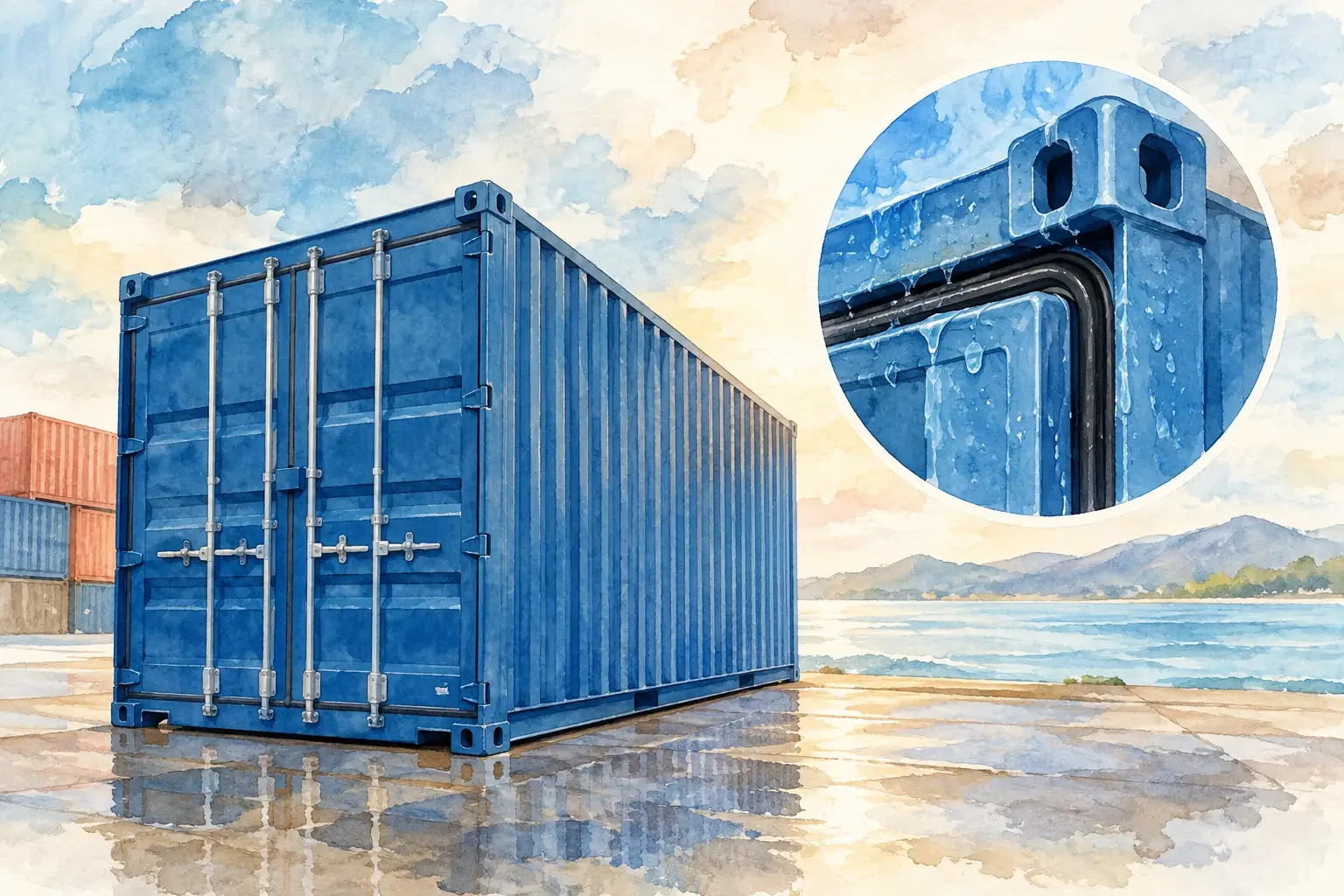
Wind and water tight, often called WWT, means the container is built to keep out normal wind-driven rain. The term is used for storage containers. It does not mean the unit passed the inspection for international cargo.
Ask what inspection and what repairs support that grade. Sellers do not all use the same test.
What the grade includes
A WWT container should have no obvious weather opening in these parts:
- Roof
- Walls
- Floor
- Corner structure
- Welds
- Cargo doors
The doors must close and lock. The gaskets must seal the door perimeter.
A used unit can still show small dents, surface rust, old repairs, and worn paint.
WWT does not mean the container is airtight, proof against humidity, proof against flood water, or fit to sit in standing water.
A container needs ventilation. A temperature swing can put condensation on the steel even when rain stays out.
Check the roof and the doors for heavy rain
A WWT container that passed inspection should keep normal rain out of above-ground storage.
Heavy rain finds weak points a short walk-around can miss:
- Roof pinholes
- Damaged welds
- Worn door gaskets
- A dented door frame
- Failed sealant on an old repair
Years of handling can leave a low spot in the roof. Water that sits there speeds corrosion and can make a pinhole.
A roof repair can hold if the work and the extent are correct. Ask what was repaired.
A door can latch and still leak if the gasket is brittle, torn, crushed, or out of line.
Bent hardware can stop the doors from seating evenly.
A lockbox adds security. It does not replace the weather seal.
Match the condition to the goods
A new or one-trip container is the stronger start for weather protection. It has less handling wear, newer gaskets, and less roof corrosion.
Use that grade for sensitive inventory, finished goods, electronics, documents, or a shell that will become an office.
A used WWT container can protect equipment, construction materials, farm supplies, and general site storage. Expect visible wear. Confirm that roof, wall, and door repairs are done.
A refurbished unit can add corrosion repair, sealed leak points, exterior paint, and replaced parts. Use it when both the look and the weather performance matter.
Inspect before delivery
Start on the roof, the top rails, and the corners. Look for a severe dent, a hole, corrosion around a repair, or a low spot that can hold water.
Daylight inside the closed container is a warning. A dry day can hide a leak.
At the door end, the doors must swing, line up, close, and engage the locking bars without too much force.
Check the gaskets for cracks, missing pieces, and flat spots that break the seal.
Check the header, the sill, the hinges, and the welds around them.
Inside, look for rust streaks, stains, damp areas, mold, or an odor from repeat moisture.
Check the wall-to-roof seams and the floor edge, especially near the cargo doors.
A sound plywood floor carries the load. It does not stop water from a bad roof or a bad door seal.
For high-value goods, put the agreed condition in the quote.
Set the container so the site does not add water
Put the unit on stable, level supports. Keep it above standing water. Bear the load at the corner castings.
The support can be concrete blocks, railroad ties rated for the load, a gravel pad, or an engineered foundation. The site and the container weight decide which one.
If the container twists or settles, the door frame can go out of line. The doors get hard to close. The gasket loses contact.
A small lift at the door end can send roof water away from the doors. Keep the support stable, and follow the engineering requirements for that unit.
Water on the goods can be rain, or it can be condensation. Steel cools at night and warms in the day. Warm humid air inside can put water on the ceiling and the walls. The water then drips.
This is common in a humid climate and when the load itself is moist. The goods may need a desiccant, a moisture barrier, ventilation, insulation, or climate control.
Add more than WWT when the use needs it
An office, a laboratory, food storage, medical inventory, or sensitive manufacturing goods can need insulation, vapor control, HVAC, electrical work, and sealed penetrations.
Frame, flash, and seal each added window, personnel door, vent, conduit, and mechanical opening.
A reefer is a different product. Judge it on the refrigeration machine, the electrical requirements, the floor, and the operating profile.
For a long placement, cut the openings in the shop. A field cut or a temporary patch is a leak path.
Conexwest can match the openings, the site, the use, and the delivery plan.