
Are Shipping Containers Fireproof? Steel's Limits
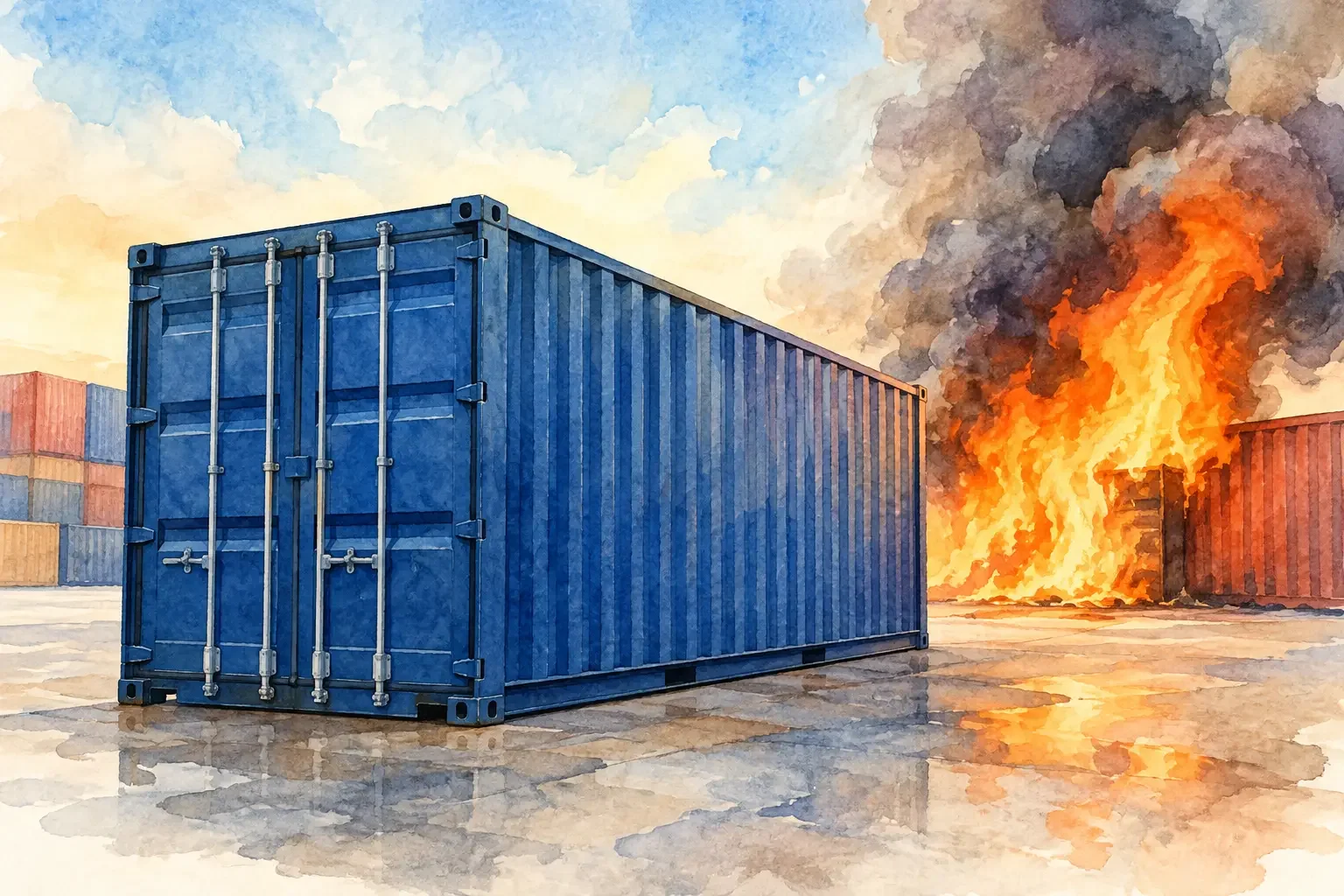
The steel shell does not burn. A standard shipping container is not a fire-rated enclosure.
Fire performance depends on the use, the modifications, the goods inside, and the code for that site.
Steel is noncombustible. The box is not fire-rated
The word fireproof means the structure keeps its function in a fire. A standard ISO container cannot make that claim.
Heat can enter through the roof, the walls, the doors, the floor, the vents, the windows, and any added opening.
The steel skin will not feed a fire. That does not mean the container will hold a fire for a stated time, protect the contents from heat, or stay sound after a severe fire.
Ask whether the finished unit meets the fire protection required for the occupancy, the contents, and the location.
What heat does to the container
The walls are corrugated weathering steel. Steel does not ignite. It conducts heat.
A fire outside can raise the interior temperature quickly. A fire inside can heat the shell and send radiant heat to equipment, materials, or buildings nearby.
As the temperature rises, steel loses strength and stiffness.
In a long or very hot fire, the roof can deform, the doors can bind, and welds can be stressed. The container may no longer perform as designed.
This matters when the roof carries HVAC, solar equipment, shelving, a mezzanine, or another added load.
The plywood or bamboo floor can char or burn. The result depends on the floor material, any treatment, the fire, and the time.
Paint, sealant, packaging, furniture, plastics, fuel, and insulation can be the fuel that sets how fast a fire grows.
Each opening changes the fire path
An unmodified container has few openings besides the cargo doors. A field office, an equipment enclosure, a retail space, or a custom facility has more.
These openings break the continuous steel shell:
- A personnel door
- Windows
- A roll-up door
- Louvered vents
- Electrical conduit
- Plumbing
- HVAC openings
If the project needs a rated wall or a rated roof, design those details before fabrication.
Interior materials do not all behave the same way in a fire. This includes spray foam, fiberglass insulation, wood framing, wall panels, adhesives, flooring, and a ceiling.
Insulation can make the container more comfortable. The wrong material or the wrong installation can raise the fire risk.
Electrical work needs a load calculation, protected wiring, breakers sized for the load, grounding, lights, outlets, disconnects, and equipment clearances.
Do not use overloaded extension cords or an improvised power connection in place of a designed electrical package.
When the project needs a fire-rated assembly
A fire extinguisher inside a standard container does not make the container fire-rated.
A fire-rated container is an assembly built for a stated fire-resistance result. The authority having jurisdiction sets the rating from the code, the site, the occupancy, and the contents.
These uses often need a closer fire review:
- Support space for battery energy storage
- A generator or electrical enclosure
- Chemical or fuel storage
- A welding area
- A commercial kitchen
- A laboratory
- A container close to a building or a property line
Tools and dry construction materials are a different case from lithium-ion batteries, paint, solvents, compressed gas, or combustible inventory.
If people occupy the space, the design may also need:
- Egress doors
- Exit paths
- Emergency lighting
- Alarms
- Ventilation
- An occupancy limit
- An accessible entry
- Fire department access
Measures that match the use
For general storage, reduce ignition sources and keep combustible goods organized.
For a powered office, use a code-compliant electrical system, smoke detection, a clear exit, and interior materials that fit the use.
For a higher hazard, the project may need a purpose-built fire-rated assembly and suppression equipment.
These measures can apply:
- A noncombustible or tested interior assembly
- A rated door where the code requires one
- Fire-stopping at cable and pipe penetrations
- Smoke or heat detection
- Emergency lighting
- Extinguishers selected for the hazard
- Ventilation designed for the equipment or the goods
Keep the outside of the container clear of brush, pallets, trash, fuel containers, and other combustible material.
Keep a path for occupants and for emergency responders.
Do not set the container so close to a building, a fence, or a work area that a fire can move between them. A local setback can apply to a temporary unit.
For flammable or hazardous goods, the operation may also need secondary containment, spill control, ventilation, signs, grounding or bonding, and controlled access.
A reefer is not a fire rating
A refrigerated container has insulated walls and holds a set temperature. The insulation does not make it fireproof or fire-rated.
Judge the panels, the refrigeration equipment, the electrical parts, the floor, and the stored product for the actual use.
A reefer can be the right start for cold storage. When fire protection is the main requirement, judge the finished system.
Write four facts before you order
Write down:
- What will be inside
- Who will enter
- Where the container will sit
- What utilities it needs
Those facts set the condition, the layout, the doors, the ventilation, the electrical scope, the insulation, and whether you need a code review before fabrication.
Name the contents in specific words. Equipment storage can mean hand tools. It can also mean fueled equipment, battery chargers, welders, chemicals, or electronics.
For a complex build, talk early with the local building department, the fire marshal, a design professional, or the safety team.
A supplier can cut doors and windows and can install insulation, HVAC, electrical gear, and partitions. The jurisdiction sets the approval. Settle that before delivery.