
Yes, 30-foot shipping container homes are legal if your local zoning and building codes allow them. You’ll likely need permits for foundations, plumbing/electrical, and structural changes. Always check with your city/county before you buy or cut steel.
30-Foot Shipping Container Home Plans: Ideas & Cost
30-Foot Shipping Container Home Plans: Price & Design Ideas
Key Takeaways
- 30-foot containers give about 240 sq ft and are easier to move than 40-foot containers, making them a better option when considering ease of transportation.
- The total cost involved is a combination of the costs of the container, modifications, and site work.
- It is important to build your shipping container home for heat and humidity with proper insulation, mechanical ventilation, solid foundations, and anchoring
- Conexwest supplies 30-foot containers across the country in new, used, and refurbished units, and delivers in 3–7 business days.
Why 30-Foot Containers Are Ideal for Homes
Unlike their 20-foot counterparts, 30-foot containers provide approximately 240 square feet of floor space, allowing for more creative layout options, including separate sleeping areas, full kitchens, and comfortable living spaces. They're also easier to transport to remote building sites than 40-foot containers.
Beyond their size and layout flexibility, 30-foot containers come with several practical advantages. They are highly cost-efficient, since decommissioned units can be purchased at relatively low prices.
They also require fewer building materials to adapt, and container homes remain mobile and adaptable, making them well-suited for seasonal living, vacation getaways, or use as rental investment properties.
Conexwest, a leader in shipping and storage solutions based in Northern California, offers new, used, and refurbished containers from 10ft to 45ft, with fast delivery within 3–7 days and container fabrication options like adding shelves and locks. We serve over 10,000 customers nationwide, including prestigious clients like the U.S. Navy and Google. As an ISO 9001 and AWS-certified company, we ensure top quality and competitive pricing. |
Ideas for 30-Foot Shipping Container Homes
Let’s take a look at the kinds of spaces you can create in a 30-foot container:
1. Minimalist Studio Apartment
A popular approach is a completely open layout: sleeping, living, and cooking are all integrated into a single space, maximizing square footage. Clever use of foldaway furniture, like Murphy beds or compact kitchenettes, helps de-clutter. Large windows and minimal internal walls make the area feel much more spacious.
2. One-Bedroom Tiny House
For more privacy and separation, place a dedicated sleeping area or compact bedroom at one end of the container. The opposite end can house a bathroom with a shower. The central space then becomes your social hub with the kitchen and living room combined, featuring bar seating or a small dining nook.
3. Family Cabin or Guest Suite
For short-term stays or guest accommodation, bunk beds and multipurpose furniture let you sleep up to four people in a single container. Storage units and closets are built upward to save floor space. This approach is perfect for hunting cabins or weekend getaways.
4. Home Office/Studio Hybrid
A 30-foot container can be divided into two functional areas—one for living and one for working. Floor-to-ceiling glass on one side enhances natural light and makes a small home feel roomy. Built-in desks, bookshelves, and modular partitions keep work and relaxation separate.
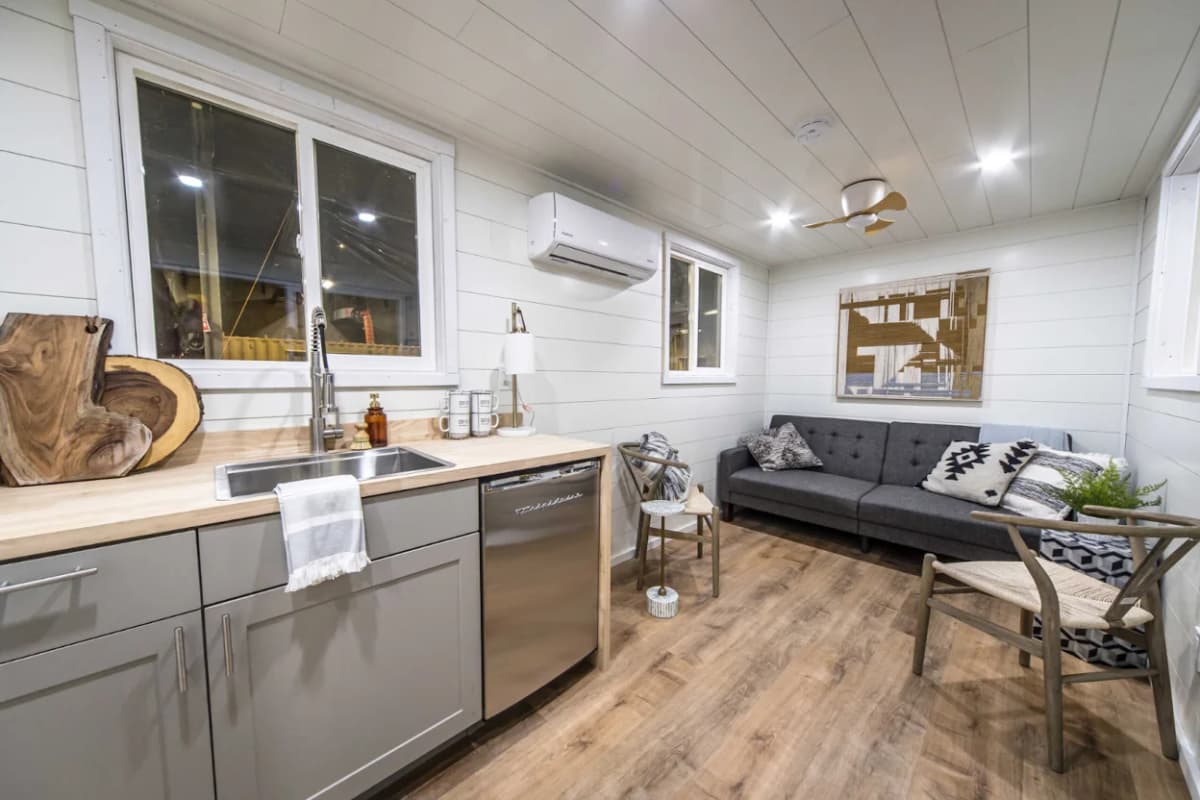
You can consider different types of home plans to take advantage of a container’s flexibility (Image courtesy of Backcountrycontainers).
Container Home Floor Plan Examples
Below is an overview of floor plan ideas for home layouts. These can be adjusted to suit your land, climate, budget, and lifestyle.
Layout Type | Features & Functions | Space Efficiency | Suited For |
Studio Open Plan | The bed doubles as a couch; kitchen, living, and sleeping in one space | Very high | Singles, couples |
Bunk Room Cabin | Built-in bunks, extra storage, small living space | Moderate | Families, guests |
Office/Home Hybrid | Partition wall, dedicated workspace + living area | Variable | Freelancers |
Off-Grid Eco Home | Compost toilet, solar, rainwater systems | High | Eco-minded users |
Designs often incorporate sliding doors or pocket doors to save on swing space, and modular or fold-away furniture to free up more floor area.
Top Shipping Container Home Design Considerations
Some important design considerations to consider include:
1. Insulation & Climate
Metal is a poor insulator. Without proper walls, a container home will be unlivable in extreme temperatures. Use spray foam or rigid insulation inside the container to regulate heat and cold, and consider insulated wall panels on the outside if the local climate is harsh.
2. Foundations & Site Preparation
Containers must be securely anchored. Concrete piers, slab foundations, or railroad ties are common, depending on your soil, local code, and mobility needs. Elevation helps with water drainage and pest prevention.
3. Windows, Light & Ventilation
Natural light makes a compact home feel open and inviting. Skylights, large windows, and glass doors work well. For off-grid living, cross-breeze ventilation and passive solar design are critical.
4. Utilities & Off-Grid Options
Decide early if your home will be fully connected to water, sewer, and electricity, or if solar panels and compost toilets will be used. Off-grid systems should be designed into your plans from the outset, influencing everything from layout to roof shape.
Some suppliers, like Conexwest, provide modification services like security features and network upgrades, which can be helpful for off-grid homes.
5. Local Zoning & Permits
Shipping container homes are subject to building codes, zoning regulations, and permitting requirements. Check with local authorities before purchasing or modifying containers.
30ft Shipping Container Home Cost
Base Container Prices
For 30ft shipping containers, refurbished units start at $3,500 for standard models and $3,300 for containers with roll-up doors. These mid-size containers offer more space than 20ft units while maintaining affordability compared to larger 40ft options.
Additional Costs & Conversion
Conversion costs for 30ft containers follow similar patterns to other sizes, with total project expenses typically ranging from $15,000–35,000. Factor in delivery fees, site preparation, insulation, electrical work, and interior finishes to determine your complete budget for this expanded living space.
*These numbers are estimates, and the actual price can vary. Thus, it’s best to reach out to us for an accurate quote.
Why Conexwest Is Your Ideal Partner for Container Home Projects
When it comes to sourcing quality containers for your 30-foot home build, Conexwest stands out as a trusted nationwide supplier with extensive experience in shipping and storage solutions. Our comprehensive inventory includes 30ft containers in new, used, and refurbished conditions, ensuring you can find the perfect foundation for your container home project within your budget.
Speed and reliability are hallmarks of our service, with container delivery typically completed within 3–7 business days to building sites across the country. Beyond basic container supply, we offer valuable fabrication services, including custom modifications, shelving installations, and security enhancements that can jumpstart your home conversion project.
Our track record speaks for itself, having served over 10,000 satisfied customers nationwide, including high-profile clients like Google and the U.S. Navy who trust us for their most demanding projects. Our ISO 9001 and AWS certifications guarantee that every container meets rigorous quality and safety standards.
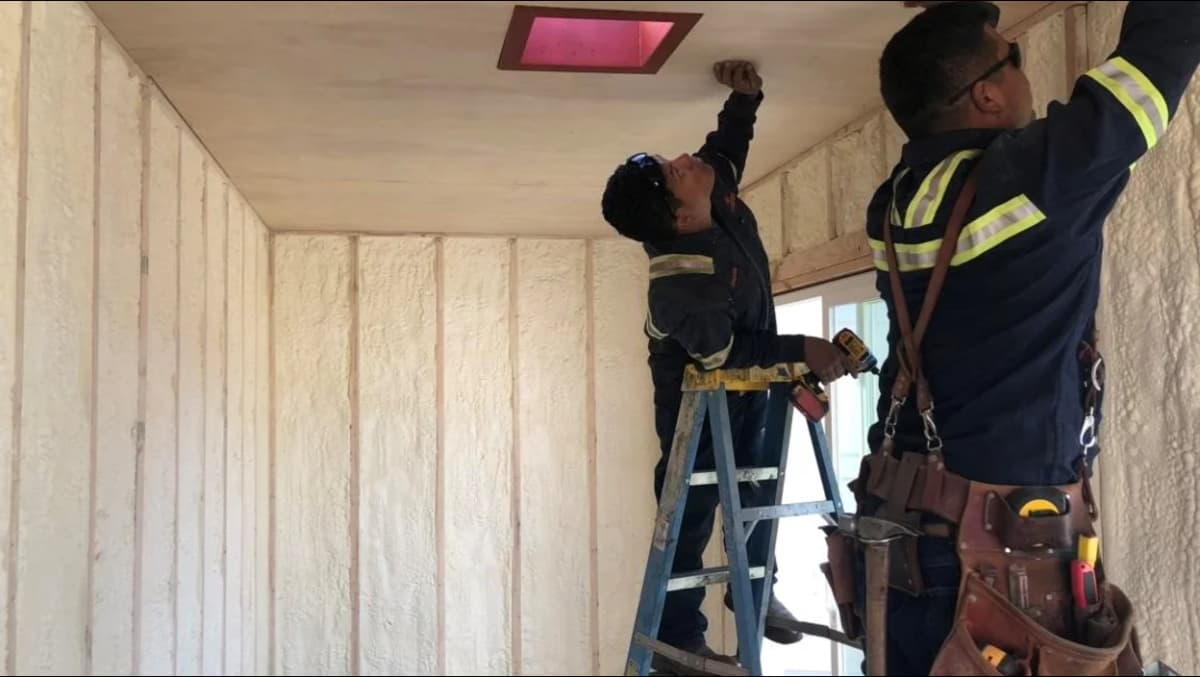
Conexwest provides the quality containers and expert modifications needed to transform your 30-foot container home vision into reality.
Whether you're planning a minimalist studio, family cabin, or off-grid retreat, we provide not just the container, but the expertise and modifications necessary to create a durable, comfortable living space that will serve you for years to come.
Was this helpful?
Frequently Asked Questions
Yes. Bare steel sweats and swings with temperature. Closed-cell spray foam or rigid foam with a proper vapor barrier stops condensation, stabilizes temperatures, and protects finishes.
Choose your shipping container home foundation based on soil and code—concrete piers or helical piles for light/level installs, slabs for permanence, and piers where drainage or pests are a concern.
The steel shell is strong, but safety depends on anchoring, reinforced openings, and overall design. For severe weather regions, follow local wind/seismic requirements and consider a safe room.
Conexwest has in stock 30ft units in different conditions: new, used, and refurbished, and can deliver to your location in 3–7 business days. We are known for top-notch quality, and this is proven by our client list, which includes Google and the US Navy. We also provide customization services that can help you convert your container into your ideal home.