How to Build a Bitcoin Mining Farm With Shipping Containers | Conexwest
Over the last decade, Bitcoin has risen from an edgy, suspicious experiment to a global digital asset. But most people don’t see what happens behind the scenes of creating Bitcoin or the physical infrastructure that keeps the network running: mining.
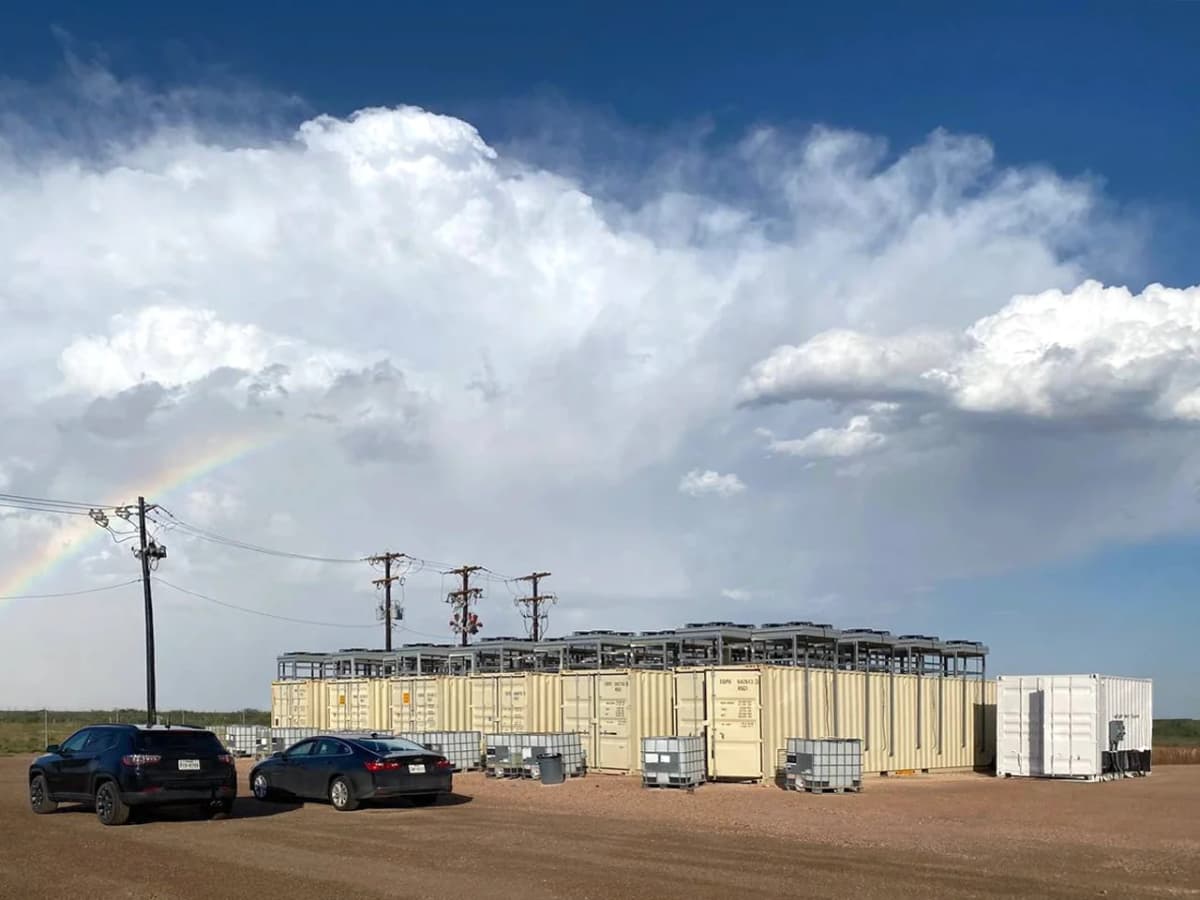
As Bitcoin mining expanded from a basement hobby done from personal computers to a massive industrial operation, it has reshaped how and where the world’s dominant cryptocurrency is produced. The focus shifted from tech novelty to practical survival, and efficiency, cost, and location suddenly ruled the day. Containerized mining has become one of the industry’s preferred approaches: fast, flexible, and ready to follow opportunity wherever it leads.
To understand what this looks like in practice, we spoke with Eugene Tatarchenko, a Bitcoin mining operator with direct experience building and running containerized mining infrastructure.
.webp&w=1200&q=75)
What Bitcoin Mining Actually Does
Most people can quote Bitcoin's price or recall a market crash, but far fewer understand what keeps the network running.
When someone sends Bitcoin, the transaction must be verified. Thousands of transactions are grouped into blocks. Specialized computers compete to verify those blocks, and once verified, the block is added to the blockchain. The miners involved receive a reward: newly issued Bitcoin and transaction fees.
In this sense, mining is less mysterious than it sounds. Transaction fees serve the same role they do in traditional finance — they are the incentive that makes the system work. For users, it's the cost of sending money. For miners, it's income.
What often goes unnoticed is the physical reality behind this process. Mining requires enormous computing power, which consumes large amounts of electricity and generates significant heat. It is precisely this demand for power, cooling, and efficiency that reshaped how and where mining takes place.
.webp&w=1200&q=75)
.webp&w=1200&q=75)
Why Containers Are Ideal for Mining and Data Centers
Scalability
When it comes to scalability, mobility, and energy use, recycled shipping containers make a lot of sense for mining infrastructure for several practical reasons.
In the mining industry, the ability to expand is not just a possibility; it is a core objective. In that context, traditional buildings fall short when compared to containerized solutions. Permanent structures are difficult to expand, build upward, or modify once completed. Containers, by contrast, are designed for modular growth. Additional units can be added and connected relatively quickly, allowing operations to scale as demand and capital increase.
For that reason, 40-foot containers have become a common standard across the industry, precisely because they allow capacity to be added incrementally. Instead of committing to a single, oversized facility, operators can begin with one unit, monitor performance, and add additional containers as demand grows.
Containers can be placed side by side, stacked, or assigned to specific functions such as compute, power storage, or even on-site offices for monitoring and security. This creates a modular system that can expand piece by piece, rather than all at once.
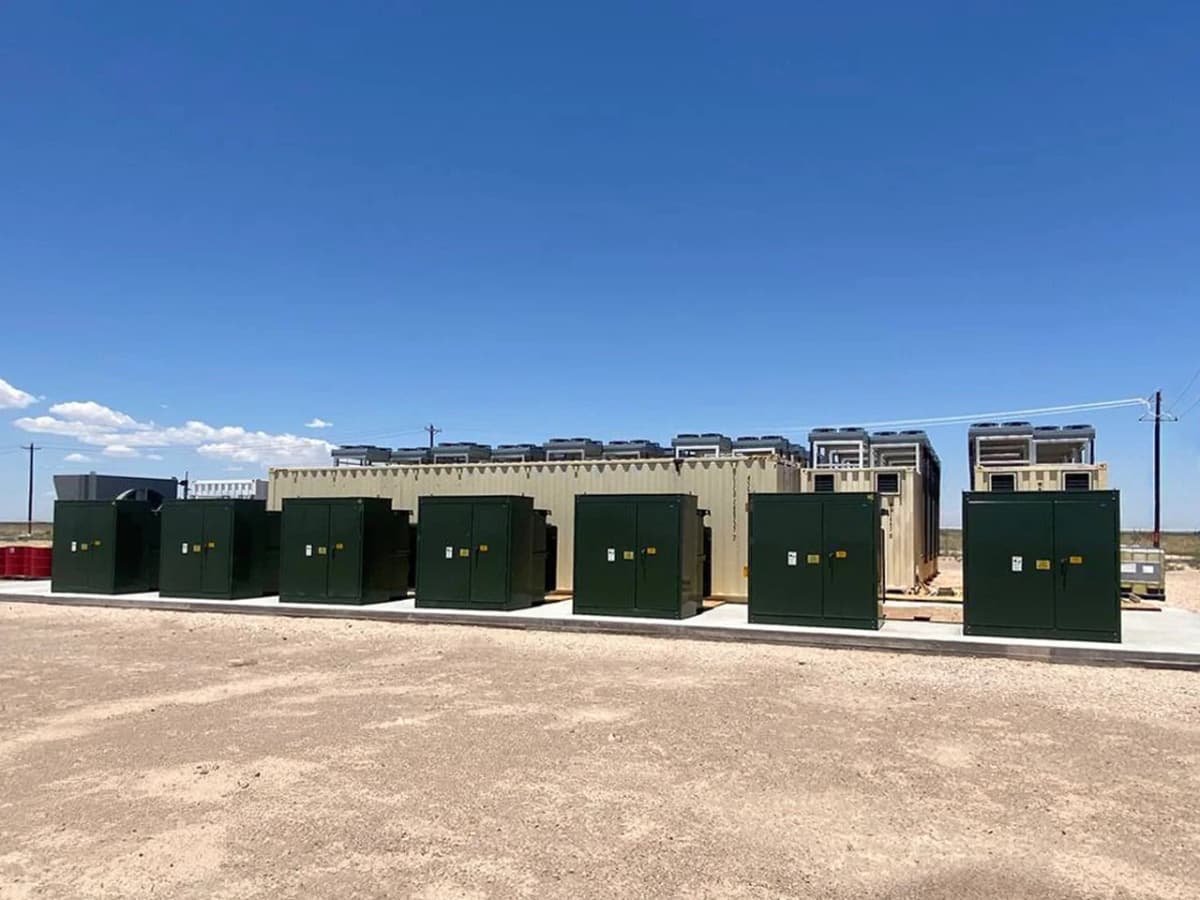
"When you buy a containerized unit, you don't need a traditional building, permits, or long construction timelines," Tatarchenko explains. "You connect it to power, and it's running." As he puts it, "You can configure them like building blocks."
Mobility
While containerized mining facilities often remain in one location for long periods, relocation is never off the table. Energy pricing is one of the most common reasons operators choose to move. Because mining depends heavily on access to low-priced electricity, the ability to switch to a more favorable energy market becomes a strategic advantage when conditions change.
That is where the mobility built into containerized infrastructure comes into its own. "If power prices change or a site becomes inefficient, you can disconnect the unit, load it onto a truck, and move it," Tatarchenko says. That level of flexibility simply doesn't exist with traditional buildings. In an industry shaped by fluctuating energy costs and shifting regional incentives, that flexibility makes containers not just practical but essential.
Most operators choose remote locations outside city limits, where zoning constraints are fewer — though noise from equipment and generators still requires proper site planning.
Energy Efficiency and Thermal Management
One of the biggest operational challenges in Bitcoin mining is not software or hardware, but heat. Mining equipment runs continuously, drawing large amounts of electricity and converting much of it into heat. Managing that heat efficiently is both a technical necessity and a major cost consideration.
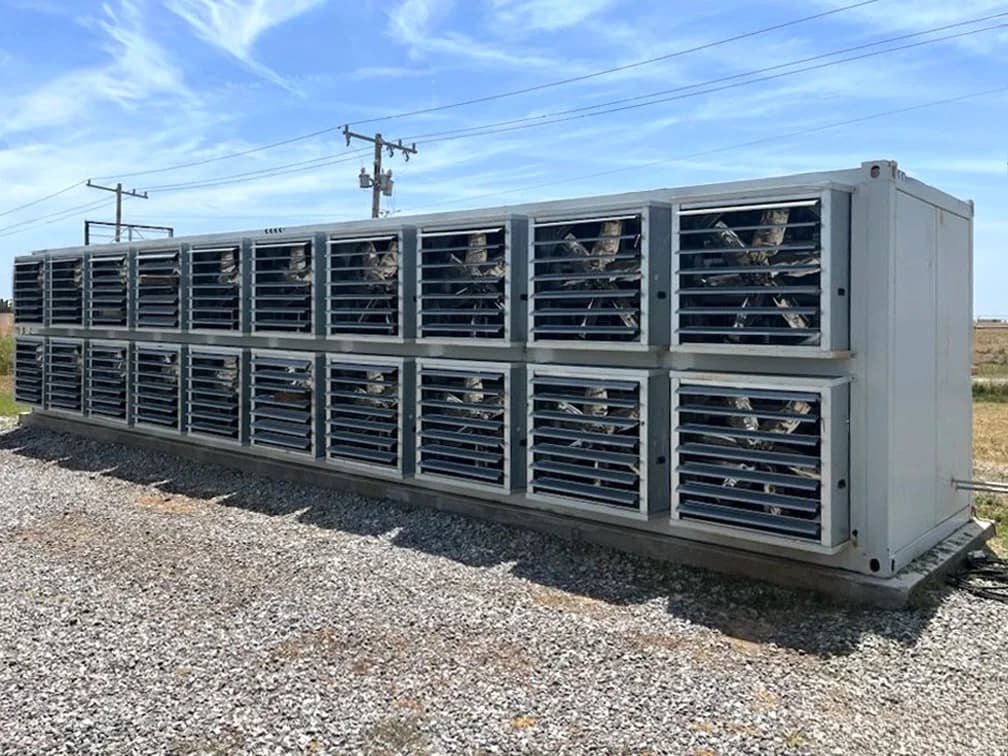
Containerized infrastructure addresses this problem by design. Rather than relying on complex, building-wide cooling systems, containers are engineered to support high-volume airflow. In a typical setup, one side of the container is fitted with industrial exhaust fans that push hot air out, while the other, opposite side draws in cooler air through filtration systems. This creates a steady, directional flow that prevents heat from accumulating around the equipment.
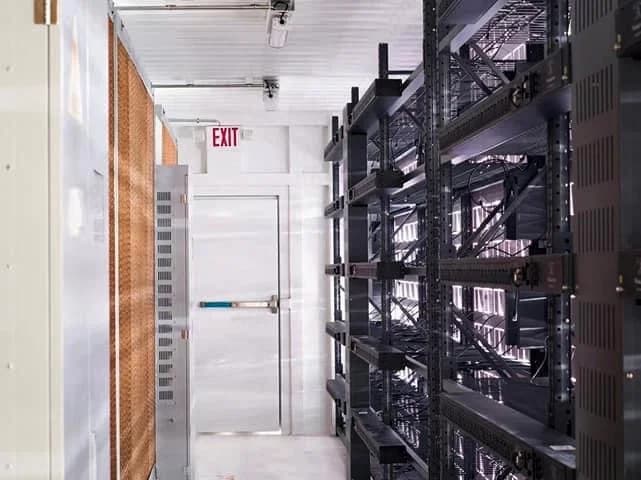
Some operations enhance this system further by using evaporative cooling panels, which, under suitable climate conditions, can reduce incoming air temperatures by approximately 10–15°C before it reaches the machines. The result is a controlled environment that cools equipment efficiently without the energy overhead of traditional data center air conditioning.
In practice, these containers function less like storage units and more like purpose-built heat dissipation systems. By simplifying cooling and reducing energy waste, containerized mining improves overall efficiency, allowing operations to scale without the added complexity or cost of conventional cooling infrastructure.
.webp&w=1200&q=75)
What Operators Look for Inside a Mining Container
Three factors consistently matter most: power capacity, equipment density, and electrical quality.
Power capacity is the starting point. A standard 40-foot mining container is often designed to handle 1-1.5 megawatts (MW) of power. In some advanced configurations containers can support up to 3 MW, allowing operators to run significantly more hardware within a single unit. The higher the power capacity, the greater the potential output, but also the higher the engineering requirements.
Closely tied to power is equipment density. At roughly 1 MW, a container may house roughly 250–350 machines, depending on hardware, layout, and electrical design.Racks are often arranged in a zig-zag or parallel configuration to optimize airflow and cooling, ensuring that machines can operate continuously without overheating. Efficient layout is critical; packing equipment too tightly can undermine performance and shorten hardware lifespan.
Finally, electrical quality is non-negotiable. Mining containers rely on high-grade Power Distribution Units (PDUs), three-phase power systems, and properly rated outlets to handle sustained electrical loads. Poor-quality electrical components are not just inefficient; they pose serious safety risks, including the risk of fire. For this reason, all high-voltage connections must be installed by licensed electrical contractors with experience in industrial power systems, not individual electricians.
Together, these requirements turn a simple steel container into a highly specialized piece of infrastructure, one capable of supporting round-the-clock operations at an industrial scale.
What’s Next for Bitcoin and Containerized Mining?
Cryptocurrency follows cycles. The next bitcoin halving is projected to occur around April 2028, an event that will halve mining rewards. For miners, it means their reward will be cut in half. Historically, halvings have acted as pressure tests for the industry.
The current cycle has already demonstrated the scale of what's at stake. In 2025, Bitcoin surpassed $109,000 for the first time, driven in part by the launch of spot Bitcoin ETFs that attracted over $115 billion in assets under management. The network's hashrate crossed 1 zettahash per second — a milestone that reflects the sheer volume of computing power now dedicated to mining. As institutional capital flows in, the demand for scalable, cost-efficient mining infrastructure is only accelerating.
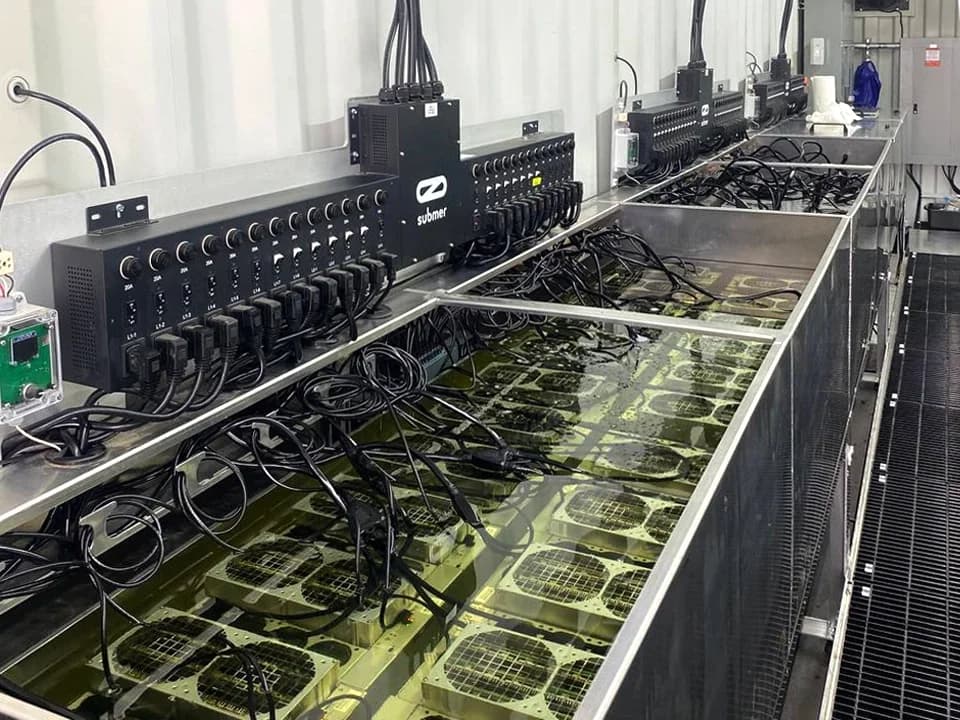
While some market participants anticipate a potential market slowdown, mining activity has not slowed. Instead, many operators are doubling down on infrastructure, with a growing number expanding into containerized solutions.
Mining facilities that prioritize cost-effective energy or invest in self-generated power are more likely to survive and endure market downturns while continuing to scale. Those burdened by high electricity costs are often the first to shut down when conditions tighten.
Tatarchenko points to self-generated power as a decisive advantage. "When your power rate is low, sometimes it doesn't even matter what the Bitcoin price is," he says. "You can cover your costs and still keep part of the Bitcoin instead of selling everything."
As the next cycle approaches, containerized mining continues to gain momentum. Built around modular design, mobility, and energy efficiency, containers have proven well-suited to the realities of modern Bitcoin mining, where power costs, location, and adaptability often determine viability. As Bitcoin matures, the infrastructure supporting it is evolving in parallel, reshaping how and where the network is sustained behind the scenes.
Looking to Build or Scale a Mining Operation?
Conexwest supplies and modifies shipping containers purpose-built for Bitcoin mining and data center applications. Each unit is delivered with electrical systems, ventilation, and cooling already installed — connect to power and you're running. Available in 20-foot and 40-foot configurations with custom layouts to match your hardware and capacity needs.
Explore mining container options at conexwest.com or call to discuss your project.